Extracts from Kim Philby’s espionage confession published today for the first time
September 24, 2019 Leave a comment
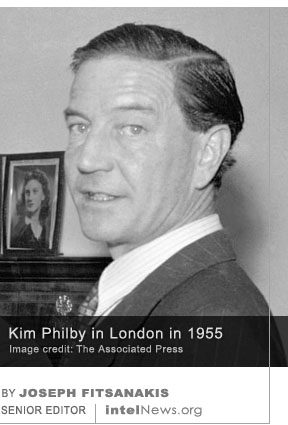 Extensive extracts from the confession of Kim Philby, one of the Cold War’s most prolific double spies, are scheduled to be released today for the first time by Britain’s National Archives. While working as a senior member of British intelligence, Harold Adrian Russell Philby, known as ‘Kim’ to his friends, spied on behalf of the Soviet OGPU and NKVD, the intelligence services that later became known as the KGB. His espionage activities lasted from 1933 until 1963, when he secretly defected to the USSR from his home in Beirut, Lebanon. Philby’s defection sent ripples of shock across Western intelligence and is often seen as one of the most dramatic incidents of the Cold War. He was part of a spy ring of upper-class British communists who were known collectively as ‘the Cambridge spies’ because they were recruited by Soviet intelligence during their student days at the University of Cambridge in England.
Britain’s intelligence establishment has never released Philby’s confession, which he made to his friend Nicholas Elliott, an intelligence officer in the Secret Intelligence Service (MI6) in January 1963. The MI6 had sent Elliott to Beirut, where Philby was working as a journalist, to inform him that his espionage role for the Soviets had been established beyond doubt. The MI6 officer had been authorized to offer Philby immunity from prosecution in return for a full confession. Philby accepted the offer and began his confession while in Beirut. But a few days later he vanished and reemerged in Moscow in July of that year. He died there in 1988.
The file that is scheduled to be released today by the National Archives is marked “Secret” and comes from the Security Service (MI5), Britain’s primary counterintelligence agency. It contains details about Philby’s first assignments for Soviet intelligence, which included identifying other communist students at Cambridge who would be susceptible to recruitment. Philby’s list included the names of Donald Maclean and Guy Burgess, who later became members of the Cambridge spy ring. Philby states in his confession that he cautioned his Soviet handlers about recruiting Burgess due to “his unreliability and indiscretion”, but his objections were “overruled”, he says.
When asked by Elliott how he could have sided with Soviet intelligence at a time when the Soviet leader, Joseph Stalin, was slaughtering millions, Philby responds by comparing his service for the KGB to joining the armed forces. Following orders, he says, does not imply that a soldier unquestionably agrees to every action of the government he serves. He goes on to reveal that his Soviet handlers never attempted to win his “total acceptance on the technical level. In short”, Philby continues, “I joined [Soviet intelligence] as one joined the army [… I often] obeyed orders although convinced they were wrongly conceived”.
► Author: Joseph Fitsanakis | Date: 24 September 2019 | Permalink
 The Russian government reportedly fired a number of officials over the defection of a senior Kremlin aide, who alleged worked as an American spy. Meanwhile, Moscow has filed a search request with INTERPOL about the alleged defector’s whereabouts. News of the defection was
 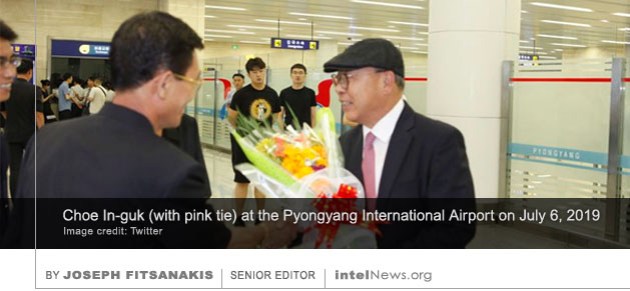 The son of a South Korean former cabinet minister has defected to North Korea, marking a rare instance of a citizen of South Korea switching his allegiance to the North. It is even rarer for such high-profile South Korean citizens to defect to North Korea. The defector is Choe In-guk, son of Choe Deok-sin, who served as South Korea’s minister of foreign affairs in the 1970s under the South Korean dictator Park Chung-hee. Choe was an American-trained army officer who served under United States command in the Korean War. He then served as a member of the cabinet and as South Korea’s ambassador to West Germany.
 In an effort to persuade senior members of the Venezuelan government to defect, the United States has lifted punitive financial sanctions on the country’s intelligence director, who left his post on April 30. General Christopher Figuera became director of the Bolivarian National Intelligence Service (SEBIN) in October 2018. SEBIN is Venezuela’s primary intelligence agency and has a dual domestic and international role. Much of its domestic mission is to protect and defend the Bolivarian Revolution, which forms the ideological framework of the government headed by President Nicolás Maduro. It follows that SEBIN’s employees are all trusted supporters of Venezuela’s embattled President.
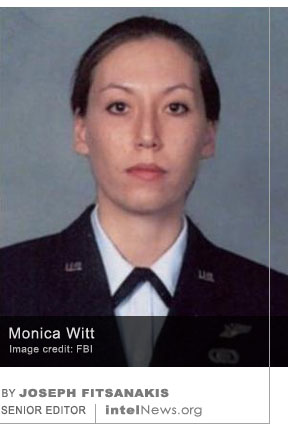 An American intelligence officer, who held the highest level of security clearance for over a decade, defected to Iran in 2012 and has been spying against the United States ever since, it was revealed yesterday. Monica Witt, 39, was a counterintelligence officer for the United States Air Force from 1997 until 2008, specializing in the Middle East. Throughout her career, she was deployed by the US military to the Middle East on several occasions, in order to carry out counterintelligence missions the details of which remain classified to this day.
 In a sign of worsening relations between the United Kingdom and Russia, a busy intersection in Moscow has been named after Kim Philby, the British senior intelligence officer who secretly spied for the Soviet Union. While working as a senior member of British intelligence, Harold Adrian Russell Philby, known as ‘Kim’ to his friends, spied on behalf of the Soviet NKVD and KGB. His espionage activities lasted from about 1933 until 1963, when he secretly defected to the USSR from his home in Beirut, Lebanon. Philby’s defection sent ripples of shock across Western intelligence and is often seen as one of the most dramatic incidents of the Cold War. He was part of a wider ring of upper-class British spies, known collectively as ‘the Cambridge spies’ because they were recruited by Soviet intelligence during their student days at the University of Cambridge in England.
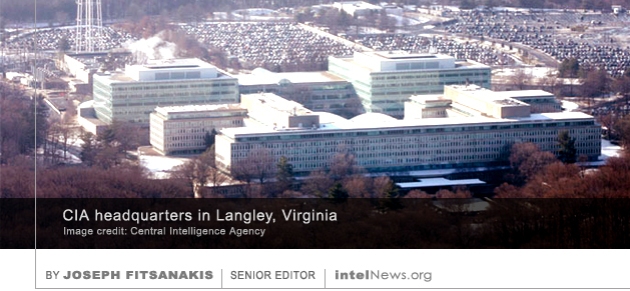 Intelligence officials in the United States are feverishly reassessing the physical safety of dozens of Russian defectors, in light of the case of Russian double spy Sergei Skripal, who was poisoned in England last March. Skripal, a former military intelligence officer who spied for Britain, was resettled in the English town of Salisbury in 2010 by the British Secret Intelligence Service (MI6). But he and his daughter Yulia made international headlines in March, after they were
 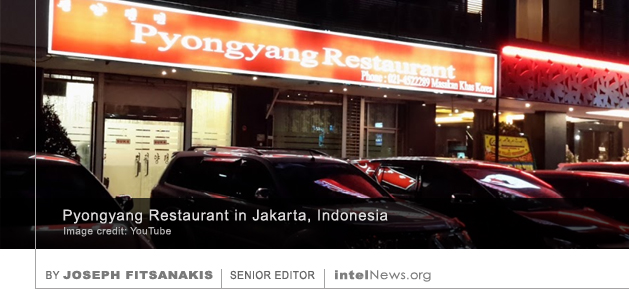 A group of 12 female North Korean restaurant workers and their male manager claim that their widely advertised defections in 2016 were fake, and that they were in fact abducted by South Korea’s spy services. The North Korean government maintains a chain of North Korea-themed restaurants throughout Asia, which operate as popular tourist attractions across Southeast Asia. The state-owned restaurants help provide the cash-strapped regime in Pyongyang with desperately needed foreign funds. The North Korean staff —almost all of them female— who work at these restaurants are carefully vetted and chosen to represent the reclusive regime abroad. Some observers
 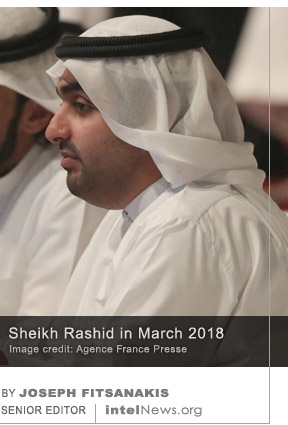 A member of one of the United Arab Emirates’ seven royal families has defected to Qatar and asked for political asylum, in what appears to be the first time that an Emirati royal has publicly turned against the oil-rich kingdom. In May of last year, the UAE
 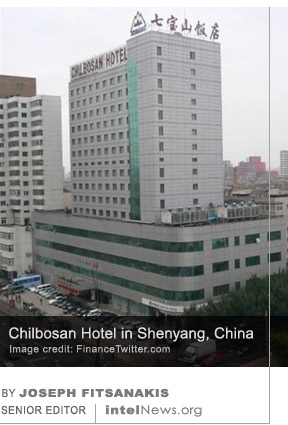 One of North Korea’s most senior intelligence officials, who played a major role in building Pyongyang’s nuclear weapons program, has disappeared and is believed to have defected to France or Britain, according to sources. South Korean media identified the missing official as “Mr. Kang”, and said he is a colonel in North Korea’s State Security Department (SSD), also known as Ministry of State Security. Mr. Kang, who is in his mid-50s, enjoyed a life of privilege in North Korea, because he is related to Kang Pan-sok (1892-1932), a leading North Korean communist activist and mother to the country’s late founder, Kim Il-sung.
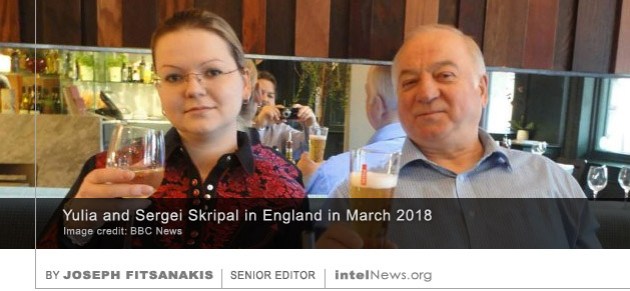 The British government may relocate Sergei Skripal, the Russian double spy who appears to have survived an assassination attempt in England, to the United States, in an effort to protect him from further attacks. The BBC
  Sergei Skripal, the Russian double agent who was poisoned with a military-grade nerve agent in England earlier this month, wrote to the Kremlin asking to return to Russia, according to one of his old school friends. Skripal, 66, and his daughter Yulia, 33, remain in critical condition in hospital, three weeks after being
 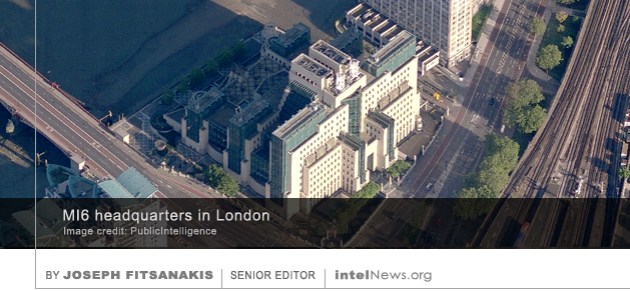 The British secret services have begun tightening the physical security of dozens of Russian defectors living in Britain, a week after the attempted murder of former KGB Colonel Sergei Skripal in southern England. The 66-year-old double spy and his daughter, Yulia, were found in a catatonic state in the town of Salisbury on March 4. It was later determined that they had been attacked with a nerve agent. Russian officials have vehemently denied that the Kremlin had any involvement with the brazen attempt to kill Skripal. But,
 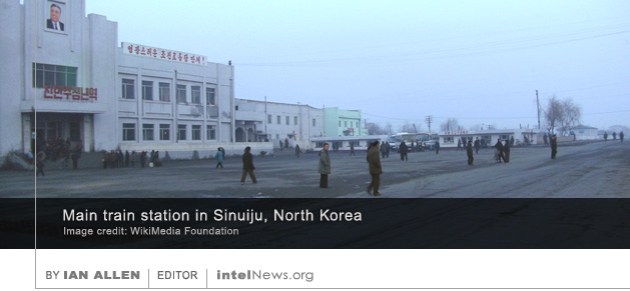 A North Korean nuclear scientist who defected to China but was involuntarily sent back to North Korea in November reportedly killed himself in his North Korean cell hours before he was due to be interrogated. Information about the scientist’s alleged suicide was issued on Thursday by Radio Free Asia (RFA), a multilingual news service based in Washington, DC, which is funded by the United States government. The service said its reporters spoke to an anonymous source in North Hamgyong province, North Korea’s northernmost region that borders China. The source identified the late scientist as Hyun Cheol Huh, but cautioned that this may not be his real name, because the North Korean security services are known to “use […] fake names when referring to important persons” in their custody.






 intelNews.org
Chinese defector reveals identities of Chinese undercover spies in Asia and Australia
November 25, 2019 by Joseph Fitsanakis 4 Comments
Police in the Chinese city of Shanghai claim that Mr. Wang is a small-time criminal who has been found guilty of using fraudulent documents and has a 15-month suspended prison sentence on his record. In a statement issued on Sunday, China’s embassy in Canberra described Mr. Wang as a “convicted fraudster” who was “wanted by police after fleeing [China] on a fake passport”. But according to reports in the Australian media, Mr. Wang has provided the ASIO with a 17-page sworn statement, in which he details his work as an undercover intelligence officer. He is also said to have shared the identities of senior Chinese intelligence officers in Taiwan and Hong Kong, and to have explained how they organize and implement espionage operations on behalf of Bejing.
In a leading article published on Saturday, The Sydney Morning Herald referred to Mr. Wang as “the first Chinese operative to ever blow his cover” and claimed that he had given the ASIO “a trove of unprecedented inside intelligence” about Chinese espionage operations in Southeast Asia. The newspaper said that the defector had revealed details about entire networks of Chinese intelligence operatives in Taiwan and Hong Kong. He also reportedly provided identifying information about deep-cover Chinese intelligence networks in Australia.
Meanwhile, in an unrelated development, Australian media said yesterday that the ASIO was examining allegations that a Chinese espionage ring tried to recruit an Australian businessman of Chinese background and convince him to run for parliament. According to reports, the spy ring approached Nick Zhao, a successful luxury car dealer, and offered to fund his political campaign with nearly $700,000 (AUS$1 million) if he run as a candidate for the Liberal Party of Australia. Zhao reportedly told the ASIO about the incident last year, shortly before he was found dead in a Melbourne hotel room. His death remains under investigation.
► Author: Joseph Fitsanakis | Date: 25 November 2019 | Permalink
Filed under Expert news and commentary on intelligence, espionage, spies and spying Tagged with ASIO, Australia, China, defectors, espionage, Hong Kong, News, Taiwan, Wang Liqiang