US military intelligence staff allege ‘toxic’ work environment, lack of oversight
December 21, 2017 Leave a comment
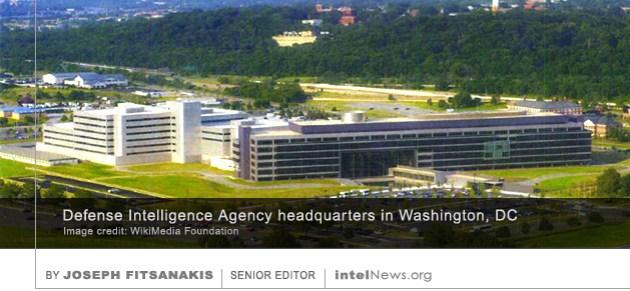 Current and former employees of the United States’ primary military intelligence agency have publicly accused the agency’s senior watchdog of not doing her job and sabotaging the careers of her subordinates. According to Foreign Policy, which interviewed the disgruntled employees, “no one is policing” the US Defense Intelligence Agency (DIA) at the moment. The DIA is one of the largest institutions in the US Intelligence Community. It collects, analyzes and disseminates foreign military-related intelligence, and has active personnel stationed in over 140 countries. As is the case with every agency in the US Intelligence Community, the DIA’s activities are monitored by an internal office of the Inspector General. The office is tasked with investigating allegations of illegality, mismanagement, fraud, waste and abuse inside the DIA.
However, two former employees allege that the DIA Inspector General’s office has effectively been disbanded, with most of its personnel having been fired, reassigned or pressured to leave in recent years. They also claim that the current dysfunctional state of the office is due to the “toxic” leadership style of the Inspector General herself, Kristi Waschull. Foreign Policy named the two former employees as David Steele, who has nearly 40 years’ experience in military intelligence, and Ron Foster, who until recently was head of investigations at the DIA’s office of the Inspector General. The two men claim that they were “fired or involuntarily reassigned” overnight “with no warning”, because they challenged Waschull’s leadership style and decisions. They told Foreign Policy that they could not discuss the details of specific cases, because they are classified. But they claimed that Waschull repeatedly sought to soften the language of inspection reports about problems in the DIA, and that she “retaliated against them and their colleagues” when they resisted her efforts.
In 2016, a Congressional investigation was carried out into allegations by as many as 50 DIA analysts that their reports about the Islamic State were being deliberately tweaked by officials at the US Central Command, the Pentagon body that directs and coordinates American military operations in Egypt, the Middle East and Central Asia. The Foreign Policy article did not mention whether the analysts’ allegations are included in the complaints launched against Waschull by Steele and Foster. The publication said that the two men filed complaints against the Inspector General in 2015, and that they are still awaiting resolution. The DIA refused to comment on the allegations, but denied that any wrongdoing had taken place in the office of the Inspector General.
► Author: Joseph Fitsanakis | Date: 21 December 2017 | Permalink
 A public event has been held for the first time in Havana to demand the release
  An investigation by Republican lawmakers in the United States House of Representatives has reportedly found that military intelligence analysts were pressured into changing reports on the Islamic State by their superiors. The investigation follows
  The leading lawmaker in the United States Congressional intelligence committee has accused the Department of Defense of resisting his efforts to investigate claims that intelligence products on the Islamic State were manipulated. Representative Devin Nunes (R-Ca.), who chairs the US House of Representatives Permanent Select Committee on Intelligence, said last week that he and his staffers were experiencing a “lack of cooperation” from the military during the course of an official probe into intelligence products. Nunes was referring to









 intelNews.org
US, British spy agencies preparing Ukraine to withstand Russian invasion – reports
December 21, 2021 by Joseph Fitsanakis 5 Comments
According to The Times, Ukraine has been undergoing a widespread series of cyberattacks from Russia almost without stop during the past several years. The attacks have consisted of multiple sabotage and espionage campaigns, which have targeted nearly every Ukrainian government agency, as well as the country’s energy infrastructure. These attacks have historically been low in number and intensity. This has changed in recent months, however, according to American officials.
Some observers are concerned that a series of large-scale cyberattacks may precede a military invasion by the nearly 200,000 Russian troops that are currently present along the Russian-Ukrainian border. Were they to materialize, these cyberattacks will probably attempt to sabotage core functions of Ukraine’s economy and government, including the banking and air-traffic systems. Moscow’s broader goal, according to The Times, would be to subvert the ability of President Volodymyr Zelensky’s government to govern Ukraine. This, in turn, could lead to its fall and replacement by a pro-Russian administration. If a pro-Russian government is threatened by a pro-Western revolt —something that Ukraine has seen in the past— it could potentially request military assistance from Moscow, which would provide a political pretext for an invasion.
Meanwhile, British newspaper The Daily Mirror said on Monday that American intelligence agencies have “secretly agreed to arm and train Ukrainian troops on how to fight a guerrilla war against Russian forces if they invade”. The paper said that meetings to discuss these plans have been taking place between officials from the Central Intelligence Agency and the Defense Intelligence Agency. The goal of such an effort, the report claims, would be to mirror the American help given to Afghan fighters by the CIA during the Soviet-Afghan war of the 1980s.
► Author: Joseph Fitsanakis | Date: 21 December 2021 | Permalink
Filed under Expert news and commentary on intelligence, espionage, spies and spying Tagged with 2022 Russian invasion of Ukraine, CIA, cyberterrorism, DIA, News, Russia, UK, Ukraine, United States