Germany ‘erroneously’ granted entry visa to known Russian intelligence officer
October 10, 2022 1 Comment
 LAST SUMMER, GERMAN EMBASSY staff in Russia issued an entry visa to a Russian national, despite warnings by at least two European security agencies that he was a known intelligence officer, according to a report. The incident has fueled persistent allegations that Berlin’s counterintelligence posture against Russia is ineffective.
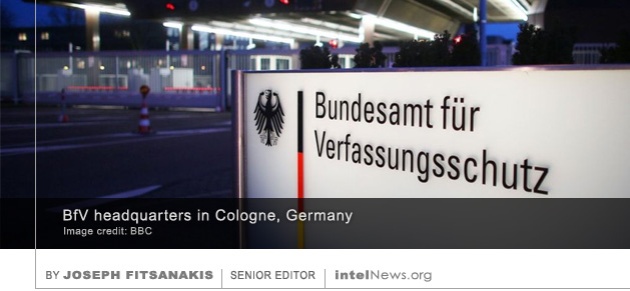
According to the German newsmagazine Der Spiegel, it was in July of this year when the German Embassy in Moscow received an application for an entry visa to Germany by a Russian national. The application included an official invitation issued to the visa applicant by the Russian Consulate General in the eastern German city of Leipzig. However, the application prompted a strong counterintelligence warning by the Federal Office for the Protection of the Constitution (BfV), Germany’s domestic security agency. According to Spiegel, at least one more European intelligence agency warned against allowing the Russian national to travel to Western Europe. The reason for the warnings was that the visa applicant was known to operate internationally under diplomatic cover, on behalf of a Russian intelligence agency.
The counterintelligence warnings were examined and caused the visa application to be rejected. However, a month later the applicant submitted a second application for an entry visa to Germany. Remarkably, the German embassy approved the second application, after “no longer recogni[zing] any suspicion of espionage” in association with this case. One possible reason, according to Spiegel, was that Russian officials had applied pressure on the German government, asking for a review of the application. When the issue was raised in Berlin, an internal review was launched. It reportedly found that the espionage warnings had been “overlooked due to an [administrative] error”. The visa was thus promptly canceled. Der Spiegel claims it is “possible that the accidental visa issue was related to [Berlin] wanting to show good will to the Russian side”.
What does that mean? Back in April, Germany expelled 40 suspected Russian intelligence officers, in response to Russian war crimes in Ukraine. As expected, Russia promptly expelled an equal number of German diplomats in a tit-for-tat move. The Russian Foreign Ministry made sure to point out that it would respond in a similar fashion, should Berlin choose to expel more Russian diplomats in the future. Such an eventuality, according to Spiegel, would run the risk of decimating Germany’s diplomatic presence in Russia, given that its size is considerably smaller than that of Russia’s in Germany. Germany, in other words, is not prepared to risk a complete breakdown in its diplomatic relations with Russia.
Some claim, however, that the current arrangement between the two countries is being exploited by the Kremlin. Der Spiegel notes that, according to intelligence experts, no European country hosts more Russian intelligence officers under diplomatic cover than Germany. It is estimated that at least 100 bogus diplomats are currently stationed in Russia’s diplomatic facilities throughout Germany.
► Author: Joseph Fitsanakis | Date: 10 October 2022 | Permalink
 A NEW PAPER, PUBLISHED by the United Kingdom’s Royal United Services Institute (RUSI) for Defence and Security Studies, sheds light the complex relationship between Italy and the West’s two principal adversaries, Russia and China. Italy is a major global economic power. It is a prominent member of the Group of Seven (G7), which collectively account for more than 50 percent of global net wealth. It is also a member of the North Atlantic Treaty Organization (NATO) and the European Union (EU).
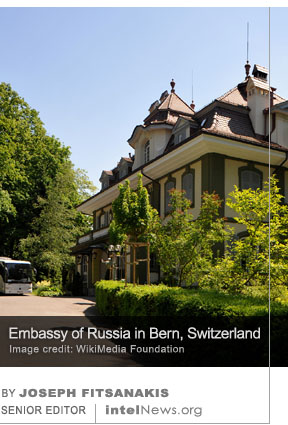 SINCE LATE FEBRUARY, WHEN Russian troops invaded Ukraine, over 500 Russian diplomats have been expelled from Western countries. Even former Russian allies have contributed to the growing list of expulsions —most recently Bulgaria, which
 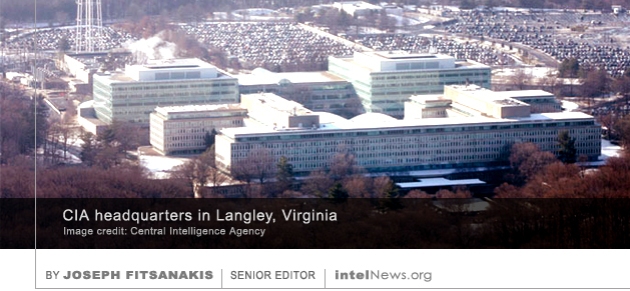 MOST CASES OF THE so-called “Havana syndrome”, a mysterious medical condition affecting mostly American government officials abroad, are unlikely to have been caused by a directed energy weapon or other device constructed by a foreign adversary, according to the United States Central Intelligence Agency. The condition is believed to have afflicted around 1,000 American and Canadian diplomats around the world in recent years, and many claim it is the result of a mystery weapon built by Russia or other adversaries of the United States.
 A NEW REPORT BY the United States National Academies of Sciences, Engineering, and Medicine, has found that the so-called ‘Havana Syndrome’, which afflicted American and Canadian diplomats in Cuba and China in 2016 and 2017, was likely caused by directed microwave radiation. The study, which was commissioned by the US Department of State, is the latest in a
 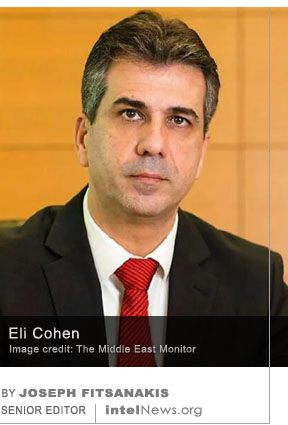 Israel’s minister of intelligence has said Bahrain and Oman could follow the United Arab Emirates in establishing diplomatic relations with Israel, following last week’s historic announcement. Israel said on Thursday that the UAE had
  Russian authorities detained three American diplomats because they allegedly tried to enter a highly secret weapons testing site in northern Russia, according to reports. The site in question is located near the northern Russian city of Severodvinsk. The city is home to a number of military shipyards and is thus restricted for non-Russians. The latter require a special permit to enter it.
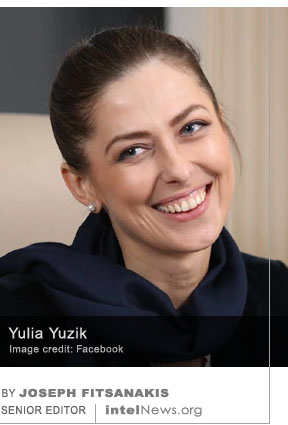 In a surprising move last week, Iranian authorities arrested a Russian journalist and expert on the Caucasus region, whom they accused of spying for Israel. They later agreed to release her following significant diplomatic pressure from Russia. But the move surprised observers, because Iran rarely acts in ways that have the potential to damage its close relations with Moscow.
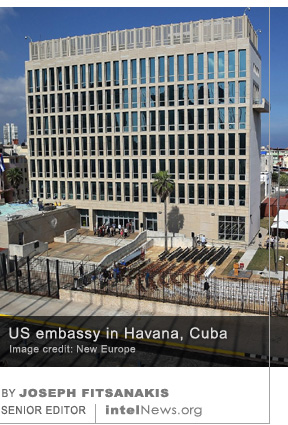 A series of alleged “sonic attacks” by a mysterious weapon may have caused the brains of American diplomats who served at the United States embassy in Cuba to shrink, according to a new scientific study. In 2017 Washington
 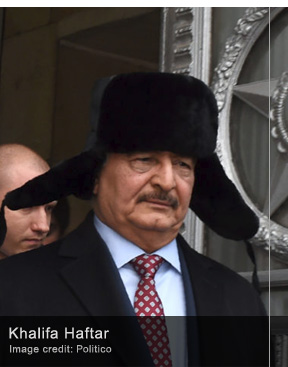 Several European Union member states, led by Italy, have criticized France for blocking a joint resolution calling on all warring factions in Libya to cease all hostilities and return to the negotiations table. The latest round of hostilities was sparked by an all-out attack by a group calling itself the Libyan National Army (LNA). The commander of the LNA is Field Marshal Khalifa Haftar, an old adversary of the Libyan leader Muammar al-Gaddafi, who lived in the United States under Washington’s protection for several decades. In 2011, following an uprising that toppled Gaddafi, Haftar returned to Libya and launch a military campaign from the eastern city of Tobruk. Since that time, he has led the LNA in a war of attrition against the United Nations-backed Government of National Accord (GNA), which is based in the Libyan capital Tripoli.
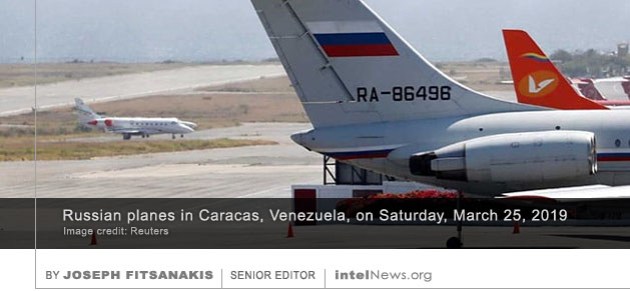 Russian media reports have confirmed that an airplane carrying 100 Russian troops arrived in Caracas on Saturday, causing tensions to rise between Washington and Moscow over the deepening crisis in Venezuela. The arrival of the Russian troops in the Venezuelan capital was first reported on Saturday morning by Venezuelan reporter Javier Mayorca, who said on Twitter that two Russian military airplanes had landed in Caracas. The reporter said that an Antonov An-124 Ruslan cargo plane belonging to the Russian Air Force could be seen on the tarmac of the Simón Bolívar International Airport in the Venezuelan capital. Another, smaller aircraft, also bearing the Russian flag on its fuselage, landed shortly afterwards, said Mayorca.






 intelNews.org
Ireland halts issuances of Russian diplomatic visas due to espionage concerns
February 18, 2024 by Joseph Fitsanakis 2 Comments
In April 2022, Ireland expelled four Russian diplomats, which it claimed were undercover intelligence officers. A subsequent report by the London-based Times newspaper alleged that a major reason Dublin had expelled the diplomats was their “efforts to cultivate contacts with dissident republicans and loyalist paramilitaries” in the Republic of Ireland and in Northern Ireland, which is British soil. The report added that at least one of the four expelled Russian diplomats was believed to be an intelligence officer for the Main Intelligence Directorate of the General Staff of the Russian Armed Forces —widely known by its Cold War-era initials, GRU.
On February 10, The Irish Times alleged that the Irish government was “refusing to allow Russia to replace diplomats assigned to its Dublin embassy […] due to concerns over espionage”. The article went on to claim that Russia’s diplomatic presence in Ireland had “dropped by half” and was causing a “tense standoff” between Ireland and Russia. It also quoted a spokesman from the Russian embassy in Dublin, who decried Ireland’s “unacceptable visa and accreditation policy”. The Russians told the paper that their embassy was staffed by just eight administrative staff and six diplomats.
On February 17, The Irish Times said it had corroborated the Russian officials’ claims by speaking with Micheál Martin, Ireland’s Deputy Prime Minister and Minister for Foreign Affairs. Martin was approached by the newspaper’s reporters in Germany, where he attended the Minich Security Conference. Martin told The Irish Times that the Irish Department of Foreign Affairs was carefully “scrutinizing” every new application for a diplomatic visa by the Russian government. The reason for the careful scrutiny, said Martin, was a number of advisories issued by Ireland’s intelligence services, suggesting “that other activities were underway” at the Russian embassy and that some embassy staff “were not actually diplomats but were performing intelligence functions”. Martin added that the Irish government had determined “15 diplomats should be adequate for [Russia’s] needs” in Ireland.
► Author: Joseph Fitsanakis | Date: 18 February 2024 | Permalink
Filed under Expert news and commentary on intelligence, espionage, spies and spying Tagged with diplomacy, Dublin (Ireland), Ireland, Micheál Martin, News, Russia, Russian embassy in Ireland