News you may have missed #890

Kim Kuk-giBy IAN ALLEN | intelNews.org
►►US DEA agents given prostitutes and gifts by drug cartels. US Drug Enforcement Administration agents allegedly had “sex parties” with prostitutes hired by Colombian drug cartels overseas over a period of several years, according to a report released Thursday by the Justice Department. Former police officers in Colombia also alleged that three DEA supervisory special agents were provided money, expensive gifts and weapons from drug cartel members. Seven of the 10 DEA agents alleged to have participated in gatherings with prostitutes and received suspensions of two to 10 days.
►►Polish lieutenant accused of spying for Russia. A Polish Air Force pilot allegedly copied several thousand flight plans for F-16 fighters and handed them to Russian intelligence. According to Polish media, the airman was arrested by authorities last November, but the information has only recently emerged. The pilot was allegedly suspended from his duties, his passport was confiscated, and he was banned from leaving the country. Some reports suggest that soon after the arrest of the lieutenant, a Russian diplomat was expelled from the country for spying.
►►North Korea claims arrest of South Korean spies. North Korea said it had arrested two South Koreans engaged in espionage. The two arrested men, identified as Kim Kuk-gi (see photo) and Choe Chun-gil, were presented at a press conference in Pyongyang attended by journalists and foreign diplomats. A North Korean media report said Kim and Choe had gathered information about North Korea’s “party, state and military secrets”. It was not immediately clear where or when the two men were arrested. In Seoul, the country’s intelligence agency said the charge that the two men were working for the agency was “absolutely groundless”.

Sri Lanka expels Indian spy official for meddling in elections

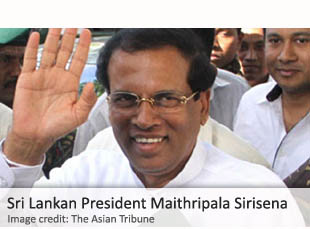
Maithripala SirisenaBy IAN ALLEN | intelNews.org
The government of Sri Lanka has expelled a senior Indian intelligence official, accusing him of meddling in national elections that took place earlier this month. Sri Lanka’s President, Mahinda Rajapaksa, stepped down on January 9 after losing a nationwide electoral contest to his former cabinet aide and main contender for the post, Maithripala Sirisena. Sirisena led a coalition of opposition parties and figures, including several of Rajapaksa’s government ministers, who defected to the opposition en masse in the months leading to the election. Rajapaksa’s defeat surprised observers, who believed he would easily win a successive third term in office. Since 2005, when he was first elected president, Rajapaksa led an all-out military campaign against the Liberation Tigers of Tamil Eelam (LTTE, also known as Tamil Tigers), after dismissing a prior truce deal between the government and the separatist group as “treasonous”. Under his leadership, the Sri Lankan military drove the Tigers out of Sri Lanka’s entire Eastern Province, reducing the extent of the group’s territorial control by 95%. However, relations with India, a traditional Sri Lankan ally, deteriorated drastically under Rajapaksa’s leadership. New Delhi became concerned that Colombo was making too many openings toward India’s geopolitical rival China. Late last year the Indian government protested after Sri Lanka permitted Chinese submarines to dock there without first informing its northern neighbor. On December 28, Sri Lankan media alleged that the senior representative of India’s Research and Analysis Wing in Colombo had been expelled from the country due to his behind-the-scenes support of the opposition’s electoral campaign. According to Sri Lankan sources, it was the Indian intelligence official who convinced Sirisena to resign from President Rajapaksa’s cabinet and run against him. The Indian intelligence operative then hosted secret meetings between Sirisena and other opposition figures, during which a united political front against Rajapaksa was formed. The allegations were also reported by the Reuters news agency on January 18, in an article that cited “political and intelligence sources” in Sri Lanka and India. New Delhi denied the allegations, saying that the intelligence official had been replaced because his overseas tour had expired, not because he had been expelled by authorities in Colombo. Meanwhile, the newly installed President Sirisena said he intends visit New Delhi on his first foreign trip in February, adding that India will form his government’s “first, main concern” on matters of foreign policy.

Russia expels Polish, German diplomats in ongoing spy row

Polish embassy in MoscowBy JOSEPH FITSANAKIS | intelNews.org
The Russian government has formally expelled several Polish and German diplomats in what appears to be a tit-for-tat move, following the removal of Russian envoys from Warsaw and Berlin on charges of espionage. The Polish government expelled a number of Russian diplomats last week, after it announced the arrest of two Polish citizens in Warsaw, on charges of spying for a foreign intelligence agency. Polish media reported that a colonel in the Polish Army had been arrested by security personnel for operating as an unregistered agent of an unnamed foreign country. Subsequent media reports said a second man, a lawyer with dual Polish-Russian citizenship, had also been arrested. According to unconfirmed Polish media reports, the two men had been recruited by the GRU, Russia’s military intelligence agency. Last Friday, Polish media reports said that four Polish diplomats stationed in Moscow had been given 48 hours to leave the country. One report suggested that the diplomats included an employee of the political section of the Polish embassy in the Russian capital, as well as three military attachés. The four had reportedly left the country by Sunday night. Authorities in Moscow said they had been forced to take the step of expelling the Polish diplomats following Warsaw’s “unfriendly and unfounded step” of ordering a number of Russian envoys to leave Poland. The four Poles were officially declared “unwanted persons” in Russia for “activities incompatible with their [diplomatic] status”, which is considered code-language for espionage. Also on Monday, the Russian Ministry of Foreign Affairs ordered the expulsion from Moscow of a German diplomat, just hours after a Russian diplomat was asked to leave the German city of Bonn by German authorities. Diplomatic sources said the German diplomat, a female employee at the German embassy in Moscow, was expelled in direct response to the earlier removal of the Russian diplomat, who was exposed as a spy following an extensive surveillance operation that lasted several months. German authorities refused to comment on the case. In Poland, Minister of Foreign Affairs Grzegorz Schetyna said simply that Warsaw “now considered the matter closed”.

Aruba releases Venezuelan ex-spy despite US calls to detain him

Hugo Carvajal BarriosBy IAN ALLEN | intelNews.org
The former director of Venezuela’s military intelligence, who had been arrested in Aruba following a request by the United States for his capture, has been released, sparking protests from Washington. On July 24, authorities in the Dutch-controlled Caribbean island announced the arrest of Hugo Carvajal Barrios, former director of Venezuela’s Dirección General de Inteligencia Militar (DGIM). Carvajal, a close associate of the country’s late president Hugo Chavez, was accused by the US Department of the Treasury in 2008 of weapons and drugs smuggling. According to the US government, Carvajal was personally involved in illegally providing weapons to the Revolutionary Armed Forces of Colombia (FARC), a leftwing guerrilla group engaged in a decades-long insurgency war against the government of Colombia. It also accused the Venezuelan official of helping the FARC smuggle cocaine out of the country, in a bid to help them raise funds to support their insurgency against Colombian authorities. In January of this year, Caracas appointed Carvajal consul-general to Aruba. Aruban officials told reporters last week that, although Carvajal held a Venezuelan diplomatic passport, he had not yet received his official diplomatic accreditation from the Aruban authorities at the time of his arrest, and was therefore not an accredited diplomat. By the end of last week, it appeared almost certain that Carvajal would be extradited to the US. But the Dutch government suddenly reversed its position on Monday and decided to release Carvajal, who has reportedly been expelled from Aruba and declared persona non grata (unwanted person). Some observers, including Venezuela’s former ambassador to the United Nations, Milos Alcalay, opined that the Dutch territory reversed its decision following “diplomatic threats” by Venezuela, “entailing severe economic relations”. Read more of this post

‘Diplomatic earthquake’ as Germany halts spy cooperation with US

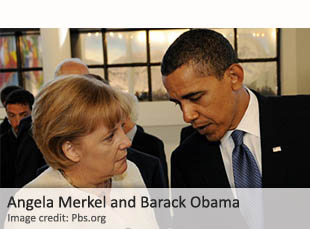
Angela Merkel and Barack ObamaBy JOSEPH FITSANAKIS | intelNews.org
The German government has instructed its intelligence agencies to limit their cooperation with their American counterparts “to the bare essentials” until further notice, according to media reports. The move follows news that Berlin requested on Thursday the immediate removal from Germany of the United States Central Intelligence Agency chief of station —essentially the top American intelligence official in the country. The request came after two German citizens, one working for the BND, Germany’s main external intelligence organization, and one working for the country’s Federal Ministry of Defense, were allegedly found to have been secretly spying for the US. German media reported on Thursday that the temporary halt in Berlin’s intelligence collaboration with Washington applies across the spectrum, with the exception of areas directly affecting tactical security concerns for Germany, such as the protection of its troops in Afghanistan, or defending against immediate terrorist threats. Sources in the German capital claimed that the removal of the CIA station chief was technically a “recommendation for his departure”, and did not constitute an official diplomatic expulsion. However, German observers described the incident as a “diplomatic earthquake”, which would have been unthinkable as a policy option for the German government, barring actions against “pariah states like North Korea or Iran”. This is not the first time an American intelligence officer has been asked to leave Germany. Berlin expelled another CIA officer in the 1990s, after it emerged that the American intelligence Agency had tried to recruit a German official at the Federal Ministry for Economic Affairs. However, unlike the current imbroglio, the previous spy affair was handled discretely and with almost no media fanfare, as is customary among allies. The decision to recommend the CIA station chief’s removal was reportedly made at a senior governmental level, following a “fruitless” telephone exchange between CIA Director John Brennan and Klaus-Dieter Fritsche, the coordinator between the German Chancellery and the BND. According to German newsmagazine Der Spiegel, Brennan offered Fritsche no apology and had “nothing to contribute other than clichés about transatlantic ties”, as well as his expressed irritation about the way the media were handling the incident. Read more of this post

Ukraine expels Russian diplomat for ‘spying activities’

Embassy of Russia in KievBy JOSEPH FITSANAKIS | intelNews.org
The Ukrainian government has issued an expulsion order for an unidentified Russian diplomat, who was detained on Wednesday for allegedly engaging in “spying activities”. On Thursday, Ukrainian government officials announced that a Russian naval attaché stationed in Ukrainian capital Kiev had been declared persona non grata (an unwelcome individual) for “engaging in acts incompatible with his diplomatic status”. The phrase is used in the international legal vernacular to describe an accredited diplomat engaging in intelligence operations abroad without the consent of his or her host nation. The Ukrainian Ministry of Foreign Affairs told reporters that the attaché had been found to “engage in spying activities”. Initially, ministry officials did not specify the nature of the Russian diplomat’s alleged spying activities. Later, however, in response to a question by a journalist, Ukrainian government representatives said that the diplomat was collecting intelligence on military and political cooperation between Ukraine and the North Atlantic Treaty Organization. At a separate public briefing, Maryna Ostapenko, spokeswoman for the SBU, Ukraine’s counterintelligence agency, said the Russian diplomat was in fact an accredited intelligence officer, who was detained “while committing spying activities” on April 30. She told reporters that the diplomat was “caught red-handed receiving classified material from his source”. Ostapenko later described the source as an unidentified colonel in the armed forces of Ukraine. A press release by the Ukrainian Ministry of Foreign Affairs said that the diplomat had been ordered to “leave the territory of the country [of Ukraine] as soon as possible”. There has been no immediate response from the Kremlin. Read more of this post

News you may have missed #858

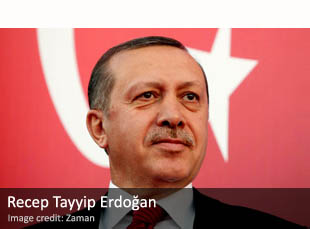
Recep Tayyip ErdoğanBy IAN ALLEN | intelNews.org
►►The FBI facilitates NSA’s domestic surveillance. Shane Harris writes in Foreign Policy: “When the media and members of Congress say the NSA spies on Americans, what they really mean is that the FBI helps the NSA do it, providing a technical and legal infrastructure that permits the NSA, which by law collects foreign intelligence, to operate on US soil. It’s the FBI, a domestic US law enforcement agency, that collects digital information from at least nine American technology companies as part of the NSA’s PRISM system. It was the FBI that petitioned the Foreign Intelligence Surveillance Court to order Verizon Business Network Services, one of the United States’ biggest telecom carriers for corporations, to hand over the call records of millions of its customers to the NSA”.
►►Egypt expels Turkish ambassador. Egypt says it has ordered the Turkish ambassador to be expelled, following comments by Turkey’s prime minister. Saturday’s decision comes after Turkish Prime Minister Recep Tayyip Erdoğan renewed his criticism of Egypt’s new leaders earlier in the week. Turkey and Egypt recalled their ambassadors in August following Turkey’s sharp criticism of Egypt’s leaders and Mohamed Morsi’s ouster. Turkey’s ambassador returned to Egypt a few weeks later, but Egypt has declined to return its ambassador to Turkey. Turkey’s government had forged a close alliance with Morsi since he won Egypt’s first free presidential election in June of 2012.
►►The internet mystery that has the world baffled. For the past two years, a mysterious online organization has been setting the world’s finest code-breakers a series of seemingly unsolvable problems. It is a scavenger hunt that has led thousands of competitors across the web, down telephone lines, out to several physical locations around the globe, and into unchartered areas of the “darknet”. Only one thing is certain: as it stands, no one is entirely sure what the challenge —known as Cicada 3301— is all about or who is behind it. Depending on who you listen to, it’s either a mysterious secret society, a statement by a new political think tank, or an arcane recruitment drive by some quasi-military body. Which means, of course, everyone thinks it’s the CIA.

News you may have missed #853

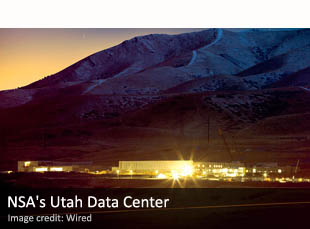
NSA's Utah Data CenterBy IAN ALLEN | intelNews.org
►►Meltdowns hobble NSA data center. Electrical surges at the National Security Agency’s massive data center in Utah have delayed the opening of the facility for a year as well as destroying hundreds of thousands of dollars in kit, the Wall Street Journal reports. Ten “meltdowns” in the past 13 months have repeatedly delayed the Herculean effort to get the spy agency’s colossal snooping facility up and running, according to project documents reviewed by the newspaper.
►►Uganda expels Sudan diplomat accused of spying. Sudanese diplomat Jad-el-Seed Mohammed Elhag has been expelled from Uganda on suspicion of espionage, Ugandan foreign ministry officials said Tuesday. “The reasons why he was expelled was that the activities he was involved in were beyond the norms and requirements of his tenure”, Uganda Ministry of Foreign Affairs spokesman Tayebwa Katureebe said. “These are issues of diplomacy and of two countries, which are not addressed normally in the press, but basically the main reason was espionage”, he said, declining to go into detail.
►►FBI accused of using no-fly list to recruit informants. A lawsuit in New York alleges that the FBI is violating the law by putting Muslim-Americans on the no-fly list not because of a “reasonable suspicion” of terrorist associations, but as a form of blackmail to coerce them into becoming informants at mosques and in their communities. Is this the beginning of the end for the US federal government’s no-fly list? According to the complaint, New York resident Muhammad Tanvir landed on the no-fly list after refusing an FBI request to work as an informant in his predominantly Muslim community.

Russia expelled ex-US embassy official who rebuffed spy advances

US embassy in MoscowBy JOSEPH FITSANAKIS | intelNews.org |
Russian authorities expelled a former American diplomat living in Moscow earlier in May, less than two months after he allegedly rebuffed an offer to spy on the United States for Russia. The former official, Thomas Firestone, served two tours of duty as a Resident Legal Adviser at the American embassy in Moscow. He later joined the Moscow office of Baker & McKenzie, a US-based law firm with offices worldwide. Firestone had frequent and direct dealings with the Russian government in his capacity as a specialist in the Foreign Corrupt Practices Act. This US law permits the prosecution of bribery cases in American courts. According to The New York Times, Firestone was approached in March of this year by operatives of the Russian Federal Security Service, the FSB, one of the main successor agencies of the Soviet KGB. Citing “people familiar with the case”, The Times claims that the American lawyer turned down an offer to spy for Moscow on behalf of the FSB. On May 5, however, while returning to Moscow from a trip abroad, Firestone was detained at Sheremetyevo International Airport, 18 miles outside of the Russian capital. After a 16-hour detention, the former Justice Department official was told that he had been declared persona non grata (undesirable) and was to be denied entrance into Russia; he was promptly placed on a flight to the US, which departed shortly afterwards. The Times says that it remains unclear at this point whether Firestone’s expulsion was directly connected to his alleged refusal to give in to the FSB’s espionage advances. However, the paper claims that the matter has been raised with the Russian government by the administration of US President Barack Obama. Read more of this post

Iranian diplomats expelled from Bosnia over spying allegations

Bosnia inside the former YugoslaviaBy JOSEPH FITSANAKIS | intelNews.org |
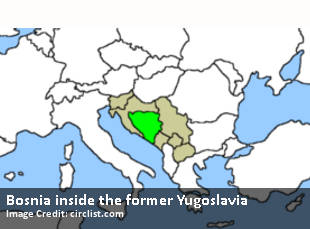
In a move described as extremely rare, authorities in Bosnia have expelled two diplomats from Bosnian ally Iran over allegations that they are intelligence officers. However, the expulsion process took a while, which arguably reveals the complicated relationship between the two predominantly Muslim nations. The two diplomats were initially declared personae non grata in late April, when the Bosnian government ordered that they leave the country by April 30. According to Bosnia and Herzegovina’s Ministry of Security, the two envoys, Jadidi Sohrab and Hamzeh Dolab Ahmad, third and second secretaries respectively at the embassy of the Islamic Republic of Iran in Sarajevo, had engaged in activities that were “in violation of their diplomatic protocol”. Word has it that the Bosnian order was issued shortly after Israeli intelligence informed the Bosnians that the two Iranian diplomats were in fact employees of the Ministry of Intelligence and National Security of the Islamic Republic of Iran (MISIRI). The Israelis also said that one of the two men had been spotted in India, Georgia and Thailand, all of which were sites of a simultaneous bombing campaign in February of 2012 against Israeli interests —though there is no public evidence that he had an active role in the attacks. On May 9, however, Bosnian media reported that the two Iranian diplomats were still in Sarajevo, more than a week since the expiration of the deadline they had been given to leave the country. Why the delay? According to Dr. John Schindler, Iran watcher and professor of national security affairs at the United States Naval War College, the move to expel the two Iranians had been “stymied by the establishment” in Bosnia, which remains decidedly pro-Iranian. Read more of this post

Venezuela expels US diplomats as Hugo Chávez is pronounced dead

Hugo ChavezBy JOSEPH FITSANAKIS | intelNews.org |
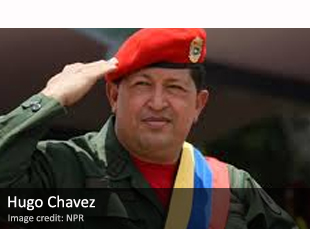
The government of Venezuela moved yesterday to expel two American diplomats from the country, shortly before officially pronouncing the death of Venezuelan President Hugo Chávez. The expulsions are seen by some as attempts to curtail communication between United States officials and the Venezuelan opposition in the aftermath of Chávez’s death. In a speech televised live on Venezuelan television on Tuesday, Vice President Nicolás Maduro said US Air Force attaché Colonel David Delmonaco, who was stationed at the American embassy in Venezuelan capital Caracas, would be expelled. “Mr. David Delmonaco has 24 hours to pick up his belongings and leave this country”, said Maduro, who is widely reputed to succeed Chávez. He added that the American attaché had been engaged in efforts “to destabilize the country”, but did not elaborate on the allegation. Shortly afterwards, Venezuelan Minister of Foreign Affairs Elias Jaua told a press conference that a second US Air Force attaché, who remains unnamed, had been declared persona non grata and would be expelled from the country along with Delmonaco. Later on the same day, US government spokesman Colonel Todd Breasseale confirmed the diplomatic expulsions. He told journalists that the US was “aware of the allegations made by Venezuelan Vice President Maduro over state-run television in Caracas”, adding that he was in a position to confirm that “our Air Attache Colonel David Delmonaco, is en route back to the United States”. But the US Department of State said it “completely reject[ed] the Venezuelan government’s claim that the United States is involved in any type of conspiracy to destabilize the Venezuelan government”. Read more of this post

Norway, Sudan, expel diplomats over spying allegations

PST headquarters in OsloBy JOSEPH FITSANAKIS | intelNews.org |
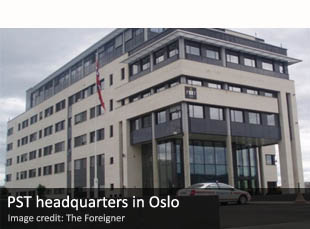
Norway and Sudan have announced tit-for-tat diplomatic expulsions over allegations of espionage. On Tuesday, the Norwegian Ministry of Foreign Affairs announced that a Sudanese diplomat stationed in the Norwegian capital Oslo would be expelled. The diplomat, whose name and position at the Sudanese embassy were not disclosed, allegedly engaged in “activities incompatible with his status under the protection of the Vienna Convention” —standard diplomatic lingo for espionage. The Reuters news agency reported that the diplomat was expelled after Norway’s main counterintelligence intelligence agency, the Police Security Service (PST), arrested and charged a 38-year-old Sudanese immigrant with espionage. The unnamed man, who was arrested in Trondheim, said he had been instructed by Sudanese embassy personnel to spy on the activities of the Sudanese expatriate community in Norway. He had previously been observed by the PST having a meeting with the same Sudanese diplomat who was subsequently expelled from Norway. Both men were arrested on Tuesday. While the unnamed diplomat has been expelled, the 38-year-old immigrant remains imprisoned in Oslo on espionage charges. According to a statement from the Norwegian Ministry of Foreign Affairs, Tuesday’s arrests marked the first case of ‘immigration intelligence’-related charges in the Scandinavian country since the 1970s. Early on Wednesday, the Sudanese Ministry of Foreign Affairs announced that it was expelling a Norwegian diplomat in response to Oslo’s move on the previous day. Read more of this post

Why did Canada suddenly suspend all diplomatic ties with Iran?

John BairdBy JOSEPH FITSANAKIS | intelNews.org |
On Friday September 7, 2012, John Baird, Canada’s Minister of Foreign Affairs, announced that Canada was suspending all diplomatic relations with Iran and was expelling Iranian diplomats from the country, effective immediately. Additionally, said Baird, Ottawa would officially list Iran as a state sponsor of terrorism under the Canadian Justice for Victims of Terrorism Act. By the time Baird made his announcement, all Canadian diplomats serving in Iran were on their way home. Iranian diplomats in Canada were given five days to leave the country. Relations between the two countries have been rocky since at least 2003, when Canadian photographer Zahra Kazemi was killed under detention in Tehran, and Iran has not had a full ambassador in Canada for nearly five years. Still, the news surprised even former government insiders in Canada. Ray Boisvert, until recently Assistant Director of the Canadian Security Intelligence Service, described Ottawa’s move as “unprecedented”. What was it that caused the final rupture in Canadian-Iranian relations? Why expel the Iranian diplomats now? Leading Middle Eastern experts in Canada cannot seem put their finger on a specific reason. Iran observer James Devine, of Canada’s Mount Allison University, told CBS that Ottawa’s move was “not tied to a specific event”. The Canadian former Ambassador to Tehran, John Mundy, said he believed the break in relations was not tied to a direct threat against Canadian interests. But CBS said many Iranian-Canadians believe the drastic move by the Canadian government should be seen as “an immediate sign” of a looming military attack on Iran by Western powers or Israel. In a recent article on the subject, Canadian political analyst Brian Stewart argued that Ottawa’s “overnight liquidation” of its diplomatic relations with Tehran must be rooted in “new intelligence” showing that Iran “absolutely poses a security threat in Canada”.   Read more of this post

Senior Soviet KGB ex-official found dead in Moscow apartment

Leonid ShebarshinBy JOSEPH FITSANAKIS | intelNews.org |
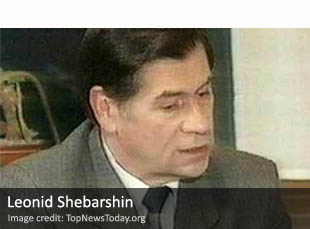
Leonid Shebarshin, a retired General of the KGB, who was often referred to as “the last Soviet spy” was found dead in his downtown Moscow apartment over the weekend. Police said a pistol and an apparent suicide note were found next to his body. In a separate statement on Saturday, law enforcement investigators said Shebarshin had shot himself. Born in 1935, Shebarshin was posted as an interpreter at the Soviet embassy in Islamabad, Pakistan, shortly after graduating from the Moscow Institute of International Relations. He eventually became personal assistant to the Soviet Ambassador to Pakistan, who recommended him to the KGB. Shebarshin returned to Moscow in 1962 to attend the KGB’s training school, before being sent back to Pakistan in 1964, this time as an intelligence officer. In 1975, he moved to India, where he became rezident (station chief) of the KGB’s field station in New Delhi. Two years later he was transferred to the KGB’s field station in Tehran, Iran, which he headed through the 1979 Islamic Revolution. In 1982, however, his meteoric rise within the ranks of the KGB was temporarily halted by the defection of Soviet Vladimir Kuzichkin, a Major in the KGB, who escaped to Turkey with the help of the British Secret Intelligence Service —also known as MI6. The British brought Kuzichkin in contact with the CIA, which in turn passed along the defector’s debriefing notes to the government of Iran. This information led to the summary expulsion from Tehran of nearly 20 Soviet KGB field officers, including Shebarshin himself. After a brief period in Moscow, Shebarshin returned to the field, this time to Soviet-occupied Afghanistan, where he traveled at least 20 times. He was in Russia on August 19, 1991, during the so-called ‘August coup’, when a group of hardline communist officials took power in Moscow and temporarily arrested Soviet Premier Mikhail Gorbachev. But, even though he headed the KGB’s First Chief Directorate (now renamed to Foreign Intelligence Service), Shebarshin persisted in remaining neutral during the coup, and spent all of August 19 playing tennis at his summer residence. Read more of this post

News you may have missed #680

General Ziauddin KhawajaBy IAN ALLEN | intelNews.org |
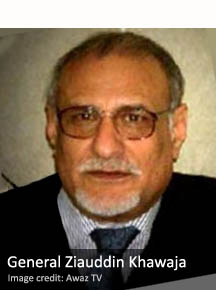
►►Did Pakistani ex-leader know bin Laden’s hideout? General Ziauddin Khawaja, who was head of Pakistan’s Inter Services Intelligence directorate (ISI) from 1997 to 1999, claims Pakistan’s former President, Pervez Musharraf, knew bin Laden was in Abbottabad.
►►Sweden expels Rwanda diplomat for spying. Sweden has expelled a Rwandan diplomat for allegedly spying on Rwandan exiles there, according to the Associated Press. The diplomat, Evode Mudaheranwa, was sent back to Rwanda last week, according to a sources close to the Swedish government. Mudaheranwa was the Rwandan embassy’s second-highest-ranking official. The Swedish action comes as amid charges that Rwandan President Paul Kagame’s government sends agents overseas to silence critics.
►►Mossad continues to use foreign passports. Agents of Israel’s Mossad intelligence agency are still using foreign passports to conduct undercover operations in other countries, according to a report in The Sunday Times of London. The paper says that new evidence shows that foreign nationals residing in Israel are willingly allowing the Mossad to use their passports. The Times interviewed several Israelis who revealed details of how they were approached by intelligence officials about the possibility of volunteering their passports for the Mossad.