February 26, 2018
by Joseph Fitsanakis
 Latvian defense officials have hinted that Russia is trying to destabilize Latvia’s economy, as a Western-backed anti-corruption probe at the highest levels of the Baltic country’s banking sector deepens. Developments have progressed at a high speed since Monday of last week, when Latvia’s Corruption Prevention and Combating Bureau arrested Ilmars Rimsevics, the longtime Governor of the Bank of Latvia —the country’s central bank. Bureau investigators said Rimsevics’ arrest related to charges that he received bribes in order to facilitate money laundering from Russia.
Rimsevics became deputy governor of the Bank of Latvia in 1992, just months after the country seceded from the Soviet Union. In 2001 he was promoted to governor, a post that he has held onto ever since. When the small Baltic country joined the European Union, in January 2014, Rimsevics automatically became a member of the Governing Council of the European Central Bank (ECB), which directs the Eurozone’s monetary policy and monitors the performance of the euro. But last week the Latvian government rescinded Rimsevics’ security clearance and a scheduled meeting of the ECB in Frankfurt took place without him.
This dramatic development underscores the troubled state of Latvia’s banking sector, which is a notorious reputation as one of Europe’s most lucrative money-laundering hubs. Soon after it gained its independence, the small country of 2 million became an attractive conduit for Russia’s nouveau riche seeking to funnel their money westward. The country’s sizeable Russian-speaking minority allowed the local banking sector to offer highly sought-after services in the Russian language, which further-facilitated its contacts with wealthy Russian clients. This was further-enhanced by Latvia’s integration into the economic structure of the European Union in 2014. But Western countries began voicing concerns about close links between Latvia’s banking sector and Russian oligarchs in 1996. By 2011, the United States Department of the Treasury had identified numerous Latvian banks as serious violators of laws designed to prevent money laundering. In 2014, and again in 2017, the Organized Crime and Corruption Reporting Project identified Latvia as part of an extensive international money-laundering scheme dubbed “the Russian Laundromat”.
Notably, Rimsevics was arrested less than a week after Washington vowed to impose penalties on ABLV, Latvia’s third largest bank, for “institutionalizing money laundering” and violating a host of financial sanctions imposed by the United Nations, including sanctions against North Korea’s nuclear program. There is no question, therefore, that Rimsevics’ dramatic arrest was designed to combat what The Financial Times recently called “a banking scandal on the Baltic”. In the past few hours, reports from Riga indicate that ABLV may be on the brink of collapse, being unable to withstand the financial effects of the public scandal that emerged in recent days.
But things are never simple in the Baltic region. Soon after Rimsevics’ release on bail, reports in the Latvian media pointed to alleged efforts by Russia to defame him, in an effort to further-tarnish the already damaged reputation of Latvia’s banking sector. On Tuesday of last week, the Latvian Ministry of Defense said it had evidence that Rimsevics was targeted in a “disinformation operation” directed from abroad. It added that there was a “high probability that [a] massive information operation” had been launched for “foreign centers” aimed at destabilizing Latvia’s banks. No evidence or further information about the allegation was revealed. But the Defense Ministry’s allegations seemed to be supported by an analysis of the relevant news reporting by the Atlantic Council’s Digital Forensics Research Lab in Washington.
On February 23, Latvia’s Prime Minister, Maris Kucinskis, and President, Raimonds Vejonis, seemed to endorse the Defense Ministry’s allegations. Despite the fact that both politicians have urged Rimsevics to resign “for the sake of the financial system”, they also warned that Latvia was under attack in an information war. The two men did not make specific allegations, but said that the information attacks experienced by Latvia were “identical” to those seen in recent years in France, Germany, and the United States. Meanwhile, shortly after his release, Rimsevics held a press conference in Riga, where he denied all charges against him. He accused Latvia’s private banks of conspiring against him and said he was the victim of “death threats” to destabilize the country. On the same day Moscow, Kremlin spokesman Dmitry Peskov said that Russia had no comment on the situation in Latvia. “This is an internal political matter for our Latvian comrades [and] we wouldn’t want to get involved”, he said.
► Author: Joseph Fitsanakis | Date: 26 February 2018 | Permalink
 THE UNPRECEDENTED GROWTH OF digital access in our time has revolutionized online user access to information. Yet, the same phenomenon is behind the growing power of individuals, groups and state actors to create and disseminate misinformation and disinformation with unprecedented intensity. In the case of misinformation, false, mistaken or otherwise misleading information is disseminated by unsuspecting users. When these actors are acting deliberately with the intention to mislead, deceive or confuse, their actions amount to disinformation.
 A FEW MONTHS AFTER France’s establishment of an agency to combat foreign disinformation, Sweden has announced the creation of a new government authority, whose mission is to defend against disinformation by foreign actors. Based in Karlstad, a city 200 miles west of Stockholm, the Swedish Psychological Defense Agency (PDA) was formally established on January 1. Its
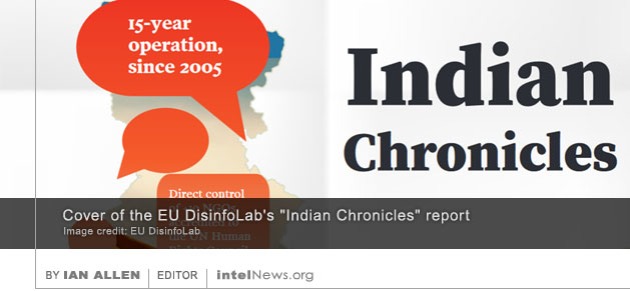 A TEAM OF RESEARCHERS in Belgium has uncovered one of the world’s largest known online disinformation networks, which has existed for 15 years and is believed to incorporate at least 750 fake media outlets in over 100 countries. The network, described by researchers as “one of the most persistent and complex operations” in the area of disinformation, is believed to exist in order to support the national interests of India.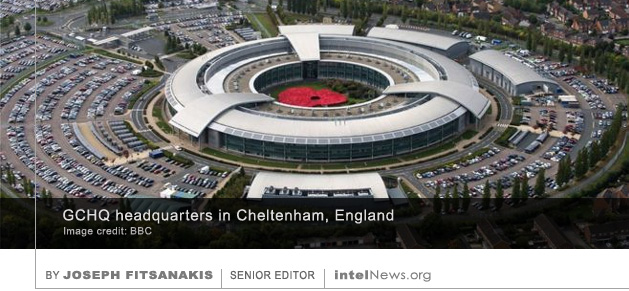
 The two main intelligence agencies of Belgium have published a declassified report in which they warn that domestic groups on the far left and far right of the political spectrum are using the COVID-19 pandemic to destabilize society. Among other things, these groups are spreading disinformation in order to incite violence and spread disillusionment with the Belgian authorities’ response to the coronavirus, according to the report.
 A cyberattack, coupled with a disinformation campaign, targeted the computer systems of the United States Department of Health and Human Services (HHS), in what officials believe was an effort to undermine America’s response to the coronavirus pandemic.
 Facebook has shut down a well-funded online campaign to support Sudan’s military regime, which some say is part of wider efforts by Egypt, the United Arab Emirates and Saudi Arabia to stop democratic reforms in Sudan. The northeast African country has experienced civil unrest for more than a year. In February Sudan’s longtime strongman, Omar Hassan al-Bashir, fell from power after 30 years, following prolonged popular protests. But the new military junta that succeeded him launched a
 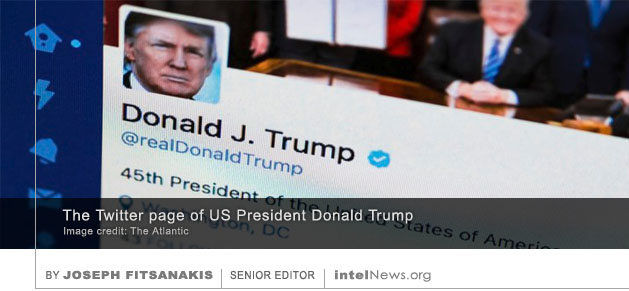 Several countries are behind organized efforts to influence electoral politics in the United States, with Russia being one among a growing list of culprits, according to experts.
  Russia “paved the way” for last November’s seizure of Ukrainian Navy ships by launching a major cyber attack and disinformation campaign aimed at Ukraine, according to a cyber security firm and the European Union. In what has become known as the Kerch Strait incident of November 25, border service coast guard vessels belonging to the Russian Federal Security Service (FSB) opened fire on three Ukrainian Navy ships that were attempting to enter the Sea of Azov through the Kerch Strait. All three Ukrainian vessels, along with crews totaling 24 sailors, were captured by the Russian force and remain in detention. Ukraine condemned Russia’s action as an act of war and declared martial law in its eastern and southern provinces. But Moscow said the incident had been caused by a provocation by the Ukrainian government, in a desperate effort to increase its popularity at home. Meanwhile, the three Ukrainian ships and their crews remain in Russia.







 intelNews.org
U.S. Pentagon ran secret COVID-19 anti-vaccination campaign to undermine China
June 17, 2024 by Ian Allen 1 Comment
According to the Reuters news agency, which uncovered the alleged plot, the psychological operation initially targeted the Philippines in the spring of 2020. During that time, the Southeast Asian nation relied heavily on the CoronaVac, also known as the Sinovac COVID-19 vaccine, which was manufactured by the Chinese biopharmaceutical firm Sinovac Biotech. The CoronaVac vaccine was approved for human consumption by the World Health Organization.
An investigation by Reuters determined that the U.S. Pentagon attempted to undermine the efficacy of the Chinese-manufactured vaccine, in order to sabotage the relations between China and the Philippines. Over time, the Pentagon project morphed into an anti-vax campaign that questioned the quality of Chinese-produced coronavirus test kits and Chinese-supplied face masks. There was also an attempt to stigmatize Chinese-produced medical supplies relating to COVID-19. The campaign argued that the coronavirus had originated in China, which made Chinese-manufactured medical supplies suspect.
The psychological operation utilized hundreds of fake social media accounts on multiple platforms, which were unified under the hashtag #Chinaangvirus —Tagalog for “China is the virus.” By early 2021, the campaign had expanded to the Middle East and Central Asia. Some social media posts claimed that Muslims should not be using the Sinovac COVID-19 vaccine because it contained pork gelatin and should thus be considered forbidden under Islamic law. These tactics raised objections by some U.S. government officials, notably from the State Department, who expressed them in meetings with Pentagon personnel. The secret campaign was terminated in June of 2021.
The Reuters news agency spoke to Greg Treverton, former chairman of the U.S. National Intelligence Council, which ensures that the work of the nation’s intelligence agencies reflect the government’s policy priorities. Treverton told the news agency that getting “as much vaccine in people’s arms as possible” would have been in the national interest of the U.S., adding that the Pentagon’s secret operation “crosses a line”. Reuters said that a senior Pentagon official acknowledged a secret psychological operation was indeed launched, in order to “disparage China’s vaccine in the developing world.” However, the official “declined to provide details” of the operation.
► Author: Ian Allen | Date: 17 June 2024 | Permalink
Filed under Expert news and commentary on intelligence, espionage, spies and spying Tagged with biomedical intelligence, China, Coronavirus, COVID-19, disinformation, News, Philippines, psyops, Sinovac Biotech, social networking, US DoD