Venezuela claims capture of ‘American spy’ near major oil refining complex
September 14, 2020 Leave a comment
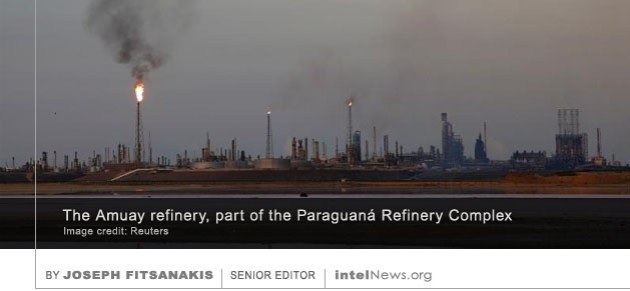 The President of Venezuela, Nicolás Maduro, announced on Friday the arrest of an alleged “American spy”, who was reportedly arrested near the largest oil refinery complex in the country. The alleged spy, who has not been named, was reportedly in the vicinity of the Paraguaná Refinery Complex, which is known as the third largest refinery complex in the world. It combines the Amuay, Bajo Grande and Cardón refineries, which together produce nearly a third of Venezuela’s daily oil output.
During a live address on Venezuelan national television, Maduro said an American citizen had been arrested on Thursday in Falcon State, in Venezuela’s northeast. Falcon is the site of the Amuay and Cardón oil refineries and much of the local population is employed in the state-owned oil industry. The Venezuelan president said the alleged spy is “a marine” who was “serving on [Central Intelligence Agency] bases in Iraq” prior to arriving in Venezuela. He added that the alleged spy was “captured with large amounts of cash, large quantities of dollars and other items”. He did not elaborate further, but said the detainee was in the process of “giving a statement in custody”.
Maduro also said that Venezuelan security forces had foiled a separate plot to bomb El Palito, which is another oil refinery, located in Carabobo State. He then urged workers in oil refineries to “be on alert” in case more attacks are planned. Venezuela’s oil production has fallen to nearly a third of its peak output in 2009, when the country was producing 3.2 million barrels per day. The government blames the oil shortage on acts of sabotage from domestic and foreign enemies of President Maduro, but opposition parties claim that mismanagement and corruption are behind the demise of the Venezuelan oil industry.
Earlier this year, a Venezuelan court sentenced two American former servicemen to 20 years in prison for their role in what the Venezuelan media refer to as “enfrentamiento en El Junquito” (“El Junquito raid”), or “Operación GEDEÓN”. GEDEÓN refers to a failed coup plot carried out on May 3 and 4, 2020, by a group of up to 60 armed men. It is alleged that the coup was masterminded by Major General Clíver Alcalá Cordones, a retired member of Venezuela’s Bolivarian Army, with the support of Silvercorp USA, a private security group led by Jordan Goudreau, a Canadian-born former sergeant in the US Green Berets. The United States government has denied involvement in the coup plot.
► Author: Joseph Fitsanakis | Date: 14 September 2020 | Permalink
 American forces remain in Syria without a clear goal in sight, as the conflict there nears its 10-year anniversary, and with Russia having emerged as the principal guarantor of security in the war-torn country, according to insiders. In an
 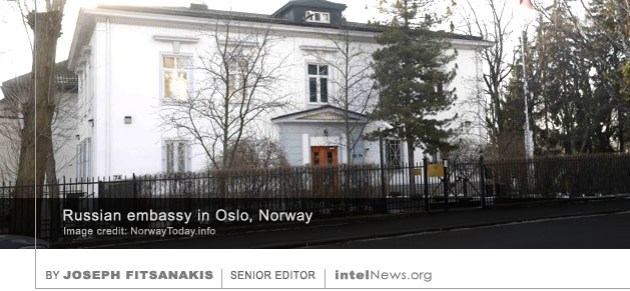 The government of Norway expelled a Russian diplomat on Wednesday, accusing him of committing espionage in a case that involves a Norwegian citizen, who has been arrested on charges of spying for Russia. Meanwhile local media named the Norwegian citizen involved in the case, while the Russian diplomat was also named yesterday in media reports.
 Authorities in Norway will not release the name of a man who was arrested on Saturday, reportedly after he met with a Russian intelligence officer in Oslo. The arrest of the unnamed man, who is a Norwegian citizen, was announced on Monday by the Norwegian Police Security Service, Norway’s counterintelligence agency.
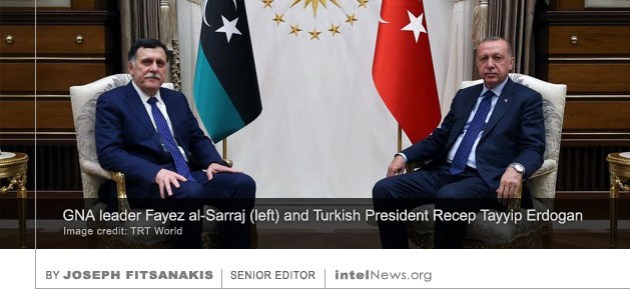 Turkish President Recep Tayyip Erdoğan has said his country is prepared to deploy troops to Libya, just days after Ankara surprised analysts by announcing an agreement with the embattled Libyan government in Tripoli. The Turkish-Libyan agreement has spurred angry reactions from Israel, Greece and Egypt, all of which are
 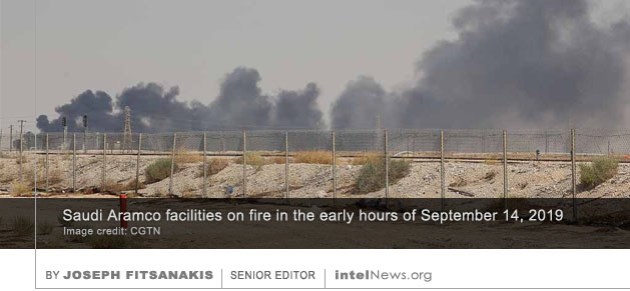 Saudi Arabia and the United States suffered “a total and embarrassing [intelligence] failure” in the lead-up to the drone strikes that shut down half of the kingdom’s oil production last month, according to Israeli sources. In the early hours of September 14, missiles
  United States officials are considering increasing substantially America’s intelligence-sharing with Saudi Arabia following last weekend’s drone attacks that halved the Kingdom’s oil production and shook global markets. The attacks occurred in the early hours of Saturday, September 14, at two refineries located in eastern Saudi Arabia. The refineries are owned by Aramco, Saudi Arabia’s government-owned oil conglomerate, and are part of the world’s largest crude oil processing facility. The massive fires caused by the attacks were contained within hours and no casualties were reported. But the facilities had to cease operation so that repairs could be completed. This cut Saudi Arabia’s oil production by close to 50 percent, which amounted to a 5 percent reduction in global oil production. The impact on the world’s financial markets was immediate: by Monday morning, oil prices had seen their most significant one-day surge since the 1991 Gulf War.
 The state-owned energy sector of Iran, one of the world’s most lucrative, has become a major target of international espionage since the imposition of new sanctions by the United States this year. The purpose of Washington’s sanctions is to limit the Islamic Republic’s ability to export energy, and by doing so end the country’s reliance on its primary source of income. It is estimated that Tehran’s energy exports have fallen by about 80 percent during the past year, and may continue to fall if the US has its way. This means that American and Iranian intelligence agencies are currently engaged in an intense war of espionage that concentrates on what remains of Iran’s oil exports. Iran continues to entice international buyers by selling energy at below-market prices, while sales are facilitated through the use of throwaway bank accounts that are difficult to trace. Exports are then carefully smuggled into overseas destinations through a variety of means.
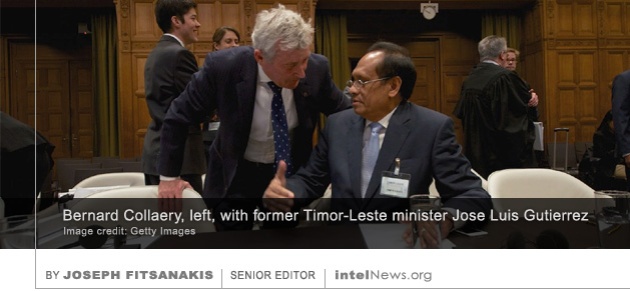 An Australian former intelligence officer will plead guilty to revealing an Australian spy operation against the impoverished nation of East Timor, which prompted international outcry and damaged Canberra’s reputation. IntelNews has covered the case of the former intelligence officer, known only as “Witness K.”
 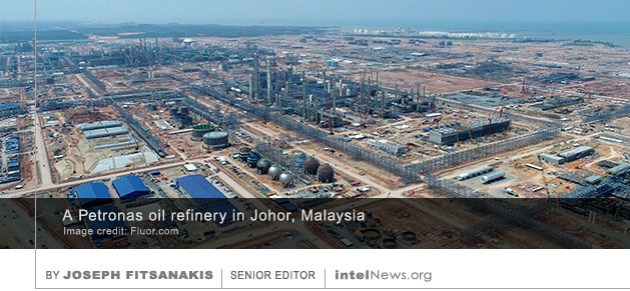 Citing “Western intelligence officials”, Israeli newspaper Haaretz said on Thursday that a deepening alliance between Malaysia and Iran is expected to enable Tehran evade some of the economic sanctions imposed on it by the United States. In the past, every time Washington has imposed economic sanctions on Iran, it has issued renewable waivers for a number of countries whose economies have historically depended on substantial Iranian energy imports. This is done in order to prevent these economies from entering a recession due to lack of access to sufficient energy supplies. This week, however, US President Donald Trump said that Washington would
 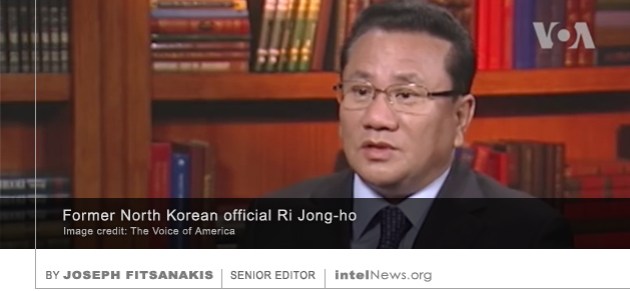 The government of North Korea uses intermediary firms in Singapore to import thousands of tons of Russian oil each year, according to a senior North Korean defector who has spoken publicly for the first time since his defection. Ri Jong-ho was a senior official in the Democratic People’s Republic of Korea under its previous leader, the late Kim Jong-il. He rose through the ranks of the Workers’ Party of Korea and was directly mentored by Kim, who personally appointed him to a post in Bureau 39. The powerful body is in charge of securing much-needed foreign currency for Pyongyang —often through illegal activities— and partly funds the personal accounts of the ruling Kim dynasty.






 intelNews.org
No prison for Australian former spy who disclosed controversial espionage operation
June 21, 2021 by Joseph Fitsanakis Leave a comment
A FORMER AUSTRALIAN SPY, who prompted international outcry by revealing a controversial espionage operation by Canberra against the impoverished nation of East Timor, has been given a suspended prison sentence. The case against the former spy, known only as “Witness K.”, first emerged in 2013. It is believed that Witness K. served as director of technical operations in the Australian Secret Intelligence Service (ASIS), Australia’s foreign-intelligence agency.
In 2013, Witness K. revealed an espionage operation that targeted the impoverished Pacific island nation of Timor-Leste, also known as East Timor. He alleged that ASIS officers, disguised as a renovation crew, bugged an East Timorese government complex. The information gathered from the spy operation allegedly allowed the Australian government to gain the upper hand in a series of complex negotiations that led to the 2004 Certain Maritime Arrangements in the Timor Sea (CMATS) treaty. The treaty awards Australia a share from profits from oil exploration in the Greater Sunrise oil and gas field, which is claimed by both Australia and East Timor.
In 2013, the East Timorese government took Australia to the Permanent Court of Arbitration in The Hague, claiming that the Australian government was in possession of intelligence acquired through illegal bugging. The claim was supported by Witness K., who argued that ASIS’ espionage operation was both “immoral and wrong” because it was designed to benefit the interests of large energy conglomerates and had nothing to do with Australian national security. It is worth noting that Witness K. said he decided to reveal the ASIS bugging operation after he learned that Australia’s former Minister of Foreign Affairs, Alexander Downer, had been hired as an adviser to Woodside Petroleum, an energy company that was directly benefiting from the CMATS treaty.
Read more of this post
Filed under Expert news and commentary on intelligence, espionage, spies and spying Tagged with ASIS, Australia, Bernard Collaery, Certain Maritime Arrangements in the Timor Sea treaty, East Timor, economic espionage, energy resources, News, Witness K.