Turkey arrests German embassy lawyer on espionage charges
November 21, 2019 2 Comments
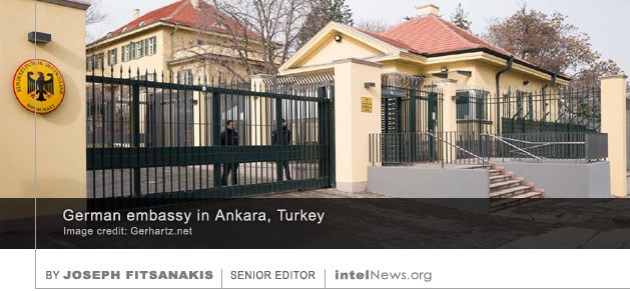 Turkish authorities have charged a lawyer working for the German embassy in Ankara with espionage, further-straining the already tense relationship between the two North Atlantic Treaty Organization allies. German newsmagazine Der Spiegel, which reported on the arrest, did not name the lawyer, but said he is a Turkish citizen and was arrested in September.
The newsmagazine said the lawyer had been hired by the German embassy to obtain information about Turkish citizens who had applied for political asylum in Germany. German authorities would regularly give the lawyer identifying information about asylum applicants. The lawyer would then verify with Turkish police that the applicants had a blank criminal record and were not wanted for participation in criminal activity. The German embassy would then forward the information collected by the lawyer to the German Federal Office for Migration and Refugees (known in Germany as BAMF), which would subsequently approve or reject the asylum applications.
Following the lawyer’s arrest by the Turkish National Intelligence Service (MİT), German authorities are concerned that the Turkish government has seized identifying information on at least 50 Turkish applicants for political asylum in Germany. Some of these applicants are reportedly members of Turkey’s persecuted Kurdish minority. Others are alleged supporters of Fethullah Gülen a United States-based former political ally of Turkish President Recep Tayyip Erdoğan, who Turkey accuses of having orchestrated the failed 2016 military coup against Erdoğan.
The German Foreign Office has described the lawyer’s arrest as “incomprehensible” and has reportedly warned those asylum seekers affected by it that their safety may be endangered. Meanwhile, German diplomats are engaged in high-level talks with the Turkish government to secure the lawyer’s release, according to Spiegel. The effort is being led by no other than Martin Erdmann, a veteran diplomat who is serving as Germany’s ambassador to Turkey.
► Author: Joseph Fitsanakis | Date: 21 November 2019 | Permalink
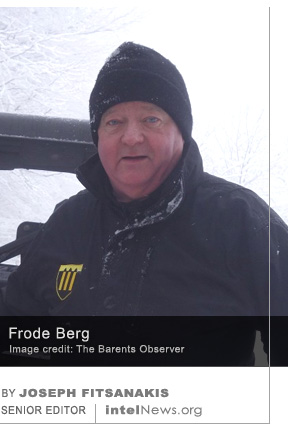 A rare three-way spy-swap has reportedly taken place between Russia and two North Atlantic Treaty Organization (NATO) members, Lithuania and Norway. Rumors of a possible exchange of imprisoned spies between the three countries first
  United States authorities have charged two employees of the social media firm Twitter and a member of staff of Saudi Arabia’s royal family with spying for Riyadh. The Federal Bureau of Investigation filed a complaint on Wednesday in San Francisco, accusing the three men of “acting as unregistered agents” for Saudi Arabia. The phrase is used in legal settings to refer to espionage.
 The Russian government is preparing to swap a number of imprisoned spies with at least two member states of the North Atlantic Treaty Organization (NATO), according to reports. The Estonia-based news agency BNS, which is the largest news agency in the Baltics,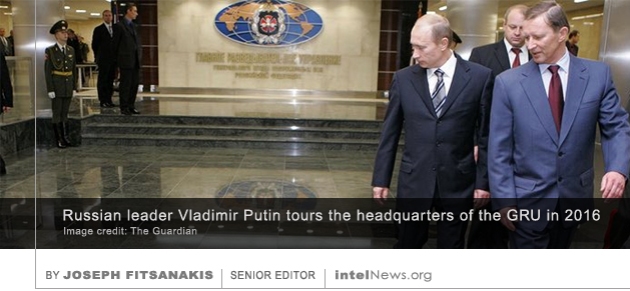
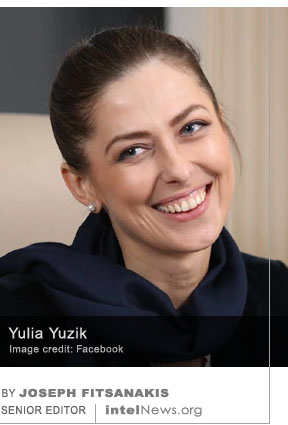 In a surprising move last week, Iranian authorities arrested a Russian journalist and expert on the Caucasus region, whom they accused of spying for Israel. They later agreed to release her following significant diplomatic pressure from Russia. But the move surprised observers, because Iran rarely acts in ways that have the potential to damage its close relations with Moscow.
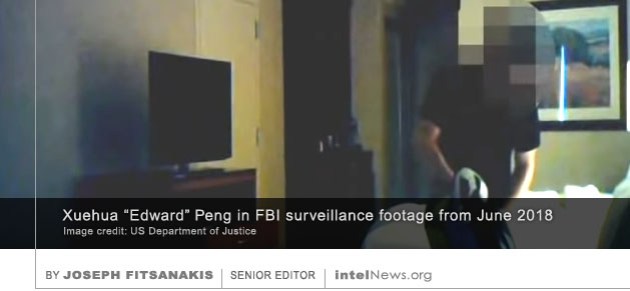 The United States has pressed espionage charges against a naturalized American citizen who operated as a courier for Chinese intelligence while working as a tour operator in California. On Monday federal prosecutors in San Francisco filed espionage charges against Xuehua “Edward” Peng, a 56-year-old Chinese-born American citizen. Peng, a trained mechanical engineer, reportedly entered the United States in June 2001 on a temporary visa. In 2012 he became a naturalized American citizen. By that time he was working for US Tour and Travel, an independent tour operator in California.
 The Russian government reportedly fired a number of officials over the defection of a senior Kremlin aide, who alleged worked as an American spy. Meanwhile, Moscow has filed a search request with INTERPOL about the alleged defector’s whereabouts. News of the defection was
 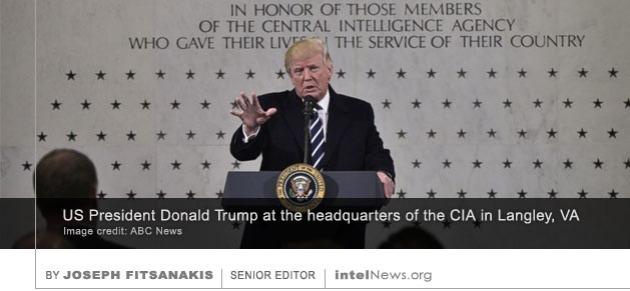 The United States Central Intelligence Agency has questioned the accuracy of a media report, which claimed that “repeated mishandling” of intelligence by President Donald Trump resulted in the exfiltration of a high-level source from Russia. According to the American news network CNN, the CIA carried out the exfiltration operation in 2017. Despite the success of the operation, the removal of the asset has left the US without this high-level source at a time when it is most needed, said CNN. The network
 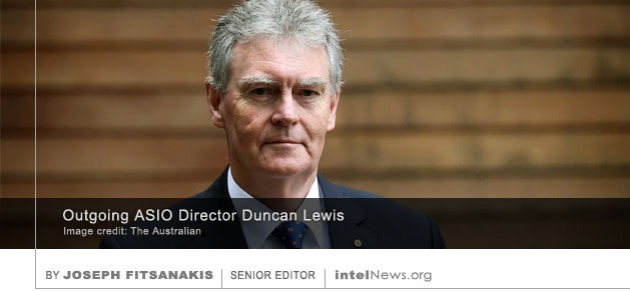 The director of Australia’s main national security agency has warned in a public speech that the threat from espionage —including cyber espionage— is greater than terrorism, and poses an “existential” danger to established states. Duncan Lewis was appointed director of the Australian Security Intelligence Organisation (ASIO) in 2014, having already served for more than four decades in the Australian military and civilian government sectors. On Wednesday, Lewis gave a rare
  The state-owned energy sector of Iran, one of the world’s most lucrative, has become a major target of international espionage since the imposition of new sanctions by the United States this year. The purpose of Washington’s sanctions is to limit the Islamic Republic’s ability to export energy, and by doing so end the country’s reliance on its primary source of income. It is estimated that Tehran’s energy exports have fallen by about 80 percent during the past year, and may continue to fall if the US has its way. This means that American and Iranian intelligence agencies are currently engaged in an intense war of espionage that concentrates on what remains of Iran’s oil exports. Iran continues to entice international buyers by selling energy at below-market prices, while sales are facilitated through the use of throwaway bank accounts that are difficult to trace. Exports are then carefully smuggled into overseas destinations through a variety of means.
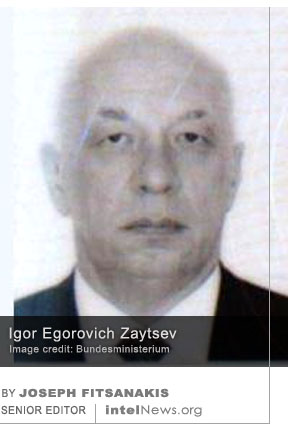 The Austrian government has issued an international arrest warrant for a Russian man who allegedly recruited a retired colonel in the Austrian Federal Army to spy for Moscow. The
 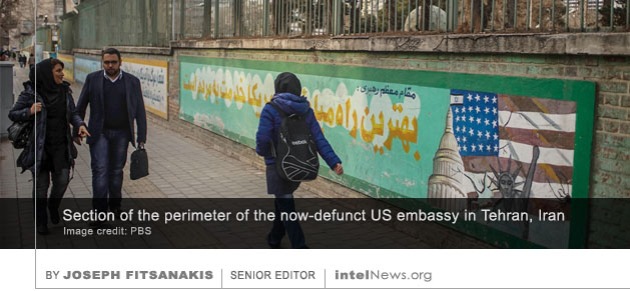 If the announcements from Tehran are to be believed, the United States Central Intelligence Agency lost at least 17 spies in Iran in the months leading up to March 2019. According to Iran’s Ministry of Intelligence, the Islamic Republic busted an alleged “CIA network” operating in sensitive private sector companies and government agencies that relate to defense, aerospace and energy. At least some of the 17 alleged spies have reportedly been sentenced to death, though their exact number remains unknown.
 made to look like rocks, which were located “in parks and other mountainous areas” in Iran and elsewhere in the Middle East, according to Iranian officials. Some of the assets communicated with their handlers while attending science conferences through- out Europe, Africa and Asia.
 The Polish government has authorized the release on bail of a former counterintelligence officer who was charged in January of this year with spying for China. The man has been identified in media reports as Piotr Durbajlo and is believed to have served as deputy director of the Internal Security Agency, Poland’s domestic counterintelligence service. A cyber security expert, Durbajlo also served in Poland’s Office of Electronic Communications with a top security clearance and unrestricted access to classified systems of Poland and the North Atlantic Treaty Organization, of which Poland is a member.






 intelNews.org
Chinese defector reveals identities of Chinese undercover spies in Asia and Australia
November 25, 2019 by Joseph Fitsanakis 4 Comments
Police in the Chinese city of Shanghai claim that Mr. Wang is a small-time criminal who has been found guilty of using fraudulent documents and has a 15-month suspended prison sentence on his record. In a statement issued on Sunday, China’s embassy in Canberra described Mr. Wang as a “convicted fraudster” who was “wanted by police after fleeing [China] on a fake passport”. But according to reports in the Australian media, Mr. Wang has provided the ASIO with a 17-page sworn statement, in which he details his work as an undercover intelligence officer. He is also said to have shared the identities of senior Chinese intelligence officers in Taiwan and Hong Kong, and to have explained how they organize and implement espionage operations on behalf of Bejing.
In a leading article published on Saturday, The Sydney Morning Herald referred to Mr. Wang as “the first Chinese operative to ever blow his cover” and claimed that he had given the ASIO “a trove of unprecedented inside intelligence” about Chinese espionage operations in Southeast Asia. The newspaper said that the defector had revealed details about entire networks of Chinese intelligence operatives in Taiwan and Hong Kong. He also reportedly provided identifying information about deep-cover Chinese intelligence networks in Australia.
Meanwhile, in an unrelated development, Australian media said yesterday that the ASIO was examining allegations that a Chinese espionage ring tried to recruit an Australian businessman of Chinese background and convince him to run for parliament. According to reports, the spy ring approached Nick Zhao, a successful luxury car dealer, and offered to fund his political campaign with nearly $700,000 (AUS$1 million) if he run as a candidate for the Liberal Party of Australia. Zhao reportedly told the ASIO about the incident last year, shortly before he was found dead in a Melbourne hotel room. His death remains under investigation.
► Author: Joseph Fitsanakis | Date: 25 November 2019 | Permalink
Filed under Expert news and commentary on intelligence, espionage, spies and spying Tagged with ASIO, Australia, China, defectors, espionage, Hong Kong, News, Taiwan, Wang Liqiang