New research reveals extent of East German spying in Canada

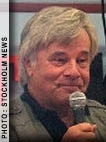
Helmut Muller-Enbergs

Muller-Enbergs

By JOSEPH FITSANAKIS | intelNews.org |
Previously unknown aspects of East German intelligence-gathering operations in Canada will be presented this coming Saturday at the annual conference of the Canadian Association for Security and Intelligence Studies in Ottawa. The new data was unearthed in Berlin by Helmut Müller-Enbergs, a researcher with Germany’s Office of the Federal Commissioner Preserving the Records of the Ministry for State Security of the German Democratic Republic (BStU). His findings show that the Stasi (Hauptverwaltung Aufklärung), the main foreign intelligence department of the German Democratic Republic (GDR), was able to gain “deep insights into the domestic and foreign affairs of Canada”. The feat appears impressive when considering that the GDR had no embassy in Canada until 1987. Read more of this post

News you may have missed #0159

  • US Congress wants to change locks in document safes. Some Congress members have revived “a decade-old debate” on replacing security locks on government safes for storing classified documents with new electromechanical locking mechanisms. According to one independent security consultant, existing mechanical locks in classified document safes “can be penetrated surreptitiously within 20 minutes”, and older barlock containers still in use “can be penetrated within seconds”.
  • A US spy in wartime Ireland. The interesting story of Major Martin S. Quigley, one of three US spies sent by the Office of Strategic Services (OSS, CIA’s forerunner) to Ireland, on a mission to find out whether the country’s government, which was officially neutral in the War, was actually siding with Nazi Germany.

Bookmark and Share

Venezuela announces arrest of Colombian “spies”

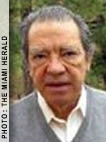
Francisco Arias Cardenas

Cardenas

By IAN ALLEN | intelNews.org |
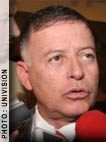
The government of Venezuela announced yesterday the arrest of an undisclosed number of Colombian intelligence agents, who were allegedly “captured carrying out actions of espionage”. The announcement was made by the Venezuelan deputy foreign minister, Francisco Arias Cardenas, who claimed that the detainees were all members of Colombia’s scandal-prone and soon-to-be-dismantled DAS intelligence agency. Cardenas gave no further details yesterday, but said that the Venezuelan government would “soon produce evidence” to back up its claims. Read more of this post

Swedish journalist, author, admits KGB ties

Jan Guillou

Jan Guillou

By IAN ALLEN | intelNews.org |
One of Sweden’s most famous journalists has admitted having had ties with the KGB in the 1960s and 1970s. Jan Guillou, a veteran newspaper correspondent known in Sweden for his hugely popular spy novels, admitted meeting with a KGB handler after allegations surfaced in a Swedish newspaper. Stockholm-based daily Expressen said it had in its possession several declassified files belonging to Sweden’s security service (SAPO), which revealed that Guillou was recruited by the KGB in 1967. The files are reportedly based on the testimony of the late Arne Lemberg, Guillou’s friend and fellow-reporter, who told SAPO that Guillou held regular meetings with KGB rezident in Stockholm Yevgeny Ivanovich Gergel. Read more of this post

Israel mum on mysterious devices found in Lebanon

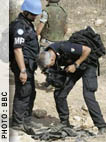
One of the devices

One of the devices

By JOSEPH FITSANAKIS | intelNews.org |
Israel has refused to either confirm or deny it planted a number of communications interception devices that were uncovered last week by security forces in southern Lebanon. Responding to a “request for clarifications” issued by the United Nations, the Israeli government said simply that “collecting intelligence in southern Lebanon will continue as long as the government in Beirut is not in full control of its territory”, an obvious reference to Hezbollah, the Shia Islamic political and paramilitary organization that controls large parts of Lebanon. Three the devices were found last week, attached to a telecommunications cable on the outskirts of the southern Lebanese village of Houla. Interestingly, two of the devices self-destructed by exploding as Lebanese security personnel were approaching. Read more of this post

News you may have missed #0153

  • More on Nozette’s 2009 mystery trip abroad. The affidavit of Stewart David Nozette, who was arrested last Monday for attempting to sell classified US government information to an undercover FBI agent, reveals that “[o]n or about January 6, 2009, [the scientist] traveled to a different foreign country”, carrying with him two thumb drives, which he failed to bring back with him. Where did he go, and why?
  • Armenia charges former army officer with spying for Azerbaijan. Armenian Army officer Gevorg Airapetian and a “foreign national” were arrested in a “special operation” by Armenian authorities earlier this week, and charged with spying for Azerbaijan. Some suspect Russian involvement, believing the Azerbaijanis to have acted as intermediaries between Airapetian and Moscow.
  • US spy chief Blair calls for spy cooperation. Director of National Intelligence (DNI) Dennis Blair called Wednesday for a better-coordinated effort within the US intelligence community. But he said nothing about recent reports that intelligence officials shut down a Web-based unclassified e-mail system, which had been heralded as an important step in information sharing between members of the US intelligence community.

Bookmark and Share

FBI targets US nuclear scientist who contacted Venezuelan official

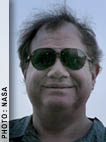
P.L. Mascheroni

P.L. Mascheroni

By JOSEPH FITSANAKIS | intelNews.org |
A team of FBI agents has raided the house of a former Los Alamos nuclear scientist who has spent two decades criticizing Washington’s nuclear weapons and energy agenda. The agents seized several computers, cameras, cell phones and paper files from the home of Dr. P. Leonardo Mascheroni, a 74-year-old Argentinean-born nuclear scientist who became a US citizen while working at the US Department of Energy’s Los Alamos National Laboratory in New Mexico. After leaving Los Alamos, in 1988, Dr. Mascheroni has campaigned in favor of inertial confinement fusion (commonly known as laser fusion) as a means of producing low-cost energy and of testing nuclear weapons without resorting to underground explosions. Following the FBI raid at his house, Dr. Mascheroni held a press conference where he claimed he was told by the FBI that he was suspected of possible involvement in “nuclear espionage”. Read more of this post

Mysterious self-destructing devices found at Lebanon-Israel border

One of the devices

One of the devices

By JOSEPH FITSANAKIS | intelNews.org |
Lebanese authorities have revealed the discovery last week of three communications interception devices near the Israel-Lebanon border. Interestingly, two of the devices self-destructed by exploding as Lebanese security personnel were approaching. Members of the Lebanese Armed Forces decided to detonate a third device, fearing that it too might explode at any moment. The three devices were attached to a telecommunications cable on the outskirts of the southern Lebanese village of Houla. Israeli officials have so far refused to address the accusation of the Lebanese government that the devices were planted by Israeli spies. Read more of this post

News you may have missed #0150

  • Israel’s inside intelligence. If only Israeli security services were as open as the CIA and other US spy agencies, lament Israelis.
  • Nozette and nuclear rocketry. Here are some of the reasons why the case of scientist Stewart D. Nozette, who was arrested and charged earlier this week under the US Espionage Act, is distressing on several levels.
  • Perle calls DoD spying whistleblower “a nutcase”. Richard Perle, chairperson of the US Defense Advisory Board under the Bush administration, has called Sibel Edmonds “a nutcase; certifiable”. Last August, Edmonds, a former FBI translator, alleged that Turkish spies had bugged, blackmailed and bribed US politicians, her FBI unit, the State Department, the Pentagon and Congress.

Bookmark and Share

Analysis: US Scientist’s Espionage Arrest Raises Questions

Nozette

Nozette

By IAN ALLEN | intelNews.org |
Stewart David Nozette, who was arrested by the FBI on October 19, on charges of sharing classified US government data with a man he believed was an Israeli government officer, is to remain in jail. The reason given by the US federal judge in charge of the case is that Nozette might flee to Israel if not confined. However, unlike the case of former US Navy intelligence analyst Jonathan Jay Pollard, who was jailed in 1987 for spying on the US for Israel, the government of Israel is said to have had no role in Nozette’s attempted espionage. The FBI itself admits that it “does not allege that the government of Israel or anyone acting on its behalf committed any offense under US laws in this case”. This is because Nozette shared classified US government data with an undercover FBI officer posing as a handler of Israeli intelligence agency Mossad. But if this is so, then two important counterintelligence questions are raised: first, how did the FBI know to lure Nozette with an agent posing as an Israeli –as opposed to a Russian or Chinese– handler? Second, why would Nozette flee to –and presumably be protected by– Israel, even though the government of Israel was not involved in this case, according to the FBI? Keep reading →

Bookmark and Share

News you may have missed #0147

  • Major purge in Gambian intelligence services. The Gambian government gave no official reasons for the dismissal of 27 officers from the country’s National Intelligence Agency (NIA). But local media said the dismissals were aimed to end bitter internal turf wars that have affected NIA’s performance.
  • US Congress bars release of more torture photos. US House and Senate members have approved legislation that would permit the Pentagon to withhold photographs if it determines that their disclosure “would endanger citizens of the US, members of the US Armed Forces, or employees of the US government deployed outside the US”. The ACLU said that “the suppression of these photos will ultimately be far more damaging to our national security than their disclosure would be”.
  • Russia jails alleged Georgian spy. A Russian military court has jailed Russian Army sergeant Jemal Nakaidze for nine years, for passing secrets to Georgia during a war between the two countries last year. See here for more on the recent tug-of-war between Russia and Georgia.

Bookmark and Share

News you may have missed #0146

  • RAND wants the US to abstain from cyberattacks. A new report by the US Pentagon’s research arm, RAND Corporation, suggests the US may be better off playing cyber-defense instead of resorting to cyberattacks. On offense, cyberwar might be better relegated to support roles, and then only “sparingly and precisely”, according to the report. The study comes as the US military fires up its new unified Cyber Command (USCYBERCOM) program this month.
  • Turkey says it foiled al-Qaida plot against Israeli, US targets. Turkish security forces detained on Thursday 32 suspected members of al-Qaeda, believed to have been planning attacks on Israeli, US and NATO targets. The suspects, some of whom are said to have been trained in al-Qaeda camps in Afghanistan, were detained in simultaneous raids across eight provinces.
  • South Korea arrests alleged Swedish-handled spy. A former South Korean air force major general, identified only as Kim, was arrested last Friday on charges of leaking classified military information to Swedish defense and aviation company Saab, between August 2008 and May this year.

Bookmark and Share

Russia jails man for passing military secrets to US Pentagon

Iskander missile

Iskander missile

By IAN ALLEN | intelNews.org |
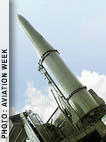
A Serb national was given an eight-year sentence by a Russian court earlier today, for allegedly passing classified information on Russian defense projects to an agent of the US Defense Intelligence Agency (DIA). Agents with Russia’s Federal Security Service (FSB), the main successor to the Soviet-era KGB, arrested the 61-year-old man, named Aleksandar Georgijevic, at a Moscow airport in 2007, as he was reportedly trying to leave Russia. They accused him of giving secret documents to Farid Rafi, whom the Russians claim was “working in the interests of the intelligence agency of the US defense ministry”. Georgijevic’s trial took place behind closed doors. But Russian media report that he began collecting classified information in as early as 1998, focusing primarily on the Russian military’s R-500 supersonic cruise missile, as well as the Iskander, Blokada and Khrizantema-C  tactical missiles. Read more of this post

News you may have missed #0144

  • Cuban Five convict’s sentence cut to 22 years. As intelNews reported on October 12, Antonio Guerrero, a member of the Cuban Five spy ring, has had his life sentence cut to 22 years, following a successful appeal. Given the time he has already served since his 1998 arrest, and benefits for good behavior, Guerrero could be released in seven years. The Cuban Five were sentenced in 2001 for spying on the US for Cuba.
  • Was British MP a Czech agent during Cold War? A recently published book on MI5’s history by Cambridge historian Dr. Christopher Andrew has reignited rumors that Labour Party parliamentarian John Stonehouse worked as an agent for the Czech StB intelligence agency in the 1960s.
  • West German spies collected East German jokes during Cold War. West German spies diligently recorded popular East German jokes about communism during the Cold War, in an attempt to gain insights into the public mood, according to recently released intelligence files.

Bookmark and Share

News you may have missed #0142

  • Egypt assisting Yemen in alleged Iranian spy infiltration. Egypt has allegedly provided Yemen with information on Iran’s intelligence activities targeting it and other Arab and African states in the region, according to Egyptian daily Akhbar Al-Youm. Meanwhile, the appeals of two Yemeni nationals convicted last October of spying for Iran are to be heard Monday in Yemeni capital Sana’a. Yemen, a major intelligence center in the Arab world, is probably the most underreported front in Washington’s so-called “war on terrorism”.
  • New book examines Operation GREENUP. A new book, They Dared Return, by Patrick K. O’Donnell, examines the operations of five German Jews, who returned to WWII Germany for Operation GREENUP, an espionage project funded by the German Operational Group of the US Office of Strategic Services –forerunner of the CIA.

Bookmark and Share