EU recalls envoy to Moscow over Skripal poisoning, more expulsions may follow

Theresa MayThe European Union has recalled its ambassador to Moscow in an apparent response to the poisoning of Sergei Skripal, a Russian double agent, who was attacked with a nerve agent in England earlier this month. Skripal, 66, and his daughter Yulia, 33, remain in critical condition in hospital, nearly three weeks after being poisoned with a nerve agent that British scientists say belongs to Russia’s Cold-War-era chemical stockpiles. Moscow has angrily rejected claims that Skripal, who spied for Britain in the early 2000s, was on a Kremlin-approved hit-list of defectors. But British Prime Minister Theresa May traveled to Brussels on Thursday to brief European Union heads of state about the attack on Skripal.

The summit concluded in the early hours of Friday with the publication of a joint statement, signed by every participating head of state, backing the British claims and expressing outrage at Moscow’s alleged use of a military-grade nerve agent on British soil. The statement said that EU leaders “agree with the United Kingdom government’s assessment that it is highly likely that the Russian Federation is responsible” for the attack on the Skripals. “There is no plausible alternative explanation”, said the statement, and described the attack on the two Russians as a “grave challenge to our shared security”. The statement will be seen as a foreign-policy triumph by London, as Britain has been contacting EU governments seeking from them a direct condemnation of Russia and possible diplomatic actions in response to the alleged attack.

The jointly authored statement also said that the EU would recall its ambassador to Moscow, effective immediately. Markus Ederer, a German diplomat who represents the EU in the Russian capital, will be leaving Russia “for a month of consultations”, in what appears to be a symbolic act of protest by the Europeans. However, some EU members threatened further action and said that they would “coordinate on the consequences to be drawn in the light of” future Russian actions on the matter of the Skripals. In statements made to reporters early on Friday, German Chancellor Angela Merkel said that there may be “further punitive measures” against Russia, adding that they would be coordinated among EU states.

Some media reported that at least five EU member states were considering expelling undeclared Russian intelligence officers from their soil in response to the alleged Russian attack in England. They are said to include France, Lithuania and Poland. The London-based newspaper Daily Telegraph reported that Russia was in danger of having its Western European spy network dismantled in response to the attack on the Skripals. Some EU countries, however, including Italy and Greece, appeared less interested in taking action against Russia. The Greek Prime Minister, Alexis Tsipras, said on Thursday that his government expressed its “solidarity with the United Kingdom”, but that the EU had to investigate what happened in England on March 4.

Author: Joseph Fitsanakis | Date: 23 March 2018 | Permalink

Luxembourg to further-probe Jean-Claude Juncker’s role in spy scandal

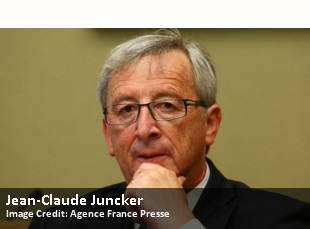
Jean-Claude JunckerA judge in Luxembourg has launched a criminal investigation into whether officials working for the country’s former Prime Minister and current European Commission President, Jean-Claude Juncker, tried to conceal his role in a spy scandal. Until he stepped down from his post in 2013, Juncker, a member of Luxembourg’s Christian Social People’s Party, was Europe’s longest-serving elected leader, having served as Prime Minister since 1995. His resignation from his post came after a parliamentary inquiry found that the country’s State Intelligence Service (SREL) had engaged in serious criminal activity.

The investigation was launched in 2012, after a local newspaper alleged that SREL’s Director, Marco Mille, employed a surreptitious recording device disguised as a watch to record a private conversation with Juncker. This led to revelations that the SREL had carried out countless illegal wiretaps around the country and that it maintained extensive secret files on over 13,000 citizens and residents of Luxembourg. The report also alleged that SREL set up a front company in order to facilitate the transfer of $10 million from a corrupt Russian businessman to a Spanish intelligence operative, as a personal favor to the Russian. The probe also examined, but did not confirm, allegations that the Grand Duke of Luxembourg had been a trusted informant of MI6, Britain’s Secret Intelligence Service. The release of the report prompted calls for Juncker to resign, because, according to Luxembourg law, the Prime Minister is directly responsible for the conduct of the country’s intelligence services, including SREL.

Now Judge Eric Schammo has launched a new criminal investigation into whether government officials working for Mr. Juncker deliberately falsified crucial evidence during the 2012 parliamentary investigation and the subsequent judicial investigation. Government prosecutors believe that a small group of officials falsified evidence in order to protect Mr. Juncker and shield him from any political fallout caused by the scandal. According to reports, former SREL Director Mille, who is currently on trial over his role in the spy affair, has in its possession a recording of a private conversation with Juncker. It is said that the recorded conversation shows that Juncker was aware of and approved the wiretap operation. This evidence was allegedly shared with members of the parliamentary inquiry in 2012. However, according to reports, pro-Juncker officials deleted it from the committee’s files. Juncker denies having had any knowledge of, or having authorized, SREL’s illegal activities.

Author: Joseph Fitsanakis | Date: 13 December 2017 | Permalink
German spy officials dismiss calls to create European intelligence agency

European UnionGermany’s two most senior intelligence officials have dismissed suggestions by European officials and leaders, including the president of France, to create a Europe-wide intelligence agency. The numerous deadly attacks carried out by Islamic State supporters across Europe in recent years have given rise to calls from various quarters for the establishment of a new intelligence service that would combine resources from every member-state of the European Union. Last month, the European Union’s Commissioner for Migration, Home Affairs and Citizenship, Dimitris Avramopoulos, said that the time had come for Europe to be “ambitious and bold, to overcome the security taboos of the past and finally work in order to build a European intelligence system”. He went on to say that, had there been sufficient “cooperation, information sharing and exchanging” between the various European intelligence services, “maybe some of these tragic events could have been predicted and prevented”. Avramopoulos’ remarks were echoed last week by France’s new President, Emmanuel Macron. Speaking at Sorbonne University in Paris, France’s head of state said that the creation of a European Intelligence Agency would “strengthen links between our countries” and prevent emerging security threats.
But these calls were rebuffed this week in Berlin, where Germany’s two most senior intelligence officials rejected any and all calls for the creation of a European intelligence service. The officials are Bruno Kahl, director of Germany’s Federal Intelligence Service, the BND, and Hans-Georg Maaßen, who heads the country’s Federal Office for the Protection of the Constitution, known as the BfV. The two men spoke before a special session of the Intelligence Oversight Committee of the German Federal Parliament, known as the Bundestag. The BND’s Kahl said Europe already had an intelligence-based early-warning center, known as the European Union Intelligence and Situation Center (EU INTCEN). He argued that there was “no need for a European intelligence agency or any other supplemental Europe-wide intelligence organization” and added that “intelligence is better organized on the national level”. He was backed by BfV’s Maaßen, who warned that the creation of a European intelligence service would “create additional bureaucratic structures, both on the European and domestic levels”, which would “profoundly lower our efficiency”.

The two German intelligence officials said that cooperation between European Union member-states had improved substantially in the past few years, and that the current model of bilateral exchange was “the most efficient […] and quickest way to share information”. The current system of inter-agency coordination would be weakened if a European intelligence service was created, according to the two men.

Author: Joseph Fitsanakis | Date: 06 October | Permalink

Leaked EU intelligence report says Islamists were not behind Turkey coup

Turkey coupA leaked report by a European Union intelligence body states that Islamist forces were not behind last July’s failed coup in Turkey, and that the ruling party used the coup to neutralize its few remaining political rivals. The government of Turkish President Recep Tayyip Erdoğan accuses members of the so-called Gülen movement of orchestrating the coup, which included an armed attack on the country’s parliament and the murder of over 200 people across Turkey. The Gülen movement consists of supporters of Muslim cleric Fethullah Gülen, who runs a global network of schools, charities and businesses from his home in the United States. The government of Turkey has designated Gülen’s group a terrorist organization and claims that its members have stealthily infiltrated state institutions since the 1980s.
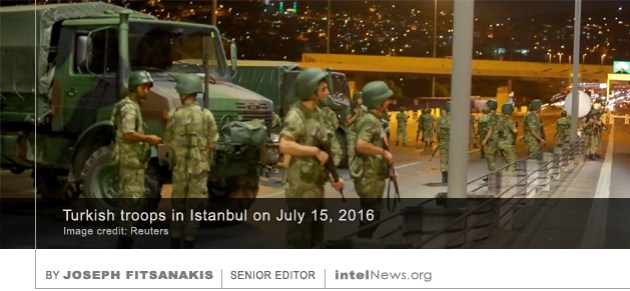
But a report compiled by the EU Intelligence and Situation Centre, known as IntCen, states that Gülenists had nothing to do with the coup, and that the current crackdown against them by the government was planned years in advance. Founded in 2012, IntCen is the intelligence-sharing body of the EU. Its reports are the results of collaborative efforts of intelligence officers from all EU states. They are distributed on a confidential basis to senior EU officials and to the ambassadors of EU states in Brussels, Belgium. The report on the coup in Turkey is entitled “Turkey: The Impact of the Gülenist Movement”. It was issued on August 24 and is marked “confidential”. But it was accessed by British newspaper The Times, which published extracts on Tuesday.

According to the leaked document, it is “unlikely” that the Gülen movement had the “capabilities and capacities” to launch a coup against Erdoğan. It is even more unlikely, it suggests, “that Gülen himself played a role” in the operation. A far more plausible explanation is that the coup was launched by a relatively small group of Kemalists (secular Turks who oppose President Erdoğan’s religiously-based politics), some Gülenists, and various opportunists within the ranks of the military. Once the coup began to unfold, a few low-level military officers with Gülenist sympathies may have “felt under pressure” to participate in order to ensure its success. That was mostly because they knew that, if the coup failed, the Erdoğan government would go after them and accuse them of staging it, states the report.

Indeed, once the coup failed, the Erdoğan administration launched a coordinated campaign designed to dismantle the Gülen movement, which was its “one and only real rival” in Turkey. Since the end of the failed coup, the Turkish state has initiated a nationwide political crackdown against alleged supporters of the coup. An estimated 100,000 people have been fired from their jobs, while hundreds of thousands have been demoted, censured or warned. Another 35,000 are believed to be in prison, charged with supporting the failed coup or with being members of the Gülen network. But the IntCen report suggests that the crackdown against Erdoğan’s opponents had been conceived and designed years in advance. Last July’s coup acted as a catalyst and was “exploited” by the government to neutralize all its political opponents, says IntCen. The lists used to arrest individuals across the country had been complied by the Turkish intelligence services many years ahead of the failed coup, according to the IntCen report.

Author: Joseph Fitsanakis | Date: 18 January 2017 | Permalink

Italian spy chief paid secret visit to Syria: news reports

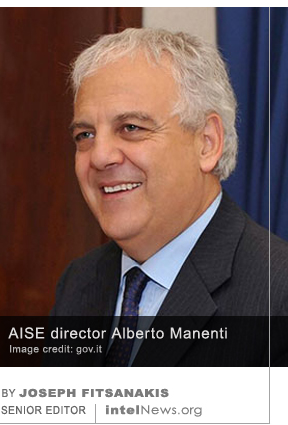
Alberto ManentiThe head of Italian intelligence paid a secret visit to Syria earlier this month, a week after his Syrian counterpart visited Rome, according to reports from the Middle East. The Dubai-based newspaper Gulf News, which first reported the alleged behind-the-scenes exchange, said the visits focused on counter-terrorism cooperation between Syria and the European Union. The paper said that the initial contact was made in late June by Major General Deeb Zeitoun, head of Syria’s General Intelligence Directorate, who paid a secret visit to Rome. General Zeitoun’s visit was allegedly in response to an official invitation issued by the Italian government. The general is believed to have stayed in a secluded private villa, which was provided by the Italian External Intelligence and Security Agency, known as AISE. He subsequently met with several Italian intelligence officials, including AISE Director, General Alberto Manenti.
A week later, Manenti secretly traveled to Syrian capital Damascus, where he stayed for several days. According to Gulf News, General Manenti met with his Syrian counterpart and other senior intelligence officials, as well as with Syrian President Bashar al-Assad. The main purpose of the secret meetings was to explore the potential for enhanced collaboration between Syria and the European Union on counter-terrorism issues. It appears that the Syrian government is willing to share intelligence on citizens of the EU who have traveled to Syria and have joined the ranks of the Islamic State, as well as other al-Qaeda-inspired groups in the country. Damascus is even willing to give EU intelligence personnel access to captured Islamist fighters that are being held in Syrian government facilities.

In return, however, the Syrians are asking that the EU enters negotiations on possibly normalizing diplomatic relations with Damascus. Contacts between the EU and Syria were severely disrupted at the outbreak of the Syrian Civil War and remain officially non-existent to this day. According to Gulf News, the Syrians told General Manenti that full intelligence cooperation in the area of counter-terrorism will ensue as soon as the EU normalizes diplomatic relations with the government in Damascus. The Italian intelligence official is believed to have told the Syrians that Rome will press the EU to move toward re-establishing relations with Damascus, in return for concrete steps taken in Syria toward “political transition” in the war-torn country.

Author: Joseph Fitsanakis | Date: 18 July 2016 | Permalink

Experts warn about Brexit’s effects on European, NATO cooperation

BrexitAfter Thursday’s Brexit vote, European and American security officials have tried to pacify concerns about major disruption of longstanding Western security cooperation arrangements. But experts stress that the international security landscape will be significantly impacted by Britain’s decision to leave the European Union (EU). As early as Thursday night, British defense, military and intelligence officials launched a marathon of phone calls in order to reassure their European and American counterparts that the United Kingdom was not going to retreat from its role in security pacts with Europe and the North Atlantic Treaty Organization (NATO).
On Friday, the office of NATO Director General Jens Stoltenberg issued a statement assuring the public that Britain’s decision to leave the EU would not impact on NATO’s security arrangements. On Sunday, however, a new statement by Stoltenberg appeared to revise his earlier comments. It argued that Britain was “the biggest provider of security in Europe” and that its eventual exit from the EU “matters”, adding that the West’s security situation post-Brexit was “more unpredictable […] than before”. Citing security officials from both sides of the Atlantic, including Stoltenberg, The Wall Street Journal opined on Sunday that Brexit “could have a profound effect on global security”, but stressed that its precise impact remains uncertain. Some officials warned that, in the long run, Britain’s exit from the EU would weaken its military, which is Europe’s most powerful. This could happen through a possible breakup of the country, with Scotland and Northern Ireland splitting from the United Kingdom in reaction to Brexit. Alternatively, Britain’s worsening economic situation could prove detrimental to its overall defense spending.

On Saturday, United States Navy Admiral (ret.) and former NATO commander James Stavridis, argued that NATO will benefit from Brexit, because it will allow the United Kingdom to devote “more resources and manpower to support” NATO’s mission. There will also be a “reduction in the […] battlefield competition between NATO and the EU”, said Adm. Stavridis, which “will likely produce a stronger NATO”. Others, however, disagreed. Citing several current and former officials, The Wall Street Journal warned that Britain’s exit from the EU would result in the loss of a quarter of the EU’s combat power. That could prompt Germany, France, and other EU nations to increase their military spending, in order to advance a more unified defense policy among EU nations. That could bring about a unified EU military headquarters, or even a joint European Army, which NATO has traditionally resisted, as it believes it would duplicate resources and undermine transatlantic cooperation. But with Britain leaving the EU, a staunch pro-NATO voice that strongly objected to the creation of a European Army ceases to exist. That could open the door to the creation of a European Army, say experts.

Last but not least, the UK was a strong player lobbying in favor of instituting EU-wide sanctions against Russia in the wake of the war in eastern Ukraine and Russia’s annexation of Crimea. With London now removed from the decision-making center in Brussels, the voices from EU member states like Spain, Italy and Greece, which argue for abandoning the sanctions against Moscow, are likely to grow louder, said The Wall Street Journal.

Author: Ian Allen | Date: 27 June 2016 | Permalink

Portuguese, Russian spies arrested in Rome may have accomplices

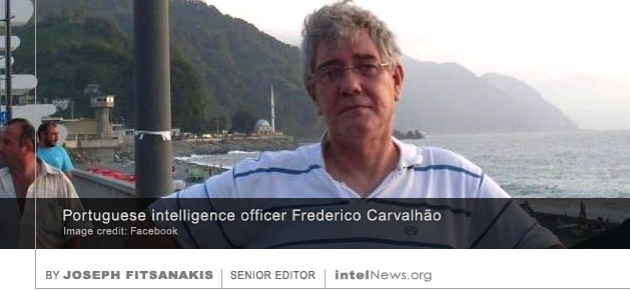
Frederico Carvalhão,A Portuguese intelligence officer arrested a week ago in Rome, allegedly while passing classified documents to his Russian handler, may have accomplices with access to North Atlantic Treaty Organization (NATO) secrets. IntelNews reported last week on the capture of Frederico Carvalhão, a section chief for Portugal’s Security Information Service (SIS), which is tasked with domestic security and counterintelligence. Carvalhão was arrested on May 23 at a café in the Trastevere district of Rome while passing a folder with six classified documents to a Russian man. The man is believed to be an employee of Russia’s Foreign Intelligence Service, known as SVR, though notably he does not have diplomatic status or immunity, and was therefore arrested. As we noted last week, this is atypical for an intelligence officer, as most of them operate as registered diplomats.
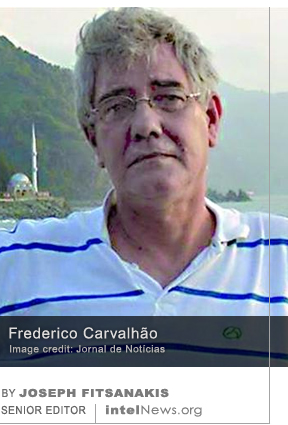
According to Portuguese media reports, the classified information that Carvalhão appears to have been sharing with the SVR since at least 2014 relate to NATO and the European Union (EU), of which Portugal is a member. However, the London-based newspaper Daily Telegraph reports that there are suspicions in Lisbon that Carvalhão was not working alone for the Russians. In other words, Portuguese investigators are looking into the possibility that the arrested spy was what is known as a ‘principal agent’. The latter signifies a mole that acts as a middle person between his foreign handlers and a cell of other agents working for him or her. The possibility that Carvalhão may not have been working alone was commented on by Portugal’s Minister of Foreign Affairs, Augusto Santos Silva, who said last week that the judicial investigation into the spy case was “ongoing”.

It appears that Carvalhão somehow managed to access NATO- and EU-related documents from the SIS’ Ameixoeira Fort headquarters in the Portuguese capital, to which he had no need-to-know access. Moreover, SIS computers do not accept flash drives, while all printed documents contain a secret watermark that identifies them as having been printed on an SIS printer. But Carvalhão appears to have somehow managed to acquire non-watermarked documents without having extracted them from an SIS computer with the use of a flash drive. Does that mean that someone else from inside SIS provided him with the documents? The EU and NATO are eagerly waiting for an answer.

Author: Joseph Fitsanakis | Date: 30 May 2016 | Permalink

Russian, Portuguese intelligence officers arrested in Rome on espionage charges

Frederico CarvalhãoTwo intelligence officers, one Russian and one Portuguese, have been arrested by Italian authorities on charges of espionage. The arrests took place in Rome on Monday by Italian police, who were reportedly accompanied by Portuguese counterintelligence officers. It is suggested in Portuguese media that the two men were arrested in the act of exchanging classified documents and money. The Portuguese intelligence officer has been identified in news reports as Frederico Carvalhão, a section chief for Portugal’s Security Information Service, which is tasked with domestic security and counterintelligence. The Russian intelligence officer has not been identified, but is believed to be an employee of Russia’s Foreign Intelligence Service, known as SVR. Interestingly, the Russian officer does not have diplomatic status and was therefore arrested, since he holds no diplomatic immunity.
A press release by the Portuguese government prosecutor said that Carvalhão had been arrested “along with a foreign subject linked to an intelligence organization” after a lengthy investigation into “concerns that [classified] information was being exchanged for money”. It is believed that Portuguese authorities began investigating Carvalhão in 2015, and now believe that he frequently traveled abroad to meet his Russian handler. He is thought to have been recruited by the Russians in 2014. According to Portuguese media reports, the documents that Carvalhão appears to have been giving the SVR contain information about the European Union and the North Atlantic Treaty Organization, of which Portugal is a member.

Carvalhão is said to have flown from Lisbon to Rome on Friday of last week in order to meet his SVR handler. The two men were meeting in a café on Saturday when they were arrested. The Portuguese government prosecutor said that Saturday’s arrests resulted from “rigorous collaboration between Portuguese and Italian authorities”. He also thanked Eurojust, a European Union agency based in the Netherlands, which focuses on cross-national judicial cooperation between European Union member-states. Security officers also raided Carvalhão’s home in Portugal, where they allegedly seized “documents and cash”. Both he and his alleged Russian hander remain in detention in Rome, while Italy is preparing to extradite them to Portugal.

Author: Joseph Fitsanakis | Date: 26 May 2016 | Permalink | News tip: C.W.

Concerns about Israeli spying prompt debate on EU security measures

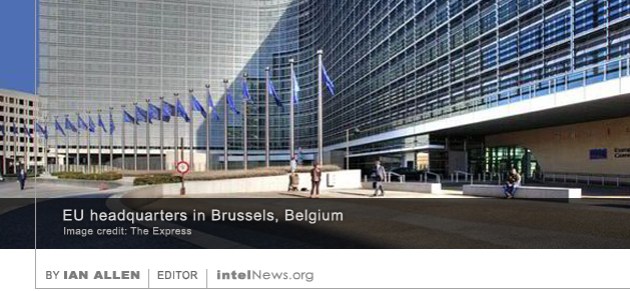
EU headquartersA debate on information security measures in the European Union was prompted last week after some officials voiced concerns that the proceedings of a closed-door meeting were secretly monitored by Israel. The meeting took place on January 15 as part of regular proceedings by the EU’s Political and Security Committee (PSC). The main item on the agenda was the EU’s Middle Eastern policy. According to some meeting participants, Israeli diplomats appeared to be aware of a statement discussed during the PSC meeting “in real time”, which prompted a wider debate on EU information security policies.

According to the Brussels-based EU Observer, which reported on the story, EU member state ambassadors present at the meeting worded a statement that contained a sentence deemed critical to Israel’s policy on Palestine. The sentence allegedly stated: “The EU will continue to unequivocally and explicitly make the distinction between Israel and all territories occupied by Israel in 1967”. According to some ambassadors who were present at the PSC meeting, “Israeli contacts sent text messages to them with requests to alter wording shortly after each new draft [of the PSC statement] went around”. Further suspicions were raised when, at the conclusion of the meeting, the Greek delegate vetoed the contentious line, standing alone against the remaining 27 delegates who had earlier supported it.

Last week, sources told the EU Observer that Israel may have placed bugs in the room where the PSC meeting took place. They added that the committee was debating whether to begin holding meetings in a secure room located in the EU headquarters building in Brussels, where the use of cell phones by meeting participants is not possible. They also said that a stricter classification policy should apply to PSC documents. Others, however, said that the source of the leak may have been the Greek delegate —the sole participant at the meeting who assumed a seemingly pro-Israeli stance. The Greek ambassador may have shared the details of the proceedings with Israeli officials, thus effectively spying on the conference on behalf of Israel, speculated the EU Observer. Another PSC meeting delegate told the paper that “the spy theory” was effectively concocted “in order to avoid confrontation” with the Greek delegation.

The EU Observer contacted the Greek mission to the EU, but was told that the Greek ambassador would never spy on the EU “as a matter of principle”. The Israeli mission to the EU declined to comment.

Author: Ian Allen | Date: 15 February 2016 | Permalink

Ex-NATO supreme commander warns of ‘Grexit security nightmare’

James StavridisAn American former supreme allied commander of the North Atlantic Treaty Organization has warned that a possible Greek exit from the Eurozone “could become a geopolitical nightmare” for the European Union and NATO. James Stavridis, a retired four-start US Navy admiral, who served as NATO’s 16th Supreme Allied Commander Europe from 2009 to 2013, said solving the Greek crisis should not be left to the central bankers. In an article published Wednesday in Foreign Policy, Stavridis said the financial administrators that are handling the Greek crisis were not sufficiently cognizant of the massive geostrategic implications of a possible “Grexit”.
The retired admiral said that if the Greek economy continues its downward spiral, the country may not be able to fulfil its defense obligations to NATO, in which Greece has held full membership since 1952. As a result, the country may leave not only the EU, but also NATO. Neither organization has ever lost a member-state, said Stavridis, adding that such a development would constitute terra incognita and would “shake both organizations in fundamental ways” by weakening their broader ideological cohesion.

However, said Stavridis, chances are that Greece will remain a member of EU and NATO despite possibly exiting the Eurozone. But it would be “an angry disaffected and battered nation”, he said, and could thus wreak havoc in both organizations. The latter are consensus-driven, meaning that their actions depend on the unanimous agreement of all member-states. If Greece adopted an “uncooperative” attitude, it would easily bring both organizations to a halt when it comes to pressing issues, such the refugee crisis in the Mediterranean, sanctions against Russia over the war in Ukraine, the Iranian nuclear program, or even negotiations about transatlantic trade. Currently, Greece’s important geographic position means that its naval bases constitute the maritime flank of NATO during a critical time of tension in the eastern Mediterranean, said Stavridis.

And what if Greece, shunned by the West, started to look elsewhere for support? Russia, which shares strong historical and religious links with Greece, could be a “prospective partner” for Athens, argued Stavridis. If Moscow offered even marginal economic assistance to Athens, Greece could be tempted to further distance itself from its Western partners, both diplomatically and militarily.

Admiral Stavridis’ warning came a day after NATO Secretary-General Jens Stoltenberg said Greece had played “an important role in southern Europe as a NATO member” and urged Athens not to make cuts in its defense spending due to the ongoing economic crisis.

Global finance fears grow as Greece faces economic meltdown

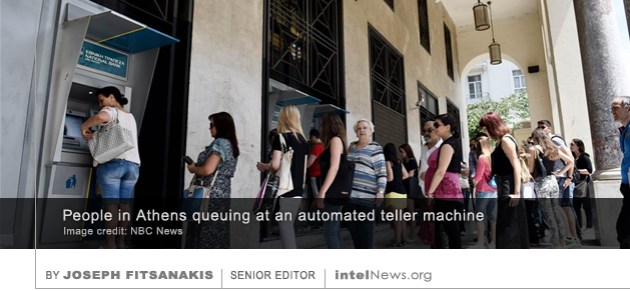
GreeceSeveral Western countries issued travel warnings for Greece on Sunday, as the Greek government shut down all banks and imposed capital controls following the breakdown of talks between Athens and the European Union. British and American citizens traveling or living in Greece were advised to have enough cash on hand, as ATMs were quickly running out of currency. In a late-night televised address to the nation, Greek Prime Minister Alexis Tsipras said banks would remain closed until July 6 –the day after Greeks vote in a nationwide referendum on whether to accept the bailout terms proposed to Greece by its creditors. Police tightened security around ATM machines, as lines were reportedly formed in petrol stations in the capital.
The decision to shut down the banks was taken after finance ministers in the eurozone –the a monetary union of 19 European Union (EU) member states that have adopted the euro as their common currency– rejected Athens’ request to prolong a financial-assistance program. The decision could prompt Greece to default on a €1.5 billion payment to the International Monetary Fund, one of Greece’s main creditors. Additionally, the European Central Bank, which oversees Greece’s banking system, refused on Sunday to infuse cash to the Greek banks, in order to accommodate the mass withdrawal of cash by panicked citizens. On Saturday, Greece’s Minister of Finance, Yannis Varoufakis, was not allowed to attend a eurozone meeting in Brussels –a historic first that could mean Greece is close to being kicked out of the eurozone and maybe even the EU as a whole.

Finance ministers of the 18 countries that attended Saturday’s meeting issued a joint statement pledging “to do whatever it takes to stabilize the common currency area” and shield it from possible domino effects caused by the Greek financial meltdown. However, it is difficult to predict what will happen to the financial markets if Greece declares a default, as some of the world’s largest banking institutions share ownership of the country’s mammoth €300 billion debt. Financial analysts warned that the euro will become “increasingly vulnerable” to ripple effects from the Greek crisis, while the London-based Financial Times crisis meeeting the developments in Greece were “expected to trigger a sharp reaction” in the world’s markets this week. The big question, said The Times, is whether the economic fallout from the latest dramatic developments would be limited to Greece or become “a global event”. There was no question, said the paper, that the markets were “at a critical juncture” and that investors were “taking the possibility of contagion very seriously”.

Meanwhile, several European countries announced they will be holding emergency meetings on Monday. German Chancellor Angela Merkel invited German party leaders to a crisis meeting, while the office of French President Francois Hollande said he would be holding a “restricted emergency cabinet meeting” to discuss the developments in Greece. The British government said its ministers were “taking steps” to protect the country from possible economic turbulence in the eurozone –of which the United Kingdom is not a member. British newspaper The Observer said in a lengthy editorial published on Sunday that the Greek crisis, coupled with rising tensions over immigration from the Middle East and North Africa, heightened terrorism fears, as well as the impending British EU referendum, were causing a “perfect storm [of] tension and division at Europe’s core”.

Author: Joseph Fitsanakis | Date: 29 June 2015 | Permalink: https://intelnews.org/2015/06/29/01-1724/

CIA issues ‘stand-down’ on spying against Western Europe

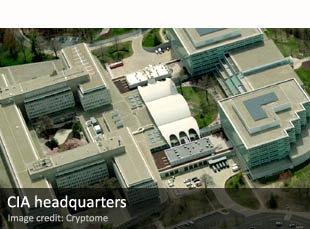
CIA headquartersBy JOSEPH FITSANAKIS | intelNews.org
The United States Central Intelligence Agency has issued a “stand-down order” to its stations in Europe, instructing them to cease all intelligence operations targeting allied countries, media reports claim. According to several Western European news outlets, including British newspaper The Guardian, CIA stations in Europe have been “forbidden from undertaking unilateral operations” involving assets recruited from within government agencies allied to Washington. Last summer, the German government instructed its intelligence agencies to limit their cooperation with their American counterparts “to the bare essentials”. Berlin also expelled the United States Central Intelligence Agency chief of station —essentially the top American official in the country. The moves came after successive revelations by American defector Edward Snowden, suggesting that Washington had spied on Germany and other Western European countries with unprecedented intensity in recent years. In July, Berlin arrested two German intelligence officers who it said were spying on Germany on behalf of the CIA. The Guardian said that the stand-down order came into effect shortly after the arrests of the CIA’s two German assets and Berlin’s subsequent reaction, which diplomatic observers described as “unprecedented”. The order was communicated to CIA stations “by senior CIA officials through secret cables”, said the paper. The decision is reportedly aimed at giving CIA stations in Europe time to evaluate the degree of operational security of their intelligence-collection programs and assess whether their officers were “being careful enough” so as to prevent further embarrassment for Langley. Additionally, CIA stations have been asked to evaluate whether targeting allied nations in espionage operations is “worth running the risk of discovery”, said The Guardian. Since the stand-down order was issued, CIA case officers have reportedly stopped meeting with all of their assets recruited from within allied governments. The London-based newspaper quoted one anonymous former CIA official who said stand-downs of this sort are not uncommon after operations are compromised, but added that he could not remember a stand-down order being “this long or this deep”. Read more of this post

Comment: Nuland’s leaked phone call is ‘populist intelligence’

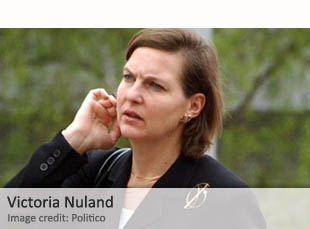
Victoria NulandBy JOSEPH FITSANAKIS | intelNews.org
My phone started ringing off the hook on Thursday evening, when a video appeared on YouTube containing a frank conversation between Victoria Nuland and Geoffrey Pyatt. Nuland, Assistant Secretary at the United States Department of State, and Pyatt, US Ambassador to Ukraine, were discussing US diplomatic moves on the political standoff in Ukraine. In the conversation, which was clearly meant to be private, Nuland expresses frustration with efforts by the European Union, which she deems weak and inadequate. In a shocking display of candor, Nuland tells Pyatt that the US should “help glue this thing and […] have the UN help glue it and, you know, f**k the EU”.

On Thursday night I spoke at the main news program of BBC television, where I agreed with most observers —some of the US government officials— that Russia was the obvious culprit behind the leaked conversation. The geopolitical interests of Washington and Brussels coincide almost completely when it comes to Ukraine, as both wish to detach the former Soviet republic from the Russian sphere of influence. So driving a wedge between the two allied sides is clearly to the benefit of Moscow. I added that the two American officials should have known better than to speak so frankly on the phone, given the constant monitoring of diplomatic communications by both adversary and friendly intelligence services, which is common knowledge in diplomatic circles. Read more of this post

US surveillance or Merkel’s phone prompts angry German reaction

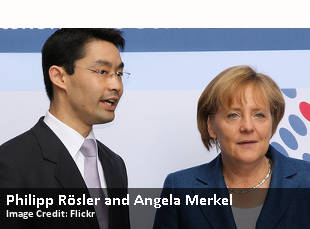
Philipp Rösler and Angela MerkelBy JOSEPH FITSANAKIS | intelNews.org
News of an invasive intelligence-gathering operation by the United States, which allegedly targeted the official communications of German chancellor Angela Merkel, has prompted angry responses from the European Union. The news prompted the French government to request that US surveillance of European heads of state be discussed during an upcoming EU summit, while The New York Times warned yesterday that “invasive American intelligence gathering” against Europe could “severely damage […] decades of hard-won trans-Atlantic trust”. The latest row between Washington and Brussels was sparked by a report aired on ARD, Germany’s state television station. It said that the National Security Agency (NSA), America’s foremost communications interception agency, had monitored the official cellular telephone of German Chancellor Angela Merkel. A spokesperson for the German government told journalists yesterday that the German leader had “angrily” called US President Barack Obama and demanded assurances that her communications were “not the target of an American intelligence tap”. The German leader reportedly told Mr. Obama that there should be “no such surveillance of the communications of a head of government” belonging to a “friend and partner of the US”. The Times reported that Washington’s responded by assuring Chancellor Merkel that her communications were “not the target of current surveillance and would not be in the future”. But the White House is said to have refused to enter into a discussion of past interception activities. Mrs. Merkel’s telephone call was the second time in less than two days that Mr. Obama had to provide assurances of privacy to a European head of state. Read more of this post

News you may have missed #851

EuropolBy IAN ALLEN | intelNews.org
►►Allegations that NSA has a listening post in Vienna. Both the US and Austrian governments have denied reports claiming to expose a major surveillance operation by the National Security Agency from within a villa in the Austrian capital Vienna. Austrian media reported last week that the US government had decided to end operations at the site because its cover was blown. Meanwhile, the allegations have turned into an Austrian affair of state.
►►Europol fighting unprecedented crime levels. Europe is dealing with an unprecedented surge in organized crime as sophisticated multinational groups, including child sex abusers and counterfeit gangs, expand their networks, according to Rob Wainwright, the British head of the European Union’s criminal intelligence agency, Europol. Wainwright says that thousands of gangs are capitalizing on the rise of smartphone and internet technology.
►►Are NSA revelations helping US tech industry? Edward Snowden’s unprecedented exposure of US technology companies’ close collaboration with national intelligence agencies, widely expected to damage the industry’s financial performance abroad, may actually end up helping. Despite emphatic predictions of waning business prospects, some of the big Internet companies that the former National Security Agency contractor showed to be closely involved in gathering data on people overseas –such as Google and Facebook– say privately that they have felt little if any impact on their businesses.