EU recalls envoy to Moscow over Skripal poisoning, more expulsions may follow
March 23, 2018 4 Comments
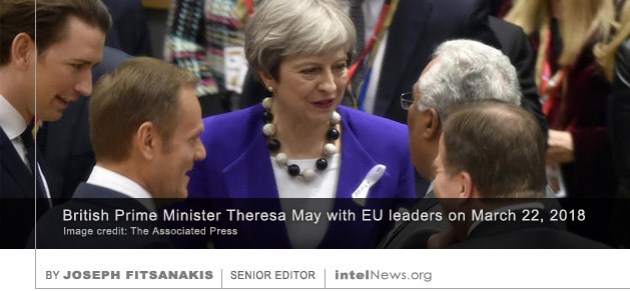 The European Union has recalled its ambassador to Moscow in an apparent response to the poisoning of Sergei Skripal, a Russian double agent, who was attacked with a nerve agent in England earlier this month. Skripal, 66, and his daughter Yulia, 33, remain in critical condition in hospital, nearly three weeks after being poisoned with a nerve agent that British scientists say belongs to Russia’s Cold-War-era chemical stockpiles. Moscow has angrily rejected claims that Skripal, who spied for Britain in the early 2000s, was on a Kremlin-approved hit-list of defectors. But British Prime Minister Theresa May traveled to Brussels on Thursday to brief European Union heads of state about the attack on Skripal.
The summit concluded in the early hours of Friday with the publication of a joint statement, signed by every participating head of state, backing the British claims and expressing outrage at Moscow’s alleged use of a military-grade nerve agent on British soil. The statement said that EU leaders “agree with the United Kingdom government’s assessment that it is highly likely that the Russian Federation is responsible” for the attack on the Skripals. “There is no plausible alternative explanation”, said the statement, and described the attack on the two Russians as a “grave challenge to our shared security”. The statement will be seen as a foreign-policy triumph by London, as Britain has been contacting EU governments seeking from them a direct condemnation of Russia and possible diplomatic actions in response to the alleged attack.
The jointly authored statement also said that the EU would recall its ambassador to Moscow, effective immediately. Markus Ederer, a German diplomat who represents the EU in the Russian capital, will be leaving Russia “for a month of consultations”, in what appears to be a symbolic act of protest by the Europeans. However, some EU members threatened further action and said that they would “coordinate on the consequences to be drawn in the light of” future Russian actions on the matter of the Skripals. In statements made to reporters early on Friday, German Chancellor Angela Merkel said that there may be “further punitive measures” against Russia, adding that they would be coordinated among EU states.
Some media reported that at least five EU member states were considering expelling undeclared Russian intelligence officers from their soil in response to the alleged Russian attack in England. They are said to include France, Lithuania and Poland. The London-based newspaper Daily Telegraph reported that Russia was in danger of having its Western European spy network dismantled in response to the attack on the Skripals. Some EU countries, however, including Italy and Greece, appeared less interested in taking action against Russia. The Greek Prime Minister, Alexis Tsipras, said on Thursday that his government expressed its “solidarity with the United Kingdom”, but that the EU had to investigate what happened in England on March 4.
► Author: Joseph Fitsanakis | Date: 23 March 2018 | Permalink
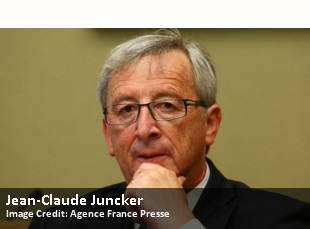 A judge in Luxembourg has launched a criminal investigation into whether officials working for the country’s former Prime Minister and current European Commission President, Jean-Claude Juncker, tried to conceal his role in a spy scandal. Until he stepped down from his post in 2013, Juncker, a member of Luxembourg’s Christian Social People’s Party, was Europe’s longest-serving elected leader, having served as Prime Minister since 1995. His resignation from his post came after a parliamentary inquiry found that the country’s State Intelligence Service (SREL) had engaged in serious criminal activity.
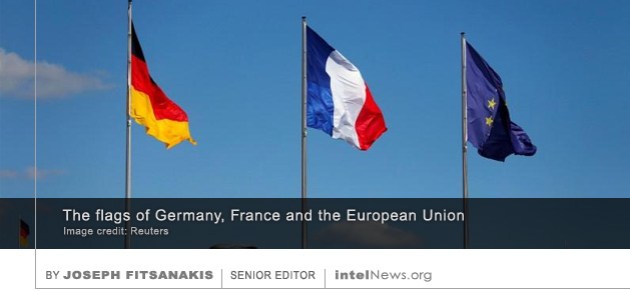 Germany’s two most senior intelligence officials have dismissed suggestions by European officials and leaders, including the president of France, to create a Europe-wide intelligence agency. The numerous deadly attacks carried out by Islamic State supporters across Europe in recent years have given rise to calls from various quarters for the establishment of a new intelligence service that would combine resources from every member-state of the European Union. Last month, the European Union’s Commissioner for Migration, Home Affairs and Citizenship, Dimitris Avramopoulos,
 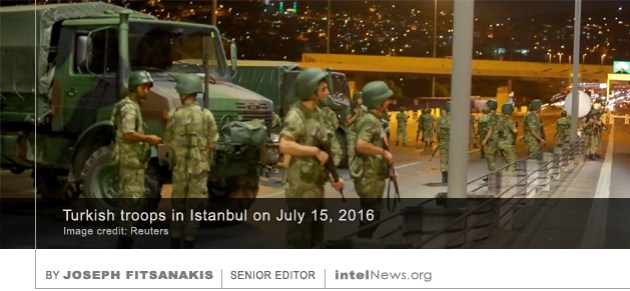 A leaked report by a European Union intelligence body states that Islamist forces were not behind last July’s failed coup in Turkey, and that the ruling party used the coup to neutralize its few remaining political rivals. The government of Turkish President Recep Tayyip Erdoğan accuses members of the so-called Gülen movement of orchestrating the coup, which included an armed attack on the country’s parliament and the murder of over 200 people across Turkey. The Gülen movement consists of supporters of Muslim cleric Fethullah Gülen, who runs a global network of schools, charities and businesses from his home in the United States. The government of Turkey has designated Gülen’s group a terrorist organization and claims that its members have stealthily infiltrated state institutions since the 1980s.
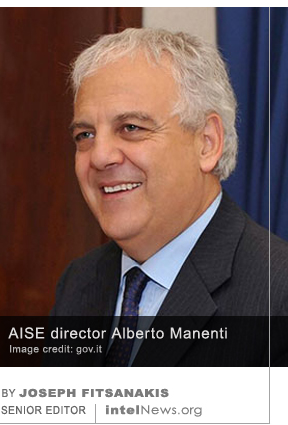 The head of Italian intelligence paid a secret visit to Syria earlier this month, a week after his Syrian counterpart visited Rome, according to reports from the Middle East. The Dubai-based newspaper Gulf News, which first reported the alleged behind-the-scenes exchange, said the visits focused on counter-terrorism cooperation between Syria and the European Union. The paper said that the initial contact was made in late June by Major General Deeb Zeitoun, head of Syria’s General Intelligence Directorate, who paid a secret visit to Rome. General Zeitoun’s visit was allegedly in response to an official invitation issued by the Italian government. The general is believed to have stayed in a secluded private villa, which was provided by the Italian External Intelligence and Security Agency, known as AISE. He subsequently met with several Italian intelligence officials, including AISE Director, General Alberto Manenti.
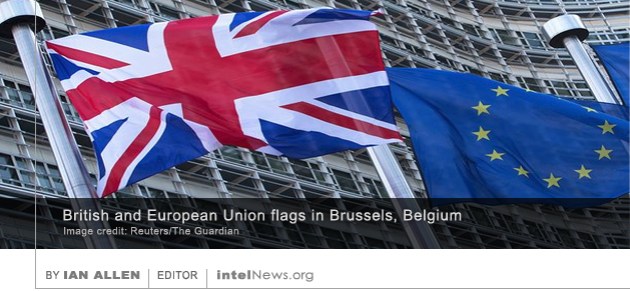 After Thursday’s Brexit vote, European and American security officials have tried to pacify concerns about major disruption of longstanding Western security cooperation arrangements. But experts stress that the international security landscape will be significantly impacted by Britain’s decision to leave the European Union (EU). As early as Thursday night, British defense, military and intelligence officials launched a marathon of phone calls in order to reassure their European and American counterparts that the United Kingdom was not going to retreat from its role in security pacts with Europe and the North Atlantic Treaty Organization (NATO).
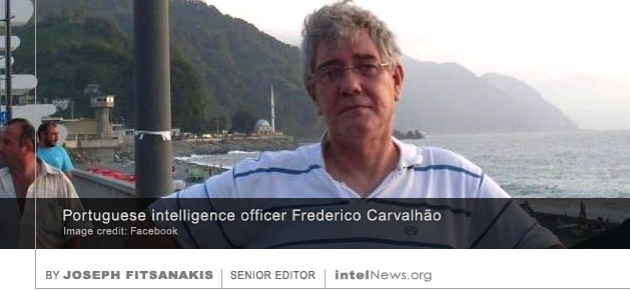 A Portuguese intelligence officer arrested a week ago in Rome, allegedly while passing classified documents to his Russian handler, may have accomplices with access to North Atlantic Treaty Organization (NATO) secrets. IntelNews
 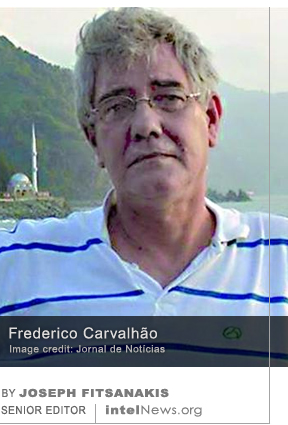 Two intelligence officers, one Russian and one Portuguese, have been arrested by Italian authorities on charges of espionage. The arrests took place in Rome on Monday by Italian police, who were reportedly accompanied by Portuguese counterintelligence officers. It is suggested in Portuguese media that the two men were arrested in the act of exchanging classified documents and money. The Portuguese intelligence officer has been identified in
 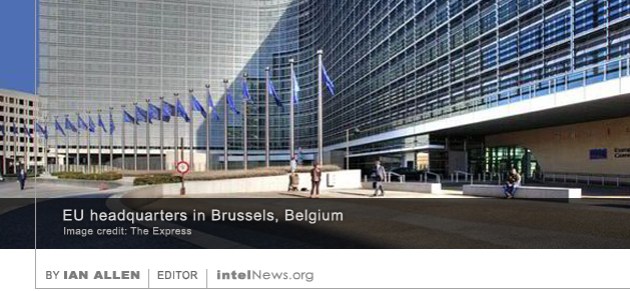 A debate on information security measures in the European Union was prompted last week after some officials voiced concerns that the proceedings of a closed-door meeting were secretly monitored by Israel. The meeting took place on January 15 as part of regular proceedings by the EU’s Political and Security Committee (PSC). The main item on the agenda was the EU’s Middle Eastern policy. According to some meeting participants, Israeli diplomats appeared to be aware of a statement discussed during the PSC meeting “in real time”, which prompted a wider debate on EU information security policies.
 An American former supreme allied commander of the North Atlantic Treaty Organization has warned that a possible Greek exit from the Eurozone “could become a geopolitical nightmare” for the European Union and NATO. James Stavridis, a retired four-start US Navy admiral, who served as NATO’s 16th Supreme Allied Commander Europe from 2009 to 2013, said solving the Greek crisis should not be left to the central bankers. In an article
  Several Western countries issued travel warnings for Greece on Sunday, as the Greek government shut down all banks and imposed capital controls following the breakdown of talks between Athens and the European Union.







 intelNews.org
Belgium to probe alleged Spanish espionage against separatist Catalan leader
June 14, 2018 by Joseph Fitsanakis 2 Comments
Amidst the chaos that ensued, Puigdemont, along with several other leading Catalan separatists, fled to Belgium where he requested political asylum. When it emerged that Puigdemont had fled abroad, Spanish authorities issued a European Arrest Warrant against him, on charges of sedition, rebellion against the state and misusing public funds. Fearing that the Belgian authorities might extradite him to Madrid, Puigdemont soon left for Germany, where he was detained by local police on March 25, 2018. He currently remains in Germany, while German authorities are deciding whether to grant Madrid’s request for his extradition.
Now authorities in Belgium are preparing to launch an investigation into whether Spain’s intelligence services carried out espionage against Puigdemont while he remained on Belgian soil. The investigation will most likely be carried out by the country’s Standing Intelligence Agencies Review Committee. Known broadly as Comité permanent R, the committee is an independent body that oversees the activities of Belgium’s security and intelligence apparatus. The investigation is to be launched as a result of an official parliamentary request submitted by the New Flemish Alliance, Belgium’s largest separatist party, which represents the country’s Dutch-speaking minority. The party has come out in support of Catalan independence and of Puigdemont in particular, and has urged Brussels to grant political asylum to the Catalan separatist leader.
Peter Buysrogge, a leading member of the New Flemish Alliance, said that his party wanted to know whether Spanish intelligence operated in Belgium with or without the knowledge of the Belgian government and intelligence services. He added that his party was especially interested in investigating allegations made in Catalan media that Spanish intelligence operatives followed Puigdemont and even installed a Global Positioning System (GPS) device under his car.
► Author: Joseph Fitsanakis | Date: 14 June 2018 | Permalink
Filed under Expert news and commentary on intelligence, espionage, spies and spying Tagged with Belgium, Carles Puigdemont, Catalonia, Comité permanent R (Belgium), espionage, European Union, New Flemish Alliance, News, Peter Buysrogge, Spain