Chile will ask US to extradite three men wanted in killing of UN diplomat
May 23, 2016 Leave a comment
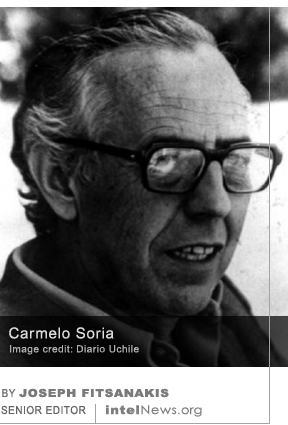 The Supreme Court of Chile will request that the United States extradites three individuals, including an American former professional assassin, who are implicated in the kidnapping, torture and murder of a United Nations diplomat. Carmelo Soria was a Spanish diplomat with dual Chilean nationality, who in the early 1970s was employed in the United Nations Economic Commission for Latin America and the Caribbean. In 1971, when the leftist Popular Unity party won Chile’s elections and became the nation’s governing coalition, Soria became an advisor to the country’s Marxist President, Salvador Allende. After the 1973 violent military coup, which killed Allende and overthrew his government, Soria used his diplomatic status to extend political asylum to a number of pro-Allende activists who were being hunted down by the new rightwing government of General August Pinochet.
Soria’s activities made him a target of the Dirección de Inteligencia Nacional (DINA), Chile’s domestic security service, which was a leading implementer of Operation CONDOR, a widespread anti-communist program that began in 1968 with the participation of most Latin American governments. CONDOR, which ended in 1989, included psychological operations, kidnappings and assassinations that targeted leftwing organizations and activists. On July 14, 1976, Soria, who had by then resumed his previous UN post, was kidnapped by agents of the DINA. He was tortured and murdered under detention. His body was found on July 16 inside a car that had been dumped in a river in Santiago de Chile. The Pinochet government refused to investigate the incident, saying that Soria had been driving under the influence of alcohol.
Last Tuesday, however, after an investigation that dates back to 1991, the Supreme Court of Chile said that an extradition request will be sent to the United States for three individuals who were allegedly directly implicated in the murder of Soria. They are: Michael Townley, a US citizen; Armando Fernandez Larios, of Chile; and Cuban Virgilio Pablo Paz Romero, all of whom were agents of DINA at the time of Soria’s murder. Townley is a former professional assassin who was hired by DINA for a series of murders. In 1978, a US court convicted him for his participation in the assassination of Orlando Letelier, former Chilean ambassador to the US, who was killed in 1976, when his car exploded in Washington, DC. Since his release from prison, Townley has been living in the US under the Witness Protection Program.
Larios, a Chilean national, was also convicted of being “an accessory after the fact” in the Letelier assassination and is also living in the US, having struck a plea bargain with Washington. The third individual, Paz Romero, was sentenced to 12 years in prison in 1991, after admitting that he personally detonated the remote-controlled car bomb that killed Leteler. He was paroled after serving half of his sentence and was ordered to be deported to his home country of Cuba. However, due to the absence of a bilateral deportation agreement between Washington and Havana, Romero remained in the indefinite custody of the US Immigration and Naturalization Service. In 2001, the US Supreme Court ruled that indefinite detentions were unconstitutional, so Romero was released and has been living freely in the US since that time.
► Author: Joseph Fitsanakis | Date: 23 May 2016 | Permalink | News tip: R.W.
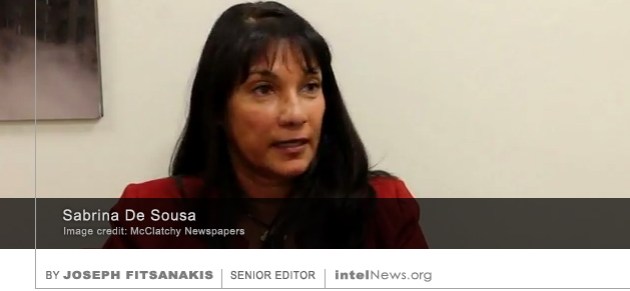 An appeals court in Portugal has ruled that a former officer of the Central Intelligence Agency is to be extradited to Italy, where she faces charges of helping kidnap a man as part of a secret operation sponsored by the United States government. Sabrina De Sousa, 59, was an accredited diplomat stationed at the US consulate in Milan, Italy, in 2003, when a CIA team kidnapped Hassan Mustafa Osama Nasr from a Milan street in broad daylight. Nasr, who goes by the nickname Abu Omar, is a former member of Egyptian militant group al-Gama’a al-Islamiyya, and was believed by the CIA to have links to al-Qaeda. Soon after his abduction, Nasr was renditioned to Egypt, where he says he was brutally tortured, raped, and held illegally for years before being released without charge.
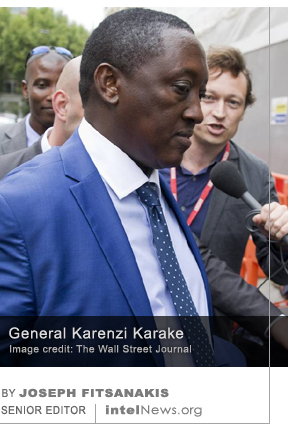 A Rwandan former intelligence chief, whose legal team is led by the wife of British former Prime Minister Tony Blair, has been freed after a court in the United Kingdom refused to extradite him to Spain to face war crimes charges. General Emmanuel Karenzi Karake, 54, was the most senior intelligence official in the administration of Rwandan President Paul Kagame. He rose to fame as a commander in the Rwandan Patriotic Front (RPF), an armed rebel group from Rwanda’s minority Tutsi tribe that fought to end the genocide inflicted upon the Tutsis by their rival Hutus. In 1994, following the death of nearly a million people, the RPF took power in Rwanda and ended the slaughter. That accomplishment caused a rapid upsurge in the popularity of Karake and other senior RPF leaders. Karake’s popularity remains strong among the Tutsis despite his dramatic falling-out with Kagame in 2010, which led to the general’s dismissal from the government.
 By JOSEPH FITSANAKIS | intelNews.org |







 intelNews.org
Ex-Yugoslav spy testifies in German trial about 1983 murder of dissident
July 6, 2016 by Joseph Fitsanakis Leave a comment
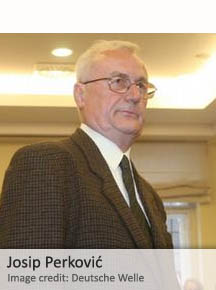
In 2009, following testimonies by several former UDBA agents, who were arrested in connection with the crime, the Office of the German Federal Prosecutor issued a European Arrest Warrant for Josip Perković, a former senior official in the UDBA. He is accused of having played a central role in organizing Đureković’s assassination. In 2014, Croatia, where Perković has been living since the demise of Yugoslavia, agreed to extradite Perković to Germany. The agreement materialized after heavy pressure was exercised on Croatia by the European Commission, after the country’s admission into the European Union.
Perković is now co-defendant in the trial taking place in Munich, along with another former UDBA intelligence official, Zdravko Mustać (see photo). Tuesday’s proceedings included testimony by another former UDBA man, Vinko Sindicić, who named both Perković and Mustać as direct accomplices in Đureković’s murder. Sindicić told the court that Perković was acting on orders to kill the German-based dissident, which came directly from the office of UDBA Director Zdravko Mustać. He added that Perković helped organize the logistics of Đureković’s assassination, including the location in Munich where the killing actually took place. Sindicić told the court that a female UDBA operative living in Munich was also involved in organizing the operation, and that the weapons used to kill Đureković had been secretly transported to Germany through Jadroagent, an international shipping and freight company based in Yugoslavia. During his testimony, which lasted for several hours, Sindicić claimed that the two men who carried out Đureković’s murder were UDBA assassins Branko Bijelić and Luka Sekula. The former died in 2004, but the latter still lives in Sweden and has yet to be extradited to Germany in connection with the murder trial.
It is worth noting that Sindicić spent a decade behind bars for his role in a failed attempt to kill another Yugoslav dissident émigré, Nikola Stedul, whom the UDBA tried to kill in the United Kingdom in 1988. Further charges against him were dropped in 2000, in a trial where he stood accused of complicity in the murder of yet another exiled Yugoslav dissident, Bruno Busić, who was killed in Paris in 1978. Both Perković and Mustać deny any involvement in Đureković’s assassination.
► Author: Joseph Fitsanakis | Date: 06 July 2016 | Permalink
Filed under Expert news and commentary on intelligence, espionage, spies and spying Tagged with assassinations, Branko Bijelić, Cold War, Croatia, extraditions, Federal Republic of Germany, Germany, history, Jadroagent, Josip Perković, Luka Sekula, News, Operation DUNAV, Stjepan Durekovic, Vinko Sindicić, Wolfratshausen (Germany), Yugoslav State Security Service, Yugoslavia, Zdravko Mustać