Spain returns stolen material to North Korean embassy in Madrid, say sources
April 16, 2019 1 Comment
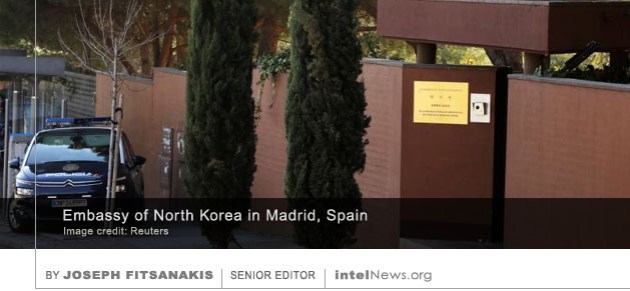 Authorities in Spain have returned material that was stolen from the embassy of North Korea in Madrid by a group of raiders in February, according to a source that spoke to the Reuters news agency. The unprecedented attack took place in the afternoon of February 22 in a quiet neighborhood of northern Madrid, where the North Korean embassy is located. Ten assailants, all Asian-looking men, entered the three-story building from the main gate, brandishing guns, which were later found to be fake. They tied up and gagged the embassy’s staff and some visitors to the embassy. After several hours spent inside the buildings, the assailants abandoned the building in two embassy vehicles that were later found abandoned.
A few weeks following the raid, a North Korean dissident group calling itself Cheollima Civil Defense —also known as Free Joseon— claimed responsibility for the attack. Cheollima Civil Defense is North Korea’s first known active resistance group. Its members call for the overthrow of the Kim dynasty. Subsequent reports said that some of those who took part in the embassy raided fled to the United States and approached the Federal Bureau of Investigation (FBI) with an offer to hand over computer hardware and telephones captured in the attack. On Tuesday, the Reuters news agency reported that the FBI “returned the material [to Spanish authorities] two weeks ago”, and that Spanish police handed it over to the North Koreans. Citing “a Spanish judicial source”, Reuters said that American authorities returned the material directly to the Spanish court that is investigating the raid.
According to the news agency, Spanish authorities returned the material to the North Korean embassy without reviewing its contents, thus complying with the norms of diplomatic protocol. Data and items belonging to foreign embassies are usually off-limits to the authorities of host nations. The report did not clarify whether the FBI returned all the material that was stolen by the raiders in February, nor did it state whether the FBI reviewed its contents prior to handing it over to the Spanish court.
► Author: Joseph Fitsanakis | Date: 17 April 2019 | Permalink
 A new book reveals for the first time the name of a former intelligence officer of the Soviet KGB who helped American authorities arrest Robert Hanssen, an American spy for the Soviet Union and Russia. The son of a Chicago police officer, Hanssen joined the Federal Bureau of Investigation in 1976 and was eventually transferred to the Bureau’s Soviet analytical unit, where he held senior counterintelligence posts. It wasn’t until 2000, however, that the FBI realized Hanssen had spied for Moscow since 1979. Following Hanssen’s arrest in 2001, it emerged that he had betrayed the names of 50 FBI and CIA assets or informants, many of whom perished in the hands of the Russian intelligence services.
 An investigation was opened in the United States on Tuesday, after two envelopes containing the deadly poison ricin were intercepted at the Pentagon. The envelopes were
  A case officer in the United States Central Intelligence Agency, who was arrested in January of this year for violating the Espionage Act, shared classified information with China, according to an official indictment. The Federal Bureau of Investigation
  A former case officer in the Central Intelligence Agency, who was arrested this week for violating the United States Espionage Act, was lured back to America from Hong Kong at least once by counterintelligence investigators, according to reports. Jerry Chun Shing Lee, 53, served in the CIA from 1994 to 2007. He was
 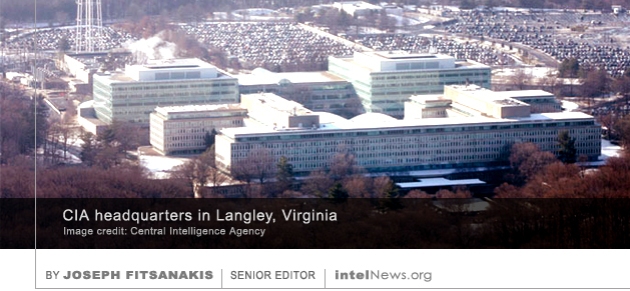 A former operations officer in the United States Central Intelligence Agency has been arrested on charges of illegally possessing top secret information, including lists of real names of foreign assets and addresses of CIA safe houses. The news emerged on Tuesday, as the US Department of Justice announced that the Federal Bureau of Investigation had filed a criminal complaint over the weekend. The complaint identifies the former case officer as Jerry Chun Shing Lee, also known as Zhen Cheng Li. Lee, a 53-year-old naturalized American, served in the CIA from 1994 to 2007 “in various overseas positions and locations”, according to court documents. Lee has
 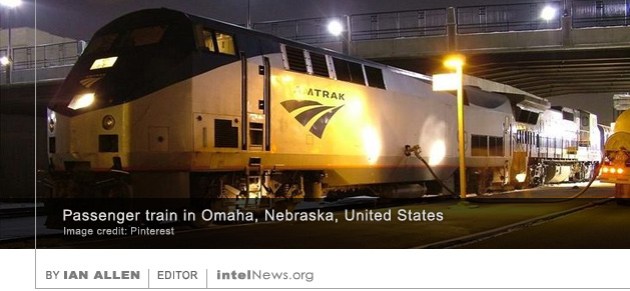 A man who attended the “Unite the Right” rally in Charlottesville, Virginia, with members of a neo-Nazi organization, has been charged with terrorism offences after he tried to derail a passenger train. Taylor M. Wilson, of St. Charles, Missouri, was arrested by federal law enforcement officials on October 22, after he
 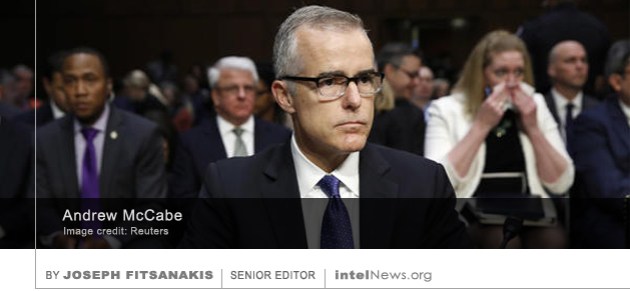 The interim director of the Federal Bureau of Investigation has told an intelligence panel in the United States Senate that he will not hesitate to report any attempts by the White House to interfere with an official investigation into Russia’s role in the 2016 presidential election. Andrew McCabe assumed the leadership of the FBI on Tuesday, after US President Donald Trump abruptly fired the Bureau’s director, James Comey. A trained lawyer who joined the FBI in 1996, McCabe amassed significant experience in countering organized crime and terrorism before being appointed Deputy Director of the Bureau in 2016.
 An employee of the United States Department of State has been charged with lying to authorities about her contacts with Chinese intelligence operatives, who gave her money and gifts in return for information. Candace Claiborne, 60, joined the Department of State in 1999 as an office management specialist. She lives in Washington, DC, but has served overseas in American diplomatic facilities in Baghdad, Iraq, Khartoum, Sudan, and China, where she was stationed in Beijing and Shanghai. According to information provided by the Federal Bureau of Investigation, Claiborne had a top security clearance, which required her to report contacts with foreign nationals.
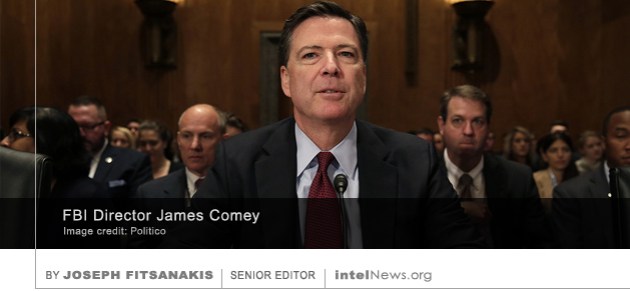 Monday’s official announcement that an investigation is underway into alleged Russian involvement in the 2016 United States presidential election was an important moment in American political history. It exposed the chaotic state of American politics and added yet another layer of complexity in an already intricate affair, from which the country’s institutions will find it difficult to recover for years to come. This is regardless of the outcome of the investigation, which is being conducted by the Federal Bureau of Investigation. Even if it fails to produce a ‘smoking gun’, the very fact that the country’s chief counterintelligence agency is examining the possibility that a US president was elected with help from Russia, is an astonishing development without parallel in modern American history.
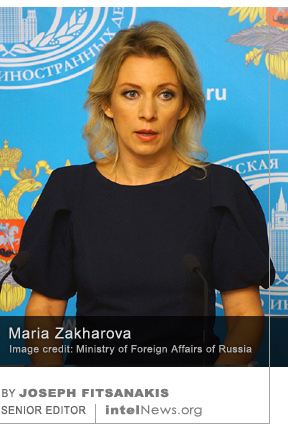 A senior Russian official has accused the United States Federal Bureau of Investigation of trying to blackmail a Russian diplomat who was attempting to purchase anti-cancer drugs in an American pharmacy. The allegation was made Sunday on live Russian television by Maria Zakharova, spokeswoman for Russia’s Ministry of Foreign Affairs. She was being interviewed on Sunday Night with Vladimir Solovey, a popular politics roundtable show on Russia’s state-owned Rossiya 1 television channel. Zakharova told Solovey that, a few years ago, the Russian government authorized one of its diplomats in the United States to purchase several thousand dollars’ worth of anti-cancer drugs. The drugs were to be used by Yevgeny Primakov, Russia’s prime minister in the late 1990s, who was battling liver cancer.
 Coordinated efforts by Anglo-American military and intelligence agencies have resulted in the killing or capturing of nearly every senior commander of the Islamic State’s online force. The close-knit group of Islamic State hackers and online propagandists, which are informally known as “the Legion”, is responsible for hacking and online recruitment incidents that led to several lone-wolf attacks in the West. In one incident in March of 2015, the Legion claimed responsibility for the unauthorized release of personal details of over 1,300 American government employees, with orders to Islamic State volunteers to kill them. In other instances, Legion operatives reached out to impressionable young men and women in Western Europe and the United States and convinced them to move to Syria or conduct attacks at home.
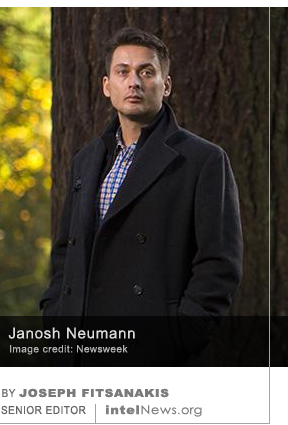 Two Russian intelligence officers, who defected to the United States in 2008, claim that they had to fend for themselves after American spy agencies failed to protect them despite promises to the contrary. Janosh Neumann (born Alexey Yurievich Artamonov) and his wife Victorya were employees of Russia’s Federal Security Service (FSB) specializing in investigations of money laundering and corruption. But in 2008 they traveled from Russia to Germany and from there to the Dominican Republic. Once in the Caribbean island, they entered the US embassy and offered to work for the Central Intelligence Agency (CIA).
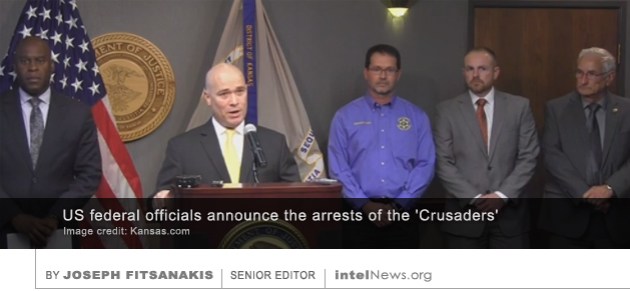 Federal authorities in the United States have charged three men with conspiring to use a weapon of mass destruction with the intention of blowing up an apartment complex in a predominantly Muslim neighborhood in Kansas. The men, Patrick Eugene Stein, Curtis Allen and Gavin Wright, who called themselves ‘the Crusaders’, allegedly wanted to spark a religious war between Christians and Muslims in the United States. They were arrested last week in simultaneous raids conducted by the Federal Bureau of Investigation, after they obtained guns and chemicals for making bombs.






 intelNews.org
FBI files espionage charges against California man who allegedly spied for China
October 1, 2019 by Joseph Fitsanakis 4 Comments
On Friday, officers with the Federal Bureau of Investigation arrested Peng at his home in Hayward, California, and charged him with spying on behalf of the Ministry of State Security (MSS), which is China’s primary external intelligence agency. At a press conference held on Monday, David Anderson, US Attorney for the Northern District of California, said that Peng began working for the MSS in June 2015 and continued to do so until June of 2018. Throughout that time, Peng participated in at least six dead drops on behalf of the MSS, said the FBI. But he was unaware that the agent on the other end of the dead drop was in fact an FBI informant, who had lured Peng and the MSS into an elaborate sting operation. The informant is referred to in the indictment as “the source”. The FBI said it paid the informant nearly $200,000 to facilitate the sting operation.
Most of the dead drops took place at a hotel in Newark, California. Peng would book a room in the hotel using a popular online booking service. He would check in and go to his hotel room, where he would hide envelopes containing as much as $20,000 in cash. He would then leave the room key at the front desk for his contact to pick up. The contact (the FBI informant) would pick up the key and the cash, and leave memory sticks with classified US government information for Peng to pick up. Peng would then travel to China to deliver the classified information to the MSS.
Unbeknownst to Peng, the FBI was monitoring him all along, and managed to secretly tape his alleged espionage activities. The surveillance footage is now part of the federal affidavit that was unsealed on Monday. Moreover, the FBI appears to have given Peng classified information that was approved for the purposes of the counterespionage operation against him. It is not known whether the classified information was real, deceptive, or a mixture of the two. It is worth noting that Peng is not a foreign diplomat and is therefore not subject to the rules of diplomatic immunity. He now faces a maximum of 10 years in prison and a fine of up to $250,000 if convicted.
► Author: Joseph Fitsanakis | Date: 01 October 2019 | Permalink
Filed under Expert news and commentary on intelligence, espionage, spies and spying Tagged with China, Chinese Ministry of State Security, counterintelligence, espionage, FBI, News, sting operations, United States, Xuehua “Edward” Peng