German intelligence agencies discuss ongoing espionage and hybrid challenges
May 6, 2024 1 Comment
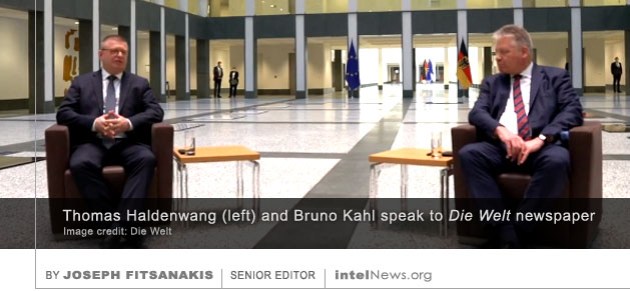
 THE 5TH SYMPOSIUM ON the Law of Intelligence Services (Symposium zum Recht der Nachrichtendienste) took place in Berlin, Germany, on March 21-22. In view of the public criticism that German intelligence agencies have faced in recent times, it was probably a relief for their officials to be able to talk more-or-less among themselves for once.
The event (see agenda in .pdf) was organized by the Federal Ministry of the Interior and the Federal Chancellery Office. This year’s topic was: “Intelligence Agencies and Armed Conflicts”. It included the tried and tested mix of academics —predominantly legal scholars—, practitioners and heads of various government authorities. The majority of the external experts discussed the complicated and, in Germany, arduous parliamentary procedures that would arise in the event of a war.
In view of the controls increasingly being placed on German intelligence agencies by various bodies and authorities —which were also represented at the symposium— a certain discrepancy became apparent repeatedly in the presentations: How can the German intelligence agencies react adequately and quickly to hybrid threats when these types of threat do not concern themselves with administrative-legal subtleties and parliamentary procedures? Although the concept of hybrid threats was generally taken for granted and therefore hardly discussed in terms of content, those present agreed at a minimum that disinformation is part of it. All the more worrying was the statement by one speaker who explained that there was no official definition of disinformation within the German security authorities’ legal codes.
In the discussion, the panel moderated by Center for Intelligence Service Training and Further Education (ZNAF), the common training and study location of the Federal Intelligence Service (BND) and the Federal Office for the Protection of the Constitution (BfV), clearly stood out and underscored that this relatively new institution has made a name for itself in the academic intelligence landscape since its establishment in 2019.
However, the symposium also showed that the German security bureaucracy tends to reach its limits when it comes to current developments in the unconventional domain. This was demonstrated, for example, by a speaker’s demand that hybrid risks ought to be assigned to a “state area of responsibility”. The problem, however, lies precisely in the statelessness of hybrid risks. The existing regulations are also proving to be counterproductive, in view of the challenges: there would simply be highly heterogeneous participants in the so-called Cyber Defense Centre, which would also include police authorities. However, due to the strict separation in the legal domain, personal data cannot simply be passed on from the BND to the Federal Police, for example. Read more of this post
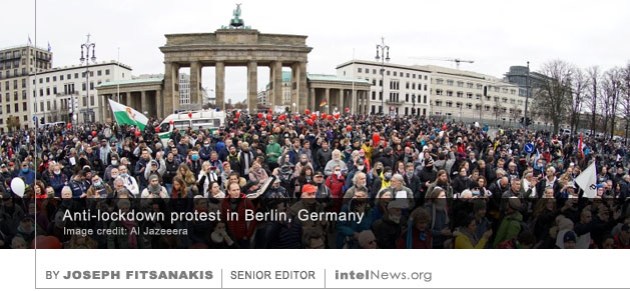 GERMANY’S DOMESTIC INTELLIGENCE AGENCY said on Wednesday it has begun monitoring groups associated with conspiracy theories surrounding COVID-19, who are “challenging the legitimacy of the state”. Germany is home to one of the most vocal anti-lockdown movements in the Western world, with public rallies against lockdown measures taking place nearly every week across the country. These rallies attract a peculiar mix of participants who come from a variety of backgrounds, including anti-vaccination proponents, various conspiracy theorists, and supporters of both far-left and far-right parties.
 A GERMAN COURT HAS temporarily blocked an attempt by the country’s intelligence service to place a domestic far-right party under government surveillance for the first time since the Nazi era. The far-right party, Alternative für Deutschland, or AfD, was established in 2013. It shocked the German political establishment in 2017, when it received nearly 6 million votes, which amounted to 12.6% of the national vote. Since then, however, the AfD has been shunned by other political parties and the German media, for its alleged links with neo-Nazi groups and sympathizers.
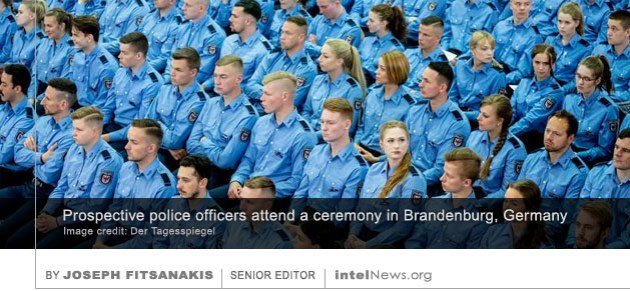 The German government has announced plans to hire hundreds of new police and intelligence officers, in order to step up its monitoring of violent far-right groups in the country. The announcement came at a press conference hosted on Tuesday in Berlin by Horst Seehofer, Germany’s Interior Minister.
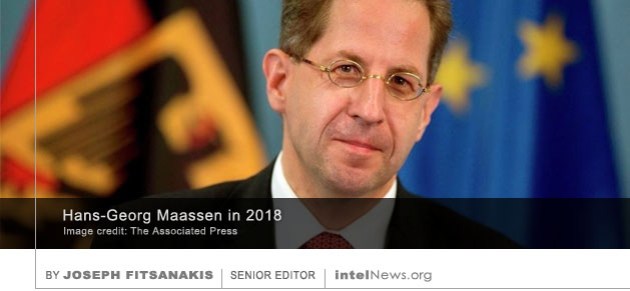 The successor to Angela Merkel in the leadership of Germany’s ruling Christian Democratic Union (CDU) urged the removal from the party of the country’s former spy chief for expressing far-right views. But she later appeared to retract her comments. Hans-Georg Maassen led Germany’s Federal Office for the Protection of the Constitution (BfV) from August 2012 until his removal last September. His BfV career was abruptly
 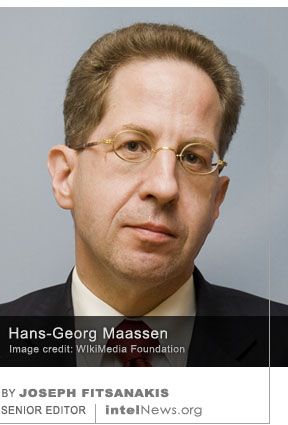 Germany’s fragile ruling coalition continues to face strong criticism two days after removing the country’s domestic intelligence chief over concerns that he may harbor far-right sympathies. Hans-Georg Maassen, a career civil servant, led Germany’s Federal Office for the Protection of the Constitution (BfV) from August 2012 until his removal on Thursday of this week. His hasty removal from the BfV was caused by the so-called
 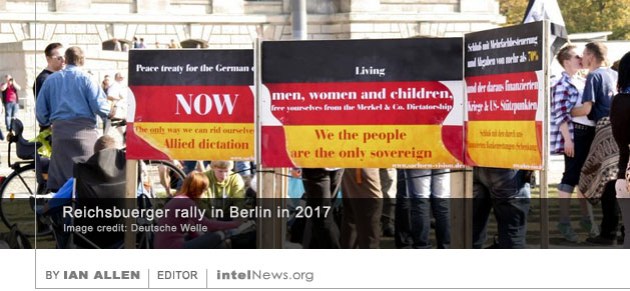 Adherents of a bizarre far-right movement in Germany, who claim to be citizens of Prussia, are arming themselves and pose a growing security threat, says a new report by the country’s domestic spy service. The members of the movement call themselves Reichsbuerger (“citizens of the Reich”) and reject the legitimacy of the Federal Republic of Germany. Instead of the modern-day German state, which emerged in 1990 from the union of East and West Germany, Reichsbuergers swear allegiance to the Deutsches Reich (German Reich), the Nazi German state that existed between 1933 and 1945. They also claim that the Deutsches Reich, which they occasionally refer to as Prussia, continues to exist in its pre-1945 state and is still governed by a provisional government in exile.
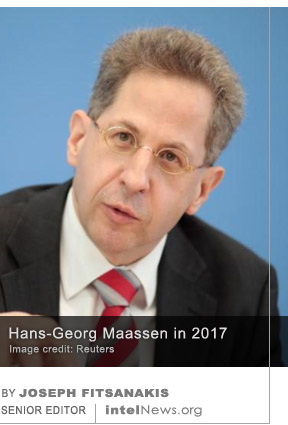 The head of Germany’s domestic intelligence agency has warned of security risks resulting from Chinese direct investment in high-technology German and other European companies. Since 2012, Hans-Georg Maassen has served as director of the Federal Office for the Protection of the Constitution, Germany’s domestic security and counterintelligence agency.
 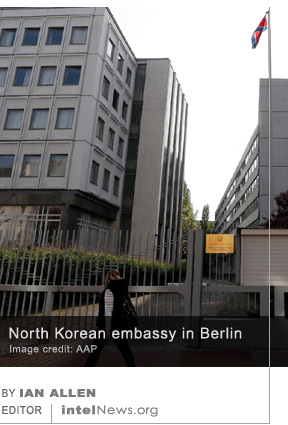 North Korea used its embassy in Berlin to acquire technologies that were almost certainly used to advance its missile and nuclear weapons programs, according to the head of Germany’s counterintelligence agency. For many decades, Pyongyang has used a sophisticated international system of procurement to acquire technologies and material for its conventional and nuclear weapons programs. These secret methods have enabled the country to evade sanctions placed on it by the international community, which wants to foil North Korea’s nuclear aspirations.
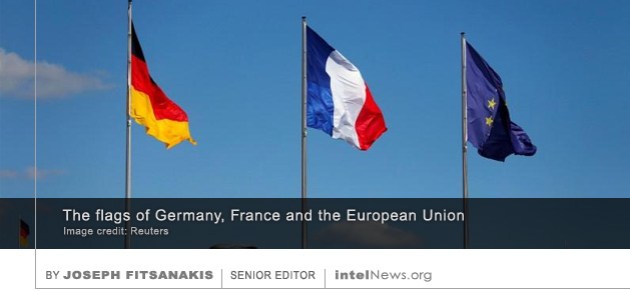 Germany’s two most senior intelligence officials have dismissed suggestions by European officials and leaders, including the president of France, to create a Europe-wide intelligence agency. The numerous deadly attacks carried out by Islamic State supporters across Europe in recent years have given rise to calls from various quarters for the establishment of a new intelligence service that would combine resources from every member-state of the European Union. Last month, the European Union’s Commissioner for Migration, Home Affairs and Citizenship, Dimitris Avramopoulos,






 intelNews.org
Possible Russian role probed in incendiary devices found in Britain and Germany
October 21, 2024 by Joseph Fitsanakis 2 Comments
On September 1, the German government issued a warning about unknown suspects allegedly shipping “unconventional incendiary devices” throughout Europe. The warning referenced a fire that occurred at a DHL logistics center in the east German city of Leipzig. Germany’s Federal Office for the Protection of the Constitution (BfV) warned at the time that “further incendiary incidents” were anticipated, but provided no further details.
Late last week, British newspaper The Guardian reported that an incident like the one that occurred in Leipzig had taken place in a DHL warehouse in Minworth, a suburb of the city of Birmingham, located in the British Midlands region. In subsequent reporting, the paper alleged that British and German authorities have been investigating a link between the two incidents. Moreover, authorities are reportedly probing the possibility that the incidents may be part of a wider campaign by Russian military intelligence to sabotage Western European transportation and shipping networks.
Meanwhile, Lithuanian media revealed on Friday that a suspect had been arrested in Lithuania in connection with the two fires in Britain and Germany. The reports suggested that the two incendiary devices had been shipped from Lithuania by the same individual. However, there have been no updates about who may be behind the apparent sabotage campaign.
► Author: Joseph Fitsanakis | Date: 21 October 2024 | Permalink
Filed under Expert news and commentary on intelligence, espionage, spies and spying Tagged with DHL Group, Federal Office for the Protection of the Constitution (Germany), Germany, GRU, Lithuania, News, Russia, sabotage, transportation security, UK