Libya gave French ex-president Sarkozy $8 million, says Gaddafi’s spy chief

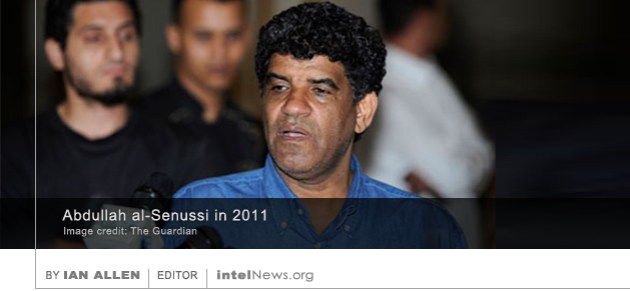
Abdullah al-SenussiA senior intelligence advisor to Libya’s late ruler Muammar al-Gaddafi has reportedly told French investigators that the Libyan government gave $8 million to the election campaign of France’s ex-President Nicolas Sarkozy. Sarkozy’s 30-year political legacy has been marred by a series of financial scandals, for which he is currently under investigation. In March of last year, the former French president issued strong denials of accusations that he accepted an illicit multi-million monetary donation from Gaddafi during his 2007 campaign for the presidency. During a 20-minute television interview, Sarkozy described the investigation into the allegations that he acted as an agent of influence for Libya as “a waste of time”, arguing that it was over an alleged donation of less than $45,000, which represented a tiny fraction of his campaign budget.
But according to the French investigative news website Mediapart, a team of French judges was told by Gaddafi’s former spy chief that Sarkozy was given millions of dollars in secret by the Libyan state. Abdullah al-Senussi, who oversaw the Libyan intelligence agencies under Gaddafi, reportedly told the French investigators that the funding was part of a secret deal between the two parties. In 1979, Senussi married the sister of Gaddafi’s wife and remained a trusted confidante of the Libyan leader until his violent death in 2011. According to Mediapart, he told the French judges that he personally supervised the transfer of funds to Sarkozy’s election campaign. He said that the payments entered the campaign’s coffers via a French government minister who received the funds from Libyan agents in two separate installments in 2006. In return, Sarkozy promised to help reinstate Gaddafi’s international image if he was elected president. He also promised to impede attempts by Western countries to arrest Gaddafi and some of his senior government aides —including Senussi— for terrorist crimes. Senussi allegedly said that Sarkozy himself promised him that his international arrest warrants would be quelled with the help of the French president’s personal lawyers. Sarkozy later hosted Gaddafi in Paris in a lavish setting in 2007.

Mediapart said that it accessed Senussi’s testimony before the French judges after getting hold of extracts from his formal statements during his interviews. It added that the information provided by Senussi appears to confirm similar claims made by other witnesses in the investigation about Sarkozy’s alleged illegal campaign funding. The former French president is currently involved in a separate legal dispute concerning alleged illegal spending during his failed campaign for the presidency in 2012.

Author: Ian Allen | Date: 21 February 2019 | Permalink

French security services investigate Russian role in yellow vests movement

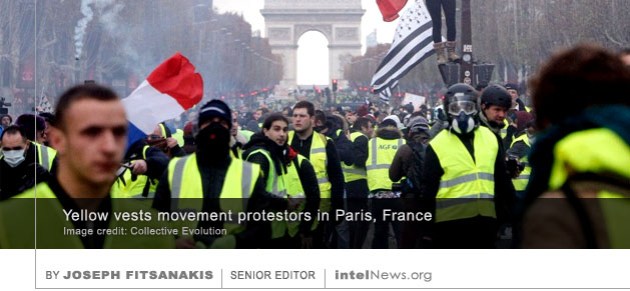
yellow vests movementIntelligence and security services in France are investigating whether Russian involvement on social media and other platforms is playing a role in amplifying the so-called ‘yellow vests’ movement. Known in French as le mouvement des gilets jaunes, the campaign began online in May of this year as a popular protest against rising fuel prices and the high cost of living in France. In mid-November, the movement made its first public appearance with large demonstrations that have continued every weekend since then. Yellow vest protestors claim that tax increases are disproportionally affecting working- and middle-class people and that everyday life is becoming economically unsustainable in France. Some of the demonstrations have turned violent, and so far at least eight people have died as a result. The ensuing crisis has become the most significant threat to the government of Emmanuel Macron, as the protests are increasingly evolving into an anti-Macron rallies.
So far, the yellow vests campaign has been largely bipartisan, bringing together protestors from the entirety of the French political spectrum. Additionally, there are no identified leaders or coordinators of the movement. However, some suspect that Russian government operatives may be further-inflaming an already incensed protest movement. On Friday, The Wall Street Journal said that French security agencies were investigating potential involvement by the Kremlin in the yellow vests campaign. The paper quoted an unnamed French government cybersecurity official as saying that “there has been some suspect activity [and] we are in the process of looking at its impact”. The official was referring to the online activity of some leading social-media accounts involved with the yellow vests, which appear to also be “promoting Russian-backed coverage” of French politics. The Journal also cites Ryan Fox, a cybersecurity expert for the Texas-based firm New Knowledge, who claims that “several hundred accounts on Twitter and Facebook” that are involved in the yellow vests movement “are very likely controlled by Moscow”.

However, there is disagreement among cybersecurity experts about the extent of the Kremlin’s involvement in the yellow vests. Paris has previously accused Moscow of trying to influence the direction of French politics. In February of 2017, France’s Directorate-General for External Security warned that Russia had launched a secret operation to try to influence the outcome of that year’s French presidential election in favor of the far right. However, if such an effort existed, it failed to stop the rise to power of Emmanuel Macron. Since assuming the country’s presidency, Macron has been a leading international critic of Russia’s domestic and foreign policies. The Kremlin, therefore, has strong reasons to want to see a premature end to Macron’s presidency.

This does not necessarily mean that Moscow has been able to anticipate —let alone influence— the yellow vests movement, whose energy has surprised even the most experienced French political observers. The Journal notes that many leading Western cybersecurity bodies, including the Atlantic Council’s Digital Forensic Research Lab, have “not seen significant evidence of state-sponsored interference” in the yellow vests movement, whether by Russia or any other government. Facebook also said that its monitors have not uncovered any evidence of an organized campaign by Moscow to coax the yellow vests protests. The paper also cited Dimitri Peskov, a spokesman for the Kremlin, who categorically denied allegations that Russia was in any way involved in directing yellow vests activists.

Author: Joseph Fitsanakis | Date: 17 December 2018 | Permalink

Analysis: Strasbourg attack raises serious security concerns in Europe

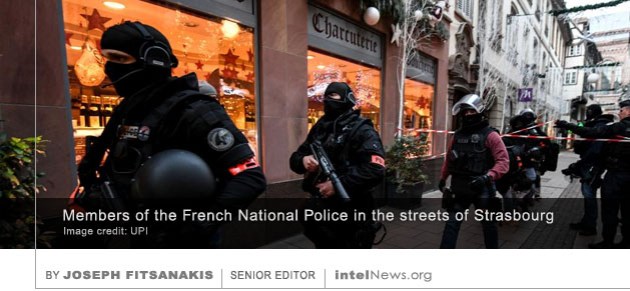
StrasbourgThe terrorist attack in the French city of Strasbourg on December 11 raises important security concerns for Europe’s ability to defend itself against a rapidly evolving Islamist insurgency. The attack lasted 10 minutes, from 7:50 to 8:00 p.m. on Tuesday evening, and targeted shoppers in Christkindelsmärik, a large Christmas market held annually in Strasbourg. The lone shooter, who has since been identified as Chérif Chekatt, a French citizen, was reportedly heard shouting “Allahu Akbar” (God is great) repeatedly as he opened fire on the unsuspecting shoppers. He also tried to stab some of them using a knife. Chekatt eventually exchanged fire with French soldiers and officers of the National Police before fleeing the scene of the attack in a taxi cab. Three people were declared dead at the scene, while 12 others were urgently transported to nearby hospitals. Six of them remain in critical condition. Chekatt remained at large until Thursday evening, when he was shot dead by police in Strasbourg.

It is important to stress that the choice of Strasbourg as the site of the terrorist strike was not accidental, nor was the attack spontaneous. A city and of nearly 500,000 inhabitants in its greater district, Strasbourg is one of the European Union’s de facto capitals. It hosts several European institutions, including the building of the European Parliament. Its geographical location on the French-German border epitomizes the crossroads of Franco-German cultural traditions. Its distinct character symbolizes the coexistence of Europe’s two leading powers, which forms the cornerstone of the European Union project. The majority of Strasbourg’s residents are bilingual and communicate in Alsacien, a peculiar mixture of French and German. The city also exemplifies a distinctive brand of 21st-century Christian unity through the balanced coexistence of Catholic and Protestant religious cultures. The Christkindelsmärik —the venue that was attacked on Tuesday— is Europe’s largest Christmas market and symbolizes precisely that coexistence. Providing that Tuesday’s attack was sanctioned and/or planned by the Islamic State or one of its affiliate organizations, its strong symbolism is apparent.

As Washington Examiner commentator Tom Rogan noted on Wednesday, it appears that the perpetrator of the attack was able to acquire a semi-automatic weapon, as well as grenades. Unlike the United States, accessing these types of weapons in Western Europe is exceedingly difficult. This is so especially in France, a country that has remained in a perpetual state of heightened security since the Paris attacks of November 2015. It is even more perplexing that Chekatt was able to acquire this type of weaponry, given that his name featured on the terrorism watch lists of France’s security and intelligence services. Additionally, says Rogan, one of the operational trademarks of the Islamic State centers on adhering to a sharp division between its arms procurement networks and the individuals who carry out terrorist attacks. This means that a wider Islamist network in France, Switzerland or Germany, was able to armed and possibly trained Chekatt in Europe, since the attacker is not believed to have visited the Middle East or North Africa.

Rogan also points out that Chekatt —a French-born 29-year-old petty criminal— was radicalized while serving time in prison. This raises important questions about Salafist-Jihadi radicalization networks inside Western European prison systems. The security implications of this realization inevitably widens the security considerations of Europe’s counterterrorism agencies. The latter have so far focused primarily on the danger posed by the return of European Islamic State volunteers from the Middle East. The problem, however, appears to be more complicated.

Ultimately, the Strasbourg attack demonstrates that, despite several years of concerted efforts, the ability of European counterterrorism agencies to prevent strikes by Islamist groups on European soil is limited. Meanwhile, European streets are busy during the Christmas season, with indoor and outdoor markets and festivals, concerts, as well as a host of religious observances taking place in thousands of different locations across the continent. Should Tuesday’s attack in Strasbourg mark the beginning of a sustained terrorism campaign by the Islamic State, December could prove to be a deadly month in Europe.

Author: Joseph Fitsanakis | Date: 13 December 2018 | Permalink

French senior civil servant arrested on suspicion of spying for North Korea

Benoît QuennedeyA senior civil servant in the upper house of the French parliament has been arrested on suspicion of spying for North Korea, according to prosecutors. The news of the suspected spy’s arrest was first reported on Monday by Quotidien, a daily politics and culture show on the Monaco-based television channel TMC. The show cited “a judicial source in Paris” and said that France’s domestic security and counterintelligence agency, the General Directorate for Internal Security (DGSI), was in charge of the espionage case.
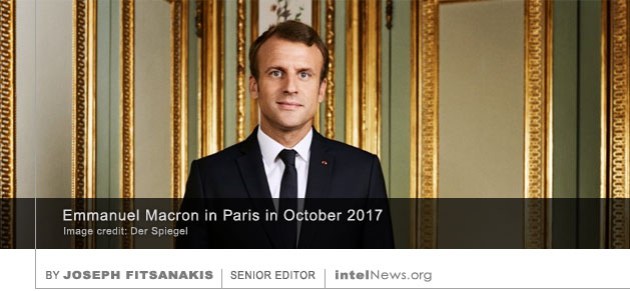
The senior administrator has been identified as Benoit Quennedey, a civil servant who liaises between the French Senate and the Department of Architecture and Heritage, which operates under France’s Ministry of Culture. Quennedey was reportedly detained on Sunday morning and his office in the French Senate was raided by DGSI officers on the same day. Quotidien said that he was arrested on suspicion of “collecting and delivering to a foreign power information likely to subvert core national interests”. The report did not provide specific information about the type of information that Quennedey is believed to have passed to North Korea. It did state, however, that a counterintelligence investigation into his activities began in March of this year.

Quennedey is believed to be the president of the Franco-Korean Friendship Association, the French branch of a Spanish-based organization that lobbies in favor of international support for North Korea. Korea Friendship Association branches exist in over 30 countries and are believed to be officially sanctioned by Pyongyang. They operate as something akin to the pre-World War II Comintern (Communist International), a Moscow-sanctioned international pressure group that advocated in favor of Soviet-style communism around the world. French media reported on Monday that Quennedey traveled extensively to the Korean Peninsula in the past decade and has written a French-language book on North Korea. News reports said that the French President Emmanuel Macron had been made aware of Quennedey’s arrest. The senior civil servant faces up to 30 years in prison if found guilty of espionage.

Author: Joseph Fitsanakis | Date: 27 November 2018 | Permalink

France arrests six far-right militants who plotted to kill President Macron

Emmanuel MacronAuthorities in France have announced the arrest of six individuals who were allegedly involved in a plot to kill French President Emmanuel Macron. Government prosecutors said on Tuesday that the six were arrested for planning “a violent action against the president of the Republic”. A former economy and industry minister, Macron resigned from the cabinet of left-of-center Prime Minister Manuel Valls in 2016 in order to lead a new right-of-center movement called En marche (Forward). In 2017 he won the presidential election with 66.1 percent, becoming the youngest president in the history of France.

French security services have responded to several instances of potential plots against Macron. In one recent case, a man was charged in July of last year with plotting to kill the president during France’s annual Bastille Day celebrations. This latest case, however, appears to be larger in size and sophistication. According to prosecutors, Tuesday’s arrests were part of a wider probe in to “a criminal terrorist association”. All six suspects had reportedly been monitored for quite some time by France’s domestic security agency, the General Directorate for Internal Security (DGSI).

The names and backgrounds of those arrested have not been released. But France’s BFM-TV station said on Tuesday that their ages ranged from 20 to 60, that they were men and women, and that they belonged to an unspecified “far-right organization”. It is also notable that their arrests took place as a result of raids in three different parts of the country —namely in the city of Moselle, located on the border of France, Germany and Luxembourg, and in Ille-et-Vilaine near Rennes in France’s northwestern Brittany region. More raids reportedly took place in the region of Isere in the French Alps. Reports early on Wednesday morning said that authorities were examining the details of the alleged assassination scheme, which was “imprecise and loosely formed”.

Author: Joseph Fitsanakis | Date: 07 October 2018 | Permalink

French government report says thousands approached by Chinese spies on LinkedIn

LinkedInA French government report warns of an “unprecedented threat” to security after nearly 4,000 leading French civil servants, scientists and senior executives were found to have been accosted by Chinese spies using the popular social media network LinkedIn. The report was authored by France’s main intelligence agencies, the General Directorate for Internal Security (DGSI) and the General Directorate for External Security (DGSE). According to the Paris-based Le Figaro newspaper, which published a summary of the classified report, the two intelligence agencies presented it to the French government on October 19.

The report describes Chinese efforts to approach senior French scientists, business executives, academics and others, as “widespread and elaborate”, and warns that it poses an “unprecedented threat against the national interests” of the French state. It goes on to state that nearly 4,000 carefully selected French citizens have been approached by Chinese intelligence operatives via the LinkedIn social media platform. Of those nearly half, or 1,700, have leading posts in French industry, while the remaining 2,300 work in the public sector. In their totality, those targeted are involved nearly every area of industry and government administration, including those of nuclear energy, telecommunications, computing and transportation, said the report. According to Le Figaro, those targeted were approached online by Chinese spies who employed fake identities and identified themselves as headhunters for Chinese corporations, think-tank researchers or consultants for major companies. They then invited targeted individuals to all-expenses-paid trips to China for conferences or research symposia, or offered to pay them as consultants.

The DGSI-DGSE report concludes that most of those targeted displayed shocking levels of “culpable naivety” and a “completely insufficient” awareness of online espionage methods. To address this, French intelligence agencies have produced guidelines on detecting and evading attempts at recruitment or luring from intelligence operatives using social media, said Le Figaro. French civil servants are now being informed of these guidelines through a concerted campaign by the French intelligence community, said the paper. The report, however, did not say whether similar efforts were taking place in the French private sector.

Author: Joseph Fitsanakis | Date: 24 October 2018 | Permalink

France freezes assets of Iranian spies in response to foiled terror attack in Paris

French Ministry for the EconomyFrance has seized the financial assets of two Iranian spies and frozen all assets belonging to the Iranian Ministry of Intelligence, in response to a foiled bomb attack in Paris, which the French government has blamed on Tehran. The alleged bomb attack was uncovered on June 30 of this year, when members of Belgium’s Special Forces Group arrested a married Belgian couple of Iranian descent in Brussels. The couple were found to be carrying explosives and a detonator. On the following day, German police arrested an Iranian diplomat stationed in Iran’s embassy in Vienna, Austria, while another Iranian man was arrested by authorities in France, reportedly in connection with the three other arrests.
All four individuals were charged with a foiled plot to bomb the annual conference of the National Council of Resistance of Iran (NCRI) that took place on June 30 in Paris. The NCRI is led by Mujahedin-e Khalq (MEK), a militant group with roots in radical Islam and Marxism. The MEK was designated as a terrorist group by the European Union and the United States until 2009 and 2012 respectively. But it has since been reinstated in both Brussels and Washington, reportedly because it provides the West with a vehicle to subvert the Iranian government. France, Germany and Belgium allege that the aborted bombing plot was an attempt by Iran to disrupt the close relations between the MEK and Western governments.

On Tuesday, Paris announced the seizure of assets of two of the men who were arrested in June and July. One is an accredited Iranian diplomat identified as Assadollah Asadi, who is believed to be an official-cover intelligence officer. The other man is Saeid Hashemi Moghadam, who was arrested by French authorities. He is believed to be an Iranian sleeper agent. All assets belonging to the Islamic Republic’s Ministry of Intelligence were also been frozen, effective immediately, it was announced. In a joint statement, the French ministers of foreign affairs, economics and the interior said that the move reflected the France’s “commitment to fight terrorism, in all its manifestations […], especially on its territory”. The statement added that “the extremely heinous act envisaged on our territory could not go without a response”.

The Iranian government has denied all connection to the alleged plot in Paris and has dismissed the incident a “false flag” operation staged by MEK in cooperation with Tehran’s “enemies at home and abroad”.

Author: Joseph Fitsanakis | Date: 04 October 2018 | Permalink

Israel says it foiled Iranian-sponsored bomb attack in France

MossadIsrael helped foil an alleged Iranian-sponsored bomb attack in Paris, which involved arrests of several Iranian agents and at least one diplomat in France, Belgium and Germany, according to media reports. As intelNews reported earlier this month, the arrests began on June 30, when members of Belgium’s Special Forces Group arrested a married Belgian couple of Iranian descent in Brussels. The couple were found to be carrying explosives and a detonator. On the following day, July 1, German police arrested an Iranian diplomat stationed in Iran’s embassy in Vienna, Austria. On the same day, a fourth person, who has not been named, was arrested by authorities in France, reportedly in connection with the three other arrests.

All four individuals appear to have been charged with a foiled plot to bomb the annual conference of the National Council of Resistance of Iran (NCRI) that took place on June 30 in Paris. The NCRI is led by Mujahedin-e Khalq (MEK), a militant group with roots in radical Islam and Marxism. The MEK was designated as a terrorist group by the European Union and the United States until 2009 and 2012 respectively. But it has since been reinstated in both Brussels and Washington, reportedly because it provides the West with a vehicle to subvert the Iranian government.

On Thursday, authorities in Israel announced the lifting of a blanket censorship decree that prevented local media from discussing the country’s role in helping the Europeans foil the alleged bomb attack in Paris. According to Israel’s Channel 2, a private television station based in Jerusalem, the Iranian attack was prevented after the Israeli agency Mossad detected the whereabouts of several suspects involved in it. The Mossad then supplied Germany, Belgium and France with intelligence that led to the arrests of some of those suspects. However, Channel 2 said that the Israeli government did not give a reason for the initial censorship imposed on the country’s media, nor did it explain why it had decided to lift it. On July 4, Israeli Prime Minister Benjamin Netanyahu appeared to hint that Israel had a role in the foiling of the alleged bomb attack in Paris. Speaking during a commemoration ceremony in Acre, Israel, Netanyahu said it was “no coincidence” that the attack in Paris had been stopped. But the Israeli leader did not expressly indicate that the Mossad had a role in the operation.

Following news of the arrests in Europe, the Iranian government said that it had no connection to the alleged plot in Paris and called the incident a “false flag” operation staged by Tehran’s enemies at home and abroad.

Author: Joseph Fitsanakis | Date: 20 July 2018 | Permalink

Iran sleeper cell agents, including diplomat, arrested in three European countries

National Council of Resistance of IranAn Iranian diplomat and members of what authorities described as an “Iranian sleeper cell” were arrested this week in Belgium, Germany and France, as they were allegedly planning to a bomb a high-level meeting in Paris. The arrests came after a complex investigation by several European intelligence agencies and were announced by Belgium’s Minister of the Interior, Jan Jambon.
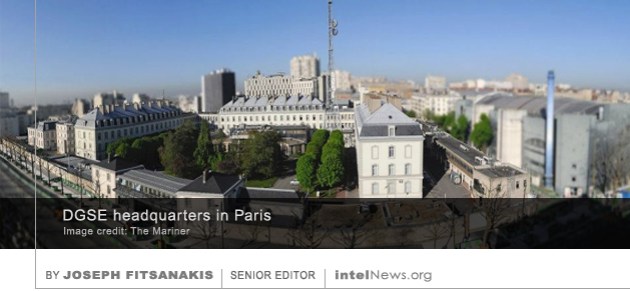
The operation against the alleged sleeper cell began on Saturday, June 30, when members of Belgium’s Special Forces Group stopped a Mercedes car in Brussels. The car was carrying a married Belgian couple of Iranian descent, named in media reports as Amir S., 38, and Nasimeh N., 33. According to the Belgian Ministry of the Interior, Nasimeh N. was found to be carrying 500 grams of triacetone triperoxide (TATP) explosive and a detonator inside a toiletries bag. On the following day, Sunday, July 1, German police arrested Assadollah A., an Iranian diplomat stationed in Iran’s embassy in Vienna, Austria. According to reports, the diplomat was driving a rental car in the southeastern German state of Bavaria, heading to Austria. On the same day, a fourth person, who has not been named, was arrested by authorities in France, reportedly in connection with the other three arrests.

The four detainees were in contact with each other and were allegedly working for the Iranian government. All four have been charged with an alleged foiled plot to bomb the annual conference of the National Council of Resistance of Iran (NCRI) that took place last Saturday, June 30, in a Paris suburb. The National Council of Resistance of Iran is a France-based umbrella group of Iranian dissidents, led by Mujahedin-e Khalq (MEK), a militant group that has roots in radical Islam and Marxism. Between 1970 and 1976, the group assassinated six American officials in Iran and in 1970 tried to kill the United States ambassador to the country. It initially supported the Islamic Revolution of 1979, but later withdrew its support, accusing the government of Ayatollah Khomeini of “fascism”. It continued its operations from exile, mainly from Iraq, where its armed members were trained by the Palestine Liberation Organization and other Arab leftist groups.

Until 2009, the European Union and the United States officially considered the MEK a terrorist organization. But the group’s sworn hatred of the government in Iran brought it close to Washington after the 2003 US invasion of Iraq. By 2006, the US military was openly collaborating with MEK forces in Iraq, and in 2012 the group was dropped from the US Department of State’s list of foreign terrorist organizations. Today the group enjoys open protection from the EU and the US. According to Belgian authorities, the four members of the Iranian sleeper cell were planning to bomb the MEK-sponsored NCRI meeting in Paris under instructions by the Iranian government. Conference participants included over 30 senior US officials, including US President Donald Trump’s personal lawyer, Rudy Giuliani, who addressed the meeting. Stephen Harper, Canada’s former prime minister, also spoke at the conference.

Speaking in Brussels this week, Belgium’s Interior Minister Jambon praised the country’s intelligence, security and law enforcement agencies for foiling the alleged bomb plot in Paris. But Mohammad Javad Zarif, Iran’s Minister of Foreign Affairs, dismissed claims of an Iranian sleeper cell as “fake news” and described reports of a foiled bomb attack as “a sinister false flag plot”.

Author: Joseph Fitsanakis | Date: 06 July 2018 | Permalink

France arrests two intelligence officers on charges of spying for China

dgse franceFrance has confirmed the arrest of two French intelligence officers who are accused of spying for the Chinese government. It appears that the two officers were captured and charged in December. However, their arrests were not publicized at the time, because French counterintelligence officials wanted to avoid alerting more members of a possible spy ring, which some say may include up to five French citizens. It was only last Friday, a day after French media published leaked reports of the arrests, that the French government spoke publicly about the case.
France’s Minister of the Armed Forces, Florence Parly, told France’s CNews television on Friday that two French intelligence officers were “accused of extremely serious acts of treason” against the French state. The two officers had been charged with delivering classified information to a foreign power”, she said. Parly added that the spouse of one of the officers was also being investigated for participating in acts of espionage on behalf of a foreign country. When asked to identify the country that the two officers are accused of spying for, the minister refused to respond. But the Agence France Presse news agency cited an anonymous “security source”, who said that the two intelligence officers were being suspected of spying for China and that they had been captured following a sting operation by French counterintelligence officers.

French television station TFI1 said on Friday that both spy suspects are officers in the General Directorate of External Security (DGSE), France’s primary external intelligence agency. The station added that at least one of the two suspects was stationed at the embassy of France in Beijing when French counterintelligence became aware of the alleged espionage. According to some reports, the two suspects had retired from the DGSE by the time they were arrested, but committed their alleged espionage while still in the service of the spy agency. French government officials have refused to provide information about the length of the alleged espionage or the nature of the classified information believed to have been compromised. Additionally, no information is available about whether the two alleged spies were working in cooperation with each other. The BBC asked China last week about the arrests in France, but the Chinese Ministry of Foreign Affairs said it was not aware of the incident.

Author: Joseph Fitsanakis | Date: 28 May 2018 | Research credit: E.W. and P.C.  | Permalink

French consular employee caught smuggling guns to Gaza using diplomatic car

French consulate in JerusalemAn employee of France’s consulate in Jerusalem is under arrest for allegedly smuggling weapons from the Gaza Strip to the West Bank, according to French media reports, which have been confirmed by Israel. The consular employee has been identified by the Shin Bet, Israel’s domestic security agency, as Romain Franck, 23. He reportedly worked as a driver at the consulate, a job he managed to secure through a prestigious “international volunteer” program sponsored by the French government. The elite program allows recent French college graduates to gain work experience in various countries around the world. Although he had a relatively junior post at the French consulate, Franck carried a diplomatic passport, which allowed him to move through international borders without being searched, due to his diplomatic immunity privileges.
But, according to French newspaper Liberation, Franck was detained by Shin Bet officers on February 19 of this year, as he was trying to enter Israel from the Gaza Strip at the Erez border crossing. He was driving a car that bears French diplomatic license plates and belongs to the French consulate in Jerusalem. Inside the car, the Shin Bet officers reportedly found pistols and assault rifles. According to Liberation, Franck’s arrest has been kept secret. The Shin Bet admitted that the newspaper’s story was true on Tuesday afternoon. Franck reportedly told his Israeli captors that he had received the weapons from a Palestinian who worked at the French Cultural Center in Gaza. He then transported them over several trips to the West Bank, where other Palestinians picked them up, paid him, and sold them on to others.

Israel has reportedly arrested eight more people in connection with the gun running, all of whom are Palestinians. They include a Palestinian security guard at the French consulate. According to the Shin Bet, Franck was not ideologically or politically allied with Hamas, Fatah, or any other Palestinian group. Instead, he participated in the gun smuggling for financial gain. A spokesman at France’s embassy in Tel Aviv said that Paris was closely monitoring the incident and was “in close contact with the Israeli authorities on the matter”.

Author: Joseph Fitsanakis | Date: 21 March 2018 | Permalink | Research credit: MF

French Special Forces were on plane that crashed in Ivory Coast, killing 4

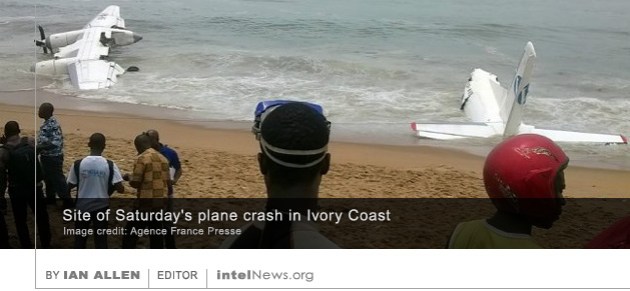
Ivory CoastA plane crash that killed four off Côte d’Ivoire last week had been chartered by the French military as part of its counterinsurgency mission in West Africa, it has been admitted. Ivorian authorities identified the aircraft as a Ukrainian-made Antonov transport airplane. It reportedly took off from Ouagadougou, the capital of Burkina Faso, on last Saturday morning. Shortly afterwards, the aircraft crash-landed in the Atlantic Ocean past Abidjan, one of West Africa’s largest cities, on the southern coast of Côte d’Ivoire. Local officials said the airplane broke in half and immediately caught fire. Of the ten people that were on board, four are reportedly dead; six others are seriously hurt. Reports said that the four dead passengers were all Moldovan nationals. Two other Moldovans and four French nationals were injured.
Late on Saturday, France’s Armed Forces Ministry said that it had chartered the Antonov aircraft, as part of Operation BARKHANE. The military operation began in August of 2014, as part of a broader effort by France to combat what it describes as an Islamist insurgency in the African Sahel region. Currently, French Special Forces are believed to be operational in at least five countries there, namely Niger, Mali, Chad, Mauritania and Burkina Faso. French government sources report that BARKHANE involves 4,000 French troops, commanded from an operational headquarters in N’Djamena, capital of Chad. Close to 1,000 of these troops are believed to be stationed in Burkina, mostly in the capital Ouagadougou. It is also believed that many of the transportation needs of Operation BARKHANE are facilitated by Ukrainian-built Antonovs, flown mostly to and from Abidjan by former Soviet pilots, who sub-contract their services to the French military. That would explain why there were Moldovans implicated in Saturday’s plane crash.

It is reminded that another airplane that had been chartered by the French military crashed in Malta in October of 2016, killing five French citizens. Paris later revealed that they were all employees of the General Directorate for External Security (DGSE), France’s external intelligence agency. The plane was found to have been registered in the United States and operated by a company based in Luxembourg. The French government said on Sunday that it launched an investigation into the cause of Saturday’s crash. There were reports of a storm that hit Abidjan early on the day of the crash, but it is not known whether the storm is in any way connected with the crash.

Author: Ian Allen | Date: 16 October 2017 | Permalink

French-Swiss firm allegedly bribed Islamic State to keep its factory working in Syria

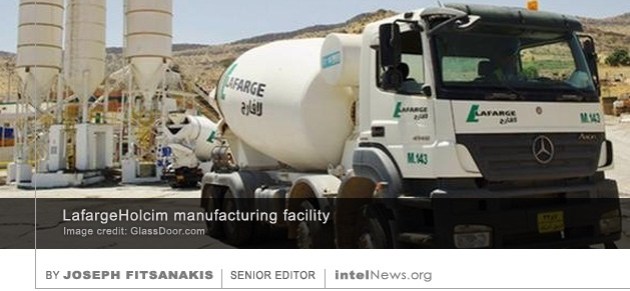
LafargeHolcimThe world’s largest building materials manufacturer, LafargeHolcim, which is headquartered in France and Switzerland, allegedly bribed the Islamic State to keep its factory working in Syria, according to court witnesses. The company specializes in the manufacture of building materials such as cement, concrete and various byproducts. It was formed in 2015 by a merger of France-based Lafarge and Swiss-based Holcim, and currently employs an estimated 120,000 employees in nearly 100 countries around the world.


In 2011, soon after the Syrian Civil War broke out, various militant groups began operating in the area around one of LafargeHolcim’s plants, located in in north-central Syria, 10 miles south of the Syrian-Turkish border. In June of 2016, French newspaper Le Monde published allegations that LafargeHolcim’s subsidiary, Lafarge Cement Syria (LCS), which owns the plant, bribed various militias to stay away from its factory. According to the paper, at least €20,000 (approximately $24,000) went to the Islamic State, which eventually conquered the area around the LafargeHolcim plant. The article further claimed that LCS managers in Syria sent detailed emails to LafargeHolcim executives in Europe about their dealings with various militias, including the Islamic State. LafargeHolcim approved the use of funds to bribe the militias, said Le Monde, in order to allow the factory to remain operational and to avoid having their employees taken hostage.

The newspaper’s allegations prompted the Office of the Public Prosecutor in Paris to launch a preliminary investigation in October of the same year. Eventually, an official complaint was filed by the French Ministry of Finance, which argued that the activities of LCS may have constituted illicit financial relations between a French-owned company and a terrorist group. An official investigation was opened in June of 2017 into whether LafargeHolcim illegally financed terrorist groups through its subsidiaries, Lafarge and LCS. Investigators are also examining claims that the company presented the French government with forged accounting documents in order to hide the bribes it gave to various Syrian armed groups.

Last week, investigators heard from the first time from witnesses, three of whom were LCS employees in 2014, when the company first made contact with Islamic State militants. They allegedly told prosecutors that the French-Swiss company paid approximately $20,000 a month to various armed groups, including al-Qaeda, al-Nusra Front, and the Islamic State. Prosecutors did not discuss details about the witnesses’ testimonies, but Le Monde said it spoke to individuals with direct knowledge of the investigation, who said that the witnesses’ testimonies were particularly damning for LafargeHolcim. The probe continues.

Author: Joseph Fitsanakis | Date: 25 September 2017 | Permalink

French police officer charged in complex spy case involving Morocco, Algeria

Paris Orly AirportA French police officer has been charged with illegally sharing secret government documents in an espionage case involving France’s border police and diplomats from Morocco and Algeria. According to information published by the French daily Libération, the police officer supplied Moroccan intelligence with classified information about France’s border-control policies and procedures. He also gave the Moroccans information about the movements in France of Moroccan nationals and senior Algerian government officials.

According to the report by Libération, the police officer, identified only as “Charles D.”, was charged on May 31 of this year with corruption and violating secrecy rules. Court documents state that Charles D. gave away classified documents belonging to the Direction centrale de la police aux frontières (DCPAF), a directorate of the French National Police that is in charge of immigration control and border protection across France. He reportedly gave the documents to another man, identified in court documents as “Driss A.”, who worked at Paris’ Orly Airport. It is believed that Driss A. worked as director of the Orly branch of ICTS International, a Dutch-based company that provides security services in several European airports. It is also believed that Driss A. —a Moroccan-born French citizen— was secretly employed by the Deuxième Bureau, Morocco’s military intelligence service. It appears that the Moroccans compensated Charles D with free holidays in Morocco in exchange for his services.

Interestingly, when French counterintelligence officers raided Driss A.’s home in Paris, they found documents detailing the activities of senior Algerian government ministers during their official trips to France. The officials are identified in the documents as Algeria’s former Deputy Prime Minister Noureddine Yazid Zerhouni, Higher Education Minister Tahar Hadjar, and Telecommunications Minister Hamid Grine. The documents appear to have been produced by Algerian intelligence and given initially to the embassy of Algeria in France. No explanation has been given about how these documents fell in Driss A.’s possession. Some observers assume that Driss A., acting as a Moroccan intelligence operative, must have acquired them from a source inside the Algerian embassy in Paris.

Author: Joseph Fitsanakis | Date: 07 September 2017 | Permalink

French spy agencies conclude Assad government was behind Syria gas attack

Khan SheikhunA comprehensive report released yesterday by the French Intelligence Community concludes with certainty that the government of Syrian President Bashar al-Assad was behind the April 4 sarin gas attack in northwestern Syria. The report, a “national evaluation” based on France’s own intelligence sources and scientific analysis of samples collected from the site of the attack, indicates that the poison gas used in the attack came from stockpiles that belong to the Syrian government.

The sarin gas attack targeted Khan Sheikhun, a town of approximately 50,000 people in the southern region of Syria’s Idlib Governorate. The city is located on the main highway that connects the Syrian capital Damascus with the city of Aleppo in the north of the country. The surprise attack killed nearly 100 people and drew near-universal condemnation from the international community. It also sparked a military attack by the United States, which launched a missile attack at a Syrian military base from where the sarin gas attack allegedly originated.

On Wednesday, France’s Minister of Foreign Affairs, Jean-Marc Ayrault, announced the publication of a report, which, he said, proves conclusively that the Syrian government perpetrated the attack. The six-page declassified version of the report concludes that “the Syrian armed forces and security services perpetrated a chemical attack using sarin against civilians”. It alleges that the conclusion rests on “intelligence collected by our services”, which includes “samples from the scene of the attack”. The latter are reportedly identical with samples collected from sites of previous chemical attacks perpetrated by the Syrian government. Additionally, the French report concludes that the attack was conducted with the use of airplanes, which the Syrian rebel forces do not have.

The French intelligence report comes after a similar report from the United States concluded that Assad’s government was behind the attack on Khan Sheikhun. A few days after the attack, medical tests conducted on victims of the attack by Turkish experts showed that sarin gas had been used, but did not implicate a specific culprit. The Syrian and Russian governments deny all involvement in the attack and claim that it was carried out by al-Qaeda-linked rebels.

Author: Joseph Fitsanakis | Date: 27 April 2017 | Permalink