Same hacker group is targeting French and German elections, says report

Konrad Adenauer FoundationThe same group cyber-spies that attacked the campaign of French presidential candidate Emmanuel Macron is now attacking German institutions that are connected to the country’s ruling coalition parties, according to a report by a leading cyber-security firm. The Tokyo-based security software company Trend Micro published a 41-page report on Tuesday, in which it tracks and traces the attacks against French and German political targets over the past two years. The report, entitled From Espionage to Cyber Propaganda: Pawn Storm’s Activities over the Past Two Years, concludes that the hackers are seeking to influence the results of the national elections in the European Union’s two most powerful nations, France and Germany.

The Trend Micro report focuses on a mysterious group that cyber-security experts have dubbed Pawn Storm —otherwise known as Sednit, Fancy Bear, APT28, Sofacy, and STRONTIUM. It says that the group has launched an aggressive phishing campaign against German political institutions, which has intensified in the past two months. The group allegedly set up fake computer servers in Germany and the Ukraine, and used them to try to infiltrate the computer networks of two elite German think-tanks, the Konrad Adenauer Foundation (KAF) and the Friedrich Ebert Foundation (FEF). The KAF is connected with the Christian Democratic Union party, which is led by Germany’s Chancellor, Angela Merkel. The FEF has strong ties with the centrist Social Democratic Party, which is part of Germany’s governing alliance.

The report’s leading author, cyber-security expert Feike Hacquebord, told the Reuters news agency that the hackers were possibly seeking to infiltrate the two think-tanks as a means of gaining access to the two political parties that are connected with them. Some cyber-security experts in Europe and the United States have said that the Russian Main Intelligence Directorate, the country’s military intelligence agency, known as GRU, is behind the cyber-attacks on France, Germany and the United States. But the Trend Micro report did not attempt to place blame on Moscow or any other country for the cyber-attacks. The Kremlin has denied involvement with the alleged hacking operations.

Author: Ian Allen | Date: 26 April 2017 | Permalink

Iranian spies second most active in Germany, says Interior Ministry

BND GermanyIranian intelligence operatives are the second most active in Germany after Russian spies, with much of their activity focusing on Israeli targets in the country, according to the German Interior Ministry. The information is contained in a report that was issued in response to a request by a member of Germany’s Bundestag last week. It states that Iranian spies have engaged in nearly two dozen known intelligence operations on German soil since 2007, and have even targeted individuals for assassination.

The Interior Ministry’s report reveals that German authorities initiated counterintelligence investigations against 22 cases of espionage by Iranian agents during the past decade. These account for over 17 percent of all counterintelligence cases conducted by the German state since 2007. Of the remaining cases, 27 concerned Russian spies, while China and Turkey are believed to be behind 15 spy cases each. Syrian intelligence operatives were found to be behind a total of eight spy operations conducted on German soil in the past decade. According to the report, the majority of intelligence operations conducted in Germany by Iranian agents were attempts to secure material and technologies that could be used in Iran’s nuclear program. Approximately half of Germany’s federal states reported attempts by Iranian agents to secure nuclear-related goods in recent years.

But Tehran has also allegedly been implicated in attempted assassinations of German citizens, according to the report. One example mentioned in the document is that of Mustafa Haidar Syed-Naqfi. Sayed-Naqfi, who is a Pakistani national, was arrested in the northern German city of Bremen in January of this year for spying on behalf of Iran. According to German authorities, the Pakistani man compiled lists of potential targets for assassination by Iran. As intelNews reported at the time, Syed-Naqfi’s list of targets included prominent Jews or German-Israelis living in northern Germany. Among them was Reinhold Robbe, a politician with the center-left Social Democratic Party (SPD), who served for a number of years as president of the German-Israeli Congress. According to reports, the spy had compiled detailed maps of Robbe’s daily movements, which outlined his travel routines and the routes he took from his home to the DIG headquarters in Berlin. German officials believe that the type of surveillance that Sayed-Naqfi. carried out against Robbe indisputably leads to the conclusion that the politician’s assassination was being planned.

German authorities believe that Syed-Naqfi worked for the Quds Force, a Special-Forces unit of Iran’s Revolutionary Guards Corps, which is responsible for covert operations outside Iran. Last month, the Pakistani man was given a four-year prison sentence by a Berlin court for engaging in espionage on German soil.

Author: Joseph Fitsanakis | Date: 25 April 2017 | Permalink
Analysis: Unease in Europe as Turkey intensifies espionage abroad

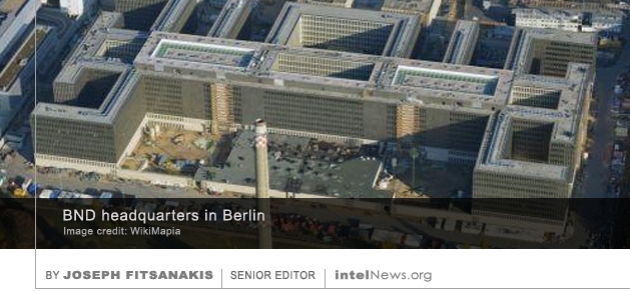
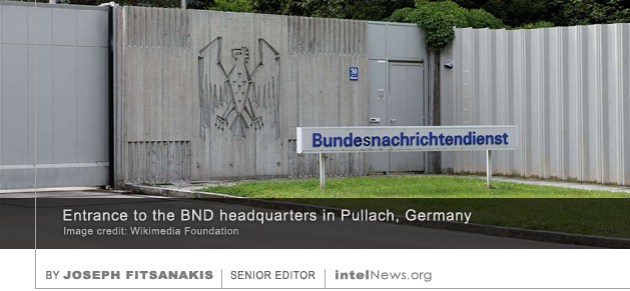
BND GermanyEarlier this week, it was revealed that the German government rejected a request by the head of Turkish intelligence to spy on Turks living in Germany. The rejection was an important moment in German-Turkish relations and highlights the growing unease in high-level exchanges between Turkey and the European Union.

On Monday, Germany’s Süddeutsche Zeitung newspaper alleged that the head of Turkey’s National Intelligence Organization (MİT), gave his German counterpart a list containing the names hundreds of Turks living in Germany, and asked him to spy on them. According to the newspaper, the list was given by MİT chief Hakan Fidan to Bruno Kahl, head of the Bundesnachrichtendienst, Germany’s Federal Intelligence Service, known as BND. The two men reportedly met at a security conference held in Munich last February. The Süddeutsche Zeitung claims that the list given to Kahl included 300 individuals and approximately 200 groups and organizations that the MİT wanted the BND to monitor.

It is extremely uncommon for information of this kind to be communicated informally between directors of intelligence organizations. Typically the exchange of information between cooperating intelligence agencies happens in a very formal and prescribed environment, not circumstantially during a conference. The episode described by the Süddeutsche Zeitung demonstrates a degree of amateurism on behalf of Turkey’s MİT. It is also symptomatic of the pressure that the agency is under by the Turkish government, following last July’s failed military coup in Ankara and Istanbul.

The government of Turkish President Recep Tayyip Erdoğan accuses members of the so-called Gülen movement of orchestrating the failed coup, which included an armed attack on the country’s parliament and the murder of over 200 people across Turkey. The Gülen movement consists of supporters of Muslim cleric Fethullah Gülen, who runs a global network of schools, charities and businesses from his home in the United States. The government of Turkey has designated Gülen’s group a terrorist organization and claims that its members have stealthily infiltrated state institutions since the 1980s. In responding to the post-coup security pressures, MİT has been stretched to its limit. Asking the BND for assistance illustrates the Turkish agency’s limitations, especially when it comes to spying abroad. Read more of this post
Germany publicly rejects Turkish spies’ request to monitor dissidents

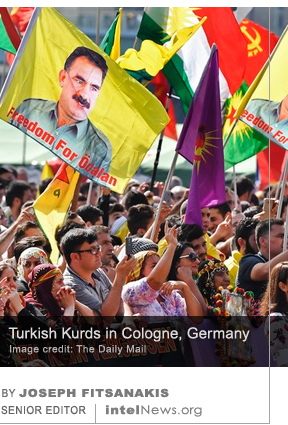
KurdsGerman intelligence and security agencies have publicly rejected a direct request made by Turkey’s intelligence chief to gather information on Turks who are living in Germany and are critical of the Turkish government. The request reportedly relates to attempts by the Turkish government to round up its critics, following a failed military coup in July of last year. The government of Turkish President Recep Tayyip Erdoğan accuses members of the so-called Gülen movement of orchestrating the coup, which included an armed attack on the country’s parliament and the murder of over 200 people across Turkey. The Gülen movement consists of supporters of Muslim cleric Fethullah Gülen, who runs a global network of schools, charities and businesses from his home in the United States. The government of Turkey has designated Gülen’s group a terrorist organization and claims that its members have stealthily infiltrated state institutions since the 1980s.
Since the end of the failed coup, the Turkish state has initiated a nationwide political crackdown against alleged supporters of the coup. Over 100,000 people have been fired from their jobs, while hundreds of thousands have been demoted, censured or warned. Another 41,000 are believed to be in prison, charged with supporting the failed coup or being members of the Gülen network. But many observers in Europe view the coup as a catalyst that was exploited by the government in Ankara neutralize its political opponents.

On Monday, Germany’s Süddeutsche Zeitung newspaper claimed that Turkey’s National Intelligence Organization, known as MİT, gave its German counterpart a list containing the names hundreds of Turks living in Germany, and asked him to spy on them. According to the newspaper, the list was given by MİT chief Hakan Fidan to Bruno Kahl, head of the Bundesnachrichtendienst, Germany’s Federal Intelligence Service, known as BND. The two men allegedly met at a security conference held in Munich last February. The Süddeutsche Zeitung claims that the list given to Kahl included 300 individuals and approximately 200 groups and organizations that the MİT wanted the BND to monitor.

But instead of spying on these targets, the BND wrote to them and warned them that the Turkish state was after them. The German spy agency also warned them to stay away from any contact with Turkish authorities in Germany and to refrain from traveling to Turkey. On Tuesday, Germany’s Interior Minister, Thomas De Maiziere, confirmed the Süddeutsche Zeitung article and warned Turkey to respect Germany’s territorial sovereignty. “Here German jurisdiction applies”, said De Maiziere, “and citizens will not be spied on by foreign countries”.

Author: Joseph Fitsanakis | Date: 29 March 2017 | Permalink

Turkish diplomats stepping up espionage in Europe, claims German report

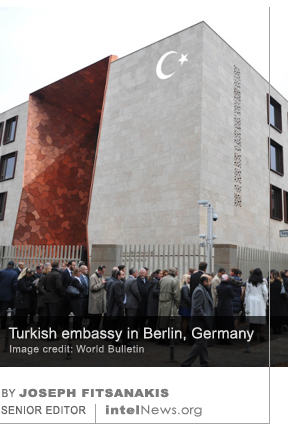
Turkish embassy in GermanyTurkish state agencies have asked the country’s diplomats stationed all over Europe to spy on Turkish expatriate communities there, in an effort to identify those opposed to the government, according to a German report. The government of Turkish President Recep Tayyip Erdoğan accuses members of the so-called Gülen movement of orchestrating a military coup in July of last year, which resulted in an armed attack on the country’s parliament and the murder of over 200 people across Turkey. The Gülen movement consists of supporters of Muslim cleric Fethullah Gülen, who runs a global network of schools, charities and businesses from his home in the United States. The government of Turkey has designated Gülen’s group a terrorist organization and claims that its members have stealthily infiltrated state institutions since the 1980s.

According to German newsmagazine Der Spiegel, the Erdoğan government has now tasked its diplomats stationed abroad to engage in intelligence collection targeting alleged Gülen sympathizers. The report cited “a confidential analysis by the Federal Office for the Protection of the Constitution” (BfV), Germany’s counterintelligence agency. The analysis allegedly states that Turkish diplomats are now conducting systematic espionage activities in Germany, Austria, Switzerland, Holland, Belgium, and other Western European countries. The BfV report allegedly claims that much of the espionage conducted by Turkish diplomats is directed by the country’s Religious Affairs Directorate, known as Diyanet. The agency is seen as the institutional guardian of Turkey’s Sunni Muslim orthodoxy. It provides schools with religious education that is carefully tailored to be compatible with the country’s secular constitution, and trains the country’s imams, who are employed by the state. Der Spiegel claimed on Monday that Diyanet has asked its religious representatives stationed in Europe to look for Gülen sympathizers. According to the German newsmagazine, information is now pouring in from Turkey’s embassies and consulates. It includes names of individuals, as well as student groups, cultural organizations, schools and day-care centers that are seen as not sufficiently critical of the Gülen movement. Der Spiegel said it had seen a report sent to Diyanet by the Turkish embassy in Berne, Switzerland, which warned that many Gülenists had left Turkey and were now operating in Switzerland.

Late last summer, Der Spiegel claimed that Turkey’s National Intelligence Organization (known by its Turkish initials, MİT) secretly contacted its German counterpart, the Federal Intelligence Service (BND) and asked for assistance to investigate and arrest supporters of the Gülen movement living in Germany, some of whom are German citizens. The BND reportedly refused to cooperate with the request. Another German news outlet, Die Welt, cited an unnamed German security official who said that the MİT employed more operatives in Germany than the East German spy agency did at the height of the Cold War.

Author: Joseph Fitsanakis | Date: 20 February 2017 | Permalink

Pakistani man sought out assassination targets for Iran, says Germany

Reinhold RobbeAuthorities in Germany have pressed espionage charges against a Pakistani man who allegedly spied for Iran and even compiled lists of potential targets for assassination. The man, who has been identified in media reports only as “Syed Mustafa H.”, is a 31-year-old worker at the German Aerospace Center in the northern German city of Bremen. He is also reportedly a graduate of the Materials Science and Production Engineering department of the Universität Bremen. According to court documents, he is believed to have been spying for Iranian intelligence since the summer of 2015. It appears that the Federal Office for the Protection of the Constitution (BfV), Germany’s domestic intelligence agency, had been aware of the man’s espionage activities for at least a year prior to his arrest.
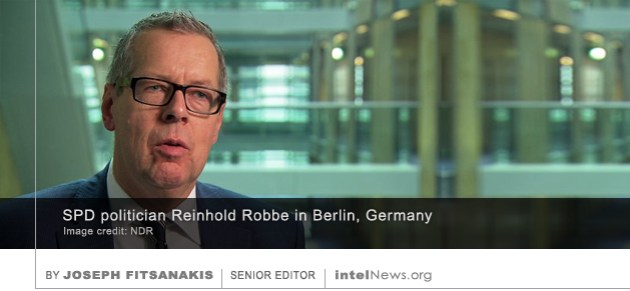
German media, including the newspapers Süddeutsche Zeitung and Die Zeit, as well as public broadcasters Taggesschau, WDR and NDR, report that Syed Mustafa H.’s main task was to compile lists of potential assassination targets. These included prominent Jews or German-Israelis living in northern Germany. Among them was Reinhold Robbe, a politician with the center-left Social Democratic Party (SPD), who served for a number of years as president of the German-Israeli Congress (DIG). According to reports, the Pakistani spy had compiled detailed maps of Robbe’s daily movements, which outlined his travel routines and the routes he took from his home to the DIG headquarters in Berlin. German officials believe that the type of surveillance that Syed Mustafa H. carried out against Robbe indisputably leads to the conclusion that the politician’s assassination was being planned.

Reports in the German media suggest that Syed Mustafa H.’s work was a small part of a much broader operation by Iranian intelligence. The operation aims to identify prominent individuals throughout Europe, who have Israeli connections. These individuals can be targeted during a future conflagration between Israel and Iran, or in retaliation to an Israeli intelligence operation against Tehran. If Syed Mustafa H. is found guilty of targeting Robbe, it will mark the first proven case of a German political figure who has been targeted for possible assassination by an Iranian intelligence agency.

Author: Joseph Fitsanakis | Date: 10 January 2017 | Permalink

German security agencies had watched Berlin market attacker for a year

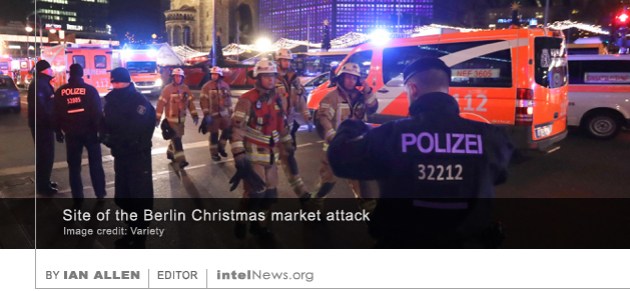
Berlin Christmas market attackThe central suspect in the Berlin Christmas market attack had been on the radar of German security agencies since January of this year, because he had links with radical Islamists and sought to buy guns for a terrorist attack. Anis Amiri, 23, left his native Tunisia in 2011, soon after the outbreak of the so-called Arab Spring there. He lived in Italy for three years before arriving in Germany in July 2015. In April of this year, he applied for an asylum in Germany. According to German authorities, Amiri was arrested multiple times in Tunisia for drug-related offenses. He is also believed to have used at least six different aliases since moving to Europe, and to have claimed to be a citizen of Lebanon and Egypt at different times.
On Wednesday, German newspaper Süddeutsche Zeitung revealed that Amiri’s cell phone and email accounts had been monitored by German security agencies at least since January of this year. The decision to monitor his telecommunications was reportedly taken by officials at Germany’s Center for Terrorism Defense (GTAZ). The agency functions as a fusion center for intelligence cooperation between German police and spy services. The newspaper said that Amiri was deemed suspicious because of his connections with several radical Islamists, who were arrested in Germany in recent months. They include Abu Walaa, a vocal supporter of the Islamic State who was captured in Northern Germany in November. According to anonymous German officials, Amiri had also told friends that he was seeking people to help him purchase weapons and use them to carry out attacks on civilians in Europe.

Last summer, Amiri was involved in a scuffle between rival drug gangs in Berlin, in which at least one knife was used. But he disappeared for several weeks when police tried to question him about it. He was eventually arrested and questioned by police in Berlin. It was discovered that, according to one German official, Amiri “was highly mobile”, moving between Berlin and northern Germany every few weeks. But, according to the Süddeutsche Zeitung, German authorities did not have enough evidence against him to keep him in detention. Shortly after Amiri’s arrest and subsequent release, German authorities decided to turn down his application for asylum due to security concerns. He was due to be deported from Germany before December 31. The German police is now offering up to €100,000 for Amiri’s capture.

Author: Ian Allen | Date: 22 December 2016 | Permalink

German and British spy services in ‘biggest rift’ since World War II, claim sources

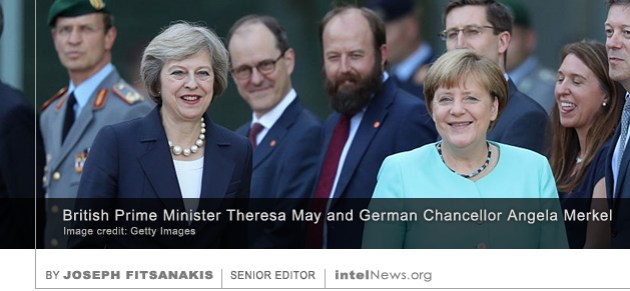
Theresa May Angela MerkelA reported discord between British and German intelligence services, which began in 2014, allegedly persists and now constitutes the “biggest rift between [the] secret services” of the two countries “since World War II”. According to British newspaper The Daily Mail, the Germans accuse Britain of working with the United States to spy on Berlin, while the British government says German intelligence agencies cannot be trusted to safeguard classified information. In an article published on Thursday, The Daily Mail said British and American intelligence agencies have stopped sharing non-critical intelligence with their German counterparts. The lack of cooperation “has now reached the point where there is virtual radio silence” between German and Anglo-American intelligence agencies, said the newspaper, citing “a source familiar” with the ongoing negotiations between the two sides.
In 2014, Germany expelled the most senior American intelligence officer stationed in the country after it confirmed that the United States National Security Agency had spied on German citizens, and had even targeted the personal communications of German Chancellor Angela Merkel. Berlin also caught a German intelligence officer who was spying for the Central Intelligence Agency. It was later alleged that Washington threatened to end all intelligence cooperation with Berlin if the German government offered protection to American defector Edward Snowden. Some German lawmakers had suggested that Berlin should reach out to Snowden, in return for information about US intelligence operations against Germany. In March of last year, the German broadsheet Süddeutsche Zeitung said that officials in Berlin had accused Britain of participating in American spy operations against Germany. The resulting dispute betweem Britain and Germany, said the paper, had turned into a “burgeoning crisis” that threatened intelligence-sharing between London and Berlin.

According to The Daily Mail, British intelligence agencies are now accusing their German counterparts of not properly safeguarding classified information that is shared with them by British security services. Consequently, claim the British, some of that information has found its way to WikiLeaks, the international whistleblower website founded by Australian former computer hacker Julian Assange. The London-based newspaper claims that British and German intelligence officials have met twice since 2014 to discuss ways of resolving the differences between their respective intelligence agencies. But the meetings have failed to mend the division between the parties and the crisis persists, claims The Daily Mail.

Author: Joseph Fitsanakis | Date: 16 December 2016 | Permalink

Greece jails member of alleged network of German retirees spying for Turkey

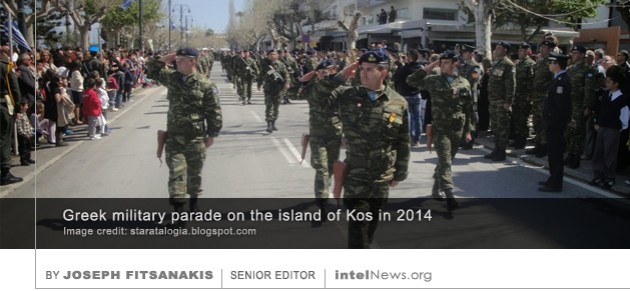
Kos GreeceA German retiree living in Greece, who admitted in court that he was part of a network of German and other Western European residents of Greece recruited as spies by Turkish intelligence, has been jailed for 14 years. The 65-year-old man, who has not been named, was arrested two years ago in the southeastern Aegean island of Kos. He was born in Cold-War-era East Germany and worked as a locksmith before serving for 15 years in the East German National People’s Army. From 2009 to 2012, he lived in Turkey before moving permanently to Greece.
On the morning of October 15, 2014, the German national was arrested by Greek police, who said they spotted him taking pictures of a Greek military outpost while sitting in his parked car. The police officers confiscated his camera and searched his vehicle, finding a pair of binoculars, various camera lenses and several memory sticks. His camera contained photographs of Greek military installations and government buildings on the island, which is located less than 3 miles off the Turkish coast. More photographs of Greek defense installations, military vehicles and communications facilities were found in the man’s house on the island. Police also found there documents in the Turkish language and notepads bearing coordinates of Greek military bases, public buildings and bridges located on Kos. The prosecution claimed that the German man was also monitoring the activities of Frontex, the European Border and Coast Guard Agency that maintains a base on the Greek island.

During the trial, the accused said he was recruited by Turkey’s intelligence service, known as MİT, in 2011, when he was living in Turkey. He also told the court that he was one of many German and other Western European retirees living in Greece, who have been recruited by Turkish intelligence to spy on Greek military and civilian government facilities. He added that, in return for his services, his Turkish handlers deposited €2,000 every month to his bank account in Germany. He had also been instructed to meet his handlers in Germany, not in Greece or Turkey. A court in the Greek island of Rhodes convicted the German man to 14 years in prison, one year less than the 15-year sentence requested by the prosecution.

Author: Joseph Fitsanakis | Date: 09 Dec 2016 | Research credit: Strategy Reports | Permalink

Court rules against German spy who was fired for dating foreign woman

BND GermanyA former employee of Germany’s spy agency, who was recalled from his post abroad after dating a foreign woman, has lost his legal battle to be compensated for lost earnings. The former intelligence officer, who has not been identified by name, worked for Germany’s Federal Intelligence Service, known by its initials, BND. From 2006 to 2008, he served as the BND’s station chief in Riga, Latvia. The post implies that he the highest-ranking German intelligence officer in the small Baltic state. According to court documents, the BND station chief had explicit directions from his employer, in writing, not to fraternize with locals while serving in the Latvian capital. The instructions expressly forbade romantic affiliations with locals.

But, according to documents from the legal case, the intelligence officer failed to comply with agency policy and began dating a Latvian national. Soon he fell in love with her and invited her to move in with him. It was allegedly after the local woman moved in with him that he notified the BND about their relationship. The intelligence agency promptly recalled him from his post and demoted him —a move that, he claims, effectively ended his career. He therefore sued the BND, asking for reinstatement of his job and €400,000 ($420,000) in lost earnings. The plaintiff’s lawyers argued that, prior to inviting the woman to move in with him, he asked Latvian intelligence to run a background investigation on her, which came out clean. They also argued that Latvia is a member of the North Atlantic Treaty Organization and that the BND cooperates with its Latvian counterpart.

However, according to German news reports, the court rejected the plaintiff’s claims and threw out the case. The former BND officer has also been ordered to pay the legal costs associated with the court case. Intelligence officers posted abroad are typically warned to avoid entering in sexual or romantic relationships with non-vetted foreign nationals. Intelligence agencies fear that these situations could give rise to infiltration by rival agencies, or even enable extortion and blackmail to be carried out by adversary intelligence operatives.

Author: Joseph Fitsanakis | Date: 25 November 2016 | Permalink

Dozens of Turkish diplomats apply for asylum in Germany following July coup

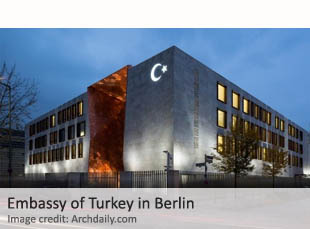
Embassy of Turkey in BerlinAt least 35 Turkish nationals with diplomatic passports have applied for political asylum in Germany following last July’s failed military coup in Turkey, according to German authorities. The administration of Turkish President Recep Tayyip Erdoğan accuses members of the so-called Gülen movement of orchestrating the coup, which included an armed attack on the country’s parliament and the murder of over 200 people across Turkey. The Gülen movement consists of supporters of Muslim cleric Fethullah Gülen, who runs a global network of schools, charities and businesses from his home in the United States. The government of Turkey has designated Gülen’s group a terrorist organization and claims its members have stealthily infiltrated state institutions since the 1980s.

Since the end of the failed coup, the Turkish state has initiated a nationwide political crackdown directed at alleged supporters of the coup. An estimated 100,000 people have been fired from their jobs, while hundreds of thousands have been demoted, censured or warned. Another 32,000 are believed to be in prison charged with supporting the failed coup or with being members of the Gülen network. Many of those targeted in the crackdown belong to the country’s diplomatic corps. It is believed that the 35 Turkish holders of diplomatic passports members of the country’s diplomatic community who were stationed abroad when the coup took place and are now hesitant to return to their home country for fear of being arrested.

On Monday, German Interior Ministry spokesman Johannes Dimroth told reporters in Berlin that the Turkish nationals had filed applications for asylum with Germany’s Federal Office for Migration and Refugees, known as BAMF. He added that the number of 35 asylum seekers included diplomats’ family members, who are also carriers of diplomatic passports. He did not specify whether the asylum seekers had been based in Germany prior to the July 15 coup. In response to a question from a reporter, Dimroth said that 35 was “not an absolute and final figure” and that it could change in the coming weeks. When asked about the reasons given by the asylum seekers for their applications, Dimroth refused to speculate. The Turkish Ministry of Foreign Affairs and the Turkish embassy in Berlin did not respond to questions on the matter.

Author: Joseph Fitsanakis | Date: 25 October 2016 | Permalink

Germany’s most famous spy on trial for tax evasion, claims money is not his

Werner MaussThe most famous intelligence operative in Germany went on trial last week after his name was linked to dozens of offshore bank accounts and shell companies. But he claims he used these accounts to rescue hostages as part of his undercover work. Werner Mauss became known in 1997, when he was arrested in Colombia while using a forged passport. He had traveled to the Latin American country to secure the release of a German woman who had been kidnapped by leftist guerrillas. The Colombian authorities eventually released him, following heavy diplomatic pressure from the German government. But the German media began investigating his background, and it soon became known that he was working for the Federal Intelligence Service, specializing in negotiating the release of hostages.
Now, in his mid-70s, Mauss enjoys celebrity status in Germany. He claims on his personal website that he was directly involved in neutralizing over 100 criminal gangs and that his work led to the capture of 2,000 criminals and spies. He also claims to have helped prevent dangerous chemical substances from falling into the hands of terrorist groups.

Last Monday, however, Mauss appeared in court in the North Rhine-Westphalian city of Bochum, accused of placing millions of euros in undeclared offshore accounts. The German state prosecutor accuses the spy of having dozens of accounts in his name in offshore tax havens such as the Bahamas, Turks and Caicos, and Panama. Government investigators say Mauss hid nearly €15 million (approximately $23 million) in secret accounts between 2002 and 2013. It appears that at least some of the accounts had been opened under aliases that Mauss used during his spy operations.

According to reports in the German media, Mauss first appeared on the government’s radar several years ago, when investigators in North Rhine-Westphalia purchased a CD from a whistleblower who worked in Luxembourg’s UBS bank. Earlier this year, Mauss’ name appeared again, this time in the so-called Panama papers, the massive data leak of documents belonging to Panamanian law firm Mossack Fonseca that specialized in offshore wealth management.

According to his lawyers, Mauss did nothing wrong, and claims that he used the shell companies and offshore bank accounts to channel funds to kidnappers in order to secure the release of hostages. Mauss’ legal team also claims that the 76-year-old former spy cannot properly defend himself because he is prevented from speaking freely by the clandestine nature of his work for the government. It is believed that the trial will continue until the end of this year.

Author: Ian Allen | Date: 3 October 2016 | Permalink

Turkey has more spies in Germany than Stasi had during Cold War: expert

Turks in GermanyThe Turkish intelligence service currently employs more operatives in Germany than the East German spy agency did at the height of the Cold War, according to a German expert on espionage. The comment was made following the disclosure that Turkey maintains close to 6,000 informants and other intelligence operatives in Germany. An unnamed German security official told German newspaper Die Welt on Monday that the informants are operational throughout Germany and are handled by Turkey’s National Intelligence Organization, known as MİT.

According to Die Welt, many of these informants are tasked with keeping tabs on Germany’s large Kurdish community, which Ankara views as domestic threats to Turkish national security. More recently, however, MİT operatives in Germany have been instructed to infiltrate groups of supporters of the charismatic Muslim cleric Fethullah Gülen who lives in the United States. A former ally of Turkish President Recep Tayyip Erdoğan, Gülen and his millions of supporters around the world now oppose the Turkish government and are described as terrorists by Ankara. President Erdoğan has personally accused “Gülenists” of orchestrating the failed July 15 coup in Turkey. In addition to infiltration, MİT informants in Germany are allegedly engaged in psychological operations against perceived opponents of the Turkish government, and sometimes engage in blackmail and intimidation of targeted individuals or groups, according to Die Welt.

Erich Schmidt-Eenboom, one of Germany’s best known independent researchers on intelligence, and a widely published author, said he was surprised that the number of alleged MİT operatives in Germany is this high. If the number of 6,000 operatives is accurate, said Schmidt-Eenboom, it would place the MİT above the level of the Stasi during the Cold War. He was referring to the Ministry for State Security, the intelligence agency of communist-era East Germany, which was known for its extensive networks of informants during the Cold War. Schmidt-Eenboom said that, according to Stasi records, the agency handled approximately 10,000 operatives in West Germany, a country that at the time had a population of 60 million. In contrast, the 6,000 MİT operatives in Germany are primarily tasked with monitoring the Turkish and Kurdish immigrant community there, which numbers no more than 3 million. Consequently, said Schmidt-Eenboom, there are 500 potential human targets for each present-day MİT operative, whereas there were 6,000 West German citizens for every Stasi operative during the Cold War.

The article in Die Welt did not specify whether the alleged MİT informants are paid agents or simply supporters of the Turkish government who have volunteered their services. As intelNews reported earlier this week, some members of the German Bundestag’s Committee on Parliamentary Oversight, including its chairman, Clemens Binninger, plan to launch an official investigation into the activities of Turkish intelligence in Germany. Of particular interest to the committee is the alleged cooperation between German and Turkish intelligence agencies following the failed coup in Turkey this past July.

Author: Joseph Fitsanakis | Date: 26 August 2016 | Permalink

Turkey asks German spies for help in rounding up July coup plotters

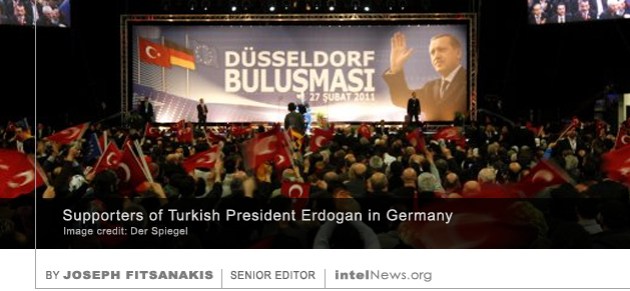
Recep Tayyip ErdoğanThe Turkish government has sent an official request to German intelligence for assistance in cracking down on the members of the so-called Gülen movement, which Ankara claims is behind July’s failed coup plot. The movement consists of supporters of Muslim cleric Fethullah Gülen, who runs a global network of schools, charities and businesses from his home in the United States. The government of Turkey has designated Gülen’s group a terrorist organization and claims it has stealthily infiltrated state institutions since the 1980s. The administration of Turkish President Recep Tayyip Erdoğan accuses Gülen’s supporters of orchestrating the July 15 coup that included an armed attack on the country’s parliament and the murder of over 200 people across Turkey.
According to German newsmagazine Der Spiegel, Turkey’s National Intelligence Organization (known by its Turkish initials, MİT) has secretly contacted its German counterpart, the Federal Intelligence Service (BND). The Turks’ request, said Spiegel, involves the provision of assistance to investigate and arrest supporters of the Gülen movement living in Germany, some of whom are German citizens. There are over three million people with Turkish citizenship, or of Turkish descent, currently living in Turkey. Citing “a dossier of classified documents”, Spiegel said that the MİT had asked the BND to investigate a list of 40 individuals for possible links to Gülen, and to extradite to Turkey another three whom Ankara claims have direct ties to the July coup. The documents also allegedly contain a request for MİT officials to pressure German lawmakers to be more critical of Gülen supporters in Germany. Requests for cooperation were also sent by MİT to nearly a dozen state governments in Germany, but all were declined, said Spiegel.

The Turkish government has arrested, fired or demoted tens of thousands of people since July, for alleged links to the Gülen movement. Some European officials, many of them German, have accused President Erdoğan of using the failed coup as an excuse to purge his opponents of all political persuasions in the country. On Sunday, the head of Germany’s Committee on Parliamentary Oversight, Clemens Binninger, said he would launch an investigation into the joint projects between German and Turkish intelligence agencies following the failed July coup. Another member of the Committee, Hans-Christian Ströbele, said he would personally set up a panel to probe any communication between German intelligence agencies and the MİT. By working closely with Turkish intelligence, German spy agencies were risking “becoming complicit in criminal activity”, said Ströbele.

Author: Joseph Fitsanakis | Date: 22 August 2016 | Permalink

German court sentences ex-Yugoslav spies to life for 1983 murder of dissident

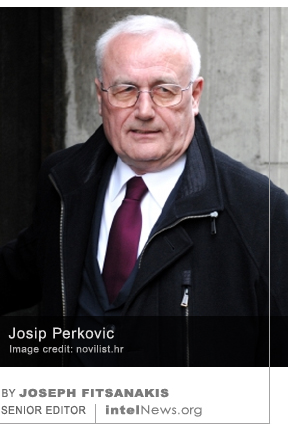
Josip PerkovićA German court has given life sentences to two senior intelligence officers in Cold-War-era Yugoslavia, who masterminded the murder of a Croat dissident in 1983. Josip Perković and Zdravko Mustać, both former senior officials in the Yugoslav State Security Service, known as UDBA, were extradited to Germany from Croatia in 2014. They were tried in a German court in the Bavarian capital Munich for organizing the assassination of Stjepan Đureković on July 28, 1983. Đureković’s killing was carried out by UDBA operatives in Wolfratshausen, Bavaria as part of an UDBA operation codenamed DUNAV. Đureković, who was of Croatian nationality, was director of Yugoslavia’s state-owned INA oil company until 1982, when he suddenly defected to West Germany. Upon his arrival in Germany, he was granted political asylum and began associating with Croatian nationalist émigré groups that were active in the country. It was the reason why he was killed by the government of Yugoslavia.

The court proceedings in Munich included dramatic testimony by another former UDBA operative, Vinko Sindicić, who named both Perković and Mustać as direct accomplices in Đureković’s murder. Sindicić told the court that Perković was acting on orders to kill the German-based dissident, which came directly from the office of UDBA Director Zdravko Mustać. He added that Perković helped organize the logistics of Đureković’s assassination, including the location in Munich where the killing actually took place. Sindicić told the court that a female UDBA operative living in Munich was also involved in organizing the operation, and that the weapons used to kill Đureković had been secretly transported to Germany through Jadroagent, an international shipping and freight company based in Yugoslavia.

On Wednesday, the court found both former UDBA officials guilty of complicity in the assassination of Đureković and convicted them for life. German media reported that the convicted men’s defense team plans to appeal the ruling by advancing the case to Germany’s Federal Court of Justice in Karlsruhe, Baden-Württemberg, which is Germany’s highest ordinary-jurisdiction court. Perković and Mustać declined requests to make comments to the press at the end of the trial. It is believed that at least 22 Croat nationalists were murdered in West Germany by the Yugoslavian intelligence services during the Cold War.

Author: Joseph Fitsanakis | Date: 04 August 2016 | Permalink