US government wants to use secret witnesses in CIA leak trial

James Risen

James Risen

By JOSEPH FITSANAKIS | intelNews.org |
Prosecutors in the case of an ex-CIA officer accused of disclosing classified information to a journalist have asked the court for permission to introduce evidence in secret and to use privacy screens to shield the identities of witnesses. Jeffrey Sterling, who worked for the CIA’s Iran Task Force,  faces 10 felony counts and up to 120 years in prison for sharing information about the CIA’s operations in Iran. Court documents do not name the recipient of Sterling’s information, but it is common knowledge that Sterling spoke to James Risen, a Pulitzer Prize-winning journalist for The New York Times. In chapter 9 of his 2006 book State of War: The Secret History of the CIA and the Bush Administration, Risen details a botched operation by the Iran Task Force, which tried to pass to the Iranians a series of faulty nuclear bomb design documents. To do this, the CIA apparently recruited a Russian former nuclear scientist, who had defected to the United States. The unnamed scientist was told to travel to Vienna, Austria, in early 2000, and offer to sell the documents to the Iranians. But the documents contained a deliberate technical flaw, which, Risen alleges, the Russian CIA operative thought was so obvious that it could make him look untrustworthy in the eyes of the Iranians, thus endangering the entire mission. The Russian scientist ended up letting the Iranians know about the flaw, reveals Risen. He further alleges that the CIA operation may have actually helped the Iranian nuclear weapons program, as Iranian scientists would have been able to “extract valuable information from the blueprints while ignoring the flaws”. Read more of this post

News you may have missed #546

Thomas Drake

Thomas Drake

By IAN ALLEN | intelNews.org |
►►Whistleblower says NSA mismanagement continues. Former US National Security Agency employee Thomas Drake was recently sentenced to a year’s probation for leaking secrets about the agency to a journalist. The presiding judge did not sentence him to prison, recognizing that his genuine intention was to expose mismanagement. Soon after his sentencing, Drake told The Washington Times that mismanagement continues at the NSA, which he compared to “the Enron of the intelligence world”. He also told the paper that NSA’s accounts were “unauditable”, like those of most of the other agencies operating under the Pentagon. ►►Taliban claim phones hacked by NATO. The Afghan Taliban have accused NATO and the CIA of hacking pro-Taliban websites, as well as personal email accounts and cell phones belonging to Taliban leaders, in order to send out a false message saying that their leader, Mullah Mohammad Omar, had died. Taliban spokesman Zabihullah Mujahid told the Reuters news agency that the hacking was “the work of American intelligence” and that the Taliban would “take revenge on the telephone network providers”. ►►Rumsfeld memo says ‘US can’t keep a secret’. “The United States Government is incapable of keeping a secret”. This was opined in a November 2, 2005 memo authored by Donald Rumsfeld. The memo by the then-Defense Secretary continues: Read more of this post
News you may have missed #544

Google

Google

By IAN ALLEN | intelNews.org |
►►Russia a ‘leading suspect’ in cyberespionage attack on US. I wrote on Monday about the cyberespionage operation that targeted a leading US defense contractor last March, and resulted in the loss of tens of thousands of classified documents. US Deputy Defense Secretary William J. Lynn III, who disclosed the operation, said only that it was conducted by “a foreign intelligence service”. According to the last sentence of this NBC report, US officials see Russian intelligence as “one of the leading suspects” in the attack. ►►Al-Qaeda acquires Pakistani spy service manuals. Jamestown Foundation researcher Abdul Hameed Bakier reports that al-Qaeda operatives have managed to get access to espionage training manuals used by Pakistan’s Inter-Services Intelligence directorate (ISI). Copies of the documents have apparently been posted on Internet forums that are sympathetic to al-Qaeda, and bear the mark of the As-Sahab Foundation, al-Qaeda’s media wing. ►►Google-NSA collaboration documents to remain secret —for now. Even before Google shut down its operations in China, following a massive cyberattack against its servers in early 2010, the company has maintained close contact with American intelligence agencies. But after the 2010 cyberattack, some believe that Google’s relationship with the US intelligence community has become too cozy. In February of 2010, the ACLU said it was concerned about Google’s contacts with the US National Security Agency (NSA). Other groups, including the Electronic Privacy Information Center (EPIC), have filed Freedom of Information Act (FOIA) requests seeking access to the inner workings of Google’s relationship with NSA. Read more of this post

News you may have missed #503

  • Dutch forces’ covert operations in Africa revealed. Dutch forces have for several years been training government soldiers in Mali, Senegal and Chad, without the Dutch parliament being informed, according to Dutch newspaper AD, which cites documents from the US Congress and the Pentagon.
  • Israel destroys spying devices found in Gaza. Hamas sources have told Egyptian newspaper al-Ahram that they discovered several “audio-visual spying devices” in the sand hills south of Gaza City. But, as soon as they started removing the devices, they “received a phone call from Israeli intelligence elements” telling them that the site would be bombed “within three minutes” —which is precisely what happened, according to al-Ahram. Regular readers of this blog will know this incident was not a first.
  • Leaked documents reveal Guantanamo secrets. A batch of leaked US government intelligence documents, not meant to surface for 20 years, shows that intelligence collection at Guantánamo often was much less effective than the George Bush administration has acknowledged. According to the documents, the US military used interrogation and detention practices that they largely made up as they went along.

News you may have missed #460

Leaked cable confirms end of US-NZ spy quarrel

Hillary Clinton

Hillary Clinton

By JOSEPH FITSANAKIS | intelNews.org |
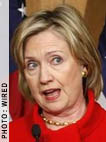
To regular readers of this blog, this is not so much a revelation, as it is a confirmation. Back in October of 2009, we wrote about a peculiar comment made Hillary Clinton. The United States Secretary of State had told a press conference that “we [the US] are resuming our intelligence-sharing cooperation [with New Zealand], which we think is very significant”. Resuming? When had it been disrupted, and why? Most intelligence observers agree that the only glitch that could have caused the cooperation to end would have been New Zealand’s nuclear ban. It was in 1984 when, under mounting popular pressure, the Labour government of David Lange voted to bar nuclear-powered or nuclear-armed ships from entering New Zealand territorial waters. At the time, the ban was heralded by the global nuclear disarmament movement as a major victory. But Washington did not see it that way. Successive US administrations pressured Wellington to repeal the nuclear-free legislation and allow US warships to make use of strategic New Zealand ports. Washington’s pressure increased in the years after 9/11, culminating in 2006, when it threatened to cancel a free-trade agreement between the two countries if New Zealand refused to repeal the ban. It appears that, at some point in time, possibly after 9/11, the US actually terminated intelligence sharing between the two countries in order to force New Zealand to comply. Read more of this post

Some underreported WikiLeaks revelations

WikiLeaks

WikiLeaks

By JOSEPH FITSANAKIS | intelNews.org |
There is little point in recapping here the bulk of disclosures contained in the ongoing WikiLeaks revelations. The news sphere is jam-packed with them —and perhaps this is the real story in the WikiLeaks revelations, namely the fact that espionage and intelligence issues have near-monopolized the global news cycle for the first time since the post-Watergate Congressional investigations of the 1970s. But it is worth pointing out a handful of news stories on the WikiLeaks revelations that have arguably not received the media coverage that they deserve. Undoubtedly the most underreported disclosure concerns a 2007 meeting between US officials and Meir Dagan, the then Director of Israel’s Mossad intelligence agency. During the meeting, Dagan apparently “presented US with five-step program to perform a coup in Iran“.  But there are other underreported disclosures. Take for instance the revelation that US Secretary of State Hillary Clinton personally authorized US diplomats to engage in all-out and indiscriminate spying on senior United Nations officials. Although there is nothing here that will surprise seasoned intelligence observers, the breadth of intelligence collection that US diplomats are instructed to engage in (which includes collecting credit card numbers and biometric data of UN officials) is astonishing and certainly unprecedented. Moreover, it should be noted that many senior UN officials are in fact American, which leads to the intriguing question of whether US diplomats are routinely required to engage in intelligence collection against American UN officials. Read more of this post

News you may have missed #450

  • Nuke bomb material found in Georgia black market. Highly enriched uranium that could be used to make a nuclear bomb is on sale on the black market along the fringes of the former Soviet Union, according to evidence emerging from a secret trial in the Republic of Georgia.
  • CIA Director warns against leaks. Asserting that lives have been endangered and sources compromised by “a damaging spate of media leaks” in recent months, CIA Director Leon E. Panetta reminded the spy agency’s employees Monday that unauthorized disclosures of classified information “cannot be tolerated”.
  • US issues new unclassified information policy. The White House has issued an executive order to establish a uniform policy for handling “controlled unclassified information” (CUI), which is information that is restricted from disclosure because it involves personal privacy, proprietary data or law enforcement investigations not relating to national security.

News you may have missed #434 (book news edition)

Comment: What Can the US Do To Stop WikiLeaks?

Julian Assange

Julian Assange

By JOSEPH FITSANAKIS | intelNews.org |
Ever since whistleblower site WikiLeaks published 77,000 classified US military documents on the war in Afghanistan, several pundits have urged US government agencies, including the Pentagon, to take action. Late last week, former George W. Bush speechwriter Marc Thiessen urged the Pentagon to unleash its “cyber capabilities to prevent WikiLeaks from disseminating those materials”. Some columnists have even suggested that US intelligence services should “come up with an up-to-date photo of [WikiLeaks founder Julian] Assange and distribute it to […] SEAL sharpshooters”. Pentagon representatives have also stepped up their rhetoric, warning that “[i]f doing the right thing isn’t good enough for [WikiLeaks], we will figure out what alternatives we have to compel them to do the right thing”.

Read more of this post

News you may have missed #414

Bookmark and Share

News you may have missed #413

  • Complex politics behind Ugandan spy chief’s removal. The recent sacking of Dr Amos Mukumbi from heading Uganda‘s Internal Security Organisation (ISO) was the handiwork of politics, intrigue and suspicion within the country’s intelligence community and between politicians. It was also related to ongoing turf wars between the ISO and its sister agency, the External Security Organisation.
  • Experts still evaluating WikiLeaks impact. Some analysts believe that the US intelligence establishment will call for an increased clampdown on secrecy in the wake of the WikiLeaks Afghan War Diary files release. But the data dump has also spurred those arguing that the US government needs to reduce the amount of information it classifies as secret, much of which may be unnecessary.
  • Radio program investigates the Mossad. BBC Radio has aired a relatively well-produced primer on Israeli intelligence agency Mossad. The BBC’s Security Correspondent Gordon Corera interviews former Mossad Director Efraim Halevy and former Mossad operative Rafi Eitan, among others.

Bookmark and Share

CIA hid terrorism prisoners from US Supreme Court

CIA HQ

CIA HQ

By JOSEPH FITSANAKIS | intelNews.org |
The Central Intelligence Agency purposefully concealed at least four terrorism detainees from the US legal system, including the Supreme Court, according to an exclusive report by the Associated Press. The news agency has revealed that the CIA secretly transported the four to Guantánamo Bay Detention Camp on Cuba in 2003, two years before it publicly admitted their capture. It then secretly transferred them again to other sites in its black site prison network in various countries around the world, just three months before their prolonged stay at Guantánamo would entitle them to legal representation. While at Guantánamo, the four prisoners, Abd al-Nashiri, Mustafa al-Hawsawi, Ramzi Binalshibh and Abu Zubaydah, were kept at a facility known as ‘Strawberry Fields’, which is detached from the main prison site at the bay. By hiding the four, the Bush Administration managed to keep them under CIA custody while denying them legal representation for two years longer than allowed by US law. It also concealed their detention from national and international human rights monitoring bodies and from the US justice system, including the Supreme Court. Read more of this post

German ex-spies to be fined for advertising skills online

BND seal

BND seal

By IAN ALLEN | intelNews.org |
At least a dozen German former intelligence officers are to face disciplinary action after they were found advertising their past spy careers on a job-seekers’ professional networking Web site. The German government authorized the country’s leading external intelligence agency, the Federal Intelligence Service (BND), to initiate an internal investigation, after German tabloid newspaper Bild drew attention to the online revelations in a leading article. The newspaper listed 12 former BND officers who advertised their past intelligence careers on their publicly listed résumés on Xing.com, a German-language website that serves as Germany’s version of LinkedIn.com. German federal legislation expressly forbids BND personnel from ever publicly revealing their professional ties with the spy agency, even after dismissal, resignation or retirement. Read more of this post

Israel government extends document secrecy rule to 70 years

Mossad seal

Mossad seal

By JOSEPH FITSANAKIS | intelNews.org |
Researchers, academics and transparency advocates have criticized new Israeli government regulations that extend the classification period of state archives from 50 to 70 years. The measure was approved on July 11 by Prime Minister Benjamin Netanyahu, following strong pressure by the Israeli intelligence community, led by the country’s General Security Service, also known as Shin Bet. Speaking to leading Israeli newspaper Ha’aretz, Israel National Archives Director Yehoshua Freundlich admitted that the move was designed to shield Israel “over [issues relating to its] adherence to international law”. He added that the new legislation was also a response to the rising freedom-of-information movement in Israel, led by such organizations as the Association for Civil Rights in Israel and the Movement for Freedom of Information. Read more of this post