Iran threatens to retaliate against Greece if US uses military bases to launch attack
January 17, 2020 1 Comment
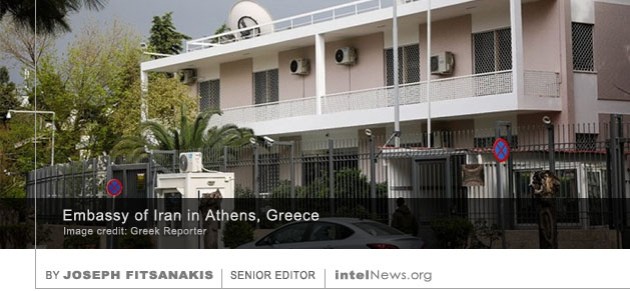 Iran has issued a warning against Greece, saying that it will retaliate if the United States attacks the Islamic Republic using its military bases on Greek soil. It is the first time that Iran has threatened to launch attacks against a member of the European Union in connection with the recent rise in tensions between Tehran and Washington.
Iranian officials issued the warning against Greece in response to comments made by Greek Prime Minister Kyriakos Mitsotakis during his recent visit to the White House, which coincided with the assassination of Iranian General Qasem Soleimani by the US. Speaking about Soleimani’s killing, Mitsotakis said that “we [Greeks] are allies with the US, so we stand by our allies through difficult times”. And he continued: “I understand this particular decision was taken by taking into consideration what is the US national interest, and we stand by that decision”.
Iran’s response to the Greek prime minister’s comments came in a letter that was sent by the Iranian embassy in Athens to one of Greece’s leading broadsheets, Kathimerini. The letter pointed out that Greece and Iran enjoyed “friendly, traditional and historical relations”. Given “the absence of any differences or tension between [the two countries] in recent centuries”, said the letter, “we believe that [Mr. Mitsotakis’] statement cannot be the official position of the Greek government”. It went on to warn that “The Islamic Republic of Iran has made it very clear that in the event of a US-led war against the country, the concession of [military] bases by any country to the American invader will be considered a hostile act and Iran reserves the right to respond in a clear and decisive manner”.
Last weekend, Greece’s Foreign Affairs Minister, Nikos Dendias, revealed that the Iranian government had delivered a statement to his office, protesting Mitsotakis’ comments. But he added that he had not had a chance to read it. He also said that his Iranian counterpart, Mohammad Javad Zarif, had asked to speak with him about Greece’s stance in the US-Iran dispute.
► Author: Joseph Fitsanakis | Date: 17 January 2020 | Permalink
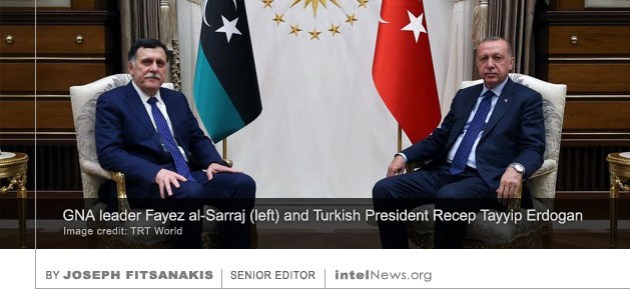 Turkish President Recep Tayyip Erdoğan has said his country is prepared to deploy troops to Libya, just days after Ankara surprised analysts by announcing an agreement with the embattled Libyan government in Tripoli. The Turkish-Libyan agreement has spurred angry reactions from Israel, Greece and Egypt, all of which are
 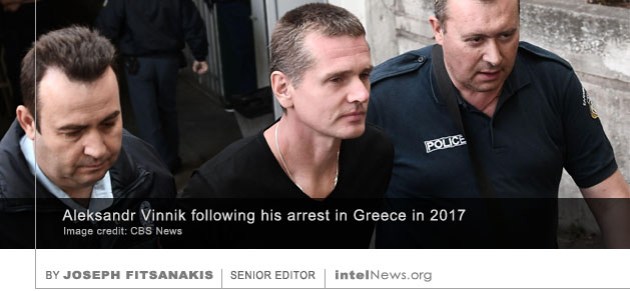 An intense fight between the United States and Russia over the extradition of a Russian cryptocurrency tycoon being held in Greece, is raising questions about the possible use of cryptocurrencies by spies. The tycoon in question is Aleksandr Vinnik, 39, who in 2011 co-founded BTC-e, an international cryptocurrency-trading platform. BTC-e allowed users to buy or sell several popular cryptocurrencies, including bitcoin and litecoin, using Russian rubles, United States dollars, or European Union euro currencies. Although headquartered in Russia, BTC-e’s servers were located in Bulgaria, while its operations were conducted through its offshore components in Cyprus and the Seychelles.
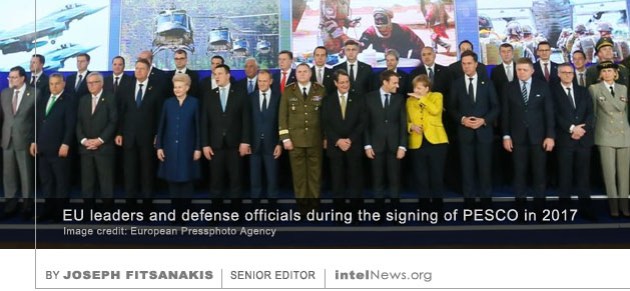 Twenty-five members of the European Union have agreed to establish a joint intelligence training academy, a move interpreted by some as a concrete effort to deepen inter-European security cooperation following Brexit. The announcement came just hours after leading EU heads of state
 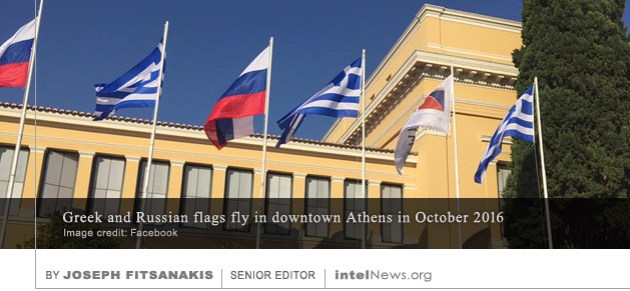 In a rare moment of downturn in relations between Athens and Moscow, Greece has expelled two Russian diplomats and refused to accredit two more, reportedly for “undermining Greek national security”. Greece was not among nearly 30 countries that expelled or refused to accredit over 150 Russian diplomats in March, in an act of solidarity with the United Kingdom. The
 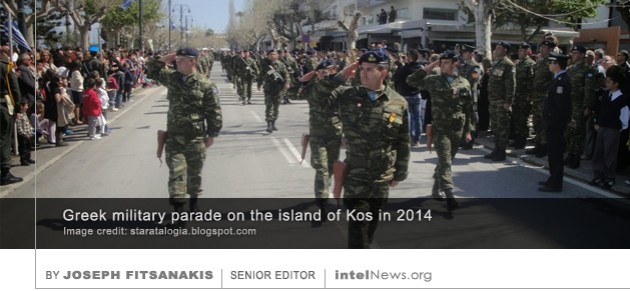 A German retiree living in Greece, who admitted in court that he was part of a network of German and other Western European residents of Greece recruited as spies by Turkish intelligence, has been jailed for 14 years. The 65-year-old man, who has not been named, was arrested two years ago in the southeastern Aegean island of Kos. He was born in Cold-War-era East Germany and worked as a locksmith before serving for 15 years in the East German National People’s Army. From 2009 to 2012, he lived in Turkey before moving permanently to Greece.
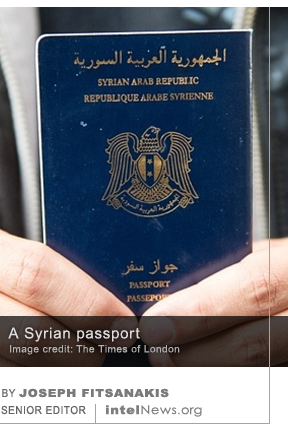 Fake Syrian passports designed for use by members of the Islamic State trying to enter Europe have been found in refugee camps in Greece during an investigation by the law enforcement agency of the European Union (EU). Officials from Europol, the EU agency that coordinates intelligence operations against organized crime across EU-member-states, said that the fake travel documents were found during a fact-finding mission in Greek refugee camps. The mission was part of a larger investigation into the production and use of forged passports by the Islamic State, the Sunni militant group that is also known as the Islamic State of Iraq and Syria (ISIS).
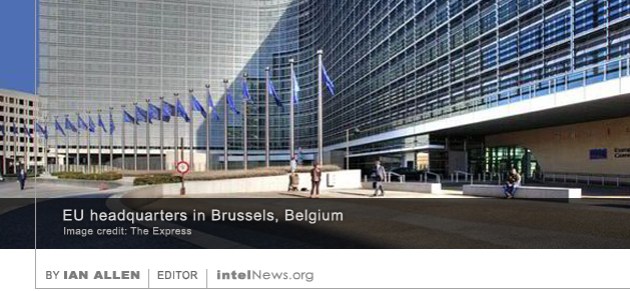 A debate on information security measures in the European Union was prompted last week after some officials voiced concerns that the proceedings of a closed-door meeting were secretly monitored by Israel. The meeting took place on January 15 as part of regular proceedings by the EU’s Political and Security Committee (PSC). The main item on the agenda was the EU’s Middle Eastern policy. According to some meeting participants, Israeli diplomats appeared to be aware of a statement discussed during the PSC meeting “in real time”, which prompted a wider debate on EU information security policies.
 The man who masterminded November’s Islamist attacks in Paris was based in Athens, and last January managed to escape arrest during a joint Greek-Belgian police operation aimed at capturing him. Moroccan-born Abdelhamid Abaaoud, who had lived in Brussels for years, died in a gun battle with French police on November 18, just days after the multiple attacks in Paris that killed 130 people and injured hundreds. It is believed that the perpetrators of the attacks, who were based in Belgium, were guided and directed by Abaaoud. He, however, was not based in Belgium, but in Athens, Greece. It was from there that he directed the Islamist cells, mostly by phone, according to the BBC.
 An American former supreme allied commander of the North Atlantic Treaty Organization has warned that a possible Greek exit from the Eurozone “could become a geopolitical nightmare” for the European Union and NATO. James Stavridis, a retired four-start US Navy admiral, who served as NATO’s 16th Supreme Allied Commander Europe from 2009 to 2013, said solving the Greek crisis should not be left to the central bankers. In an article
 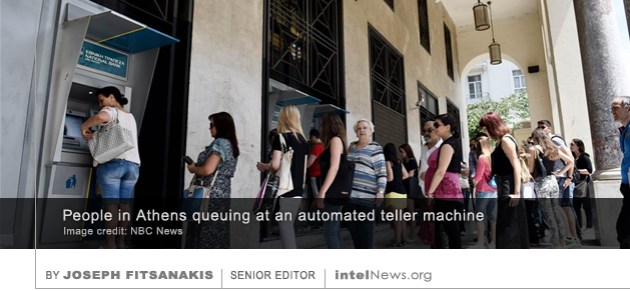 Several Western countries issued travel warnings for Greece on Sunday, as the Greek government shut down all banks and imposed capital controls following the breakdown of talks between Athens and the European Union.
 By JOSEPH FITSANAKIS| intelNews.org |






 intelNews.org
Greek authorities uncover identity of Russian spy who posed as Greek citizen
March 20, 2023 by Joseph Fitsanakis 1 Comment
In an article published on Friday, the Greek daily Kathimerini, identified the woman as “Irena A.S.”. It said she had arrived in Greece from an unspecified Latin American country in 2018. Soon afterwards, she assumed a new cover identity, using the birth certificate of a Greek child named Maria Tsalla. The child is believed to have died in the northeastern Athens suburb of Marousi in December 1991, a few days after being born. According to the report, NIS/EYP officers discovered that the dead child’s archived death certificate in the Marousi town hall had been removed by persons unknown, giving officials the impression that Maria Tsalla was still alive.
Soon after assuming her cover identity, Irena A.S. registered herself as a resident of Aliveri, a largely rural municipality in the central Greek island of Euboea. Less than a year later, using the name Maria Tsalla, she opened a knitwear store in the central Athens neighborhood of Pagrati, where she also rented an apartment. It is believed that she had hired an employee and had a Greek boyfriend, none of whom were aware that she was not Greek. According to the article in Kathimerini, the NIS/EYP has yet to uncover evidence that Irena A.S. was in contact with officials at the Russian embassy in Athens (pictured).
For reasons that remain unclear, Irena A.S. left Greece in a hurry in January of this year, leaving behind most of her personal belongings. She eventually contacted her store and apartment landlords, informing them that she would not be returning to Greece due to some health issues. In the weeks that followed, she ensured that all of her financial obligations toward her landlords and employee were met. It is believed that Irena A.S.’s husband, also a Russian national, who lived in Brazil using forged cover credentials, and going by the cover name “Daniel Campos”, also disappeared in January of this year. It is highly likely that they have both returned to Russia, possibly under fear of their cover being blown.
► Author: Joseph Fitsanakis | Date: 20 March 2023 | Permalink
Filed under Expert news and commentary on intelligence, espionage, spies and spying Tagged with Brazil, espionage, EYP (Greece), Greece, Irena A.S., Irena Shmyrev, News, non-official-cover, Russia