Russia, Lithuania and Norway exchange prisoners in rare three-way spy-swap
November 18, 2019 1 Comment
 A rare three-way spy-swap has reportedly taken place between Russia and two North Atlantic Treaty Organization (NATO) members, Lithuania and Norway. Rumors of a possible exchange of imprisoned spies between the three countries first emerged in mid-October. However, all three governments had either denied the rumors or refused to comment at the time. It now turns out that the spy-swap, which international news agencies described as “carefully coordinated” was the result of painstaking negotiations between the three countries, which lasted several months.
A major part of the process that led to last week’s spy swap was the decision of the Lithuanian parliament to approve altering the country’s criminal code. The new code allows the president of Lithuania to pardon foreign nationals who have been convicted of espionage, if doing so promotes Lithuania’s national interest. The new amendment also outlines the process by which the government can swap pardoned foreign spies with its own spies —or alleged spies— who may have been convicted of espionage abroad. On Friday, Lithuanian President Gitanas Nausėda announced he had pardoned two Russian nationals who had been convicted of espionage against Lithuania, in accordance with the new criminal code. The president’s move was approved by the country’s multi-agency State Defense Council during a secret meeting.
Shortly after President Nausėda’s announcement, Sergei Naryshkin, Director of Russia’s Foreign Intelligence Service (SVR) said that Moscow would immediately proceed with “reciprocal steps”. The Kremlin soon released from prison two Lithuanian nationals, Yevgeny Mataitis and Aristidas Tamosaitis. Tamosaitis was serving a 12-year prison sentence, allegedly for carrying out espionage for the Lithuanian Defense Ministry in 2015. Mataitis, a dual Lithuanian-Russian citizen, was serving 13 years in prison, allegedly for supplying Lithuanian intelligence with classified documents belonging to the Russian government.
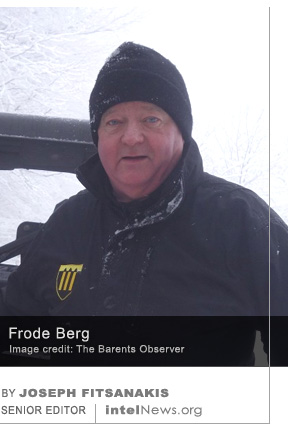
The two Lithuanians were exchanged for two Russians, Nikolai Filipchenko and Sergei Moisejenko. Filipchenko is believed to be an officer in the Russian Federal Security Service (FSB), who was arrested by Lithuanian counterintelligence agents in 2015. He had been given a 10-year prison sentence for trying to recruit double agents inside Lithuania, allegedly in order to install listening bugs inside the office of the then-Lithuanian President Dalia Grybauskaite. Moisejenko was serving a 10½ year sentence for conducting espionage and for illegally possessing firearms. Lithuania alleges that Moisejenko had been tasked by Moscow with spying on the armed forces of Lithuania and NATO. Along with the two Lithuanians, Russia freed Frode Berg (pictured), a Norwegian citizen who was serving a prison sentence in Russia, allegedly for acting as a courier for the Norwegian Intelligence Service.
On Saturday, Darius Jauniškis, Director of Lithuania’s State Security Department, told reporters in Vilnius that the spy swap had taken place in a remote part of the Russian-Lithuanian border. He gave no further information about the details exchange, or about who was present at the site during the spy-swap.
► Author: Joseph Fitsanakis | Date: 18 November 2019 | Research credit: E.G. | Permalink
 The Iranian government may have used a female intelligence officer to lure a leading Iranian dissident from his home in France to Iraq, where he was abducted by Iranian security forces and secretly transported to Iran. Iranian authorities
  The Russian government is preparing to swap a number of imprisoned spies with at least two member states of the North Atlantic Treaty Organization (NATO), according to reports. The Estonia-based news agency BNS, which is the largest news agency in the Baltics,
  A Russian former police officer, who is serving a prison sentence in Russia for having spied for the United States Central Intelligence Agency, has written an open letter to President Donald Trump, asking to be freed. Yevgeny A. Chistov was arrested by the Russian Federal Security Service (FSB) in 2014 on charges of spying for Washington. During his trial, he admitted having been recruited by the CIA when he worked as an officer in the police, Russia’s federal law-enforcement agency, which operates under the Ministry of Internal Affairs. Russian state prosecutors accused him of having established contact with the CIA in 2011. In 2015, he was
  Russia may have made the decision to kill former double spy Sergei Skripal because he continued to provide counterintelligence assistance to Eastern European governments, according to media reports from Prague. Skripal, 66, a veteran military intelligence operative who spied for Britain in the early 2000s, has been living in England since 2010. He was recently released from hospital after he was
  Britain’s counterintelligence service is nearing the conclusion that a foreign government, most likely Russia, tried to kill a Russian double spy and his daughter, who are now fighting for their lives in a British hospital. Sergei Skripal, 66, and his daughter Yulia Skripal, 33, are said to remain in critical condition, after falling violently ill on Sunday afternoon while walking in downtown Salisbury, a picturesque cathedral city in south-central England. Skripal arrived in England in 2010 as part of a large-scale
  A public event has been held for the first time in Havana to demand the release
  China and Taiwan reportedly swapped each other’s imprisoned spies, just days before a historic meeting between their heads of government. It was the first time in the two nations’ history that they have swapped jailed spies with each other. The exchange appears to have taken place in secret in late October, less than two weeks ahead of a historic November 7 meeting between Chinese President Xi Jinping and Taiwanese President Ma Ying-jeou. The meeting, which took place in Singapore, was hailed for its historic significance, as it was the first of its kind since 1949, when the two countries emerged following a bitter civil war between communist and nationalist forces.
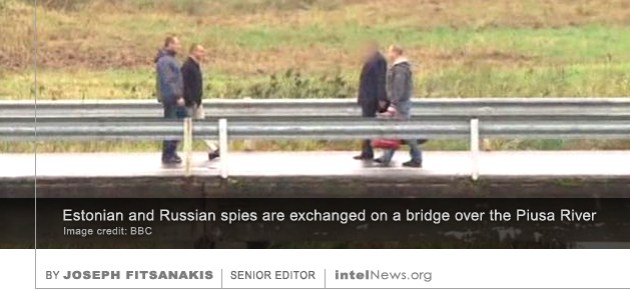 The Russian and Estonian intelligence services have exchanged two men accused by each country of spying for the other, in a rare public example of what is commonly referred to as a ‘spy-swap’. The exchange took place on Saturday on a bridge over the Piusa River, which forms part of the Russian-Estonian border, separating Estonia’s Polva County from Russia’s Pskov Oblast.









 intelNews.org
At least four Russians released in prisoner exchange with West are verified ‘illegals’
August 5, 2024 by Joseph Fitsanakis 2 Comments
In intelligence parlance, the term ‘illegals’ emerged during the Cold War to describe Russian intelligence personnel who operated without any formal association with Russian diplomatic facilities. In many cases, these operatives used third country passports. This enabled them to operate with an unusual degree of flexibility and evade the attention of rival intelligence services. At the same time, however, the absence of diplomatic credentials prevented these operatives from claiming diplomatic immunity if caught. It thus exposed them to the possibility of lengthy prison terms upon discovery.
THE TWO GRU ILLEGALS
Among the prisoners exchanged last week was Pavel Alekseyevich Rubtsov. Rubtsov was born in the Soviet Union as the grandson of a Spanish evacuee, who had been taken to Moscow as a child by the leftist Spanish Republic during the Spanish Civil War. At the age of 9, Rubtsov moved with his mother to Spain, where he had his name legally changed to Pablo González Yagüe and grew up in Catalonia and the Basque Country. He was arrested in Poland in 2022 and charged with participating in foreign intelligence activities against Poland on behalf of the Main Directorate of the Russian Armed Forces’ General Staff, which is commonly known as GRU.
IntelNews has previously reported on the case of Mikhail Valeryevich Mikushin, who was also released and returned to Russia on Thursday. Mikushin lived for several years in Canada and Norway using a Brazilian passport under the name of José Assis Giammaria. When he was arrested by Norwegian authorities, Mikushin was working as a researcher on arctic security affairs for the Arctic University of Norway. Among other things, Mikushin was a volunteer researcher for a UiT GreyZone, a scholarly project that studies contemporary hybrid threats and grey zone warfare. Like Yagüe, Mikushin is also believed to have been employed by the GRU.
THE TWO SVR ILLEGALS
Arguably the most unusual case of illegals among those unveiled last week is that of Artem Dultsev and Anna Dultseva. The couple moved from Argentina to Ljubljana, the capital of Slovenia, in 2017. They brought with them their two young children, a boy and a girl, both of whom appear to have been born in Argentina. Artem Dultsev’s Argentinian passport bore the name Ludvig Gisch, born in 1984 in the West African country of Namibia. Dultsev posed as an information technology executive. His wife, Anna Dultseva, who operated an art gallery, used the cover name Maria Rosa Mayer Munos and went by Mayer. Read more of this post
Filed under Expert news and commentary on intelligence, espionage, spies and spying Tagged with Anna Dultseva, Artem Dultsev, GRU, imprisoned spy swaps, José Assis Giammaria, Ludvig Gisch, Maria Rosa Mayer Munos, Mikhail Mikushin, News, non-official-cover, Pablo González Yagüe, Pavel Alekseyevich Rubtsov, Pavel Rubtsov, Poland, Russia, Slovenia, SVR (Russia), United States, Vadim Nikolaevich Krasikov