Tip by confidential human source guided FBI search of Trump’s home, reports claim
August 11, 2022 4 Comments
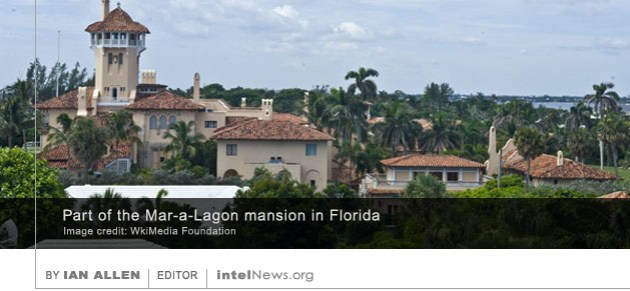 MULTIPLE NEWS OUTLETS CLAIMED on Wednesday that Monday’s search by authorities of a Florida residential compound belonging to former United States President Donald Trump was based on information provided to the Federal Bureau of Investigation by a confidential human source. The source reportedly gave the FBI details about a number of classified documents that were allegedly hidden in Trump’s Florida estate, as well as their precise location.
America’s troubled political waters turned stormy once again on Monday morning, when around 35 FBI special agents and technical support personnel arrived at Trump’s Mar-a-Lago estate in a convoy of unmarked vehicles. The FBI team proceeded to execute a search warrant, which authorized them to confiscate government files that were allegedly in storage at the luxury estate. According to the 1978 Presidential Records Act, these files belong to the state and should have been deposited to the National Archives upon Trump’s departure from the White House in January of 2021.
On Monday afternoon, the FBI staff reportedly left Trump’s residence with between 10 and 15 boxes of documents. In the ensuing hours, a number of commentators pointed out that, as per Trump’s attorney Lindsey Halligan, who observed the search in person, the FBI focused on just three rooms, ignoring the rest of the sprawling mansion —namely Trump’s office, a bedroom and a storage room. That, according to some, points to the strong possibility that the FBI special agents had prior information about the location of the files.
On Wednesday morning, Newsweek said it could confirm that the FBI had prior information about the precise location of the files. The news outlet cited two senior government officials, including “an intelligence source” who had “direct knowledge of the FBI’s deliberations” in the days leading up to the search. According to the sources, during the first week of August the government prosecutor in charge of the case was able to secure a search warrant by a West Palm Beach judge. The prosecutor reportedly did so by providing the judge with “abundant and persuasive detail” about the files, which “proved that those records were contained at Mar-a-Lago […] in a specific safe in a specific room”.
On Wednesday evening, The Wall Street Journal also reported that the FBI had been approached by “someone familiar with stored papers”. The source allegedly provided government investigators with information about the precise location of “classified documents” at Mar-a-Lago. The paper added that the FBI confidential source had direct access to the documents.
The US attorney general’s guidelines [PDF] define FBI confidential human sources as individuals who are “believed to be providing useful and credible information to the FBI for any authorized information collection activity”. They further stipulates that the FBI expects or intends to obtain “additional useful and credible information” from confidential human sources in the future, thus it usually builds a long-term relationship with these individuals. The guidelines also note that, given the sensitivity of the role of confidential human sources, their “identity, information or relationship with the FBI warrants confidential handling”.
► Author: Ian Allen | Date: 11 August 2022 | Permalink
 THE BRITISH GOVERNMENT IS citing a rarely used “breach of confidence” clause in an effort to stop the country’s public broadcaster from revealing the identity of a British intelligence officer working abroad. According to
  THE BRITISH GOVERNMENT IS seeking to stop the nation’s public broadcaster from airing a story that would allegedly reveal the identity of a British intelligence officer working abroad. The news
  A number of United States government officials have expressed dismay about the White House’s treatment of top-level meetings about the coronavirus (COVID-19) as classified, a move described by some as “not normal”. On Wednesday the Reuters news agency
  The government of Israel has increased to 90 years the period during which documents belonging to intelligence and security agencies can remain secret, extending it by 20 years. Until last month, government documents produced by Israeli spy agencies, such as its external spy organization, the Mossad, or its domestic security agency, the Shin Bet, could remain hidden from public view for up to 70 years. Last year, however, the administration of Prime Minister Benjamin Netanyahu commissioned a study into the possibility of extending the classification period for such documents. Israel’s Supreme Council of Archives, a body within the Israel State Archives that advises the Office of the Prime Minister on matters of classification, recommended against extending the classification period by more than five years.









 intelNews.org
Still unanswered: Trump’s motive for withholding classified documents
June 12, 2023 by Joseph Fitsanakis 5 Comments
What remains unanswered, however, is the motive. Why did Trump allegedly take several hundred classified documents from the White House? Did he select specific documents to purloin? And, if so, why these specific documents? Lastly, why did the former president go to such pains to frustrate the government’s efforts to recover the documents? There has been intense public speculation about the answers to these questions. Yet the grand jury indictment does not appear to attempt to establish the possible motive behind the alleged crime. Nor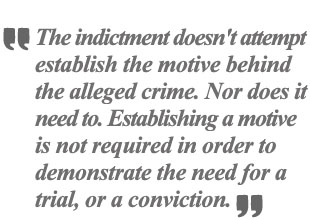 does it need to. Establishing a motive is not required in order to demonstrate the need for a trial, or indeed a conviction. Given the high stakes of this case, however, establishing a motive can provide much-needed clarity in the public sphere.
Accidental or Malicious?
It is important to clarify with precision what the grand jury indictment does not state: its pages do not contain any suggestion that Trump took possession of the classified documents in order to share them with specific individuals or entities, American or foreign. Nor does the indictment suggest that the former president intended to use the classified information in his possession for personal financial gain —for instance to promote his investment ventures at home or abroad, or to gain leverage and win over potential business partners.
So, why did Trump do it? As The New York Times explained on Sunday, the indictment does offer some hints of motives, if one reads between the lines. One possible explanation stems from Trump’s time in the White House, during which he learned to associate his access to classified information as a paramount perk that came with being president of the United States. It follows that, retaining access to classified information was a way for him to maintain control over the office of the presidency. That strong need intensified even more after January 2021, as Trump was clearly “not ready to let go of the perks of holding the highest office in the country”. Indeed, the indictment describes several examples that reveal the strong sense of ownership that the former president felt about the classified documents he kept at his private residence at Mar-a-Lago, as well as his determination to keep them in close proximity to his office and sleeping quarters.
Tertiary Motives
A plausible tertiary motive for Trump’s alleged crimes is the leverage and status that access to secrets can bestow upon an individual. It is possible that Trump viewed the classified documents as the apogee of the long list of his material prizes and trophies —as an important physical legacy of the zenith of his career. That would also explain why he allegedly fought so determinedly to keep the documents in his possession, even after he was told in no uncertain terms by the government that they did not belong to him. Moreover, as The Times notes, the former president may view his classified document collection as a way to insure his legacy —for instance as a means of rebutting critics of his policies and decisions while he was in office, or even as potential “payback against perceived enemies”.
But these motives are probably less prominent in Trump’s mind. A strong and deeply held sense of ownership of government information, no matter their classification grade, is likely the driving motive behind the alleged crimes. As The Washington Post noted in an insightful article in 2022, aides to the former president said that he appeared sincere and genuine about his conviction that the classified documents “were his, not the government’s”. When he was advised otherwise by his own aides, he noticeably “gravitated toward lawyers and advisers who indulged his more pugilistic desires”, according to the paper. His attitude was not a show. It was sincere. Moreover, there is no reason to believe that it has subsided since his indictment.
A Genuine Conviction of Ownership
Trump’s latest legal woes are rooted in his genuine belief that access to classified information is something he is owed —not simply because he served as president of the United States, but because, in his mind, he should still be in the Oval Office. These deeply entrenched beliefs are unlikely to be abandoned by the former president, regardless of the cost. More importantly, these same beliefs are passionately shared by millions of his supporters. The latter are sufficient in number to wreak havoc in the Republican Party and radically reshape American politics for years to come. If Trump avoids trial or a prison sentence, his support base will view such an outcome as a form of noble victory against the “deep state”. It is therefore likely to be energized, possibly like never before. Should Trump be jailed or seek political asylum abroad in order to evade incarceration, the American political landscape will undergo a major earthquake. Regardless of the outcome of this unprecedented saga, stormy waters seem to lie ahead.
► Author: Joseph Fitsanakis | Date: 12 June 2023 | Permalink
Filed under Expert news and commentary on intelligence, espionage, spies and spying Tagged with Analysis, Donald Trump, intelligence classification, Joseph Fitsanakis, lawsuits, Newstex, United States