News you may have missed #454

  • Georgia lets Russian envoy visit jailed spy suspect. Georgia says it has allowed a representative of the Russian consulate to meet with a Russian citizen detained on charges of espionage. The jailed man is one of 13 individuals suspected of spying for Russia, who were arrested by Georgian counterintelligence earlier this month. Four of the detained suspects are Russian citizens and nine are Georgian nationals.
  • Danish agency aware of CIA spying since 2004. The Danish security services have released a statement saying they have known since 2004 that the US Embassy in Copenhagen was collecting information on Danish citizens. Last week, several Scandinavian countries launched investigations into the activities of intelligence gathering networks employed by US embassies.
  • Iran charges German reporters with espionage. Iranian officers detained the journalists, who were pretending to be tourists, as they conducted an interview with the son of Sakineh Mohammadi Ashtiani, a 43-year-old mother of two, condemned to death by stoning.

News you may have missed #453

  • France accuses Iran of violence at Tehran embassy. A diplomatic standoff between France and Iran has ensued, after Paris accused Iran’s security services of committing “unacceptable acts of violence” on French diplomatic personnel at the French embassy in Tehran. The alleged incident happened as guests gathered at the embassy for a traditional Persian music concert. Iranian plainclothes security forces and uniformed police stopped about two-thirds of 130 invited guests from entering the building, and an unknown number of people were seen being taken away in unmarked vans.
  • CIA picks Air Force general to lead military ops office. The CIA announced Monday that it has chosen an Air Force Lt. Gen. Kurt A. Cichowski, who has extensive experience in Predator drones, to head its military affairs office. In 2009, Cichowski called the CIA drone assassination program a “phenomenal […] success”.
  • Aussie spies spooked out by student filmmakers. Three media students filming a tourist site near the controversial new headquarters of Australia’s spy organization, ASIO, in Canberra, prompted a late-night police check, apparently over security concerns.
News you may have missed #446

  • American pleads guilty to spying for China. Glenn D. Shriver acknowledged on Friday that he accepted $70,000 from Chinese spies as he attempted to secure jobs with the CIA and US Foreign Service that would have allowed him to expose US government secrets. He apparently spent two years going through the CIA hiring process and reached the final security screenings. But US intelligence sources say Shriver was discovered very early in the hiring process.
  • Obama widens CIA operations in Pakistan. The US is pushing to expand secret CIA operations in Pakistan. But Islamabad is so far rebuffing US requests to allow additional CIA officers and special operations military trainers to enter the country.
  • US spy balloons blew towards Iran. The latest WikiLeaks revelations show that on two occasions in 2006 American JLens spy balloons broke from their moorings in Iraq and drifted toward the Iranian airspace. No information on the balloons’ fate is reported in the war logs. Did Iran get hold of them?

News you may have missed #445

  • WikiLeaks files show Iranian involvement in Iraq. The latest WiliLeaks release of nearly 392,000 US military reports from Iraq shows, among other things, that Iran was a major combatant in the Iraq War. According to the documents, Tehran’s elite Quds Force trained Iraqi Shiite insurgents and imported weapons like Explosively Formed Projectile bombs into Iraq for use against civilians, Sunni militants and US troops.
  • WikiLeaks founder on the run. Julian Assange’s fate seems as imperiled as that of Private Bradley Manning, the 22-year-old former Army intelligence operative under detention in the US for leaking Iraq and Afghan war documents to WikiLeaks. Last Monday, Mr. Assange’s bid for a residence permit in Sweden was rejected. His British visa will expire early next year.
  • Money problems of US spies may threaten US security. Elizabeth Bancroft The executive director of the US Association of Former Intelligence Officers, has suggested that government agencies should monitor intelligence service employees with security clearances, who may have fallen into bankruptcy during the ongoing economic crisis. Spy agencies are worried that financial problems might leave these employees open to bribery or blackmail.

Iran admits some of its nuclear scientists spied for the West

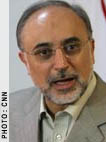
Ali Akbar Salehi

Ali Akbar Salehi

By JOSEPH FITSANAKIS | intelNews.org |
A top-level Iranian government official has admitted that some scientists and technicians in Iran’s nuclear energy program were successfully lured into spying for Israeli and Western intelligence agencies in the past. The disclosure, which was characterized as “stunning” by the Associated Press, marked the first-ever open admission by the Iranian government that the country’s nuclear energy program has been penetrated by foreign spies. It was made last weekend by Ali Akbar Salehi, Iran’s Vice President and Director of the country’s Atomic Energy Organization. According to the Iranian government-controlled Fars News Agency, Vice President Salehi told an audience that individual scientists and technicians working in Iran’s nuclear program had used their access to classified relevant information to benefit from “foreign purchases and commercial affairs”. Read more of this post

News you may have missed #438 (Stuxnet edition)

[Research credit to Arthur Sbygniew]

Iran announces arrests of alleged nuclear spies

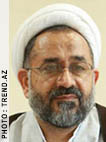
Heidar Moslehi

Heidar Moslehi

By IAN ALLEN | intelNews.org |
The Iranian government has announced the arrest of an unspecified number of alleged nuclear spies, reportedly in connection with a sophisticated virus that infected computers used in Iran’s nuclear energy program. The arrests were publicized on Sunday by Heidar Moslehi, Iran’s Minister of Intelligence, who said those arrested had helped facilitate the spread of the so-called Stuxnet virus last June. The malicious program, which appears to have been designed to sabotage sensitive hardware components found specifically in nuclear centrifuges, has infected at least 100,000 computer systems worldwide, most of which are located in Iran. Speaking to Iranian media, Moslehi accused Israel and the United States of trying to sabotage the Iranian nuclear energy program, but noted that Iran’s intelligence services have resumed “complete supervision of cyberspace” and will successfully prevent “any leak or destruction” of the Islamic Republic’s nuclear research and development program by outside forces. But elsewhere in Tehran, Hamid Alipour, an Iranian government Senior Information and Technology official, admitted that technical experts are still working on containing the virus, which appears to be mutating. Read more of this post

Experts see nation-state behind sophisticated computer virus attack

Ahmadinejad

By IAN ALLEN | intelNews.org |
Computer forensics specialists are split as to the purpose and initial target of a sophisticated computer virus that infected computers used in the Iranian government’s nuclear energy program. The virus, named Stuxnet, was discovered in Iran in June by a Belarusian computer security firm doing business in the Islamic Republic. It has since infected at least 100,000 computer systems in countries such as Brazil, India, Russia and the United States. But the primary target of the virus appears to have been the Iranian nuclear energy program, specifically computers located at the Islamic Republic’s nuclear reactor facility in Bushehr and the uranium enrichment plant in Natanz. Several commentators, including Wired magazine, dispute the existence of any evidence pointing to a clear target inside Iran.  But Israeli media maintain that computers at Natanz were the primary target of Stuxnet, and that subsequent infections at computer labs at Bushehr were in fact an unintended side effect. Read more of this post

News you may have missed #435 (cyberwarfare edition)

  • Analysis: Cyber attacks test US Pentagon. US military and civilian networks are probed thousands of times a day, and the systems of the North Atlantic Treaty Organization headquarters are attacked at least 100 times a day. Meanwhile, more than 100 countries are currently trying to break into US defense networks.
  • US should be able to shut Internet, ex-CIA chief says. Cyberterrorism is such a threat that the US President should have the authority to shut down the Internet in the event of an attack, Former CIA Director Michael Hayden has said.
  • Iran battling alleged ‘spy virus’. Iranian officials have confirmed reports that a malicious computer code, called Stuxnet, was spreading throughout the nation’s nuclear infrastructure. But they have given differing accounts of the damage, said to be capable of taking over computers that operate huge facilities, including nuclear energy reactors. Did someone say ‘Israel‘?

Analysis: Deadly conflict inside Iraqi spy service goes unmentioned

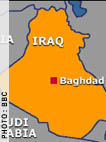
Iraq

Iraq

By JOSEPH FITSANAKIS | intelNews.org |
Amidst the chaos of post-Ba’athist Iraqi politics, a deadly sectarian conflict is raging within Iraq’s powerful spy agency. Employees inside Iraq’s National Intelligence Service (INIS) are split along religious sectarian lines, with Sunni and Shiite officers battling for control of the organization. The warring factions are directly affiliated with opposing political parties, and represent various political interests. Shiite officers are seen as aligned with Tehran, whereas Sunnis are close to Washington and –ironically– to the remnants of Saddam Hussein’s Ba’ath party. The conflict has resulted in the assassination of several INIS officers, mostly by their colleagues in the Service, according to two anonymous Iraqi security officials, who spoke to The National, an English-language newspaper published in the United Arab Emirates. Read more of this post

News you may have missed #432

  • French spy agency chief warns of high terror risk. Bernard Squarcini, director of France’s Direction de la Surveillance du Territoire (DST) counterintelligence agency, has warned that the country’s military presence in Afghanistan is among the reasons that have made France a prime target for radical Islamist groups.
  • Iran frees one of three Americans held on spy charges. American Sarah Shourd, who has been held in Iran for more than a year on suspicion of spying, has been released by authorities in the Islamic Republic.
  • American civil rights photographer was FBI informant. New information shows that celebrated civil rights-era photographer Ernest Withers had been a paid informant for the FBI, reporting on the whereabouts and activities of the movement’s leaders, many of whom considered him a personal friend.

News you may have missed #420

  • Nokia and Siemens deny helping Iranian spying. Isa Saharkhiz, a one-time reporter for the Islamic Republic News Agency, is suing Nokia Siemens Networks in US federal court, claiming the companies facilitated his capture and torture at the hands of the Iranian government. The European-based consortium denies the allegations.
  • New Aussie spy agency HQ ‘on time and on budget’. The new ASIO $606 million  (USD $540 million) headquarters in Parkes, Canberra, is progressing on time and on budget, with completion scheduled for mid-2012. Meanwhile, the 270 construction workers on site have been vetted for security clearance, must pass security checkpoints each day, and have signed papers not to discuss anything that happens on site.
  • US Pentagon spends big on outsourced spy imagery. The production and maintenance of US spy satellites used to be in government hands, but now this critical aspect of national security is routinely outsourced. The National Geospatial-Intelligence Agency (NGA), the Department of Defense’s operator of military spy satellites, recently awarded $7.3 billion in contracts for its EnhancedView commercial imagery program.

News you may have missed #416 (Iran edition)

  • Israel not to attack Iran in 2011, say US sources. The Obama administration, citing evidence of continued troubles inside Iran’s nuclear program, has persuaded Israel that it would take roughly a year for Iran to complete a “dash” for a nuclear weapon. US officials say the assessment has dimmed the prospect that Israel would pre-emptively strike Iran within the next year.
  • Iran launches first spy drone. Iran has launched a domestically made long-range high-altitude drone, called Karrar, according to state media. Hamed Saeedi, managing director of Farnas Aerospace Company, which is in charge of the project, said plans are under way to produce additional drones and unmanned choppers.
  • Iranian tried for espionage collapses in Armenian court. Behnam Bagheri, an Iranian citizen being tried in Armenia on charges of spying for Azerbaijan, collapsed in court in Yerevan on August 19 while delivering his defense speech, according to reports. In a similar case in October of 2009, Armenia charged one of its own officers with spying for Azerbaijan.

Bookmark and Share

News you may have missed #412

Bookmark and Share