Iran spied on ISIS supporters through fake phone wallpaper app, say researchers
September 14, 2018 1 Comment
 Supporters of the Islamic State, most of them Persian speakers, were spied on by the government of Iran after they downloaded a fake smartphone application with wallpaper images, according to an online security firm. Iran is a major adversary of the radical Sunni group Islamic State. The latter considers Shiism (Iran’s state religion) as an abomination. Not surprisingly, therefore, the Islamic State, which is also known as the Islamic State of Iraq and Syria (ISIS), relies largely on supporters from the Arabic-speaking regions of the Levant. But according to estimates, Sunnis constitute about 10 percent of Iran’s population, and ISIS has found some fertile ground among Iran’s 8 million-strong Sunni minority. As a result, the government in Tehran is highly mistrustful of Iranian Sunnis, many of whom are ethnic Kurds, Baluchis, Azeris or Turkomans, and systematically spies on them.
According to the Israeli online security firm Check Point Software Technologies, one way in which Tehran has spied on Persian-speaking ISIS supporters is through fake smartphone applications. In an article published last week, the company said it had uncovered a state-sponsored surveillance operation that it had codenamed “Domestic Kitten”. The Check Point article said that the operation had gone on for more than two years, but had remained undetected “due to the artful deception of its attackers towards their targets”. The surveillance of targeted phones was carried out with the help of an application that featured pro-ISIS-themed wallpapers, which users could download on their devices. Yet another program linked to the same vendor was a fake version of the Firat News Agency mobile phone application. The Firat News Agency is a legitimate Iranian information service featuring news about Iran’s Kurdish minority. But both applications were in fact malware that gave a remote party full access to all text messages sent or received on the compromised phones. They also gave a remote party access to records of phone calls, Internet browser activity and bookmarks, and all files stored on the compromised phones. Additionally, the fake applications gave away the geo-location of compromised devices, and used their built-in cameras and microphones as surveillance devices.
Check Point said that the majority of compromised phones belonged to Persian-speaking members of Iran’s Kurdish and Turkoman minorities. The company stressed that it was not able to confirm the identity of the sponsoring party with absolute accuracy. However, the nature of the fake applications, the infrastructure of the surveillance operation, as well as the identities of those targeted, posed a strong possibility that “Domestic Kitten” was sponsored by the government of Iran, it concluded. Last July, the American cyber security firm Symantec said that it had uncovered a new cyber espionage group called “Leafminer”, which was allegedly sponsored by the Iranian state. The group had reportedly launched attacks on more than 800 agencies and organizations in in countries such as Israel, Egypt, Bahrain, Qatar, Kuwait, the United Arab Emirates, Afghanistan and Azerbaijan.
► Author: Ian Allen | Date: 14 September 2018 | Permalink
 Authorities in the United States have announced the arrests of two men who have been charged with spying on American soil on behalf of the Islamic Republic of Iran. The men were reportedly arrested on August 9, but information about them was only released on Monday by the US Department of Justice. In a
  An American cyber security firm has reported the discovery of a previously undetected, “highly active” Iranian cyber espionage group, whose extensive target list consists mainly of large organizations and companies in the Middle East. The cyber security firm Symantec, makers of Norton antivirus software, which uncovered the cyber espionage group’s existence, has dubbed it “Leafminer”. It said the group has been active since the beginning of 2017, but has “significantly ramped up its activities” in 2018 and is currently involved in dozens of ongoing attacks.
 Iranian military officials have warned of extracting “revenge from foreign intelligence services”, as Reuters reported that an aggressive campaign against Tehran has been launched by Washington. On Sunday, the Reuters news agency said that senior officials in the administration of US President Donald Trump had launched a concerted offensive “meant to foment unrest” in the Islamic Republic.
  Israel helped foil an alleged Iranian-sponsored bomb attack in Paris, which involved arrests of several Iranian agents and at least one diplomat in France, Belgium and Germany, according to media reports. As intelNews
 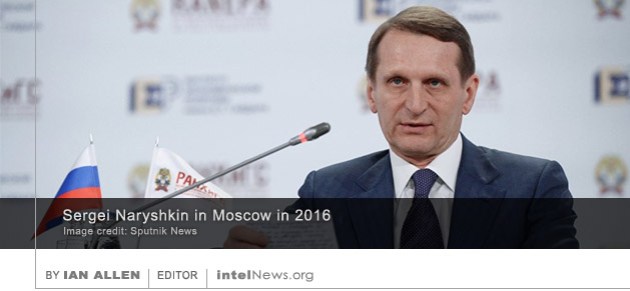 Intelligence directors from Russia, China, Iran and Pakistan met on Tuesday to discuss regional cooperation with particular reference to combating the Islamic State in Afghanistan. Information about the high-level meeting was
 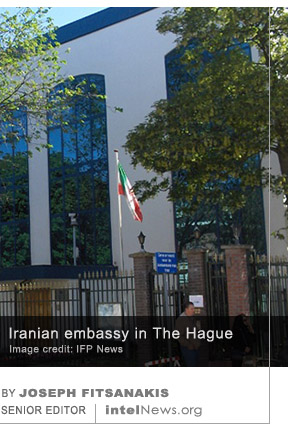 Holland has expelled two Iranian diplomats without saying why, leading to speculation that the expulsions may be related to the arrests of members of an alleged Iranian sleeper cell in Belgium, Germany and France last week. On Friday, a spokesperson from Holland’s General Intelligence and Security Service (AIVD)
  An Iranian diplomat and members of what authorities described as an “Iranian sleeper cell” were arrested this week in Belgium, Germany and France, as they were allegedly planning to a bomb a high-level meeting in Paris. The arrests came after a complex investigation by several European intelligence agencies and were announced by Belgium’s Minister of the Interior, Jan Jambon.
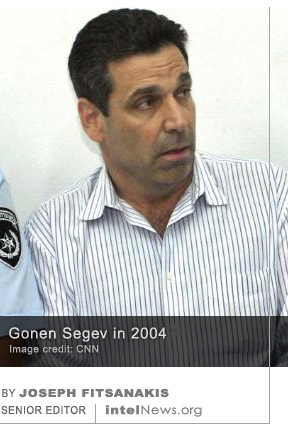 Israel has charged Gonen Segev, who served as the Jewish state’s Minister of Energy and Infrastructure, with spying for its archenemy, Iran. Segev, 62, was reportedly detained last month during a trip to Equatorial Guinea following a request by Israeli officials. He was then extradited to Israel and arrested as soon as he arrived in Tel Aviv last month, according to a statement by the Shin Bet, Israel’s domestic security service. On Monday it emerged that Israeli authorities had imposed a gag order on the case, forbidding Israeli media from reporting any information about it. The order appears to have now been lifted.
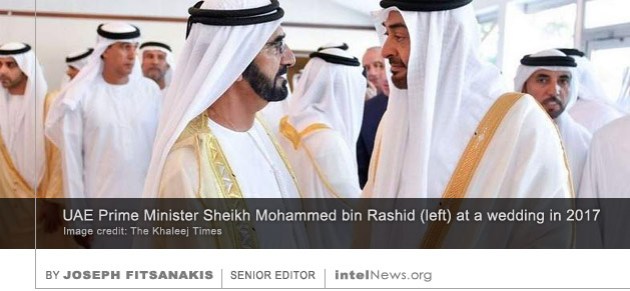 A lengthy exposé by a leading American newsmagazine has claimed that Israel and the United Arab Emirates, two countries that officially have no relations, have been secretly collaborating for more than two decades. Their secret cooperation has been extremely tight and has included clandestine weapons sales and intelligence-sharing, according to the exposé, which was published on the website of The New Yorker on Monday and will feature in the magazine’s print edition on June 18. The lengthy piece, which deals with the changing geopolitics of the Middle East, is written by Adam Entous, national security correspondent for The Washington Post, who has previously reported for more than two decades for Reuters and The Wall Street Journal.
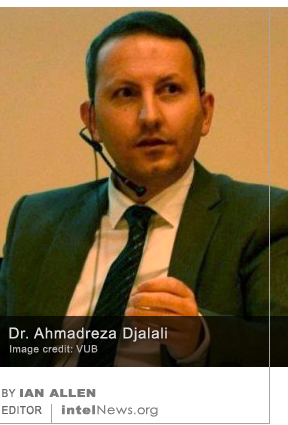 The government of Sweden has granted citizenship to an academic who is on death row in Iran for allegedly helping Israel kill Iranian nuclear scientists. Sweden’s Foreign Affairs Ministry confirmed on Saturday that Ahmadreza Djalali, who lives in Sweden and has lectured at Stockholm’s renowned Karolinska Institute, is now a Swedish citizen. IntelNews has
 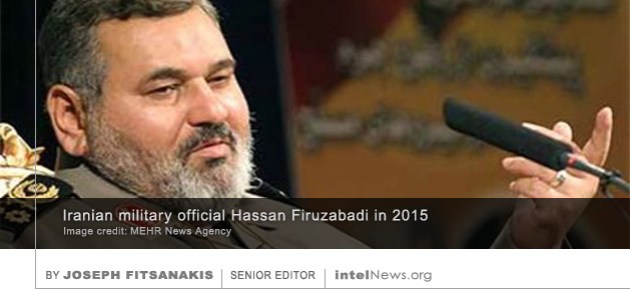 The former chief of staff of Iran’s Armed Forces has said that foreign governments used different species of lizards, including chameleons, to spy on the Iranian nuclear program. The claim was made by Hassan Firuzabadi, a veteran Iranian military official, who from 1989 to 2016 served as the chief of staff of the Iranian Armed Forces —the most senior military post in the Islamic Republic. Since his retirement in 2016, Firuzabadi has served in a number of key consultancy roles and is currently a senior military advisor to Ayatollah Ali Khamenei, Iran’s reform-minded supreme leader.








France freezes assets of Iranian spies in response to foiled terror attack in Paris
October 4, 2018 by Joseph Fitsanakis 2 Comments
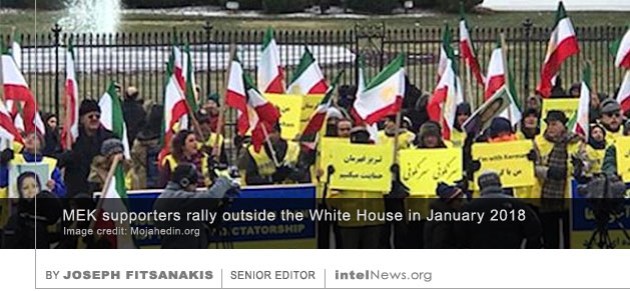
All four individuals were charged with a foiled plot to bomb the annual conference of the National Council of Resistance of Iran (NCRI) that took place on June 30 in Paris. The NCRI is led by Mujahedin-e Khalq (MEK), a militant group with roots in radical Islam and Marxism. The MEK was designated as a terrorist group by the European Union and the United States until 2009 and 2012 respectively. But it has since been reinstated in both Brussels and Washington, reportedly because it provides the West with a vehicle to subvert the Iranian government. France, Germany and Belgium allege that the aborted bombing plot was an attempt by Iran to disrupt the close relations between the MEK and Western governments.
On Tuesday, Paris announced the seizure of assets of two of the men who were arrested in June and July. One is an accredited Iranian diplomat identified as Assadollah Asadi, who is believed to be an official-cover intelligence officer. The other man is Saeid Hashemi Moghadam, who was arrested by French authorities. He is believed to be an Iranian sleeper agent. All assets belonging to the Islamic Republic’s Ministry of Intelligence were also been frozen, effective immediately, it was announced. In a joint statement, the French ministers of foreign affairs, economics and the interior said that the move reflected the France’s “commitment to fight terrorism, in all its manifestations […], especially on its territory”. The statement added that “the extremely heinous act envisaged on our territory could not go without a response”.
The Iranian government has denied all connection to the alleged plot in Paris and has dismissed the incident a “false flag” operation staged by MEK in cooperation with Tehran’s “enemies at home and abroad”.
► Author: Joseph Fitsanakis | Date: 04 October 2018 | Permalink
Filed under Expert news and commentary on intelligence, espionage, spies and spying Tagged with Assadollah Asadi, France, Iran, Iranian Ministry of Intelligence, Mujahedeen-e Khalq, National Council of Resistance of Iran, News, Saeid Hashemi Moghadam, terrorism