Emirates authorities confirm four ships targeted by ‘sabotage operations’
May 13, 2019 1 Comment
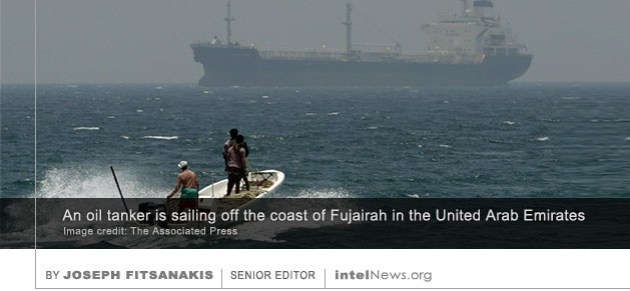 Authorities in the United Arab Emirates said on Sunday that four commercial ships were targeted by “sabotage operations”, but did not point to possible culprits. The announcement came hours after false reports circulated in Iranian and Lebanese media stating that explosions had been witnessed at the port of Fujairah, a major Emirati commercial shipping facility that borders the Sultanate of Oman and is visible from the coast of Iran. The alleged explosions were first reported by Al-Mayadeen, a Shiite-Lebanese satellite television station, and were then picked up by a host of Iranian news outlets.
The reports caused alarm in international energy market circles, as observers feared that the explosions may have resulted from deliberate attacks by Iranian forces. Located less than 100 miles from the Strait of Hormuz, through which over 30 percent of the world’s sea-transported oil is trafficked, the Port of Fujairah is the world’s second largest shipping fueling hub. Even a partial destruction of the port would cause major disruptions in the international energy transportation system. Several hours later, however, the Associated Press dismissed the reports as false, saying it had spoken to “Emirati officials and local witnesses” and had found the earlier reports of explosions at Fujairah to be “unsubstantiated”.
Later on Sunday, state-owned Emirates News Agency published a statement by the Ministry of Foreign Affairs, which said that four ships had indeed “suffered acts of sabotage” while sailing off the Emirati coast. The Foreign Ministry’s statement said that the ships were “civilian trading vessels of various nationalities” and that they had been “subjected to […] acts of sabotage”. It added that “subjecting commercial vessels to sabotage operations and threatening the lives of their crew is considered a dangerous development”. However, Emirati officials refused to elaborate on the nature of the sabotage that the ships allegedly suffered, or discuss the possible culprit or culprits of the alleged attacks. On Friday, the United States Maritime Administration (MARAD) warned that Iranian military forces could target “US commercial ships, including oil tankers”. There was also an “increased possibility” of “Iran or its regional proxies taking action against US and partner interests”, said MARAD.
► Author: Joseph Fitsanakis | Date: 13 May 2019 | Permalink
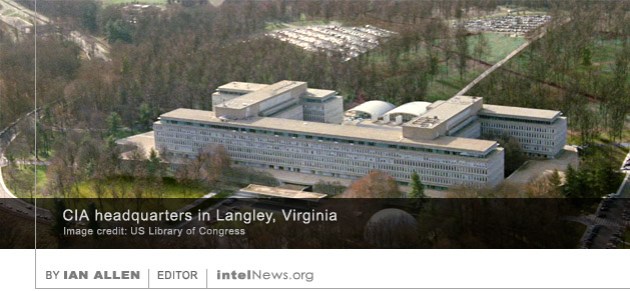 An untypical high-level meeting was convened at the headquarters of the United States Central Intelligence Agency last week to discuss Iran, according to NBC News. The meeting, which NBC
  The sudden decision by the United States to deploy significant firepower to the Middle East was partly in response to intelligence that was given to Washington by Israeli officials, according to a report. On Wednesday, the US announced that the USS Abraham Lincoln carrier strike group had received instructions to sail to the Middle East. The aircraft carrier is
 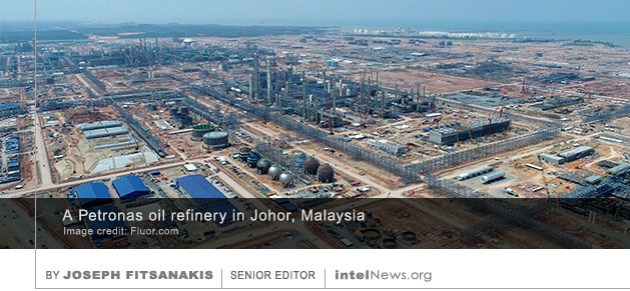 Citing “Western intelligence officials”, Israeli newspaper Haaretz said on Thursday that a deepening alliance between Malaysia and Iran is expected to enable Tehran evade some of the economic sanctions imposed on it by the United States. In the past, every time Washington has imposed economic sanctions on Iran, it has issued renewable waivers for a number of countries whose economies have historically depended on substantial Iranian energy imports. This is done in order to prevent these economies from entering a recession due to lack of access to sufficient energy supplies. This week, however, US President Donald Trump said that Washington would
 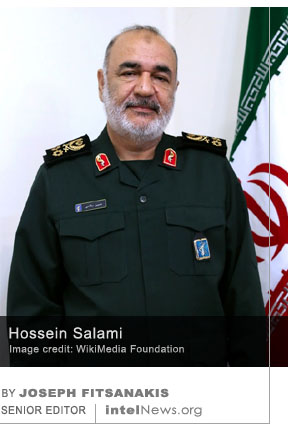 Authorities in Tehran revealed on Sunday the sudden replacement of the head of the Islamic Revolutionary Guard Corps. The unexpected move was announced by pro-government media, but no explanation was given. Since 2007, the IRGC has been led by Major General Mohammad Ali Jafari, 61, a conservative military commander who is widely believed to have consolidated the IRGC’s role within Iran’s power structure. Under his leadership, the IRGC has come to be seen as the staunchest defender of the principles of the 1979 Iranian Revolution. Many Western observers describe the IRGC as a ‘praetorian guard’ whose members possess immense power and often wealth. Today the IRGC is a military force with a command structure that is distinct from that of Iran’s regular Armed Forces. It maintains its own army, navy and air force, has its own paramilitary and political protection units, and is in charge of Iran’s nuclear program.
 Prosecutors in the United States have informed lawyers representing the Chinese telecom- munications firm Huawei that they intend to use evidence obtained through secret surveillance in a lawsuit against the company. The case involves the arrest of
 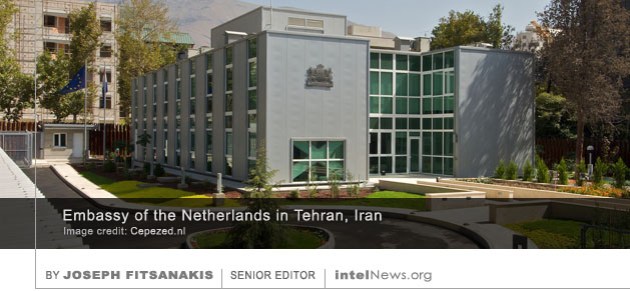 Holland said on Monday that it had recalled its ambassador from Tehran after Iran expelled two Dutch diplomats, in a deepening dispute involving the assassination of two Dutch citizens by alleged Iranian agents. In July of last year, Holland
  An American intelligence officer, who held the highest level of security clearance for over a decade, defected to Iran in 2012 and has been spying against the United States ever since, it was revealed yesterday. Monica Witt, 39, was a counterintelligence officer for the United States Air Force from 1997 until 2008, specializing in the Middle East. Throughout her career, she was deployed by the US military to the Middle East on several occasions, in order to carry out counterintelligence missions the details of which remain classified to this day.
 The United States Federal Bureau of Investigation has charged two men of Iranian descent, who were arrested in California, of operating as deep-cover spies for Iran. Documents filed in a federal court in Washington, DC, name the men as Majid Ghorbani, 59, and Ahmadreza Mohammadi Doostdar, 38. Both have American citizenship and were arrested by the FBI in August, following a year-long counterintelligence investigation. The Los Angeles Times
  Authorities in Holland have officially accused Iran of ordering the contract murders of two men on Dutch soil in 2015 and 2017, one of them just a block away from the Dutch foreign ministry’s headquarters. The announcement illuminates the reason behind the expulsion of two Iranian diplomats from Holland last year, which the authorities did not explain at the time.
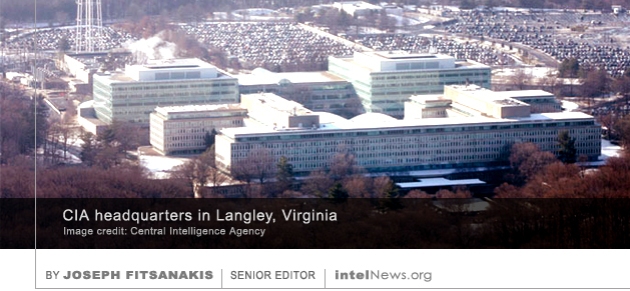 The United States Central Intelligence Agency suffered a “catastrophic” compromise of the system it uses to communicate with spies, which caused the death of “dozens of people around the world” according to sources. This is alleged in a
  The Danish government has recalled its ambassador from Iran and has accused the intelligence services of the Islamic Republic of plotting an assassination operation on Danish soil. Danish government officials also said that Copenhagen would seek to impose further economic and diplomatic sanctions on Tehran, in coordination with the European Union. The accusations against Iran were leveled during an emergency news conference in the Danish capital on Tuesday, led by Anders Samuelsen, Denmark’s Minister of Foreign Affairs, and Finn Borch Andersen (pictured), Director of the Danish Security and Intelligence Service, known as PET.
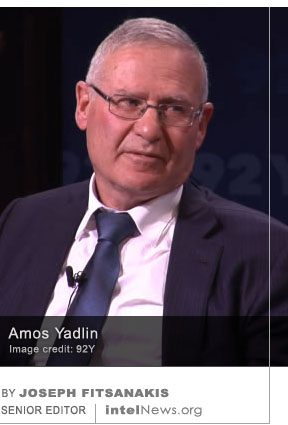 The government of Iran is smuggling parts for ballistic missiles to Lebanon, where they are secretly assembled in clandestine factories operated by the Shiite militant group Hezbollah, according to Israel’s former spy chief. For several months now, the international news agency Reuters has been
 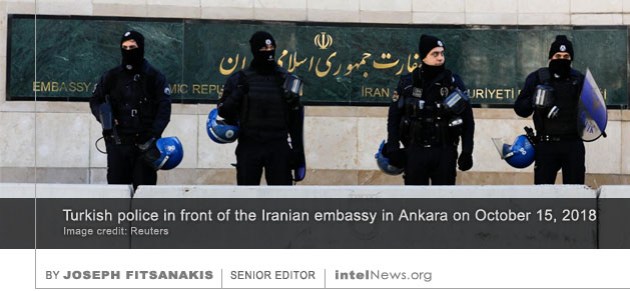 There were conflicting reports yesterday in Ankara of an alleged evacuation of Iran’s ambassador to Turkey, following credible reports of a suicide bomb attack, possibly by the Islamic State. Several Turkish media outlets reported on Monday afternoon that authorities in Ankara had communicated an urgent intelligence warning to the Iranian embassy there of a possible suicide bomb attack. According to the








British commander in Iraq contradicts US assessment of increased Iranian threat
May 15, 2019 by Joseph Fitsanakis 4 Comments
On Tuesday, however, this view appeared to be challenged by Major General Christopher Ghika, Britain’s most senior military official in the Middle East, who is deputy commander of Operation Inherent Resolve (OIR). The OIR umbrella brings together all pro-Western forces that are fighting the Islamic State in Iraq and Syria. General Ghika spoke to American reporters at the US Department of Defense via a live video-link from Baghdad, where he is currently stationed as OIR deputy commander. In responding to questions by reporters about alleged threats to Western forces from Iran or its proxies, General Ghika said that the OIR forces were “aware of that presence [or Iranian-led Shia militia groups in Iraq and Syria], clearly. And we monitor them along with a whole range of others because that’s the environment we are in”. However, added the general, “no, there has been no increased threat from Iranian-backed forces in Iraq and Syria”.
British newspaper The Guardian, which published General Ghika’s comments on Tuesday, noted that his statements appeared to directly contradict Washington’s claims of a heightened Iranian threat in the region. But in a statement released on Tuesday night local time, the US Central Command CENTCOM, whose responsibilities include the Middle East and Central Asia theaters, rejected General Ghika’s comments. “Recent comments from OIR’s Deputy Commander run counter to the identified credible threats available to intelligence from U.S. and allies regarding Iranian backed forces in the region”, said the statement. The Guardian described CENTCOM’s statement as “particularly striking” and “an extraordinary rebuke of an allied senior [military] officer”. The British Ministry of Defense had not responded to CENTCOM’s statement by Wednesday morning.
► Author: Joseph Fitsanakis | Date: 15 May 2019 | Permalink
Filed under Expert news and commentary on intelligence, espionage, spies and spying Tagged with CENTCOM, Christopher Ghika, intelligence cooperation, Iran, News, Operation Inherent Resolve, UK, United States