Australia to deport Kazakh-born Irish woman for allegedly spying for Russia
February 27, 2023 1 Comment
 THE GOVERNMENT OF AUSTRALIA has ordered the deportation of a Kazakh-born Irish citizen, who is believed to be a spy for the Russian Federation, according to reports from Australia and Ireland. The woman in question has been identified as Marina Sologub, 39, an ethnic Russian who was born in Kazakhstan, but grew up in the Republic of Ireland.
Sologub reportedly spent her teenage years in Glanmire, a suburb of the city of Cork, located on Ireland’s southern coastline. She eventually enrolled at University College Cork, where she graduated with a degree in Politics and Governance. While still at university, Sologub worked for Bernard Allen, a member of parliament for Ireland’s center-right Fine Gael political party. She then worked full-time at the office of Willie Penrose, a parliamentarian for the left-of-center Labour Party, which is far smaller than Fine Gael.
In 2011, when she was in her late 20s, Sologub was hired by Ireland’s National Space Centre in Middleton, Cork, where she remained for 7 years. According to media reports, Sologub has claimed that she was instrumental in “the development of intergovernmental agreement between Republic of Ireland and Russia Federation in use of space for civil purposes” during her time at the National Space Centre.
In 2020, Sologub’s impressive résumé landed her a job with the British-headquartered international consultancy firm Deloitte in Australia. She moved to Australia in September of that year and worked for Deloitte for about a year, at which point she was hired by a private firm specializing in the space industry. She subsequently entered employment with the city council of Marion, a small suburb of Adelaide, the capital of South Australia.
On February 22, the Australian Security Intelligence Organisation (ASIO), which is tasked with counterintelligence, announced that Sologub’s visa was under investigation on suspicion of her role in international espionage. It was reported that Sologub had had “extensive interactions with diplomatic staff from the Russian embassy” in Australia, which began soon after she entered the country in 2020. Now Australia has announced Sologub’s deportation from the country. According to media reports, Sologub’s deportation is part of a wider operation that aims “to identify Russian intelligence workers among high-ranking employees” in Australian government and industry.
► Author: Joseph Fitsanakis | Date: 27 February 2023 | Permalink
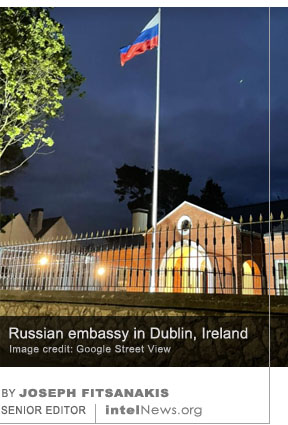 FOUR RUSSIAN DIPLOMATS, WHO Ireland claims are undercover intelligence officers, met with Irish paramilitaries as part of a wider plan to “stoke political unrest” in Britain and Ireland, according to a new report. In a press conference held in Dublin last week, Irish Taoiseach (Prime Minister) Micheál Martin
 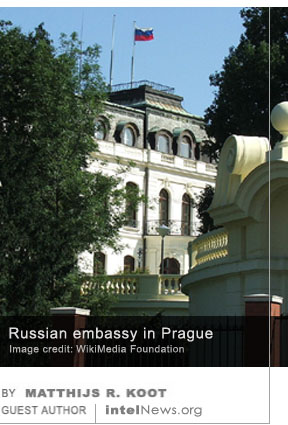 A WEEK AFTER POLAND
 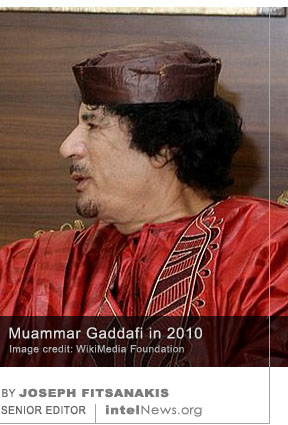 DOCUMENTS RELEASED LAST WEEK by the National Archives of Ireland show the extraordinary support given by the government of Libya to Irish republican separatists in Britain during the 1970s and 1980s. The previously classified documents were released last Tuesday by Ireland’s National Archives, which is the country’s official repository of state records. According to reports, the
 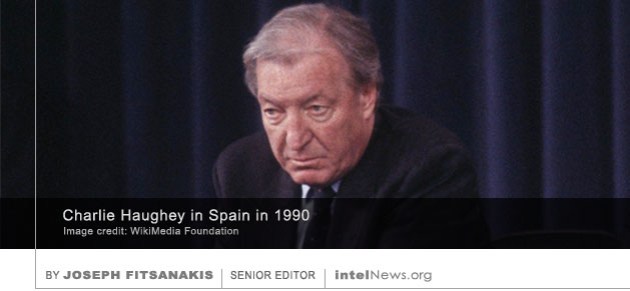 A NEW BOOK BY a veteran Irish journalist claims that the late Taoiseach (prime minister and head of the government of Ireland) Charlie Haughey was in effect an informer of the Provisional Irish Republican Army in the 1960s and 1970s. Written by Kevin O’Connor, the longtime political correspondent of The Sunday Independent, the book also claims that Haughey maintained regular contact with the leadership of the IRA throughout the 1970s.
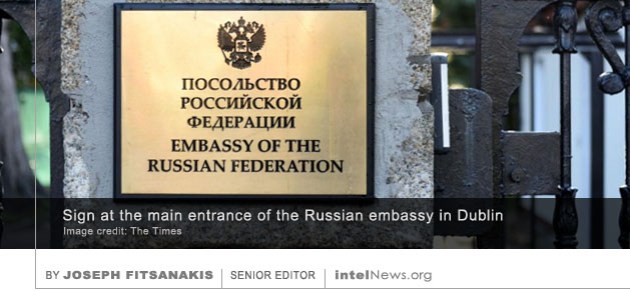 IRELAND’S COUNTERINTELLIGENCE SERVICE HAS launched an investigation into an expansion project at the embassy of Russia in Dublin. According to sources cited by The Times newspaper, the Irish government is concerned that the expansion project is part of a secret plan by Moscow to turn its embassy in Dublin into a major espionage hub in Europe.
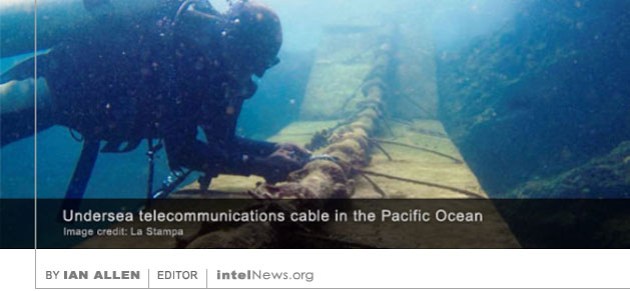 The Russian government sent a team of spies to Ireland to monitor undersea fiber-optic cables, which enable communications traffic between North America and Western Europe, according to a new report. The spies were allegedly sent to Ireland by the Main Directorate of the General Staff of the Russian Armed Forces, which is known in Russia as GU, and formerly as GRU.
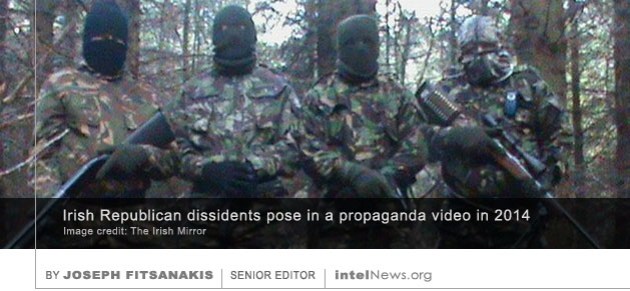 The British Security Service (MI5) has over 700 officers —more than 20 percent of its entire force— stationed in Northern Ireland, due to fears that the Brexit process might reignite the centuries-long sectarian conflict there. In 1922, nationalist rebels managed to dislodge Ireland from the British Empire. But six counties in Ireland’s north remained under British dominion, and today form the British territory of Northern Ireland. Irish nationalists have for decades engaged in an unsuccessful campaign —at times peaceful and at times violent— to unite these counties with the Republic of Ireland. Following the Good Friday Agreement of 1998, nationalist and British loyalist groups in Northern Ireland terminated their armed operations and entered the political arena, effectively sharing power in the British territory. The integration of Ireland and Britain into the European Union helped in that process by effectively bringing to an end border checks between the two countries. Thus, pro-British loyalists continued to live under British rule, while nationalists have been able to cross from Northern Ireland to the Irish Republic and back without restrictions, as if the two states were effectively unified.
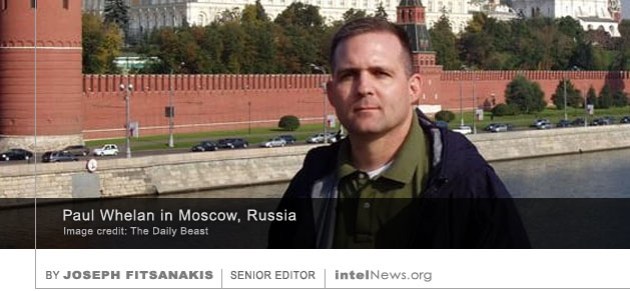 An American former Marine, who faces espionage charges in Russia, is a citizen of at least three other countries, namely Canada, Britain and the Republic of Ireland, according to reports. Paul Whelan, 48, was arrested by Russia’s Federal Security Service (FSB) on December 28 at the Metropol, a five-star hotel in downtown Moscow. News of Whelan’s arrest first emerged on January 3 in a
 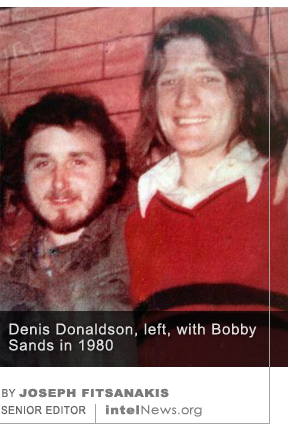 A former member of the Provisional Irish Republican Army, who was an agent for the British security services, has alleged that Gerry Adams, leader of the second-largest political party in Northern Ireland, ordered the killing of a British spy in 2006. The former agent was referring to the killing of Denis Donaldson, a senior member of the Provisional IRA, who was found dead months after it was revealed that he had been secretly spying on the republican organization on behalf of British intelligence.
 A former senior member of the Official Irish Republican Army in the United Kingdom claims that he was abandoned by British and American spy agencies after he testified in a high-profile counterfeiting case. The case involves members of the Official IRA, including its alleged former chief of staff, who is wanted in the United States in connection with the so-called supernote counterfeit money investigation. The supernote, also known as superdollar or superbill, is a fake 100-dollar bill believed to be one of the highest-quality counterfeit banknotes ever detected. The US government believes that a nation-state is behind the production of the supernote, with North Korea being the primary suspect.
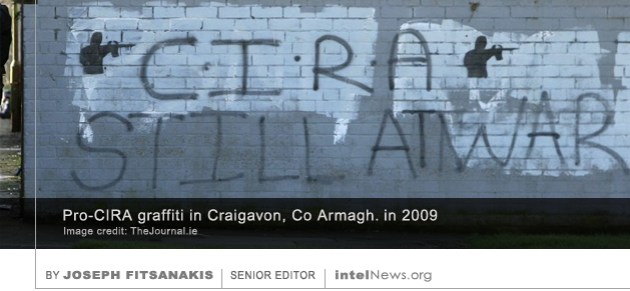 A leading dissident republican group in Ireland has claimed responsibility for a bloody attack in Dublin, which was carried out last week by a group of masked assailants disguised as police and carrying AK-47 assault rifles. Police said that the carefully planned attack involved at least six people wearing SWAT-style police uniforms, at least one of whom was disguised as a woman. The assailants







 intelNews.org
Ireland halts issuances of Russian diplomatic visas due to espionage concerns
February 18, 2024 by Joseph Fitsanakis 2 Comments
In April 2022, Ireland expelled four Russian diplomats, which it claimed were undercover intelligence officers. A subsequent report by the London-based Times newspaper alleged that a major reason Dublin had expelled the diplomats was their “efforts to cultivate contacts with dissident republicans and loyalist paramilitaries” in the Republic of Ireland and in Northern Ireland, which is British soil. The report added that at least one of the four expelled Russian diplomats was believed to be an intelligence officer for the Main Intelligence Directorate of the General Staff of the Russian Armed Forces —widely known by its Cold War-era initials, GRU.
On February 10, The Irish Times alleged that the Irish government was “refusing to allow Russia to replace diplomats assigned to its Dublin embassy […] due to concerns over espionage”. The article went on to claim that Russia’s diplomatic presence in Ireland had “dropped by half” and was causing a “tense standoff” between Ireland and Russia. It also quoted a spokesman from the Russian embassy in Dublin, who decried Ireland’s “unacceptable visa and accreditation policy”. The Russians told the paper that their embassy was staffed by just eight administrative staff and six diplomats.
On February 17, The Irish Times said it had corroborated the Russian officials’ claims by speaking with Micheál Martin, Ireland’s Deputy Prime Minister and Minister for Foreign Affairs. Martin was approached by the newspaper’s reporters in Germany, where he attended the Minich Security Conference. Martin told The Irish Times that the Irish Department of Foreign Affairs was carefully “scrutinizing” every new application for a diplomatic visa by the Russian government. The reason for the careful scrutiny, said Martin, was a number of advisories issued by Ireland’s intelligence services, suggesting “that other activities were underway” at the Russian embassy and that some embassy staff “were not actually diplomats but were performing intelligence functions”. Martin added that the Irish government had determined “15 diplomats should be adequate for [Russia’s] needs” in Ireland.
► Author: Joseph Fitsanakis | Date: 18 February 2024 | Permalink
Filed under Expert news and commentary on intelligence, espionage, spies and spying Tagged with diplomacy, Dublin (Ireland), Ireland, Micheál Martin, News, Russia, Russian embassy in Ireland