News you may have missed #683

Lech WalesaBy IAN ALLEN | intelNews.org |
►►Walesa scorns new claims he was communist informant. Poland’s former President and Solidarity founder Lech Walesa has brushed off new claims that crucial documents concerning his alleged collaboration with Poland’s communist secret services may be stored in the Polish parliament’s archives. “I know that if there are any papers on me that are unknown, they are only toilet paper”, he said in an interview with Polish television network TVN. Rumors and accusations that Walesa, an anti-communist union leader was in fact a secret communist informant have been circulating for years in Poland.
►►Israeli embassy in Singapore dismisses Barak assassination plot. The Israeli embassy in Singapore confirmed Friday that Defense Minister Ehud Barak had visited the city-state, but dismissed reports of an assassination plot targeting him. Kuwaiti newspaper Al Jarida wrote recently that Barak had been targeted for assassination by three members of a Hezbollah militant cell during his trip to Singapore from February 12-15.
►►Moves to question Turkish spy chiefs quashed. State prosecutors have abandoned an attempt to question Turkey’s spy chiefs over past secret contacts with Kurdish militants, after government moves to curb their investigation of the intelligence agency (MİT). State media said on Monday that prosecutors lifted an order summoning MİT head Hakan Fidan. Nice to be reminded who is really in charge in 21st-century ‘democratic’ Turkey.

Turkey denies reports of intelligence officers arrested in Syria

Turkish-Syrian borderBy JOSEPH FITSANAKIS | intelNews.org |
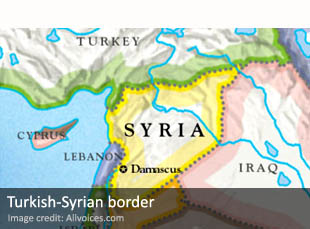
The Turkish government has denied reports in the Israeli media that dozens of Turkish intelligence officers have been arrested and are under interrogation in neighboring Syria. Israeli newspaper Ha’aretz reported over the weekend that at least 40 Turkish intelligence officers had been captured by the Syrian military and were being questioned. The paper also claimed that Syrian military interrogators had extracted “confessions” from the captured Turkish officers, according to which they were operating on instructions to “carry out bombings” in Syria, and other operations aimed to “undermine the country’s security”. Citing Syrian sources, Ha’aretz also said that the Turkish intelligence officers “admitted” having been trained by Israeli intelligence agency Mossad, and that the Mossad also trains members of the opposition Free Syrian Army. The Israeli daily also said that Ankara and Damascus have been involved in “intensive negotiations” over the fate of the 40 Turkish intelligence officers. According to Ha’aretz, Syria has offered to release the Turks, providing Ankara extradites scores of Syrian defectors —most of them from the military— who have been given political asylum in Turkey during the past few months. Damascus reportedly also insists that Turkey takes immediate steps to prevent the smuggling of weapons and military supplies to the Free Syrian Army through its territory. But in a brief press statement on Monday, a Ministry of Foreign Affairs spokesman said that the report in Ha’aretz was “incorrect”. Turkish newspaper Zaman also quoted anonymous Turkish intelligence sources who flatly refuted the reports from Israel. Read more of this post

Analysis: The How and Why of Modern Assassinations

Bomb blast site in New Delhi, IndiaBy JOSEPH FITSANAKIS | intelNews.org |
Reports on the discovery last week of a synchronized plan to attack Israeli diplomats in India, Georgia, and Thailand, are still unfolding. At least four people —including the wife of an Israeli diplomat— were injured in New Delhi, when a bomb ripped through a van belonging to the Israeli embassy there. Another bomb was defused by Georgian counterterrorist forces after it was found fastened under an Israeli diplomatic vehicle in Tbilisi. And in Bangkok, two Iranian nationals were arrested after a bomb they were manufacturing exploded prematurely in a rented house in the Thai capital. In an interview I gave this past weekend to The Journal, one of Ireland’s most popular newsmagazines, I noted that the use of targeted assassinations as a means of achieving broader political goals is, of course, not new. But there are definite trends that we have been able to see developing during the past decade or so. For starters, even though the methods of assassination vary greatly, there are common trends one can point out, particularly in the organizational infrastructure of state-sponsored assassination operations. There is, to be precise, an increasing complexity in the way these operations are planned prior to their execution by specialized hit teams. I told The Journal’s interviewer, Susan Ryan, that the increasing sophistication of these types of operations can be appreciated by comparing older examples with case studies that are more recent. Take, for instance, the Black September killings, conducted by Israeli intelligence in response to the 1972 massacre of Israeli athletes at the Munich Olympics. Read more of this post

News you may have missed #682

Lieutenant General Ronald BurgessBy IAN ALLEN | intelNews.org |
►►Is there a Mossad base near Iran? The London-based Sunday Times has published an interview with a man claiming to be an Azerbaijan-based agent of Israeli intelligence agency, who confirmed the existence of such a base. The man, identified in the article as “Shimon,” told the paper that there were dozens of Israeli Mossad agents working out of the base. The meeting between the agent and the London Times‘ reporter took place in Baku, near the Israeli Embassy, the report said.
►►Analysis: CIA report on Soviet bioweapons still secret. It has been three decades since the Reagan administration accused the Soviet Union and Vietnam of using chemical weapons known as yellow rain. We still do not know how the US came to this conclusion, but have good reason to believe that it was based on flawed or distorted intelligence. A classified critique of the intelligence behind those charges, written several years ago for the Central Intelligence Agency, could shed light on what happened. Last year, Matthew Meselson, a Harvard expert on chemical and biological weapons, filed a Freedom of Information Act request to get the report released. He was turned down.
►►US official says Iran unlikely to strike first. Lieutenant General Ronald Burgess, director of the US Defense Intelligence Agency, said the Iranian military is unlikely to intentionally provoke a conflict with the West. He said Iran probably has the ability to “temporarily close the Strait of Hormuz with its naval forces”, as some Iranian officials have threatened to do if attacked or in response to sanctions on its oil exports by the US and European Union. But, he added, “Iran is unlikely to initiate or intentionally provoke a conflict or launch a preemptive attack”.

News you may have missed #681

Vladimir NesteretsBy IAN ALLEN | intelNews.org |
►►Mossad ‘bolsters activity in Tunisia’. The Mossad has bolstered its activity in several Tunisian cities since the start of the revolt that ousted President Zine El Abidine Ben Ali last January, Tunisian magazine Al-Musawar has reported. According to the magazine, the Israeli intelligence agency has been working with its US-based counterpart, the CIA, to revive its spy network in post-revolution Tunisia.
►►US ‘used quake’ to send Special Forces into Pakistan. The US Pentagon used the Kashmir earthquake of 2005 to send operatives from the Joint Special Operations Command (JSOC) into Pakistan, reveals a new book by D.B Grady and Marc Ambinder, entitled The Command: Deep Inside the President’s Secret Army. The authors claim that dozens of CIA operatives and contractors entered Pakistan using valid US passports and posing as construction and aid workers, thus avoiding the requisite background checks from Pakistan’s Inter-Services Intelligence spy agency.
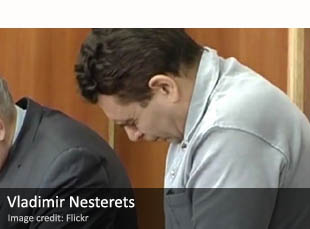
►►Russian officer convicted of spying for CIA. A Russian military court last week convicted Lt. Col. Vladimir Nesterets of providing the CIA with secret information on Russia’s new intercontinental ballistic missiles and sentenced him to 13 years in prison. The officer pleaded guilty to passing on that classified information in exchange for money, said the Federal Security Service, the main agency that replaced the Soviet-era KGB. Russia’s RIA Novosti news agency quoted the officer’s wife, Irina, as saying she could not understand the guilty plea because her husband had told her he did nothing wrong and had not betrayed his country.

News you may have missed #680

General Ziauddin KhawajaBy IAN ALLEN | intelNews.org |
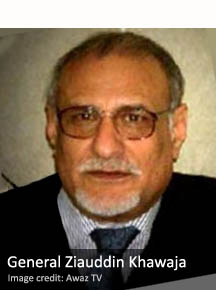
►►Did Pakistani ex-leader know bin Laden’s hideout? General Ziauddin Khawaja, who was head of Pakistan’s Inter Services Intelligence directorate (ISI) from 1997 to 1999, claims Pakistan’s former President, Pervez Musharraf, knew bin Laden was in Abbottabad.
►►Sweden expels Rwanda diplomat for spying. Sweden has expelled a Rwandan diplomat for allegedly spying on Rwandan exiles there, according to the Associated Press. The diplomat, Evode Mudaheranwa, was sent back to Rwanda last week, according to a sources close to the Swedish government. Mudaheranwa was the Rwandan embassy’s second-highest-ranking official. The Swedish action comes as amid charges that Rwandan President Paul Kagame’s government sends agents overseas to silence critics.
►►Mossad continues to use foreign passports. Agents of Israel’s Mossad intelligence agency are still using foreign passports to conduct undercover operations in other countries, according to a report in The Sunday Times of London. The paper says that new evidence shows that foreign nationals residing in Israel are willingly allowing the Mossad to use their passports. The Times interviewed several Israelis who revealed details of how they were approached by intelligence officials about the possibility of volunteering their passports for the Mossad.

Israeli-Iranian ‘dirty war’ nearing point of no return

Bomb blast in New DelhiBy JOSEPH FITSANAKIS | intelNews.org |
The ongoing intelligence war between Israel and Iran appears to be reaching unprecedented levels following the exposure earlier this week of a simultaneous bombing campaign against Israeli targets in Europe and Asia. The wife of Israel’s Defense Attaché in New Delhi, India, was among four people injured on Monday, after a magnetic bomb attached to her car exploded just 500 yards from the gates of the Israeli embassy. Three thousand miles away, in Tbilisi, Georgia, a sharp-eyed employee of the Israeli embassy there discovered a bomb attached to a diplomatic car; the device was eventually diffused by Georgian counterterrorist authorities. A few hours later, the government of Thailand announced that two Iranian nationals had been detained following an explosion at a rented house in the capital Bangkok, which critically injured one of the arrestees. A second man was reportedly arrested in Bangkok’s Suvarnabhumi International Airport while he was trying to board a flight to Malaysia. At least two other men, also Iranian nationals, remain at large, though Thai officials suspect they have already fled to Iran. (Update: Thai authorities have confirmed the bombers’ targets were Israeli diplomats). Speaking anonymously to Bloomberg news agency, US intelligence officials said that operations directed at Israeli targets were also “disrupted” in Baku, the capital of Azerbaijan, as well as in Bulgaria. Observers have also noted that the attack that injured the wife of the Israeli diplomat was carried out in one of Israel’s strongest allies in Asia, thus delivering a two-fold message to both Tel Aviv and New Delhi. India’s Home Affairs Minister, Palaniappan Chidambaram, told journalists yesterday that the attack in the Indian capital was conducted by a “well trained” motorcyclist, who attached “a magnetic device” to the car before speeding away. Read more of this post

Research: Spies increasingly using Facebook, Twitter to gather data

Spying on social networkingBy JOSEPH FITSANAKIS | intelNews.org |
During the past four years, this blog has reported several incidents pointing to the increasing frequency with which spy agencies of various countries are utilizing social networking media as sources of tactical intelligence. But are we at a point where we can speak of a trend? In other words, is the rapid rise of social networking creating the conditions for the emergence of a new domain in tactical intelligence collection? This past week saw the publication of a new research paper (.pdf), which I co-authored with Micah-Sage Bolden, entitled “Social Networking as a Paradigm Shift in Tactical Intelligence Collection”. In it, we argue that recent case studies point to social networking as the new cutting edge in open-source tactical intelligence collection. We explain that Facebook, Twitter, YouTube, and a host of other social networking platforms are increasingly viewed by intelligence agencies as invaluable channels of information acquisition. We base our findings on three recent case studies, which we believe highlight the intelligence function of social networking. The first case study comes out of the Arab Spring, which, according to one report, “prompted the US government to begin developing guidelines for culling intelligence from social media networks”. We also examine NATO’s operations during the 2011 Libyan civil war (Operation UNIFIED PROTECTOR), when Western military forces systematically resorted to social networking media to gather actionable intelligence, by utilizing open sources like Twitter to pinpoint targets for attack. Finally, we examine the sabotage by Israeli security services of the 2011 “Welcome to Palestine Air Flotilla” initiative, a campaign organized by several European groups aiming to draw worldwide attention to the travel restrictions imposed by Israeli authorities on the Occupied Territories. Read more of this post

Pakistan will retaliate if Israel attacks Iran, says diplomat

Hossein SalamiBy JOSEPH FITSANAKIS | intelNews.org |
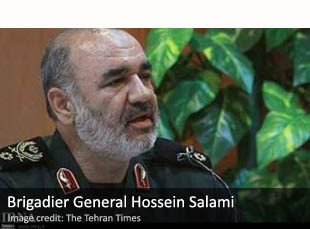
A European diplomat has quoted Pakistani officials as saying that Islamabad will retaliate in kind if the Israeli military attacks Iran. Speaking to the Associated Press, the anonymous diplomat, who is stationed in Pakistan, said Pakistani military leaders have decided that “if Iran is attacked [they] will have no alternative but to launch a reprisal attack”. The warning, which the Associated Press appears to be treating as reliable, implies the involvement of Pakistan —the world’s only predominantly Muslim nuclear power— in a possible war between Iran and Israel. The latter is also widely considered to possess a formidable nuclear weapons arsenal. Other reports quote several international experts who seem to agree that it will be impossible to contain the ramifications of a possible military confrontation between Iran and Israel to a strictly regional level. Nick Witney, former Director of the European Defense Agency, who is currently Senior Fellow at the European Council on Foreign Relations, argues that an Iranian-Israeli war will have immediate effects on the global economy. According to Witney, “the political and economic consequences of an Israeli attack would be catastrophic for Europe”, as the immediate spike in oil prices will cause out-of-control defaults in countries like Italy and Greece. This will eventually push the entire European Union, including economic powerhouse Germany, into a deep and prolonged recession, and may even cause the euro to collapse altogether. Moreover, says Witney, Iran will “probably retaliate against European interests in the region, and conceivably more directly with terrorism aimed at Western countries and societies”. Read more of this post

News you may have missed #673

Jeffrey Paul DelisleBy IAN ALLEN | intelNews.org |
►►Israel outsources intelligence-gathering to rightwing groups. The government and military of Israel have unofficially outsourced some of their intelligence work to private organizations that monitor anti-Israel incitement in the Palestinian media and are associated with right-wing politics, according to several high-ranking government and military sources.
►►NATO report finds Pakistan spies help Taliban. The BBC says it has seen a NATO report stating that the Taliban in Afghanistan are being directly assisted by Pakistani security services. The leaked report, derived from material from 27,000 interrogations with more than 4,000 captured Taliban, al-Qaeda and other foreign fighters and civilians, also claims Pakistan knows the locations of senior Taliban leaders. The US said exactly the same thing last September.
►►Another Russian diplomat ‘leaves’ Canada. Another Russian diplomat has left Canada. Dmitry Gerasimov, a consular officer with the Russian government’s office in Toronto, left in January. He is the second diplomat that the Russian embassy in Canada acknowledges has quit this country in January. The other was Colonel Sergey Zhukov, the defense attaché for the Russian government in Ottawa. All totaled, six Russian diplomats that have been dropped from Ottawa’s list of recognized foreign representatives in the last 11 days. It’s not clear which, if any, of recent these exits can be tied to the Jeffrey Paul Delisle spy controversy.

US Senate hearing accidentally reveals Mossad director’s secret visit

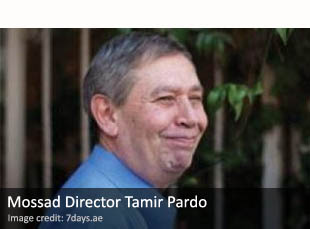
Tamir PardoBy JOSEPH FITSANAKIS | intelNews.org |
The chairwoman of a public hearing at the United States Senate, which was televised live across America, accidentally revealed that the Director of Israeli intelligence service Mossad secretly visited the US for talks last week. The revelation took place on Tuesday at a high-profile hearing conducted by the Senate Select Committee on Intelligence, with the participation of the Director of National Intelligence James Clapper and Central Intelligence Agency Director David Petraeus. While addressing the latter, Committee chairwoman Dianne Feinstein mentioned in passing that “the vice chairman [of the Committee] and I have just met this past week with the director of Mossad”, and that the meeting was classified. She was referring to Tamir Pardo, the newly installed head of Israel’s foremost external intelligence agency. Without blinking an eye, Petraeus responded saying: “Like you, obviously, I met with the head of Mossad when he was here”. Subsequent discussion during the hearing appeared to establish that Pardo visited the United States specifically to discuss the possibility of an Israeli attack on Iran’s known nuclear installations. In responding to Senator Feinstein’s comment, the CIA Director said that Pardo’s secret visit was “part of an ongoing dialogue that has also included conversations that I’ve had with [Israeli] Prime Minister [Benjamin] Netanyahu and with [Defense] Minister [Ehud] Barak”. No further information was shard on the Mossad official’s visit, and US government representatives refused to elaborate, when asked about it later. Read more of this post

Analysis: Why is Israel so chatty about a possible strike on Iran?

Ronen Bergman By JOSEPH FITSANAKIS | intelNews.org |
This past Sunday, Israeli intelligence expert Ronen Bergman published an extensive cover story in The New York Times Magazine, titled simply: “Will Israel Attack Iran?”. He answers his question in the affirmative, saying that “after speaking with many senior Israeli leaders and chiefs of the military and the intelligence, I have come to believe that Israel will indeed strike Iran in 2012”. Bergman, who a year ago wrote an excellent, well-informed account of the Mahmoud al-Mabhouh assassination, sees a “small and ever-diminishing” window of opportunity to stop the looming war.  But he says that few in Israel believe that the United States administration of President Barack Obama is willing or able to prevent an Israeli attack on Iran. Instead, the predominant sentiment in the Jewish state is that “only the Israelis can ultimately defend themselves”, he writes. But the intense discussion about a possible Israeli attack on Iran begs a critical question, which is asked by Laura Rozen, Senior Foreign Affairs Reporter for Yahoo News. She asks, why are Israeli leaders so chatty on the topic? One would think that, by being so vocal about their intentions, they risk losing a major strategic advantage that Israel’s military has relied on in the past: namely the element of surprise. In her search for an answer, she did what good reporters usually do: she actually picked up the phone and called Bergman in Israel. A condensed version of their interesting discussion is provided here. In it, she queries the Israeli intelligence expert about the widespread view that, if Israeli planes were indeed preparing to strike Iran, Tel Aviv would be very discrete about it. Bergman’s response is somewhat convincing; he says that most Israeli statements on the subject are “not meant for Israeli ears” —though they often reverberate inside Israel. Read more of this post
News you may have missed #674

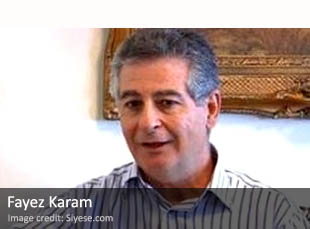
Fayez KaramBy IAN ALLEN | intelNews.org |
►►Lebanese ex-general gets prison sentence for spying for Israel. Last Tuesday’s sentence of former Brigadeer General Fayez Karam (pictured) means he will spend six more months in jail. He has been in prison since mid-2009, said the officials on condition of anonymity in line with regulations. Karam, who in the late 1980s led Lebanon’s counterespionage unit, ran for a parliament seat in 2009 as a senior member of the Free Patriotic Movement of Christian leader and Hezbollah ally Michel Aoun.
►►US may share intelligence with Nigeria. Nigeria and the United States plan to “explore the development of intelligence fusion capability”. This statement was contained in a joint communiqué issued at the end of a two day inauguration of a regional security cooperation working group held at the Ministry of Foreign Affairs in Abuja, Nigeria. The two countries will be collaborating “on training, logistics intelligence sharing, modernization of the security services and other requirements”.
►►Afghan jailed for 16 years for spying for Iran. An Afghan man, named only as Mahmmood, has been jailed for 16 years for spying for neighboring Iran. He was allegedly found in possession of photographs of foreign and Afghan military installations in western Herat province, and had Iranian intelligence officials’ phone numbers in his notebook.

News you may have missed #670: Analysis edition

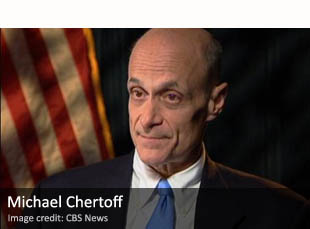
Michael ChertoffBy IAN ALLEN | intelNews.org |
►►Some argue US DHS should change intelligence mission. A decade after Congress created the Department of Homeland Security, the Aspen Homeland Security Group, which is co-chaired by former Homeland Security Secretary Michael Chertoff (pictured), says it is time for the agency to shift its focus from foreign threats to working with local governments and the private sector. Aspen pushes for even more intelligence outsourcing —no surprises there.
►►Not-so-covert Iran war buys West time but raises tension. “Ten out of 10. They hit the target and nobody got caught”, former US intelligence officer Robert Ayers told Reuters of the January 11 killing of Iranian nuclear scientist Mostafa Ahmadi-Roshan. “What makes these things so impressive is they gather a lot of information and do their ‘on the ground’ homework, which can take months”. Sidney Alford, a British explosives expert, says the hit was technically “professional. It worked and it worked very well”.
►►Inside Mossad’s war on Tehran. “In the five attacks on nuclear scientists, the hit squad has used a motorbike every time. The motorcyclist is ubiquitous in the capital’s traffic jams, often wearing a surgical mask for protection against the heavy pollution and able to move close to the target between the lines of stationary cars without attracting attention”.

Turkish officials see link between Israel and Kurdish rebels

Israeli Heron UAVBy JOSEPH FITSANAKIS | intelNews.org |
Turkish intelligence agencies have authored a report detailing alleged Israeli assistance to Kurdish rebels, whose goal is to secede from Turkey and create an independent Kurdish homeland, according to a leading Turkish newspaper. The Ankara-based Zaman said the intelligence report was commissioned after Turkish forces detected Israeli unmanned aerial vehicles (UAVs) conducting reconnaissance missions over Turkey. The paper, which is tacitly affiliated with Turkey’s ruling Justice and Development Party, said the UAVs were spotted flying over Turkey’s Adana and Hatay provinces, both of which are adjacent to Turkey’s border with Syria. As intelNews reported last August, Turkey’s main intelligence directorate, the MİT, is convinced that the Syrian government of Bashar al-Assad has increased its clandestine support for the largest Kurdish secessionist group, the Kurdistan Workers Party (PKK), in an attempt to court Syria’s 500,000-strong Kurdish minority. According to the Zaman news report, airborne intelligence collected by Israeli Heron UAVs is shared with PKK guerrillas, who then use it to construct training bases in Syrian border regions. This explains, claims the paper, why most PKK training bases in Syria are located “in areas that are known to be weak spots for the Turkish military”. The report also claims that Turkish intelligence has verified that senior PKK military commander Kenan Yıldızbakan has visited Israel “several times” in recent months. Yildizbakan is believed to have commanded a brazen PKK assault on a Turkish naval base in İskenderun in 2010, which killed seven and wounded four members of the Turkish armed forces. Read more of this post