US politics in uncharted waters as FBI announces probe into Russian activities
March 21, 2017 2 Comments
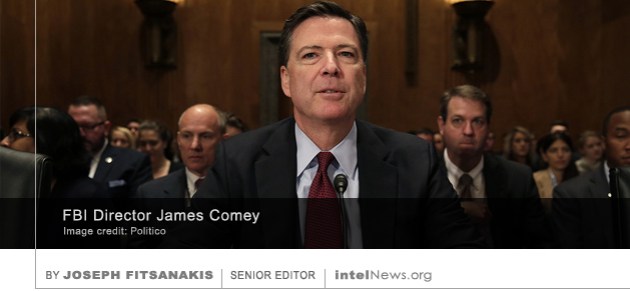 Monday’s official announcement that an investigation is underway into alleged Russian involvement in the 2016 United States presidential election was an important moment in American political history. It exposed the chaotic state of American politics and added yet another layer of complexity in an already intricate affair, from which the country’s institutions will find it difficult to recover for years to come. This is regardless of the outcome of the investigation, which is being conducted by the Federal Bureau of Investigation. Even if it fails to produce a ‘smoking gun’, the very fact that the country’s chief counterintelligence agency is examining the possibility that a US president was elected with help from Russia, is an astonishing development without parallel in modern American history.
It is important to recognize that the FBI would never have initiated such a controversial and politically charged investigation without having concrete proof of Russia’s interference in last year’s presidential election. No agency of the US federal government would choose to dedicate enormous resources and personnel, and risk the political fallout that such a probe inevitably entails, without first having amassed indisputable evidence that necessitates it. Moreover, the FBI is not acting alone; its investigation almost certainly encompasses and incorporates similar probes carried out by other American security agencies, and possibly by agencies in allied countries, including the United Kingdom. It follows that the FBI investigation will undoubtedly confirm the existence of a systematic Russian intelligence operation that was aimed at influencing the outcome of last year’s American election.
As the present author has previously stated, it would be “extremely unusual and highly uncharacteristic of Russian spy agencies if they did not launch at least a rudimentary covert campaign to target the 2016 US presidential election […]. Indeed, the opposite would have been strange”. The central question, of course, is: what types of activities were part of the Kremlin’s covert campaign? Did it mostly involve the methodical production and dissemination of so-called ‘fake news’? Did it involve substantial funding of individual candidates or political parties? Or were there perhaps instances of extortion and blackmail of targeted individuals? These questions must be answered in full, and their inherent complexity explains fully why the FBI Director James Comey would not discuss details of the investigation on Monday.
Crucially, the FBI probe will have to answer conclusively the question of whether members of the administration of US President Donald Trump, or indeed the president himself, were implicated in the Kremlin’s actions. Did the president and his senior campaign team know that the Kremlin was —allegedly—assisting their efforts? If so, how did they know? And if not, did they deliberately ignore concrete warnings pointing to the contrary?
Every American, regardless of political persuasion, who genuinely cares about his or her nation’s political stability, hopes that the FBI probe finds no collusion between the Kremlin and the Trump campaign. However, there is an important sense in which, no matter the outcome of the investigation, serious damage has already been done. The reputation of American political institutions as a whole has been severely shaken, and mistrust between American civil society and its political institutions continues to rise exponentially. Meanwhile, it is safe to say that it will take months for the FBI’s probe to conclude. By then, the current chaotic state of American politics could be the a new permanently reality in Washington, a city that has witnessed much tumult in its history, though perhaps never as perplexing as the current crisis.
► Author: Joseph Fitsanakis | Date: 21 March 2017 | Permalink
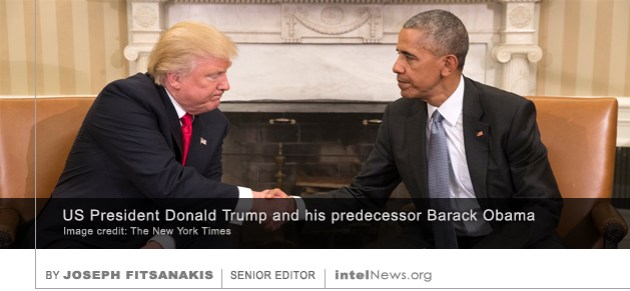 The absurdity of American politics reached new heights over the weekend, as President Donald Trump dramatically alleged on Twitter that his predecessor, Barack Obama, wiretapped his telephones last year. Even for a highly impulsive public figure known for his sensational and often-unsubstantiated allegations, Mr. Trump’s latest claims prompted a new sense of abnormality and astonishment in Washington. If the president is unable to prove his dramatic claims, his reliability will be further-eroded, and what little is left of his relationship with the American intelligence and national-security communities will disintegrate. If his allegations are proven, they will cause a scandal of unprecedented proportions from which American political institutions —including the presidency— will find it difficult to recover.
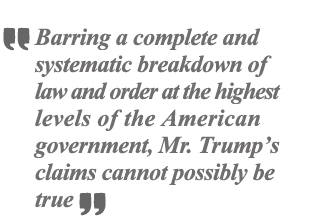 order at the highest levels of the American government, Mr. Trump’s claims cannot possibly be true. American presidents have not been legally allowed to order wiretaps since 1978, when the Foreign Intelligence Surveillance Act (FISA) was established. Prompted by the abuse of executive power revealed through the Watergate scandal, FISA forces government agencies to seek the approval of specially mandated judges before installing wiretaps. If an agency like the Federal Bureau of Investigation (FBI) wants to wiretap an individual or group suspected of acting as agents of a foreign power, it must convince one of 11 federal district judges who rotate on the FISA court that the case warrants a wiretap order. Thus, before authorizing the wiretap, a FISA judge must be convinced by examining the available evidence presented before him or her.
 The ongoing security crisis in the United States reached new heights last night as Michael Flynn, President Donald Trump’s national security advisor, resigned. In his letter announcing his decision, the former general
  number of former insiders warn that senior intelligence officials are —in the words of former National Security Agency officer
  Mr. Trump summarily fired the head of the Department of Justice and openly
  inconceivable magnitude, with implications that may well shape the future of America and its place in the world.
 There had been rumors for some time about a possible expulsion of Russian diplomats from the United States, in response to alleged Russian interference in the 2016 US Presidential election. The White House confirmed the rumors on Thursday morning, by
 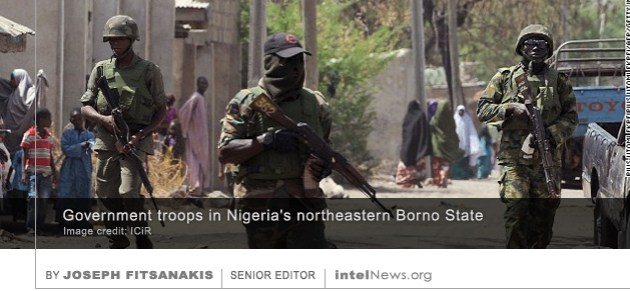 On Saturday, Nigerian President Muhammadu Buhari made a
  No person familiar with the theory and practice of intelligence will be shocked by allegations that Russia interfered in the recent American presidential election. On the contrary, the claim will strike experienced observers as a textbook case of covert operation —an intelligence activity designed to influence foreign political, military or economic developments. Far from being physically violent, most covert operations involve actions like secretly funding political parties, planting misinformation or propaganda in foreign media outlets and —in more extreme cases— bribing or extorting key political actors. During the Cold War, hardly a national election took place without attracting the
  in last month’s US election. Indeed, the opposite would be strange.
 candidates. This was about the reputation of the American electoral process. In fact, the primary goal of Russia’s involvement in the US election —which, again, must be presumed— was not to empower a particular candidate, but to weaken the reputation of American political institutions as a whole. Those who claim that the Kremlin tried to promote Trump because the Republican candidate appears to be more favorably disposed toward Russia are wrong. They misunderstand the complex nature of Russian-American relations and underestimate Russian strategy. Moscow understands that its bilateral relationship with Washington rests on a set of longstanding geopolitical variables and does not depend on ephemeral personal relations between individual leaders. Furthermore, the Kremlin views Trump as an inherently unpredictable actor that is not to be trusted. The Russian plan, therefore, was not to help elect Trump. Rather, it was to sow mistrust between American –and by extension Western– civil society and its political institutions. Given the challenges currently being faced by European and American democracy, that is not a far-fetched goal.
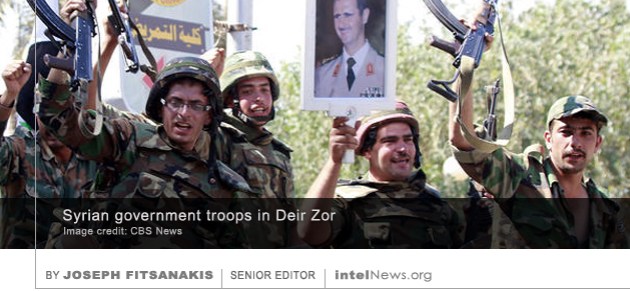 Ever since 2011, when the Syrian Civil War erupted, Turkey has refrained from directly intervening in the conflict, other than to provide material support to opponents of Syrian President Bashar al-Assad. The hope in Ankara was that Islamist and pro-Assad forces would exhaust each other. There is no evidence that Turkey was at any point seriously alarmed about the rise of Sunni militancy in Syria. Instead, the Turkish government of President Recep Tayyip Erdoğan made no secret of its primary concern, which was the rise of Kurdish nationalism in northern Syria.
 Last week, following the results of Russia’s parliamentary election, Russian media run a story suggesting that the Kremlin is planning to implement far-reaching changes to the country’s intelligence apparatus.
  Saturday’s suicide bombing, which killed over 50 and injured dozens at a wedding in Gaziantep, Turkey, was without doubt the work of the Islamic State. It was yet another attempt by the militant Sunni group to discourage the Kurds from confronting it in battle, by pointing to the deadly consequences. It was also fueled by the desire for vengeance against a population that has consistently resisted the Islamic State’s ideology. Additionally, if confirmed, the use of a child as a suicide bomber by the Islamic State may form a pattern of operational activity that can lead to broader conclusions about the current state of the organization.
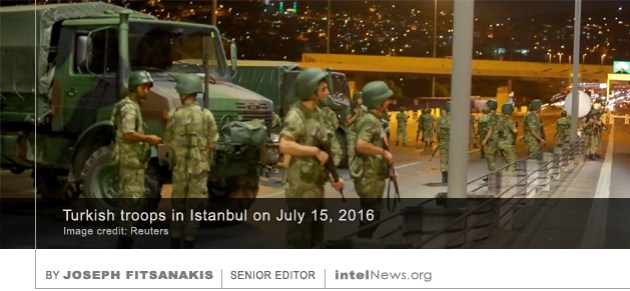 After the failure of the recent military coup d’état in Turkey, much attention has been given to the country’s armed forces, the police, even the judiciary. In contrast, little to no information has surfaced about Turkey’s intelligence establishment, which is led by MİT, the National Intelligence Organization. Did it anticipate the plot, and how did it fare as the crisis unfolded in the early hours of July 16?
 The American operation that killed the leader of the Afghan Taliban, Mullah Akhtar Mohammad Mansoor, on May 21, was unprecedented in more ways than one. It marked the first known effort by the United States to neutralize the leadership of the Afghan Taliban. It was also the first US drone strike in Pakistani Baluchistan, a region that is far removed from the Federally Administered Tribal Areas, where American operations have traditionally focused. Mullah Mansour’s killing also marked the most high-profile American incursion into Pakistani territory since the May 1, 2011 attack that killed al-Qaeda co-founder Osama bin Laden.
  Ironically, just hours before killing Mansour, Washington was calling the Taliban to join the negotiation table for peace talks with the Afghan government. So what exactly was America’s intention in killing the leader of the Afghan Taliban?
 killed the group’s leader.
 In the early hours of Thursday, May 19, EgyptAir, Egypt’s national airline carrier,
  efforts. The group has remained silent since early this morning, when EgyptAir announced the disappearance of flight MS804. However, it typically waits for several hours, and sometimes days, before assuming responsibility for high-profile attacks.
 An expanding alliance between two of the most powerful armed groups in Afghanistan, the Taliban and the Haqqani Network, is reshaping regional power dynamics and possibly altering the course of the ongoing Afghan war. It was last summer when it was announced that Sirajuddin Haqqani, the leader of the notorious Haqqani Network based in southeastern Afghanistan, had been appointed deputy leader of the Taliban. The move, which brought together two groups that traditionally acted autonomously, was seen as largely symbolic at the time. But observers are now suggesting that the two groups are actively integrating more than ever before, and that their increasing cooperation is drastically changing the dynamics of the bloody Afghan war.
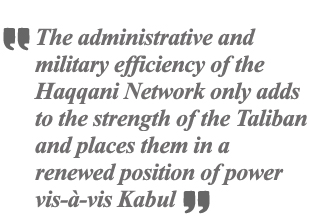 tactical priorities.
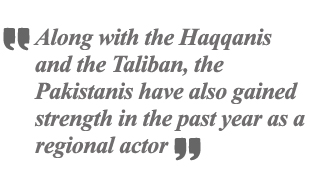 system, job centers, taxation offices and community militias. The administrative and military efficiency of the Haqqani Network only adds to the strength of the Taliban and places them in a renewed position of power vis-à-vis Kabul.
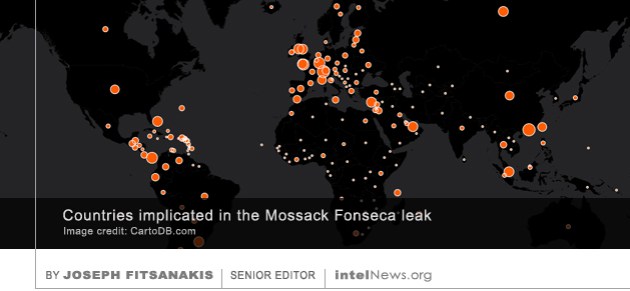 Aside from their immediate shock value, the Panama Papers reveal the enormous extent of tax evasion on a worldwide scale. This unprecedented phenomenon is inextricably tied with broader trends in globalized finance-capitalism that directly threaten the very survival of the postwar welfare state. National intelligence agencies must begin to view offshore tax evasion as an existential threat to the security of organized government and need to augment their economic role as part of their overall mission to protect and secure law-abiding citizens.
 countries. On Sunday, following a year-long analysis of the data, the reporting partners began publishing revelations from the Panama Papers, and say they will continue to do so for several days to come.
 statements, which means they have not been paying taxes in their country of citizenship or residency. Thus, there are now thousands of Mossack Fonseca clients in








Analysis: Unease in Europe as Turkey intensifies espionage abroad
March 30, 2017 by Joseph Fitsanakis Leave a comment
On Monday, Germany’s Süddeutsche Zeitung newspaper alleged that the head of Turkey’s National Intelligence Organization (MİT), gave his German counterpart a list containing the names hundreds of Turks living in Germany, and asked him to spy on them. According to the newspaper, the list was given by MİT chief Hakan Fidan to Bruno Kahl, head of the Bundesnachrichtendienst, Germany’s Federal Intelligence Service, known as BND. The two men reportedly met at a security conference held in Munich last February. The Süddeutsche Zeitung claims that the list given to Kahl included 300 individuals and approximately 200 groups and organizations that the MİT wanted the BND to monitor.
It is extremely uncommon for information of this kind to be communicated informally between directors of intelligence organizations. Typically the exchange of information between cooperating intelligence agencies happens in a very formal and prescribed environment, not circumstantially during a conference. The episode described by the Süddeutsche Zeitung demonstrates a degree of amateurism on behalf of Turkey’s MİT. It is also symptomatic of the pressure that the agency is under by the Turkish government, following last July’s failed military coup in Ankara and Istanbul.
The government of Turkish President Recep Tayyip Erdoğan accuses members of the so-called Gülen movement of orchestrating the failed coup, which included an armed attack on the country’s parliament and the murder of over 200 people across Turkey. The Gülen movement consists of supporters of Muslim cleric Fethullah Gülen, who runs a global network of schools, charities and businesses from his home in the United States. The government of Turkey has designated Gülen’s group a terrorist organization and claims that its members have stealthily infiltrated state institutions since the 1980s. In responding to the post-coup security pressures, MİT has been stretched to its limit. Asking the BND for assistance illustrates the Turkish agency’s limitations, especially when it comes to spying abroad. Read more of this post
Filed under Expert news and commentary on intelligence, espionage, spies and spying Tagged with BND, Germany, immigration intelligence, Joseph Fitsanakis, MİT (Turkey), News, Turkey