Analysis: Who was behind the raid on the North Korean embassy in Madrid?
March 18, 2019 5 Comments
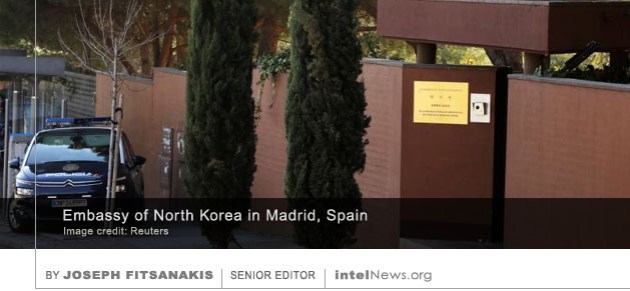 An obscure North Korean dissident group was most likely behind a violent raid on North Korea’s embassy in Madrid on February 22, which some reports have pinned on Western spy agencies, including the Central Intelligence Agency. The group, known as the Cheollima Civil Defense, is believed to be the first North Korean resistance organization to declare war on the government of Supreme Leader Kim Jong-un.
THE ATTACK
The attack took place at 3:00 in the afternoon local time in Aravaca, a leafy residential district of northern Madrid, where the embassy of North Korea is located. Ten assailants, all Southeast Asian-looking men, entered the three-story building from the main gate, brandishing guns, which were later found to be fake. They tied up and gagged the embassy’s staff, as well as three North Korean architects who were visiting the facility at the time. But one staff member hid at the embassy. She eventually managed to escape from a second-floor window and reach an adjacent building that houses a nursing home. Nursing home staff called the police, who arrived at the scene but had no jurisdiction to enter the embassy grounds, since the premises are technically North Korean soil. When police officers rang the embassy’s doorbell, an Asian-looking man appeared at the door and  said in English that all was fine inside the embassy. But a few minutes later, two luxury cars belonging to the North Korean embassy sped away from the building with the ten assailants inside, including the man who had earlier appeared at the front door.
Once they entered the embassy, Spanish police found eight men and women tied up, with bags over their heads. Several had been severely beaten and at least two had to be hospitalized. The victims told police that the assailants were all Korean, spoke Korean fluently, and had kept them hostage for nearly four hours. But they refused to file formal police complaints. The two diplomatic cars were later found abandoned at a nearby street. No money was taken by the assailants, nor did they seem interested in valuables of any kind. But they reportedly took with them an unknown number of computer hard drives and cell phones belonging to the embassy staff. They also stole an unknown quantity of diplomatic documents, according to reports.
POSSIBLE FOREIGN CULPRITS
Within a few hours, Spanish police had reportedly ruled out the possibility that the assailants were common thieves, arguing that the attack had been meticulously planned and executed. Also, common thieves would have looked for valuables and would not have stayed inside the embassy for four hours. Within a week, several Spanish newspapers, including the highly respected Madrid daily El País and the Barcelona-based El Periodico, pinned the raid on Western intelligence services. They cited unnamed police sources who claimed that at least two of the assailants had been identified and found to have links with the CIA. The reports also cited claims by embassy employees that the attackers interrogated them extensively about Soh Yun-sok, North Korea’s former ambassador to Madrid. Soh became Pyongyang’s chief nuclear negotiator after he was expelled by the Spanish government in 2017 in protest against North Korea’s nuclear missile tests. Read more of this post
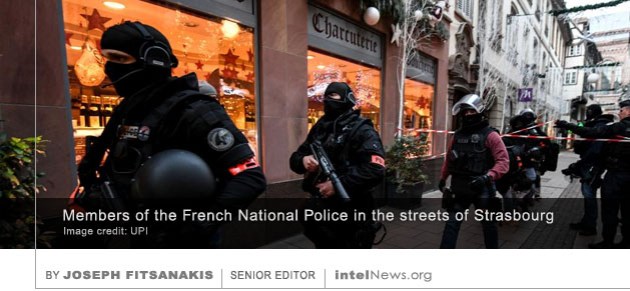 The terrorist attack in the French city of Strasbourg on December 11 raises important security concerns for Europe’s ability to defend itself against a
 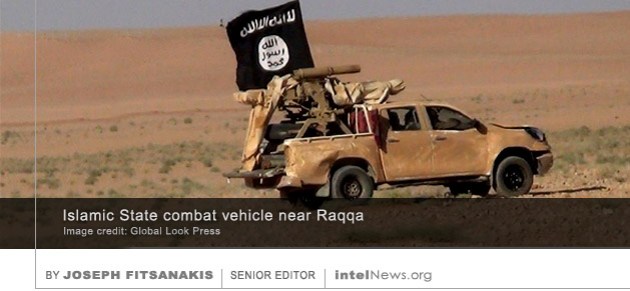 In a recent series of interviews to promote his new book, Anatomy of Terror, former FBI special agent and current counterterrorism expert Ali Soufan insists that the Islamic State remains potent and dangerous.
  way out. The group’s meteoric rise marked a watershed moment in the modern history of militant Sunni Islam. Even if it is militarily annihilated —a prospect that is far from certain— its physical absence will in no way erase its impact and influence among its millions of supporters and sympathizers. In fact, experts warn that the group is —like al-Qaeda before it— proving to be resilient and able to withstand intense military pressure from its enemies. Currently, all signs show that the Islamic State is actively reorganizing under the command of its leader, Abu Bakr al-Baghdadi. The prolonged absence of the Iraqi-born al-Baghdadi has prompted wild speculation about this supposed demise or severe incapacitation. There are even some who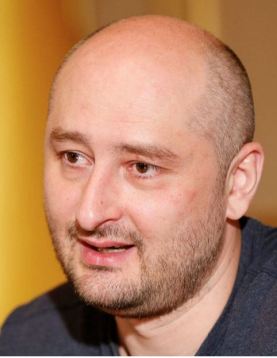
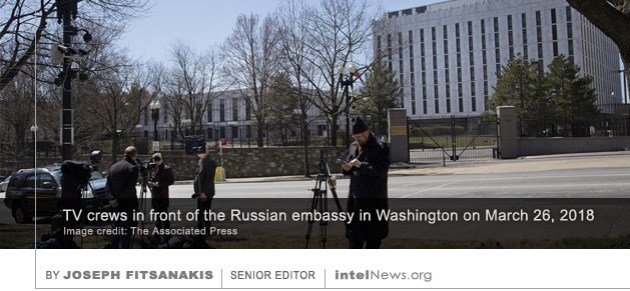 Relations between Russia and much of the West reached a new low on Monday, with the expulsion of over 100 Russian diplomats from two dozen countries around the world. The unprecedented expulsions were publicized on Monday with a series of coordinated announcements issued from nearly every European capital, as well as from Washington, Ottawa and Canberra. By the early hours of Tuesday, the number of Russian diplomatic expulsions had reached 118 —not counting the 23 Russian so-called “undeclared intelligence officers” that were expelled from Britain last week. Further expulsions of Russian diplomats are expected in the coming days.
 predecessor, Barack Obama, and his Secretary of State Hillary Clinton, who is known for her hardline anti-Russian stance. In Europe, the move to expel dozens of Russian envoys from 23 different countries —most of them European Union members— was a rare act of unity that surprised European observers as much as it did the Russians.
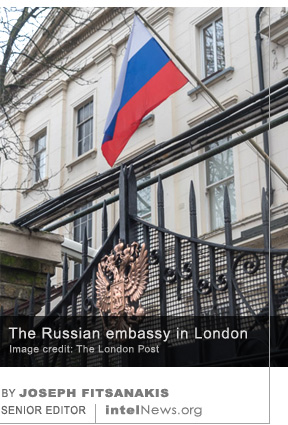 As expected, Moscow snubbed the British government’s demand for information into how a Russian-produced military-grade nerve agent ended up being used in the streets of Salisbury, England. As British Prime Minister Theresa May addressed the House of Commons on Wednesday afternoon, Sergei Skripal continued to fight for his life in a hospital in southern England. His daughter, Yulia, was also comatose, having been poisoned with the same Cold-War-era nerve agent as her father. This blog has
  the latest expulsions are dwarfed by the dramatic expulsion in 1971 of no fewer than 105 Soviet diplomats from Britain, following yet another defection of a Soviet intelligence officer, who remained anonymous.
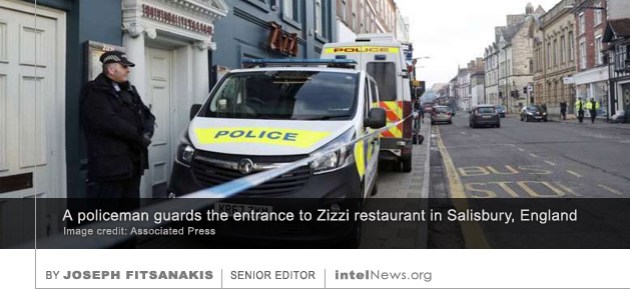 Most state-sponsored assassinations tend to be covert operations, which means that the sponsoring party cannot be conclusively identified, even if it is suspected. Because of their covert nature, assassinations tend to be extremely complex intelligence-led operations, which are designed to provide plausible deniability to their sponsors. Consequently, the planning and implementation of these operations usually involves a large number of people, each with a narrow set of unique skills. But —and herein lies an interesting contradiction— their execution is invariably simple, both in style and method. The
  Skripal, who continued to provide his services to British intelligence as a consultant while living in the idyllic surroundings of Wiltshire. Like the late Russian defector Alexander Litvinenko, who died in London of radioactive poisoning in 2006, Skripal entrusted his personal safety to the British state. But in a country that today hosts nearly half a million Russians of all backgrounds and political persuasions, such a decision is exceedingly risky.
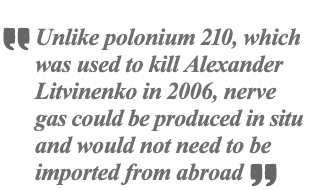 from abroad. It is, in other words, a simple weapon that can be dispensed using a simple method, with little risk to the assailant(s). It fits the profile of a state-sponsored covert killing: carefully planned and designed, yet simply executed, thus ensuring a high probability of success.
 Dozens of Saudi senior figures, some of them among the world’s wealthiest people, have been fired or arrested, as the king and his son appeared to be removing their last remaining critics from the ranks of the security services. The unprecedented arrests took place without warning less than two hours after state-run media announced the creation of a new “supreme committee to combat corruption”. A
 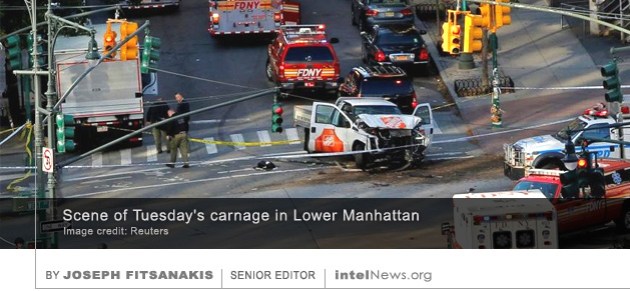 News reports hastened to
  violence, rather than risk failure by breaking new ground. But at a time like this, when the very existence of the Islamic State hangs in the balance, one would think that the group would consciously try to intimidate its opponents by showing off some kind of revolutionary new weapon. That did not happen on Tuesday.
 the heavily attended annual Village Halloween Parade was scheduled to take place on the very same street, just two hours after he launched his deranged attack.
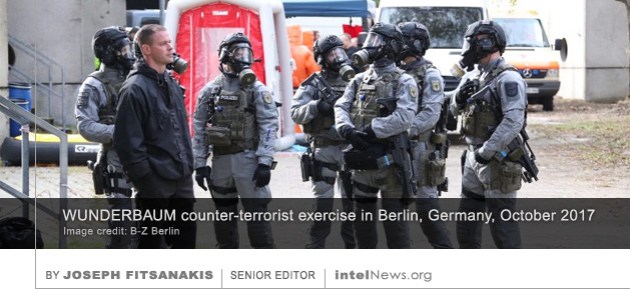 A German newspaper reported last week that at least one European intelligence agency has already warned that the Islamic State is exploring the use of chemicals for attacks in Europe. Such an eventuality would be a radical departure from prior attacks by the Islamic State in the West. In the past, the militant group has shown a strong preference for low-tech means of dispensing violence, such as firearms, vehicles and knives. But it has utilized chemical substances in Iraq and Syria, and its technical experts have amassed significant knowledge about weaponized chemicals.
 There’s a reason why America has not experienced another 9/11, and it’s not because militants are not trying. Through a series of sweeping reforms prompted by the tragic events of that day, United States intelligence and security agencies have become extremely efficient at preventing large-scale terrorist and criminal violence. Using increasingly sophisticated methods of intelligence collection, analysis and even prediction, counter-terrorism and security experts have neutralized countless attempts to replicate —or even surpass— the horror of 9/11.
 Montana. Most important of all, they work alone, which makes it immensely difficult to sense their murderous intentions. Counter-terrorism and security experts are trained to detect possible attacks by penetrating the communications between members of a conspiracy. When the operative is a lone wolf, and does not communicate his or her plans, the points of possible penetration diminish, as does the possibility of detection.
 The security map of the Middle East changed within a few hours on Wednesday, when the Islamic State managed to strike Iran for the first time. Six assailants —five men and a woman— stormed the Islamic Consultative Assembly, which serves as the parliament of Iran, and the mausoleum of the founder of the Islamic Republic, Ayatollah Khomeini. By the time they killed themselves, or were killed by security forces, the six had murdered 12 people and injured over 60. The Islamic State, which carried out the attack, had warned for several months that it would launch a direct assault at the heart of
  the world’s largest Shiite state. It tried to do so before, several times, and failed. But
 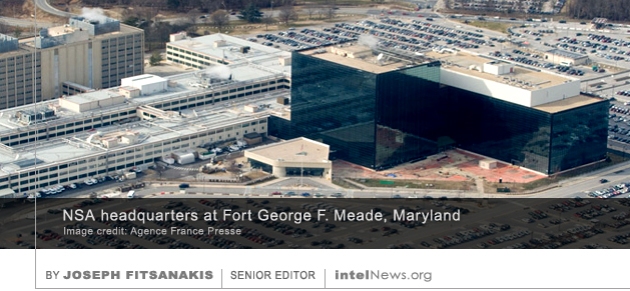 At first sight, the case of Reality Leigh Winner, a United States federal contractor who has been
  between leakers based on their motives. It does, however, distinguish between simple leakers and whistleblowers. If a US government employee uncovers evidence of abuse of power, or becomes aware of a specific and critical threat to the security of Americans, he or she is required to notify his or her superiors. If the latter refuse to take action, then the employee is justified under the law in taking all necessary actions to warn the public of impending peril. That is precisely the function of the 1989 Whistleblower Protection Act, which affords protection to insiders who expose abuses of authority, or a concrete and critical threat to public safety.
 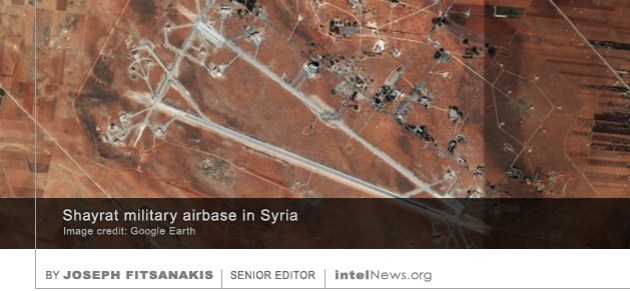 The nearly 60 Tomahawk missiles that the United States fired at Syria in the early hours of Friday local time were not the first. Nor were they the first that struck a Syrian government installation. In September of 2016, for example, a United States airstrike hit a
  given that Washington’s attack took place during the official visit to the United States by Xi Jinping, premier of China, another strong Syrian ally. Finally, it is worth considering possible Iranian responses to the US attack, especially if Iranian citizens end up on the casualty list.







Analysis: Did the US Central Intelligence Agency lose 17 spies in Iran?
July 23, 2019 by Joseph Fitsanakis 3 Comments
Officials in Tehran said on Sunday that all of the purported spies are Iranian nationals and were lured by the CIA with promises of receiving visas to enter America. Others were already in possession of visas and were “blackmailed” to spy for the US in order to have them renewed by the US Department of State, according to Iranian media reports. Visa applicants were allegedly carefully selected based on their work in critical areas such as Iran’s nuclear program or defense procurement.
A government-sanctioned documentary, which aired on Iran’s state owned television on Monday, claimed that the 17 spies did not know each other, but all had been trained independently in clandestine tradecraft. This allegedly included setting up and using secret communications systems, as well as carrying out dead drops without being detected. Dead drops utilized containers made to look like rocks, which were located “in parks and other mountainous areas” in Iran and elsewhere in the Middle East, according to Iranian officials. Some of the assets communicated with their handlers while attending science conferences through- out Europe, Africa and Asia.
The Iranian television documentary claimed that the 17 arrests had “dealt a lethal blow to US foreign intelligence”. But US President Donald Trump said in a tweet that Tehran’s allegations were “totally false” and contained “zero truth”, just “more lies and propaganda” from Tehran.
Who is right? To begin with, there is no question that the CIA recruits heavily in Iran, given that the Islamic Republic is one of America’s —indeed the world’s— primary intelligence targets. What is more, since 1979, when Washington lost its embassy in Iran, the CIA have found it more difficult to collect accurate information from inside the energy-rich country. Therefore, the need for dependable assets inside Iran has increased exponentially, and has become even more pressing now, given the importance placed on Iran by Donald Trump. Additionally, Read more of this post
Filed under Expert news and commentary on intelligence, espionage, spies and spying Tagged with Analysis, CIA, counterintelligence, espionage, Iran, Joseph Fitsanakis, United States