Secret document sheds light on North Korean abduction operations
December 11, 2014 Leave a comment
 By JOSEPH FITSANAKIS | intelNews.org
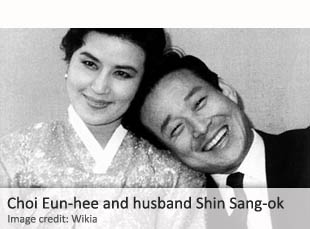
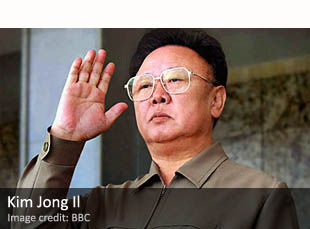
A document allegedly acquired from the government of North Korea by Western spy agencies appears to shed light on a top-secret North Korean intelligence program to kidnap dozens of foreigners in the 1970s and 1980s. That the North Korean regime engaged in systematic abduction of foreign citizens during the Cold War is not new information. International sources estimate the total number of foreign subjects abducted by North Korean intelligence to be in the dozens. They are said to include 17 citizens of Japan, as well as Chinese, South Korean, Malaysian, Italian, French and Lebanese nationals. In September 2002, during a brief period of rapprochement with Japan, North Korean leader Kim Jong-il admitted that 13 Japanese citizens had been abducted and taken to North Korea in the 1970s and 1980s. They included Megumi Yakota, a 13-year-old schoolgirl who disappeared from Japan 1977 and is believed to have died while in captivity in North Korea. The most famous case of abduction is undoubtedly that of South Korean actress Choi Eun-hee and her husband, the director Shin Sang-ok. The two were abducted by North Korean intelligence operatives in 1978 and taken to Pyongyang. They were then forced to lead the North Korean government’s efforts to develop its motion-picture industry. The two collaborated with the regime until 1986, when they managed to escape while on a visit to Vienna, Austria. On Wednesday, The Washington Times said it had seen a North Korean document “recently obtained” by Western intelligence agencies, which traces the history of the reclusive regime’s abduction unit and directly implicates its late leader, Kim Jong-il, in its creation. The paper cited “diplomatic sources familiar with the discovery”, in claiming that the document shows “how and why” Kim established the unit, called the Investigation Department, in 1977. The unit, known by its Korean acronym JOSABU, operated as part of the ruling Korean Party Central Committee. Its mission was to abduct foreigners, bring them to North Korea, and use them to train North Korean intelligence operatives in foreign languages and cultural knowledge. Some of the abductees were turned into spies and were sent abroad to conduct intelligence operations on behalf of the North Korean state. The document cited by The Times details two meetings, in September and October 1977, in which North Korean leader Kim instructed intelligence officials to establish JOSABU and explained the logic behind the proposed kidnappings. Apparently, Kim believed that if young foreigners were brought to North Korea and instructed for a period of up to seven years they could turn into “valuable intelligence agents who would be useful until the age of 60”. Not long afterwards, North Korean abduction teams were dispatched to various countries in Eastern Europe, the Middle East and Southeast Asia, according to the document. The paper notes that most of the abductees are believed to have been used for training purposes, propaganda activities, or dispatched abroad to conduct intelligence operations.
 By JOSEPH FITSANAKIS* | intelNews.org |









 intelNews.org
North Korean leaders used fraudulent Brazilian passports to travel abroad
March 1, 2018 by Joseph Fitsanakis Leave a comment
The passports were issued in the name of Josef Pwag and Ijong Tchoi. Both bear fake dates of birth and list Sao Paulo, Brazil, as the passport holders’ birthplace. Both passports bear the issuance stamp of the “Embassy of Brazil in Prague”, Czech Republic, and are dated February 26, 1996. Reuters cited an anonymous source from Brazil, who said that the fake passports were not forged from scratch. They were in fact genuine travel documents that had been sent out in blank form for use by the Brazilian embassy’s passport issuance office. The Reuters report quotes an unnamed Western security official who said that the forged passports were mostly likely used by their holders to secure travel visas from foreign embassies in Southeast Asia, mostly in Japan and Hong Kong. They could also have been used as back-ups, in case the two Kims needed to be evacuated from North Korea in an emergency —for instance an adversarial military coup or a foreign military invasion. At the very least, the passports indicate a desire to secure and safeguard the Kims’ ability to travel internationally.
North Korea’s intelligence services are known for making extensive use of fraudulent passports. Readers of this blog will recall that the two female North Korean agents who killed Kim Jong-nam, Kim Jong-un’s half-brother, in February of 2017, had been supplied with forged passports. The two women, who are now in prison in Malaysia, were using Indonesian and Vietnamese passports.
Reuters said it contacted the Ministry of Foreign Affairs of Brazil, which said it was still investigating the whether the two passports were indeed issued to members of North Korea’s ruling family, and how they came to be issued. The news agency also contacted the embassy of North Korea in Brazil, but officials there declined to comment.
► Author: Joseph Fitsanakis | Date: 01 March 2018 | Permalink
Filed under Expert news and commentary on intelligence, espionage, spies and spying Tagged with Brazil, Brazilian embassy in the Czech Republic, Czech Republic, forgery, Ijong Tchoi, Josef Pwag, Kim Jong Il, Kim Jong Un, North Korea, travel documentation