News you may have missed #331

  • CIA deputy director to step down. The Agency has denied it for months, but now the longtime rumor that its powerful deputy director, Stephen R. Kappes, was planning to resign has came true. Jeff Stein reports that “recently, grumbling about Kappes from within the CIA and without, on issues ranging from his nit-picking management style to his ties to the old order, has gotten louder. And now, apparently, Kappes has heard enough”.
  • US eyes cash deal for Kyrgyzstan base. How will the recent coup in Kyrgyzstan affect US-Kyrgyz arrangements on the Manas Air Base? A lot will depend on oil purchase deals between the US military and Kyrgyz autocrats.
  • Court case may reveal IRA spy’s role. Freddie Scappaticci, an IRA spy alleged to be the British army agent ‘Stakeknife’ could be forced into court by the wife of another IRA informer, who claims she suffered nervous breakdown after being kidnapped by him.

Bookmark and Share

News you may have missed #329

  • Iran insists US hikers had intelligence links. Iran’s intelligence minister, Heydar Moslehi, has said that Americans Shane Bauer, Joshua Fattal and Sarah Shourd, who were arrested on Iranian soil last July, “were in contact with intelligence services”. The evidence would “soon be made public”, he said.
  • Gerdes case shows difficulty of CIA jobs. The case of CIA employee Kerry Gerdes, who was recently convicted for falsifying interview reports while performing background checks on CIA employees and potential employees, reveals how difficult the job is for young CIA recruits, who expect it to be exciting or glamorous, according to seasoned investigators.
  • US still denying India access to Headley. There has been intense speculation in India and Pakistan that David Coleman Headley, a former US Drug Enforcement Administration informant, who was arrested by the FBI in October for plotting an attack on a Danish newspaper, is in fact a renegade CIA agent. Could this be why the US is denying India access to Headley?

Bookmark and Share

News you may have missed #327

  • Cyberspies eyed Canadian visa applications. Personal information about Canadians applying for visas was swiped by cyberspies who hacked into Indian embassy computers in Afghanistan. The data theft was part of a wider cyberespionage operation launched by the underground hacking community in China and aimed primarily at political targets, according to academic researchers.
  • Israeli Arab jailed for spying on top general. Rawi Sultani, who is accused of informing Hezbollah of his membership in the same fitness club as Lieutenant-General Gabi Ashkenazi, as well as of methods of accessing the club, has been sentenced to nearly six years’ imprisonment.
  • CIA places American on assassination list. US-born al-Qaeda recruiter Anwar al-Aulaqi, who now lives in Yemen, has become the first US citizen to be placed on a CIA “targeted killing” list, which requires “special approval from the White House”.

Bookmark and Share

News you may have missed #325

  • CIA investigator sentenced. CIA employee Kerry Gerdes, who falsified interview reports while performing background checks on CIA employees and potential employees, has been sentenced to two months in prison and six months of home confinement.
  • President Ford authorized warrantless wiretaps, memo shows. Even though he replaced Richard Nixon, who was forced to resign the US Presidency over intelligence abuses, Gerald Ford secretly authorized the use of warrantless domestic wiretaps soon after coming into office, according to a declassified document.
  • Yemeni court upholds alleged spies’ sentences. Three Yemenis, who were accused last year by the government of having “links to Israeli intelligence”, have had their sentences upheld by an appeal court.

Bookmark and Share

Situation report on the al-Haramain wiretap case

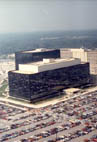
NSA Headquarters

NSA HQ

By IAN ALLEN | intelNews.org |
Max Fisher of The Atlantic Wire provides an excellent situation report on the recent decision by a US district court, which faulted the US government for unconstitutionally wiretapping a US-based Saudi charity. The charity, al-Haramain, was taken to court in September 2004 by the US government, which accused it  of having links to terrorist groups. But the charity has now successfully demonstrated that the National Security Agency (NSA) engaged in illegal spying against it, under the Bush administration’s STELLAR WIND warrantless spying program. Drawing from articles by a number of commentators, Fisher explains why the case took five years to conclude, pointing to the difficulty the plaintiffs had to prove that the NSA spied on the charity. Normally, this is close to impossible, as the NSA is not in the habit of disclosing information on its operations. Read more of this post

News you may have missed #321 (CIA edition)

  • Uruguay ex-president sent to prison for 1973 coup. Declassified documents show that, at the time of the coup, Juan María Bordaberry told the US ambassador that “Uruguay’s democratic traditions and institutions […] were themselves the real threat to democracy”.
  • FSB ‘dropped the ball’ in Moscow metro bombings. Two Russian intelligence observers argue that Russia’s new strategy has shifted toward preventing coordinated actions by large groups of militants, which has come at the expense of taking measures to prevent individual suicide attacks, such as those of last Monday in Moscow.
  • Calls for expanded DoJ probe of FBI killing of Detroit imam. The US Justice Department is probing the killing of Detroit-area Islamic cleric Imam Luqman Ameen Abdullah, who was shot dead during an FBI raid shortly after being indicted on charges of conspiracy to commit federal crimes. The FBI said Abdullah was shot after he opened fire, but critics say he may have been targeted for assassination.

Bookmark and Share

News you may have missed #320

  • Wikileaks alleges US government surveillance. British quality broadsheet The Guardian is one of a handful of mainstream media outlets to seriously examine the allegation of Wikileaks, that its editor and co-founder, Julian Assange, became the target of “half a dozen attempts at covert surveillance in Reykjavik”, by individuals who said they represented the US Department of State. The article, written by Joseph Huff-Hannon, also cites intelNews.
  • Saudi charity wins wiretap case against NSA. The Saudi-based charity Al-Haramain was taken to court in September 2004 by the US government, which accused it of maintaining terrorist links. But the charity has successfully demonstrated that the National Security Agency engaged in warrantless spying on it. However, the judge limited liability in the case to the government as an institution, rejecting the lawsuit’s effort to hold individual US government officials personally liable.
  • Kremlin accused of KGB-style honey-traps. The Kremlin has been accused of sanctioning a Soviet-style honey-trap campaign against opposition politicians and journalists using entrapment techniques based on money, drugs and women. The allegations follow the release of a string of videos on the web purporting to show an opposition politician, a political analyst and the editor of the Russian edition of Newsweek magazine in compromising situations.

Bookmark and Share

News you may have missed #317

  • Captured MI6 spy denied bail. Daniel Houghton, a former MI6 officer who allegedly attempted to sell British classified top-secret computer files to what he thought was a foreign intelligence agency (but were in fact MI5 counterintelligence agents) has had his bail application rejected.
  • Alleged Israeli spy arrested in Algeria. The Algerian security services have arrested an unidentified Israeli, who allegedly entered Algeria using a forged Spanish passport. No further information available at this time.
  • MI6’s top ranking female spy dies at 88. Daphne Park, the Baroness of Monmouth, who died Wednesday, aged 88, had a long career in the Secret Intelligence Service (SIS), which culminated in her appointment as Controller Western Hemisphere in 1975, the highest post ever occupied by a woman at MI6.

Bookmark and Share

MI6 employee arrested for trying to sell documents

Daniel Houghton

Daniel Houghton

By JOSEPH FITSANAKIS | intelNews.org |
British authorities have detained a former MI6 employee after he was caught trying to sell classified documents to MI5 spooks posing as foreign agents. Daniel Houghton, 25, who was arrested on Monday at a central London hotel, worked for MI6 between September 2007 and May 2009. During the course of his employment, he apparently stole MI5 (and not MI6, as has been suggested) electronic documents, classified secret and top-secret, by copying them to CDs and DVDs. He then attempted to sell the material, which is said to relate to “techniques for intelligence collection”, for £2 million ($2.9 million), to MI5 agents posing as intelligence handlers of an unspecified foreign intelligence service. Read more of this post

CIA technical expert arrested for pilfering equipment

Anritsu spectrum analyzer

An analyzer

By IAN ALLEN | intelNews.org |
A CIA communications technology specialist has been charged with selling CIA communications equipment to a private broker. FBI counterintelligence agents arrested Todd Brandon Fehrmann on February 26, several weeks after he sold $60,000-worth of equipment to Massachusetts-based Bizi International, Inc. Fehrmann’s CIA connection is concealed in the FBI affidavit, but The Washington Times says US government officials and even Fehrmann himself have now confirmed that he worked for the agency. The pilfered equipment appears to have included a dozen portable spectrum analyzers –handheld devices used to detect and gauge cell phone signals, among other things. Read more of this post

News you may have missed #294

  • Tensions mount in Turkey over alleged coup plot. Simmering tensions between Turkey’s government and judicial elite erupted into open confrontation Thursday, over the handling of a probe into the Ergenekon network, an alleged military-intelligence plot to topple the Islamist-rooted government.
  • CIA recruiting Chinese-Americans. The CIA is posting recruitment advertisements in Southern California’s Chinese language media during the Lunar New Year, in an attempt to hire Chinese Americans. This is part of a wider effort by the Agency to increase numbers of ethnic minority employees by 22 to 30 percent by 2012.
  • Two alleged Israeli spies sentenced to death in Lebanon. Retired police officer Mahmoud Qassem Rafeh, who was arrested by Lebanese authorities in 2006, has been given a death conviction for “collaboration and espionage on behalf of the Israeli enemy”. Another defendant, Palestinian Hussein Khattab, has been convicted in absentia for his alleged involvement in the murders of members of Hezbollah and Islamic Jihad.

Bookmark and Share

News you may have missed #0289

  • UK spies worry about human rights lawsuits. Intelligence officers at Britain’s MI5 and MI6 are allegedly being diverted from counter-terrorism work to sift through thousands of documents relating to former terrorism detainees, who are suing the security services for breaching their human rights. The article makes it look like it is the torture victims’ fault for pursuing their rights. But in reality, MI5 and MI6 should have known better than to allow and participate in extralegal torture.
  • Bangladesh arrests alleged Burmese spies. Bangladesh coast guards have arrested eight citizens of Myanmar on suspicion of spying. Photographs of Bangladesh Navy warships and security installations were found in their possession, according to the country’s police chief.

News you may have missed #0286

  • More on CIA spies working for corporations. Author Eamon Javers provides more information about his new book, in which he examines the increasing phenomenon of CIA agents working for private corporations on the side.
  • Rio Tinto spy controversy thickens. Anglo-Australian mining company Rio Tinto says it is “extremely worried” about four of its staff, who were arrested last July by Chinese authorities and have now been formally charged with espionage.
  • Court keeps White House spy emails secret. Two weeks ago, US President Barack Obama declared in his State of the Union address that “it’s time to require lobbyists to disclose each contact they make on behalf of a client with my administration or Congress”. This does not appear to apply to telecommunication industry lobbyists, who campaigned in favor of facilitating warrantless communications interception through the National Security Agency’s STELLAR WIND program.

Bookmark and Share

News you may have missed #0283

  • Romanian spy chief in rare interview. On the 20th anniversary of Romania’s post-communist Foreign Intelligence Service (SIE), Romanian daily Libera published an interesting interview with SIE director Mihai Razvan Ungureanu. Includes quote of the week: “The diplomat does nothing illegal […] while the spy does nothing in the spirit of respecting the laws of other states”.
  • Trial of Hawaii resident accused of spying for China postponed. Noshir Gowadia’s federal trial has been delayed several times since he was arrested in 2005, for allegedly providing China with information on making cruise missiles less visible to radar and heat-seeking missiles.
  • Bizarre suicide streak in Turkish military continues. Could the latest in a long list of recent alleged suicides by members of the Turkish military be connected to the shadowy Ergenekon military-intelligence network?

Bookmark and Share

US, UK spy agencies on alert after unprecedented court decision

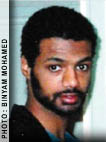
Binyam Mohamed

Binyam Mohamed

By JOSEPH FITSANAKIS | intelNews.org |
British and American intelligence agencies have been placed on alert following an unprecedented ruling by a British court, which forces the British government to disclose CIA documents in its possession. The documents relate to the case of Binyam Mohamed, an Ethiopian resident of Britain, who says he was severely tortured with the collaboration of the CIA and British domestic intelligence agency MI5, after he was renditioned to Morocco. Last February, two British judges overseeing Mr. Mohamed’s case revealed that the British government kept “powerful evidence” secret after being threatened by the US that it would “stop sharing intelligence about terrorism with the UK”. In July, it emerged that US Secretary of State Hillary Clinton personally threatened the British government that Washington would stop collaborating with London on intelligence matters if evidence in Mr. Mohamed’s case was publicly released. Read more of this post