Cybersecurity researchers uncover first-ever use of LinkedIn to spread malware
June 18, 2020 Leave a comment
 Cybersecurity researchers have uncovered what is believed to be the first-ever case of hackers using LinkedIn to infect the computers of targeted users with viruses, according to a new report. The hackers appear to have been sponsored by government and to have targeted employees of carefully selected military contractors in central Europe, according to sources.
The existence of the alleged cyberespionage operation was revealed on Wednesday by researchers at ESET, a cybersecurity firm based in Bratislava, Slovakia, which is known for its firewall and anti-virus products. The researchers said that the operation was carried out in 2019 by hackers who impersonated employees of General Dynamics and Collins Aerospace, two leading global suppliers of aerospace and defense hardware.
ESET researchers said that the hackers made use of the private messaging feature embedded in LinkedIn to reach out to their targets. After making initial contact with their intended victims, the hackers allegedly offered their targets lucrative job offers and used the LinkedIn private messenger service to send them documents that were infected with malware. In many cases, the targets opened the documents and infected their computers in the process.
The use of the LinkedIn social media platform by hackers to make contact with their unsuspecting victims is hardly new. In 2017, German intelligence officials issued a public warning about what they said were thousands of fake LinkedIn profiles created by Chinese spies to gather information about Western targets. Germany’s Federal Office for the Protection of the Constitution (BfV) said it had identified 10,000 German citizens who had been contacted by Chinese spy-run fake profiles on LinkedIn in a period of just nine months. And in 2018, a report by France’s two main intelligence agencies, the General Directorate for Internal Security (DGSI) and the General Directorate for External Security (DGSE), warned of an “unprecedented threat” to security after nearly 4,000 leading French civil servants, scientists and senior executives who were found to have been accosted by Chinese spies on LinkedIn.
Tricking a target into accessing a virus-infected document file is not a new method either. However, according to the researchers at ESET, this was the first case where LinkedIn was used to actually deliver the malware to the victims. As for the identity of the hackers, there appears to be no concluding information. However, ESET said the attacks appeared to have some connections to Lazarus, a group of hackers with North Korean links. Lazarus has been linked to the 2014 Sony Pictures hack and the 2016 Central Bank of Bangladesh cyber heist, which was an attempt to defraud the bank of $1 billion.
LinkedIn told the Reuters news agency that it had identified and terminated the user accounts behind the alleged cyberespionage campaign. Citing client confidentiality, ESET said it could not reveal information about the victims of the attacks. Meanwhile, General Dynamics and Raytheon Technologies, which owns Collins Aerospace, have not commented on this report.
► Author: Joseph Fitsanakis | Date: 18 June 2020 | Permalink
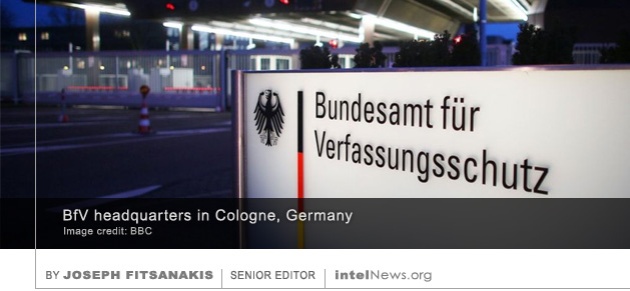 In an unusual step, German intelligence officials have issued a public warning about what they said are thousands of fake LinkedIn profiles created by Chinese spies to gather information about Western targets. On Sunday, Germany’s Federal Office for the Protection of the Constitution (BfV) held a press conference in which it said that it had discovered a wide-ranging effort by spy agencies in China to establish links with Westerners. The agency said that it undertook a 9-month investigation, during which it identified 10,000 German citizens who were contacted by Chinese spy-run fake profiles on LinkedIn. Across Europe, the number of targets could be in the hundreds of thousands,
 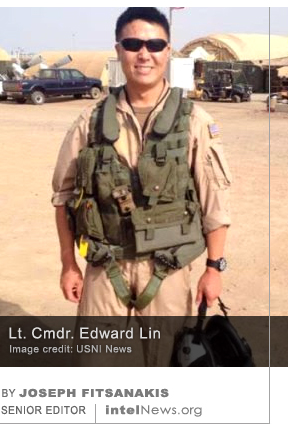 An American official has told Newsweek magazine that the possibility of further arrests in the espionage case of United States Navy flight officer Edward Lin should not be ruled out. Last Sunday, the US Navy reported the arrest Lt. Cmdr. Lin, who faces two counts of espionage and three counts of attempted espionage, among other charges. Aside from a three-page, heavily redacted charge sheet released by the Navy, almost nothing is known about this case. However, as intelNews









 intelNews.org
Dutch intelligence service warns public about online recruitment by foreign spies
February 15, 2022 by intelNews Leave a comment
AIVD director-general Erik Akerboom told Dutch newspaper Het Financieele Dagblad that Dutch and other Western secret services have been surprised by the sheer number of cases in which private sector employees disclosed sensitive information, after being blackmailed or enticed with money to share information. After foreign intelligence operatives make initial contact with their target via LinkedIn, the relationship quickly turns more “personal”, according to Akerboom. The new contact acts flatteringly about the unsuspecting target’s knowledge and competence. “You are asked to translate something. This can be followed by a physical meeting”, he says.
Potential targets are “ranked” by their position in an organization, position in a business network, and level of access to sensitive information. “The rankings determine which persons are prioritized for recruitment attempts”, according to Akerboom. This sometimes involves the creation of fake human resource recruitment agencies, as British, Australian and American intelligence agencies have warned about in the past.
While not a new phenomenon, the scope and effectiveness of foreign infiltration attempts have now reached a scale that has prompted the AIVD to warn the public. China and Russia have made attempts to acquire advanced technology in Western countries, including the Netherlands, via corporate takeovers, digital espionage, and human intelligence operations. Last year, the Netherlands expelled two Russian spies who successfully recruited employees at a number of Dutch high-tech companies. One of the Russians created fake profiles posing as a scientist, consultant and recruiter. The AIVD did not disclose the names of these companies. Read more of this post
Filed under Expert news and commentary on intelligence, espionage, spies and spying Tagged with AIVD (Netherlands), China, Erik Akerboom, LinkedIn, Netherlands, Russia