Declassified files shed light on 1956 disappearance of MI6 agent

Lionel CrabbA set of newly released files from the archives of the British Cabinet Office shed light on the mysterious case of a highly decorated combat swimmer, who vanished while carrying out a secret operation against a Soviet ship. The disappearance happened during a historic Soviet high-level visit to Britain in 1956. In April of that year, First Secretary of the Communist Party of the USSR, Nikita Khrushchev, and Nikolai Bulganin, Chairman of the Council of People’s Commissars, arrived in Britain aboard Russian warship Ordzhonikidze, which docked at Portsmouth harbor. Their eight-day tour of Britain marked the first-ever official visit by Soviet leadership to a Western country. But the tour was marred by a botched undersea operation led by Britain’s Secret Intelligence Service, known commonly as MI6. The operation, which aimed to explore the then state-of-the-art Ordzhonikidze, ended in the disappearance of MI6 diver Lionel “Buster” Crabb. The body of Crabb, one of several MI6 operatives involved in the operation, was never recovered.

Now a set of documents released by the Cabinet Office, a British government department tasked with providing support services to the country’s prime minister and senior Cabinet officials, show that the operation had been mismanaged by MI6 from the start. According to The Daily Telegraph, the documents show that miscommunication between the British Foreign Office and MI6 caused the latter to believe that the operation to target the Ordzhonikidze had been authorized by the government, when in fact no such thing had ever occurred.

Moreover, MI6 had housed Crabb and other operatives in a Portsmouth hotel, where the agency’s handler had provided the front-desk clerk with the real names and addresses of the underwater team members. The documents also reveal that several of Crabb’s relatives and friends had been told by him that he would be diving in Portsmouth on the week leading up to his death. Those who knew included one of Crabb’s business partners, with whom he operated a furniture outlet. The partner apparently told the authorities that he was contemplating “consulting a clairvoyant, Madame Theodosia”, in an effort to discover the fate of his missing business partner.

After Crabb disappeared, British government officials were convinced that he had been abducted or killed by the Soviets and that the KGB was in possession of his body. Should the Soviets decide to disclose the existence of the MI6 operation to the world, there would be “no action that [MI6] could take [that] could stave off disaster”, said one British government memo. As intelNews has reported before, n 2007, Eduard Koltsov, a retired Russian military diver, said he killed a man he thinks was Crabb, as he was “trying to place a mine” on the Soviet ship.

Author: Joseph Fitsanakis | Date: 28 October 2015 | Permalink

MI6 spy found dead in 2010 may have used female disguise, says expert

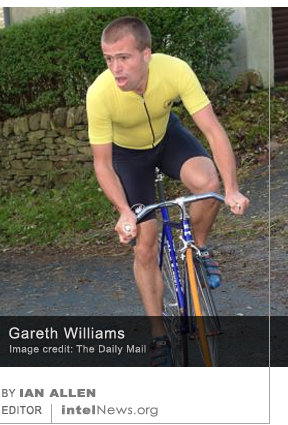
Gareth WilliamsA British intelligence officer, who was found dead in his London apartment in 2010, was not a transvestite, as some media reports have speculated, but probably worked undercover dressed as a woman, according to a leading forensic investigator. Gareth Williams, a mathematician in the employment of Britain’s signals intelligence agency, GCHQ, had been seconded to MI6, Britain’s external intelligence agency, to help automate intelligence collection. He had also worked with several United States agencies, including the Federal Bureau of Investigation and the National Security Agency. But his career came to an abrupt end in August 2010, when he was found dead in a padlocked sports bag at his home in Pimlico, London.

The discovery of £15,000 ($20,000) worth of women’s clothing in Williams’ apartment caused some in the British media to speculate that sexual jealousy may have behind the spy’s death. British tabloid The Sun suggested at the time that Williams was “a secret transvestite who may have been killed by a gay lover”. There were also reports that police investigators themselves suspected that Williams’ death may have been the result of “a sex game gone wrong”. This appeared to be substantiated by the discovery that Williams had visited gay bars and drag nightclubs in London in the weeks before his death. Subsequent reports, however, suggested that law enforcement investigators described Williams’ death as “a neat job”, a term used to refer to professional killings. There have also been official denials by police that Williams’ murder was sex-related.

Now a leading forensic investigator has said that Williams was not a transvestite and that he probably dressed in women’s clothing for his job with MI6. Peter Faulding, who specializes in deaths within confined spaces, and has advised British and American law enforcement agencies, has previously spoken publicly against the theory that Williams locked himself in the bag. He said he tried without success to lock himself in the same type of bag 300 times before discounting the self-lock theory. Faulding spoke again to The Sun last week, this time to suggest that there is no evidence that the late MI6 spy was a transvestite. “The key question never asked was: were these clothes used for his job?” he said, referring to the feminine attire found in Williams’ apartment. He told The Sun that the clothes were “used for work, rather than pleasure”. “I am certain he made a very convincing female”, said Faulding. “He was slim, with feminine features, and as a cyclist he shaved his legs”.

Author: Ian Allen | Date: 21 September 2015 | Permalink
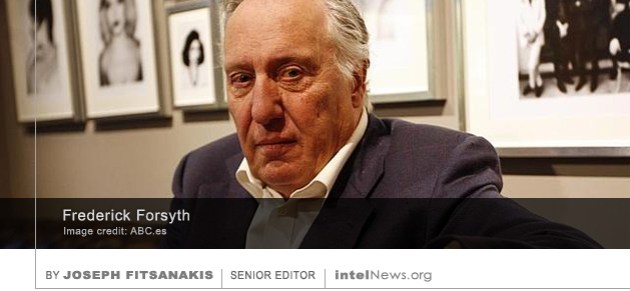
‘Day of the Jackal’ author reveals he was MI6 agent for 20 years

Frederick ForsythFrederick Forsyth, the esteemed British author of novels such as The Day of the Jackal, has confirmed publicly for the first time that he was an agent of British intelligence for two decades. Forsyth, who is 77, worked for many decades as an international correspondent for the BBC and Reuters news agency, covering some of the world’s most sensitive areas, including postcolonial Nigeria, apartheid South Africa and East Germany during the Cold War. But he became famous for authoring novels that have sold over 70 million copies worldwide, including The Odessa File, Dogs of War and The Day of the Jackal, many of which were adapted into film. Several of his intelligence-related novels are based on his experiences as a news correspondent, which have prompted his loyal fans to suspect that he might have some intelligence background.
But Forsyth had never commented on these rumors until last weekend, when was interviewed on the BBC’s main evening news program. He spoke to the station on the occasion of the upcoming publication of his autobiography, The Outsider: My Life, which will be in stores in October. He told the BBC that he was first recruited by the Secret Intelligence Service (MI6) in the late 1960s while covering the Nigerian Civil War. The bloody conflict, which is also known as the Biafran War, pitted the separatist Igbo people against the Nigerian federal government. Like other military conflicts in postcolonial Africa, it attracted the attention of the world’s powers, including France, the Soviet Union, the United States, and Britain. London was firmly on the side of the government in Lagos, but MI6 had reservations, believing that the Nigerian military forces were committing mass atrocities in Biafra. Forsyth said he was recruited by an MI6 officer who wanted to know if children were dying in Biafra as a result of the Nigerian government’s military policies against the Igbo separatists. The intelligence service were apparently hoping that they could use this information to change London’s stance on the brutal civil war. The author told the BBC that he spent the rest of the war “sending both journalistic reports to the media and other reports to my new friend”, referring to his MI6 handler.

When asked if he was paid for his services, he said his assistance to MI6 was provided on a strictly voluntary basis. “The attitude, the spirit of the age, was different back then”, he said, adding that “the Cold War was very much on” and when the British government asked a reporter for a favor it was “very hard to say no”. He did say, however, that MI6 promised to approve passages of some of his novels by way of payment. The author of The Day of the Jackal said he was given a number to call and told to send MI6 his manuscripts for vetting. “If they are too sensitive, we will ask you not to continue”, Forsyth told the BBC.

Author: Joseph Fitsanakis | Date: 31 August 2015 | Permalink

KGB spy shares details of his escape to Britain in 1985

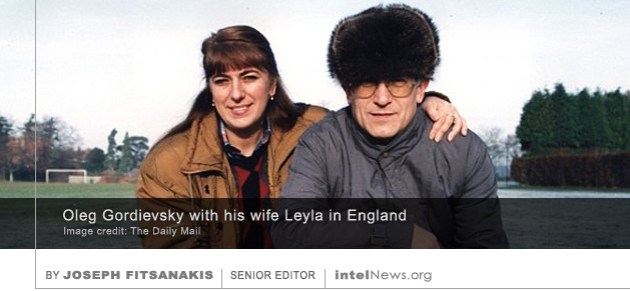
Oleg GordievskyA Soviet double spy, who secretly defected to Britain 30 years ago this month, has revealed for the first time the details of his exfiltration by British intelligence in 1985. Oleg Gordievsky was one of the highest Soviet intelligence defectors to the West in the closing stages of the Cold War. He joined the Soviet KGB in 1963, eventually reaching the rank of colonel. But in the 1960s, while serving in the Soviet embassy in Copenhagen, Denmark, Gordievsky began feeling disillusioned about the Soviet system. His doubts were reinforced by the Soviet invasion of Czechoslovakia in 1968. It was soon afterwards that he made the decision to contact British intelligence.
Cautiously, Britain’s Secret Intelligence Service (known as MI6) communicated with Gordievsky, and in 1974 he secretly became an agent-in-place for the United Kingdom. Eight years later, in 1982, Gordievsky was promoted to KGB rezident (chief of station) in London. While there, he frequently made contact with his MI6 handlers, giving them highly coveted information on Soviet nuclear strategy, among other things. He is credited with informing London of Mikhail Gorbachev’s imminent ascendency to the premiership of the Soviet Union, long before he was seen by Western intelligence as a viable candidate to lead the country.

But in May of 1985, Gordievsky was suddenly recalled to Moscow, where he was detained by the KGB. He was promptly taken to a KGB safe house in the outskirts of Moscow and interrogated for five hours, before being temporarily released pending further questioning. Remarkably, however, Gordievsky managed to escape his KGB surveillance and reappear in Britain less than a week later. How did this happen? On Sunday, the former double spy gave a rare rare interview to The Times, in which he revealed for the first time the details of his escape to London. He told The Times’ Ben Macintyre that he was smuggled out of the USSR by MI6 as part of Operation PIMLICO. PIMLICO was an emergency exfiltration operation that had been put in place by MI6 long before Gordievsky requested its activation in May of 1985.

Every Tuesday, shortly after 7:00, a British MI6 officer would take a morning stroll at the Kutuzovsky Prospekt in Moscow. He would pass outside a designated bakery at exactly 7:24 a.m. local time. If he saw Gordievsky standing outside the bakery holding a grocery bag, it meant that the double agent was requesting to be exfiltrated as a matter of urgency. Gordievsky would then have to wait outside the bakery until a second MI6 officer appeared, carrying a bag from the Harrods luxury department store in London. The man would also be carrying a Mars bar (a popular British candy bar) and would bite into it while passing right in front of Gordievsky. That would be a message to him that his request to be exfiltrated had been received.

Four days later, Gordievsky used his skills in evading surveillance and shook off (or dry-cleaned, in espionage tradecraft lingo) the KGB officers trailing him. He was then picked up by MI6 officers and smuggled out of the country in the trunk of a British diplomatic car that drove to the Finnish border. Gordievsky told The Times that Soviet customs officers stopped the car at the Finnish border and surrounded it with sniffer dogs. At that moment, a British diplomat’s wife, who was aware that Gordievsky was hiding in the car, came out of the vehicle and proceeded to change her baby’s diaper on the trunk, thus safeguarding Gordievsky’s hiding place and masking his scent with her baby’s used diaper. If it hadn’t been for the diplomat’s wife, Gordievsky told The Times that he might have been caught.

After crossing the Soviet-Finnish border, Gordievsky traveled to Norway and from there he boarded a plane for England. Soviet authorities promptly sentenced him to death, but allowed his wife and children to join him in Britain six years later, after British Prime Minister Margaret Thatcher personally lobbied the Soviet government. Gordievsky’s death penalty still stands in Russia. In 2007, the Queen made Gordievsky a Companion of the Most Distinguished Order of St. Michael and St. George for services rendered to the security of the British state.

Author: Joseph Fitsanakis | Date: 6 July 2015 | Permalink: https://intelnews.org/2015/07/06/01-1729/

Links revealed between UK spy agencies and Gaddafi-era Libya

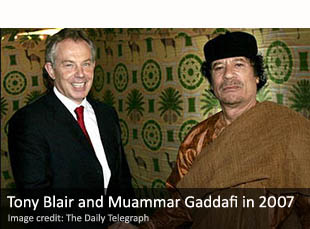
By JOSEPH FITSANAKIS | intelNews.orgTony Blair and Muammar Gaddafi in 2007
British spy agencies had close operational links with their Libyan counterparts during the rule of Colonel Muammar al-Gaddafi, and even allowed Libyan spies to operate on British soil, according to documents. The Libyan government files, unearthed in the North African country following the fall of the Gaddafi regime in 2011, allegedly reveal a degree of cooperation between London and Tripoli that goes far beyond what has been publicly acknowledged. According to London-based newspaper The Guardian, which saw the documents, intelligence agencies from the two countries launched a series of joint operations between 2006 and 2011, aimed at political enemies of the Libyan ruler, many of whom were thought to have links with al-Qaeda. In an article published on Friday, The Guardian said that the Security Service (commonly known as MI5), invited Libyan intelligence operatives to Britain and allowed them to spy on enemies of the Gaddafi regime who were living there, having been granted political asylum by the British government. The paper said that the Libyan intelligence officers were even allowed to “intimidate a number of Gaddafi opponents” who were trying to organize anti-Gaddafi campaigns on British soil. In return, the Libyan government allowed MI5 and the Secret Intelligence Service (MI6) access to captured anti-Gaddafi dissidents in Libya, while the latter underwent interrogation that almost certainly involved torture. The British paper said the unearthed documents, which come straight from the archive vaults of the Gaddafi government, are being used in a lawsuit filed in Britain against MI5, MI6, as well as against a number of British government departments, by former anti-Gaddafi dissidents. The plaintiffs, all members of the Libyan Islamic Fighting Group (LIFG), which tried to depose Gaddafi in the years prior to his death, claim that evidence against them was obtained through torture in Libyan prisons. They also claim that British intelligence agencies knew they were being tortured when they cooperated with the Libyan intelligence services that had captured them. In 2014, a former senior leader of LIFG, Abdul-Hakim Belhaj, won the right to sue the British government over his claim that he was tortured by Libyan intelligence operatives with the cooperation of British and American intelligence agencies. In 2012, another prominent Libyan political dissident, Sami al-Saadi, was awarded £2.2 million ($3.5 million) by a British court, after claiming that he underwent torture in Libya following his abduction in a joint British/Libyan/American intelligence operation.

Britain’s MI6 appoints new director amidst mounting global crises

Alex YoungerBy JOSEPH FITSANAKIS | intelNews.org
Britain’s Secret Intelligence Service (SIS, also known as MI6) has announced the appointment of a new director at a period that some see as the most critical for the agency since the end of the Cold War. The British Foreign and Commonwealth Office said in a brief statement on Saturday that Alex Younger will be replacing Sir John Sawers, who earlier this year announced he would be stepping down from the post. Prior to his appointment, Younger, 51, held the position of chief of global operations, which is considered the number two position at MI6. The Foreign Office statement described Younger as a “career SIS officer” who has worked for the agency since 1991, when he joined from the Scots Guards regiment of the British Army. He holds an economics degree and has served with MI6 in the Middle East, Europe, and Afghanistan, where he represented the agency as its most senior officer in the country following the US-led military invasion of 2001. Upon his return to the United Kingdom, Younger directed MI6’s counterterrorism preparations in the lead-up to the 2012 Summer Olympics in London. Some observers noted on Sunday that the new director’s appointment comes at a crucial period for Britain’s principal external intelligence agency, as it prepares to expand its operations in Iraq and Syria, in response to the growth of the Islamic State there. Additionally, British intelligence is refocusing on Eastern Europe, as the crisis in Ukraine threatens to further-damage relations between East and West, which appear to be on their direst state since the Cold War. Younger’s appointment will be seen as a reaffirmation by the government of the work of Sir John, who has led MI6 for four years. Many were surprised when Sir John, who was a diplomat, not an intelligence officer, was named as director of MI6 in 2010. It was said at the time that his appointment was meant to be seen as a public response by the government over strong accusations that the agency had seriously underperformed in the run-up to the 2003 invasion of Iraq. Sir John has tried to restore MI6’s reputation and has been particularly noted for his public appearances, which included lectures and speeches at parliamentary hearings. Read more of this post

Ex-MI6 counterterror chief urges caution in tackling ISIS threat

Richard BarrettBy IAN ALLEN | intelNews.org

Britain should not hurriedly change its laws to counter the perceived danger posed by homegrown militants that have joined the Islamic State, according to the former head of counterterrorism for Britain’s Secret Intelligence Service (MI6). Richard Barrett, a former diplomat, served as Director of Global Counter Terrorism Operations for MI6, Britain’s foreign intelligence agency, and is considered an international authority on counterterrorism. He told The Guardian newspaper that it would be wrong for the British government to introduce legislation effectively criminalizing travel to Iraq or Syria by British subjects. Barrett was responding to a newspaper article by London mayor Boris Johnson, who criticized Britain’s conservative government for not taking active steps to prevent British citizens form traveling to Syria and Iraq in order to join the Islamic State, also known as the Islamic State of Iraq and al-Sham, or ISIS. Johnson said he supported calls for British members of the Islamic State to be stripped of their British citizenship, even if that meant they would be left stateless —a violation of United Nations law. The London mayor further suggested that all British citizens travelling to Syria and Iraq without first notifying the government, should be legally considered as having traveled there “for a terrorist purpose”. He added that the burden should be on them to prove that they were “acting innocently” while abroad. But Barrett dismissed Johnson’s proposals, saying that they would cancel age-old principles of British common law and could potentially criminalize British citizens who traveled to the Middle East for legitimate purposes. Read more of this post

British spy chiefs ‘warn against’ Western military action in Ukraine

Map of UkraineBy IAN ALLEN | intelNews.org
The heads of British intelligence agencies are said to have advised London that interfering militarily in Ukraine would likely prompt a violent Russian response. The Sunday People said last weekend that Whitehall has been advised a Western military interference in Ukraine would “risk spiraling into an all-out war with Russia”. The Labour-supporting paper, which is published by the Trinity Mirror group, claimed that the head of MI6, Sir John Sawers, is understood to have told British Prime Minister David Cameron that the Russian government “will not stand idly by” if Western troops enter Western Ukraine, ostensibly to prevent westward military advances by Russian forces. One “senior source” told The People that the message delivered to Whitehall was that “it’s not worth starting World War Three over Ukraine”. The briefing appears to rest on intelligence acquired from sources in Russia, as well as by MI6 operatives on the ground in eastern Ukraine, which, according to the paper, “have been moving around [eastern Ukraine] covertly, monitoring border crossing points and towns where Russian support is strongest”. Meanwhile on Monday the United States Department of State distributed an 11-page document with photographs alleging that Russian Spetsnaz (special purpose forces) troops are among the occupiers of government buildings in eastern Ukraine. The same document was distributed last week by Ukrainian officials at a meeting of the Organization for Security and Co-operation in Europe. Early on Tuesday, US Vice President Joe Biden, who is visiting Ukrainian capital Kiev, pledged $50 million to help the country’s government carry out unspecified “political and economic reforms”. About a fifth of that amount has been earmarked to help fund Ukraine’s presidential election in late May of this year. Read more of this post

News you may have missed #860

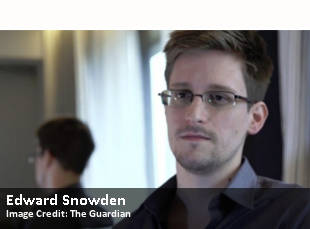
Edward SnowdenBy IAN ALLEN | intelNews.org
►►Top US-backed rebel commander flees Syria. General Salim Idris of the Free Syrian Army, who was the most senior Western-backed rebel commander in Syria, has fled the country amid growing infighting with Islamist rebels, American officials have said. The rebel military leader fled into Turkey and flew to Doha, Qatar on Sunday, after Islamist rebel groups took over his headquarters and warehouses of US-supplied military gear along the border between Turkey and Syria.
►►NSA co-worker calls Snowden ‘genius among geniuses’. Forbes magazine’s Andy Greenberg says he was contacted by a former co-worker of NSA technical expert Edward Snowden, who described the defector as “a principled and ultra-competent, if somewhat eccentric employee, and one who earned the access used to pull off his leak by impressing superiors [at NSA] with sheer talent”. The unnamed source continued: “that kid was a genius among geniuses […], I’ve never seen anything like it”.
►►Iran claims to have captured MI6 spy. Iran says it has captured a spy working for British intelligence agency MI6 in the south-eastern city of Kerman. The head of Kerman’s revolutionary court said the alleged spy had admitted being in contact with four British intelligence officers 11 times, both inside and outside the country. He said the accused was now on trial and had confessed. The nationality of the alleged spy is not yet known. The UK Foreign Office said it did not comment on intelligence matters.

Further evidence shows Litvinenko worked for MI6 when killed

Alexander LitvinenkoBy JOSEPH FITSANAKIS | intelNews.org
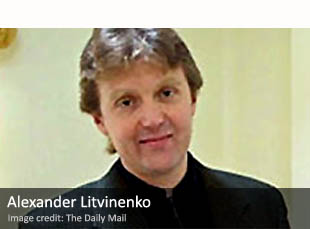
In 2012, a court in the United Kingdom was told that former KGB officer Alexander Litvinenko, who died of poisoning in 2006, had been working for British and Spanish intelligence when he was killed. Now British newspaper The Independent says it has proof that the late Russian spy provided “expert analysis” on Russian politics for British intelligence, shortly before his death. Litvinenko was an employee of the Soviet KGB and one of its successor organizations, the FSB, until 2000, when he defected with his family to the UK. He soon became known as a vocal critic of the administration of Russian President Vladimir Putin. In 2006, Litvinenko came down with radioactive poisoning soon after meeting a former KGB/FSB colleague, Andrey Lugovoy, at a London restaurant. Many suspect that the Russian government is behind Litvinenko’s murder. But the dead spy’s family has argued for years that his killers did not only kill an intelligence defector, but also an officer of British intelligence. On Thursday, The Independent said it had seen a diplomatic memo that was given to Litvnenko for analysis by British external intelligence agency MI6. The document, known in the British Foreign Office lingo as a “diptel” (diplomatic telegram), was dispatched to several British embassies around the world in 2000. It includes a descriptive analysis of a confidential meeting in London between British intelligence officials and Sergei Ivanov. Currently a political powerhouse in Putin’s administration, Ivanon was at the time an unknown quantity in Western circles. He had entered politics after having spent nearly two decades working for Soviet and Russian external intelligence. The diptel seen by The Independent outlines the exchange of views between Ivanov and the British officials during the meeting, and evaluates his stance on a broad range of issues, ranging from the rise of Islamic militancy, to China, the Middle East, and the role of the North Atlantic Treaty Organization. Read more of this post

Ex-MI6 head ‘might air memoirs’ to set Iraq War record straight

Sir Richard DearloveBy JOSEPH FITSANAKIS | intelNews.org |
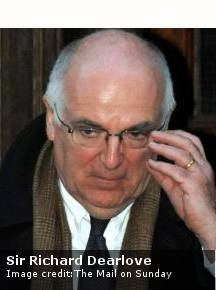
The former director of Britain’s external spy service has hinted he might publish his personal account of the decisions that led to Britain’s entry in the Iraq War, if he is criticized in a public inquiry on the subject. Sir Richard Dearlove led the UK’s Secret Intelligence Service, known as SIS or MI6, from 1999 until his retirement in 2004. He is currently on sabbatical from his post as Master of Cambridge University’s Pembroke College, in order to research and author his autobiography. The memoir is believed to be largely preoccupied with the intelligence that led to the British government’s decision to enter the United States-led 2003 war in Iraq. Sir Richard had previously indicated that he intended to make his memoirs posthumously available as a resource to academic researchers. But in an email to British tabloid The Mail on Sunday, he hinted he would consider publishing his personal account if he finds himself criticized by the Iraq Inquiry. Known in Britain as the Chilcot Inquiry, after its Chairman, Sir John Chilcot, the Iraq Inquiry was commissioned by the British government in 2009 to investigate the executive decisions that led the country to participate in the invasion of Iraq. One of the inquiry’s many goals was to evaluate the intelligence provided by MI6 to the government of Prime Minister Tony Blair. There have been rumors that the inquiry’s declassified findings, which are scheduled for publication soon, are critical of MI6’s performance and place particular blame on Sir Richard’s role in the debacle. Read more of this post

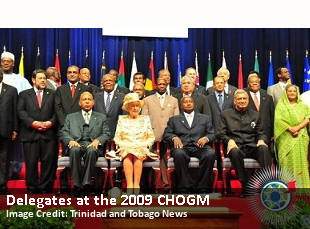
UK planned to spy on 2009 Commonwealth heads of state meeting

Delegates at the 2009 CHOGMBy JOSEPH FITSANAKIS | intelNews.org |
British intelligence agencies had plans to spy on a British Commonwealth meeting, which was attended by Queen Elizabeth and the President of France, among other heads of state. The plans to spy on the meeting, which was held in 2009, are revealed in a document disclosed to The Guardian newspaper by American whistleblower Edward Snowden. Earlier this month, Snowden, a former technical assistant for the United States Central Intelligence Agency (CIA), disclosed the existence of PRISM, a clandestine national security electronic surveillance program operated by the United States National Security Agency (NSA). The Guardian said on Sunday that it had in its possession a page from an internal classified document given to NSA by Britain’s General Communications Headquarters (GCHQ), which is tasked with collecting signals intelligence. The document apparently outlines plans to spy on international delegates in order to “give UK ministers an advantage in talks with their Commonwealth counterparts”. Some “key intelligence [collection] requirements” at the summit, which took place in 2009 in Trinidad, included “intelligence on South Africa’s views on Zimbabwe”, as well as “climate change reporting”. The document, says The Guardian, also sets out a schedule for various British intelligence agencies to arrive and begin operations in the South American island-nation. GCHQ is instructed to initiate its surveillance activities following the arrival of the international delegates. On the other hand, the Secret Intelligence Service (SIS, also known as MI6), which is Britain’s primary external intelligence agency, is expected to set up operations in Port of Spain several days prior to the event. Read more of this post

MI6 archives reveal plans for WWII and Cold War black operations

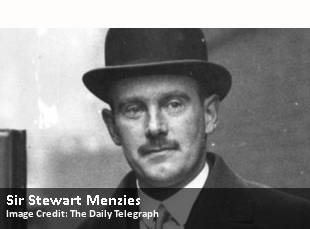
Sir Stewart MenziesBy JOSEPH FITSANAKIS | intelNews.org |
Recently declassified British archives reveal a host of audacious plans for covert operations aimed at Nazi-occupied Europe during wartime and, after 1948, inside the Soviet Union. The plans, proposed by British intelligence officials, ranged from relatively innocuous psychological operations to assassinations of key political figures. The wartime plans were proposed in 1944 by Charles Peake, a British intelligence officer detailed to the headquarters of General Dwight Eisenhower. The iconic American military commander was in charge of plans for Operation OVERLORD, the allied troop landings on the beaches of Normandy in northern France. According to documents released last week by the United Kingdom National Archives, Peake’s proposal was entitled “Assassination Priorities for OVERLORD”. It contained an extensive list of senior German and French Axis officials that should be targeted for assassination in preparation for the D-Day landings. The hit list included “certain Germans in key positions in France”, notably Field Marshals Gerd von Rundstedt and Erwin Rommel. It also incorporated several senior members of France’s Nazi-controlled Vichy administration under Marshal Philippe Pétain. The proposal, however, was quickly shot down by no other than General Stewart Menzies, Director of the Secret Intelligence Service (known as MI6), who feared that intrusive covert actions by allied operatives would cause brutal reprisals against allied prisoners of war. Ironically, Menzies, known in government simply as “C”, drafted an ever more ambitious plan for black operations after the end of World War II, this time targeted at the Soviet Union. Read more of this post

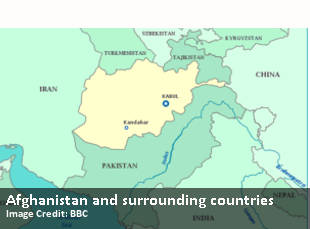
Alongside CIA, British spies also bankrolling Afghan government

AfghanistanBy JOSEPH FITSANAKIS | intelNews.org |
British officials have publicly admitted that senior members of the Afghan government receive “direct cash payments” from London on a regular basis. British newspaper The Daily Telegraph reported over the weekend that the funds have been delivered to Afghan cabinet members “periodically” ever since 2001, when British troops entered Afghanistan alongside their American colleagues. The revelation comes only a week after the publication of a New York Times exposé, which disclosed that the United States Central Intelligence Agency (CIA) had delivered “tens of millions of dollars [in] off-the-books cash” to Afghanistan’s governing elite. The newspaper added that there was little evidence that such bribes had helped promote Washington’s interests in the country in any substantial way. According to British officials, London has channeled “a smaller fraction” of the amount paid by the CIA. The British funds are delivered to senior members of the government of Hamid Karzai by MI6, Britain’s foremost external intelligence agency. The funds are then allegedly spent on what Afghan government officials call “special projects”, implying that they are used as bribes to pacify local warlords, many of which are ethnic Pasthuns and belong to the Taliban. Last week, following The New York Times revelations, Mr. Karzai told the loya jirga —Afghanistan’s grand assembly— that there was “nothing unusual” about the CIA funneling money to his government. He added that he had implored the CIA’s Station Chief in Afghan capital Kabul to continue making regular payments despite popular concern in the US, as the funds were vital to the stability of the government: “we really need it”, he said. Read more of this post

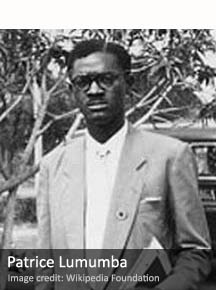
Intelligence historian calls on MI6 to declassify Lumumba files

Patrice LumumbaBy JOSEPH FITSANAKIS | intelNews.org |
An historian whose book on British intelligence prompted the claim of Britain’s complicity in the 1961 assassination Patrice Lumumba has called for MI6 to declassify its secret files on the late Congolese Prime Minister. Calder Walton is a Cambridge University-educated intelligence historian whose first book, Empire of Secrets, examines the activities of British intelligence in the last days of the British Empire. A review of the book, published by Bernard Porter in The London Review of Books in March, prompted a claim that London had organized the assassination of the iconic pan-Africanist activist, who in 1960 had become Congo’s first democratically elected Prime Minister. Many believe that the United States had a hand in Lumumba’s assassination, which was aimed at preventing him from establishing close relations between uranium-rich Congo and the Soviet Union. But British Labour politician and Life peer Lord Lea of Crondall said in a letter published in response to the review of Walton’s book that Lumumba had been killed with the help of MI6, Britain’s primary external intelligence service. He claimed he had been told so by the late Baroness Park of Monmouth, who at the time of Lumumba’s death headed the Leopoldville station of MI6. In his book, Walton, who until 2009 served as research assistant for Professor Christopher Andrew’s authorized official history of MI5, Defence of the Realm, says it is unclear who organized Lumumba’s assassination. He argues that “at present, we do not know […] whether British plots to assassinate Lumumba […] ever amounted to anything”. But speaking to The London Times on Wednesday, the historian and author urged MI6 to declassify its internal archives on the Congolese leader. Read more of this post