France launches probe into spying on media by Moroccan intelligence services
July 21, 2021 Leave a comment
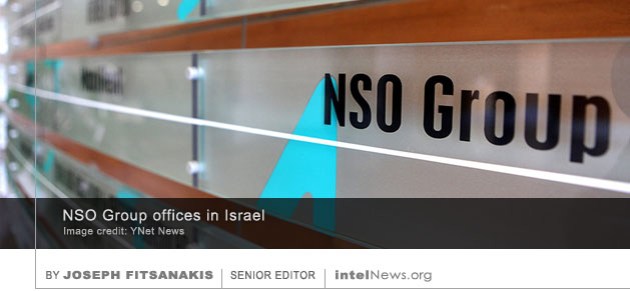
PROSECUTORS IN FRANCE HAVE opened an investigation into claims that the intelligence services of Morocco spied on French journalists’ phones, using a controversial surveillance software marketed by an Israeli firm. Since 2018, IntelNews has covered the controversial spyware, Pegasus, and its maker, NSO Group Technologies, an Israeli digital surveillance company based in Herzliya, a small coastal town located north of Tel Aviv.
The Pegasus surveillance software is able to install itself on targeted telephones without requiring their users clicking a link, or downloading an application. It then provides the spying party with near-complete control over the targeted telephone. Among other things, it gives the spying party the ability to browse through the telephone’s contents, including photographs and videos, record telephone conversations, as well as activate the telephone’s built-in microphone and camera at any time, without its user being aware that these devices are on.
Earlier this week, an investigative report published by a consortium of newspapers, including The Washington Post (United States), Le Monde (France) and The Guardian (United Kingdom), claimed that Pegasus’ victims number in their tens of thousands. Reporters said they had analyzed a leaked list of 50,000 victims of Pegasus, which include senior government officials, lawyers, labor leaders, human-rights activists and investigative journalists in almost every country in the world.
The recent revelations have made headlines in France, where the names of well-known journalists from several newspapers, magazines and news agencies feature on the leaked list of Pegasus’ victims. On Tuesday, the French investigative website Mediapart filed a legal complaint, claiming that two members of its staff, including its founder, Edwy Plenel, had been spied on by the Moroccan intelligence services through the Pegasus software. Another French investigative outlet, the newspaper Le Canard Enchaine, said it would also launch a complaint against the intelligence services of Morocco. More media outlets are expected to follow suit.
NSO Group Technologies denies that its Pegasus software is being used maliciously, and claims that it only sells the software to government agencies who use it in legitimate law enforcement investigations. The government of Morocco also denied the claims against its intelligence agencies, saying that it “never acquired computer software to infiltrate communication devices”.
However, the Office of the Paris Prosecutor said on Tuesday that it had launched an official investigation on the use of the Pegasus software by Moroccan intelligence. In a statement published on its website, the prosecutor’s office said it would examine the complaints by media companies from the perspective of as many as 10 possible charges, including criminal association, fraudulent access to personal electronic devices, and breach of personal privacy.
► Author: Joseph Fitsanakis | Date: 21 July 2021 | Permalink
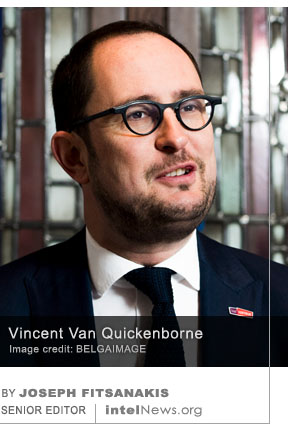 BELGIUM’S LARGEST MOSQUE has been infiltrated by Moroccan intelligence, according to the Belgian minister of justice, who allegedly consulted the country’s spy services in making that determination. The announcement has further-strained relations between the Belgian government and the country’s Muslims, which account for about 5% of the Belgian population.
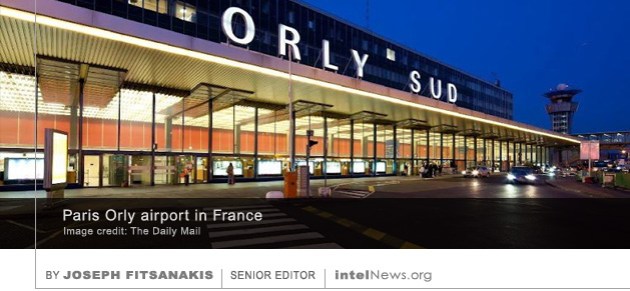 A French police officer has been charged with illegally sharing secret government documents in an espionage case involving France’s border police and diplomats from Morocco and Algeria. According to information published by the French daily Libération, the police officer supplied Moroccan intelligence with classified information about France’s border-control policies and procedures. He also gave the Moroccans information about the movements in France of Moroccan nationals and senior Algerian government officials.
 Israel’s intelligence services had access to recordings of secret talks between Arab heads of state in 1965, which helped the Jewish state win the Six-Day War, according to the former director of the country’s Military Intelligence Directorate. The brief but important conflict, which is also known as the Third Arab-Israeli War, broke out on June 5, 1967, when the Egyptian, Syrian and Jordanian armies attacked Israel. But within hours the Jewish state had managed to decimate the assailants’ air forces, and went on to deliver fatal blows to its adversaries. By the end of the war, Israel’s territory had increased threefold and Israeli troops were in control of the West Bank, the Gaza Strip and the Sinai Peninsula, among other areas.
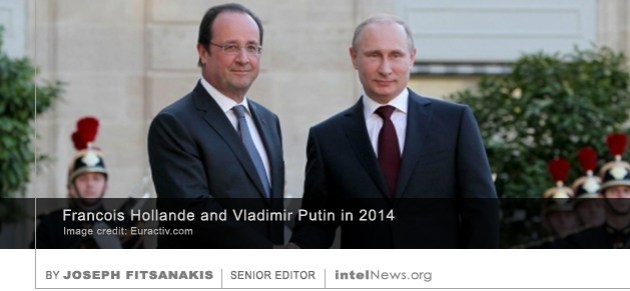 The United States and Russia, which have traditionally been cautious about sharing Middle East-related intelligence with France, have both announced that they will begin giving classified information to Paris. On Wednesday, France’s Defense Minister Jean-Yves Le Drian
 By IAN ALLEN | intelNews.org |








 intelNews.org
Qatargate corruption scandal probe widens to include Moroccan spy services
January 2, 2023 by Joseph Fitsanakis 1 Comment
On December 9 and 10, Belgian and Italian police arrested a dozen politicians, European Parliament aides, civil servants, lobbyists, and members of their families. Over €2 million in cash and other assets has since been seized by authorities, as a Europe-wide investigation continues. Those arrested included Eva Kaili, vice president of the European Parliament, which is among the core legislative bodies of the European Union. Kaili and her co-conspirators are accused of selling their ability to influence European Union policies on Qatar, in exchange for cash and other perks. Although the government of Qatar vehemently denies having a role in the scandal, it is widely believed that operatives linked to Qatari authorities facilitated the bribes.
During the past week, however, several reports in European news outlets have been alleging that, in addition to Qatar, the Kingdom of Morocco also appears to have been involved in parallel efforts to buy influence within the European Parliament. Early clues of this development surfaced during the week of December 12 in the Belgian broadsheet Le Soir and the Italian daily La Republica. The reports focused on an intelligence operative codenamed M118, who allegedly worked for the General Directorate for Studies and Documentation (DGED), the foreign spy service of Morocco.
Last week, a new report in the German newsmagazine Der Spiegel supported the theory that M118 is Mohamed Belahrech. Belahrech is allegedly an identified DGED operative, who is believed to have recruited two members of the European Parliament from Italy, Antonio Panzeri and Andrea Cozzolino, as well as Francesco Giorgi, Kaili’s Italian partner. Giorgi, a key figure in Qatargate, remains in custody. Der Spiegel also claims that Abderrahim Atmun, Morocco’s ambassador to Poland, led the Moroccan government’s efforts to recruit the three Italians. According to the report, the three were in direct communication with Mohamed Yassine Mansouri, director general of the DGED.
► Author: Joseph Fitsanakis | Date: 02 January 2023 | Permalink
Filed under Expert news and commentary on intelligence, espionage, spies and spying Tagged with Belgium, corruption, covert operations, DGED (Morocco), European Parliament, European Union, influence operations, Morocco, News, Qatar