Poisoned Russian spy advised Spanish intelligence, say officials
September 7, 2018 2 Comments
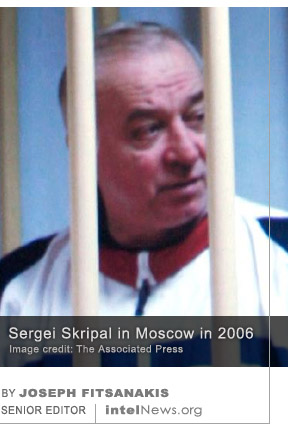 Sergei Skripal, the Russian double agent who was poisoned with a military-grade nerve agent in England earlier this year, worked with Spanish intelligence after his defection to the United Kingdom, according to sources. Skripal, a former military intelligence officer who spied for Britain in the early 2000s, had kept a low profile while living in the English town of Salisbury. He was resettled there in 2010 by the British Secret Intelligence Service (MI6), after he was released from a Russian prison. But he and his daughter Yulia made international headlines in March, after they were poisoned by a powerful nerve agent that nearly killed them. The attack has been widely blamed on the Russian government, but the Kremlin denies that it had a role in it.
The attempt to kill Skripal surprised some intelligence observers due to the fact that the Russian government had officially pardoned the double agent prior to exchanging him with Russian spies who had been caught in the West. As intelNews wrote in May, “typically a spy who has been pardoned as part of an authorized spy-swap will not need to worry about being targeted by the agency that he betrayed. If it indeed tried to kill Skripal, the Russian government may therefore have broken the unwritten rules of the espionage game”. Eventually, however, it was revealed that, instead of retiring after his defection to the UK, Skripal traveled extensively in Eastern Europe, where he advised local intelligence agencies on how to defend against Russian espionage. The double agent participated in MI6-sponsored events in which he briefed intelligence practitioners in at least two countries, Estonia and the Czech Republic. These activities may have convinced the Kremlin that Skripal had broken the unwritten conditions of his release, namely that he would not participate in any intelligence-related activities against Russia.
Now The New York Times has claimed that, in addition to consulting for Czech and Estonian spies, Skripal also visited Spain, where he met with officers from the country’s National Intelligence Center (CNI). Citing an unnamed Spanish former police chief and Fernando Rueda, a Spanish intelligence expert, The Times said that Skripal advised the CNI about the activities of Russian organized crime in Spain and the alleged connections between Russian mobsters and the Kremlin. When he traveled to Spain under MI6 protection, said the paper, Skripal was effectively returning to the place where he had been initially recruited to spy for the British. Skripal spent several years in Spain, said The Times, serving as a military attaché at the Russian embassy in Madrid. It was there that he began to work secretly for MI6. However, the precise timing of Skripal’s return trips to Spain after 2010, as well as the content of his discussions with Spanish intelligence officials, remain unknown, according to The Times.
► Author: Joseph Fitsanakis | Date: 07 September 2018 | Permalink








 intelNews.org
Catalan pro-independence leader’s phone hacked using Israeli spy software
July 15, 2020 by Joseph Fitsanakis Leave a comment
An estimated 50 percent of the population of the autonomous Spanish region of Catalonia wishes to secede from Spain. However, Madrid refused to recognize the legitimacy of an independence referendum organized by secessionist activists in 2017. The stalemate led to massive protests throughout the country, which were marred by violence and thousands of arrests, as Spain faced its deepest political crisis since the 1970s. In response to the protests, the central government suspended Catalonia’s autonomous status and arrested many of the independent movement’s leaders. Many of them have been given lengthy jail terms, while others remain abroad and are wanted by the Spanish government for promoting insurrection.
On Monday, British newspaper The Guardian and Spanish newspaper El País revealed the results of a joint investigation, according to which the smartphones of senior Catalan pro-independence politicians were targeted by hackers in 2019, and possibly even earlier. Among them was Roger Torrent, who serves as the speaker of the Parliament of Catalonia. The newspapers said he had been alerted to the hacking by cybersecurity employees of WhatsApp, a Facebook-owned company whose application was allegedly used by the hackers to take control of Torrent’s phone.
The software that was allegedly used to hack the Catalan politicians’ phones was Pegasus. It was built by NSO Group, an Israeli software development company that specializes in surveillance technologies. According to WhatsApp, which sued NSO Group in 2019, NSO Group specifically developed the Pegasus hacking platform to enable its users to exploit flaws in WhatsApp’s servers and to gain access to the telephone devices of targeted individuals. Pegasus allegedly allows its users to covertly operate a compromised phone’s camera and microphone. Read more of this post
Filed under Expert news and commentary on intelligence, espionage, spies and spying Tagged with Catalonia, cellular telephony, National Intelligence Center (Spain), News, NSO Group Technologies, Pegasus software, Spain, telephone hacking, WhatsApp