News you may have missed #539

Milt Bearden

Milt Bearden

By IAN ALLEN | intelNews.org |
►►Former CIA officer urges US-Pakistan reconciliation. During the 1980s, CIA officer Milt Bearden managed the CIA’s covert assistance to the Mujahedeen, who were fighting the Soviet army in Afghanistan. This means Bearden was dealing with Pakistan’s Inter-Services Intelligence directorate (ISI) on an almost daily basis. He has now written an article for Foreign Policy journal, in which he advises CIA and ISI officials to “cut through the shrillness, the schoolyard taunts that characterize […] the current feud between their services; decide on what is worth fixing; agree on important common goals; and get to work”. He also reminds policymakers in Washington that America’s “influence in the Indian Ocean is slipping as China and India flex their growing economic muscle”, and that the US needs Pakistan’s assistance to remain relevant in that part of the world. ►►Pakistan spy director comes to US following aid cut. Meanwhile, Washington’s decision to withhold nearly a billion dollars in annual military aid to Pakistan has shaken up Islamabad. The Associated Press reports that high-level US-Pakistan meetings are quickly “unfolding”. One such meeting involves ISI’s fiery Director, Lt. Gen. Ahmed Shuja Pasha, who just made an emergency visit to Washington, reportedly “for talks”. Pakistani officials insist, however, that “the trip was planned for some time”. Sure. In case you are wondering, Pasha’s visit went “very well“, according to both US and Pakistani officials. ►►Secret CIA site in Somalia revealed. While most intelligence observers are concerned with the latest US-Pakistan spat, Jeremy Scahill, one of America’s most tireless investigative reporters, has revealed that the CIA maintains a large secret site in Somalia. Read more of this post

News you may have missed #538

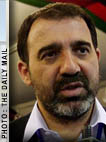
Wali Karzai

Wali Karzai

By IAN ALLEN | intelNews.org |
►►Egyptian diplomat dead in London after bizarre suicide attempt. Police in London are trying to solve the mysterious apparent suicide of Ayman Mohammed Fayed, a 41-year-old employee of the Egyptian embassy, who plunged to his death from one of the embassy’s third-floor windows last week. Embassy officials said he did so after hurriedly signing a brief suicide note to his family. Interestingly, one witness saw him trying to get back into the building from the window, apparently having changed his mind about killing himself. But, says The Daily Mail, he seems to have “lost control and fell”. The death does not seem to be related to the political changes that have taken place in Egypt this year. ►►CIA agent Wali Karzai dead in Afghanistan. Another death, that of Afghan President Hamid Karzai’s brother, has featured all over the news media in the past few days. Ahmed Wali Karzai, Afghan drug lord and influential strongman, was shot dead by his bodyguards last Tuesday. Wali Karzai’s role as a CIA agent is less widely advertised in obituaries (with a few notable exceptions). IntelNews readers will remember that, in October of 2009, The New York Times revealed that Wali Karzai had been financially sustained by the CIA ever since the initial US invasion of Afghanistan, in 2001, and that he was still —as of 2009— receiving “regular payments” from the Agency.  Read more of this post
News you may have missed #537 (bin Laden edition)

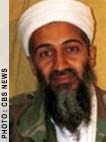
Osama bin Laden

Osama bin Laden

By IAN ALLEN | intelNews.org |
►►Ex-CIA chief speaks on al-Qaida after Osama. The killing of Osama bin Laden will force al-Qaeda to limit its ambitions and scope of its operations, according to former CIA and NSA director Michael Hayden. General Hayden’s comments on numerous issues tend to make the news almost every other week. In his latest interview, with The Associated Press, Hayden expressed the opinion that al-Qaeda’s “future attacks are going to be more numerous but less complex, less well organized, less likely to succeed, and less lethal if they do succeed”. ►►CIA organized fake vaccination drive to get bin Laden family DNA. Speaking of Osama bin Laden, British newspaper The Guardian reported earlier this week that the CIA tried to collect DNA evidence on the late al-Qaeda founder by running a phony vaccination program in Abbottabad, the quiet Pakistani town where bin Laden was believed to be hiding along with his family. But Shakil Afridi, the Pakistani doctor who administered the vaccination program, failed to get access to bin Laden’s family DNA, even though he managed to enter the family’s compound, said the paper. It is worth noting that, as soon as Pakistani authorities learned of the fake vaccination program, they arrested Dr Afridi for collaborating with a foreign intelligence agency. ►►CIA moves to protect key analyst in bin Laden raid. Bin Laden may be dead, but it seems that he still haunts the CIA. The Agency had to move one of its senior analysts undercover this week, after he was identified in a photograph that was published by US media, following the Obama administrator’s celebratory announcement of the al-Qaeda leader’s assassination. The photo showed President Obama and other national security officials gathered in the White House situation room on the night of the bin Laden raid. Most media outlets have been referring to the analyst by his middle name, John.

News you may have missed #536 (US edition)

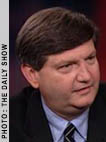
James Risen

James Risen

By IAN ALLEN | intelNews.org |
►►US federal agencies sitting on decade-old FOIA requests. In the United States, as Freedom of Information Act (FOIA) requests are growing, a new study has found that eight government agencies are sitting on requests filed over ten years ago. According to the Knight Open Government Survey, conducted by the National Security Archive at George Washington University, the single oldest request is now 20 years old. FOIA requires agencies to process and respond to a request within 20 business days. ►►US journalist seeks to avoid testifying at CIA agent’s trial. A sizeable percentage of FOIA requests are filed by journalists, who are also on the receiving ends of most intelligence-related ‘leaks’ in the United States. One of those journalists, James Risen, of The New York Times, has been subpoenaed by the Obama administration to testify at the trial of Jeffrey Sterling. Sterling is a former CIA employee, who has been arrested under the Espionage Act for allegedly revealing details about Operation MERLIN to Risen. MERLIN was a botched US effort to provide Iran with a flawed design for building a nuclear weapon, in order to delay the alleged Iranian nuclear weapons program. Times lawyers argue that the First Amendment should shield Risen from having to testify at Sterling’s trial. ►►US intel research agency works on 3-D holographs. Also in the United States, IARPA, the US intelligence community’s technical research wing, has announced that it is working on a system that lets intelligence analysts collaborate with each other using “interactive 3-D holographic displays”. Through this system, IARPA hopes that intelligence personnel could take simultaneous virtual strolls through real-life target locations, help plan raids, etc.

News you may have missed #535

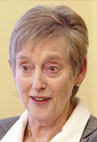
Stella Rimington

Stella Rimington

By IAN ALLEN | intelNews.org |
Last Monday’s Daily Telegraph carried a lengthy interview with Dame Stella Rimintgon, who headed MI5, Britain’s domestic intelligence agency, from 1992 to 1995. The interviewer notes that Rimington’s answers are often “so long you forget what you asked in the first place”, and when it comes to questions on MI5, she appears “practiced in the use of abstract generalities. I suspect is intentional”, she adds. No kidding. On July 10, the same newspaper revealed that, in the 1980s, an internationally renowned cancer researcher used his post at Britain’s Imperial Cancer Research Fund laboratories to steal samples and equipment on behalf of Eastern Bloc intelligence services. Jiri Bartek was working for the StB, Czechoslovakia’s secret intelligence service, says the paper. The paper notes that the revelation, which is based on declassified documents from the time, shows that Bartek (codename ‘Raki’), was probably “only one of dozens of Czech spies who used scientific positions in the West as cover for espionage”. Meanwhile, in South Africa, the country’s troubled National Intelligence Agency (NIA) has been hit an embarrassing revelation. It appears that Andre Vorster, a NIA specialist technical adviser at the agency’s Pretoria headquarters, claimed to have two doctorate degrees, both of which are fake. He also tried to swindle a leading British charity foundation by claiming to be acting on behalf of South African President Jacob Zuma. Vorster’s duties at the NIA included countersurveillance and the safeguarding of South African embassies and key installations around the world.

News you may have missed #534

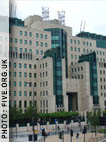
MI6 HQ

By IAN ALLEN | intelNews.org |
According to extracts from the diary of Alastair Campbell, British Prime Minister Tony Blair’s communications director from 2000 to 2003, officials from the MI6 intelligence agency told Blair that France and Germany aimed to “exploit his feud” with then Chancellor of the Exchequer Gordon Brown. Gotta love European unity. In Kuwait, meanwhile, the oil state’s Al-Shahed daily quotes “knowledgeable sources”, who claim that “a lot of spy networks exploit the Kuwaiti environment” and use the country as a transit point to spy on neighboring countries. Hopefully the Kuwaitis will not emulate authorities in Dubai, which in March of last year called on all foreign spies “to leave the region within a week. If not”, they warned, “we will cross that bridge when we come to it”. In the nearby state of Israel, public opinion is still divided about former Mossad chief Meir Dagan’s criticism of the Netanyahu government. As Bloomberg columnist Jeffrey Goldberg notes, Dagan has “called into question the wisdom –and, privately, even the sanity– of any Israeli leader who contemplates a preemptive strike on Iran’s nuclear facilities”. But why is he doing it, and could it backfire?

News you may have missed #533

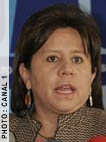
María del Pilar Hurtado

María Hurtado

By IAN ALLEN | intelNews.org |
The government of Colombia will –finally– officially request from Panama the extradition of Maria Pilar Hurtado, former director of Colombia’s disgraced DAS intelligence agency, who was granted political asylum in the Central American country last year. The Colombian government has been contemplating this move for some time, as the investigation into illegal activities by the DAS is progressing extremely slowly. In Iran, the government says that it plans to try dozens of American intelligence officials in absentia. The announcement has raised the possibility that Tehran may out US spies which the Iranians claim attempted to recruit locals as part of a sophisticated intelligence-gathering operation. One former CIA operative, Glenn Carle, voluntarily came out a few years ago, following retirement, and made news headlines last month, in connection with alleged CIA spying on American academic Juan Cole. Carle, who worked for the CIA for 23 years, in Africa, the Balkans and Latin America, among other locales, has written a book. It focuses on a several-month period he spent questioning a suspected leader of al-Qaeda. The interrogations took place in two countries, which he says he is not permitted to name.

News you may have missed #532

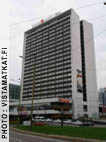
Viru Hotel

Viru Hotel

By IAN ALLEN | intelNews.org |
A new exhibition in Tallinn, called The Viru Hotel and the KGB, showcases the Soviet KGB operations in the Estonian capital’s most prestigious Soviet-era hotel. According to the curators, the 23rd floor of the hotel served as the KGB’s operational center in the city. The exhibition focuses specifically on KGB bugging technology during the last stages of the Cold War. Speaking of the Cold War, The Oak Ridger hosts an interesting interview with Francis Gary Powers Jr., son of the CIA pilot who was shot down over the USSR and later captured by the Soviets in 1960. Powers insists his father “never divulged America’s secrets” during his two-year imprisonment in Moscow. Interestingly, declassified documents from that time show that the CIA doubted Powers’ plane had been shot down by the Soviets, and believed the pilot had willingly defected to the USSR. In Canada, meanwhile, a new report to parliament by the Canadian Security Intelligence Service’s (CSIS), claims that cyber-spying is fastest growing form of espionage in the country. The report also states that, as a matter of policy, CSIS views some private-sector cyberattacks as a national security issue.

News you may have missed #531 (US edition)

  • US spy agencies looking into cloud computing. In-Q-Tel, the investment arm of the US intelligence community, recently sunk money into a cloud-based storage company called Cleversafe. The CIA has emerged as one of the US government’s strongest advocates of cloud computing, but some US intel insiders are not so hot on the idea.
  • Obama administration drops most CIA torture probes. So, this is how one of the darkest chapters in US counterterrorism ends: with practically every instance of suspected CIA torture dodging criminal scrutiny. Wired’s Danger Room blog calls it “one of the greatest gifts the Justice Department could have given the CIA as David Petraeus takes over the agency”.
  • US report shows increase in authorized wiretaps. US federal and state applications for orders authorizing or approving the interception of wire, oral or electronic communications increased 34 percent in 2010, compared to the number reported in 2009.

News you may have missed #530

  • Another spy ring reportedly busted in Kuwait. Kuwait has allegedly busted another spy ring, working for the intelligence services “of an Arab country [that] is currently embroiled in political turmoil”, reports Al-Jaridah daily. The paper also said that information gathered by the spy ring was sent to a liaison officer in the embassy of that country. Last April, two Iranians and a Kuwaiti national, all serving in Kuwait’s army, were sentenced to death for belonging to an Iranian spy ring.
  • How defectors come in from the cold. Interesting historical account of how defectors adjust to their new lives, from the BBC’s News Magazine. Sadly, much of the article is about –you guessed it– the Cambridge Five, which the British seem unable to get over, half a century later.
  • UK report says hackers should fight cyber spies. Britain faces losing its position at the leading edge of technology unless new ideas are developed to fight cyber attacks, including recruiting computer hackers to help fight organized cyber crime and espionage by foreign powers. This is the conclusion of a new report by the University College London’s Institute for Security and Resilience Studies.

News you may have missed #529 (analysis edition)

  • Analysis: US Senate backs Petraeus for CIA chief. The US Senate Intelligence Committee on Tuesday unanimously approved General David Petraeus’s nomination to head the CIA. But, asks, The Washington Post‘s Walter Pincus, which Petraeus will arrive at the CIA? The officer or the gentleman?
  • Analysis: US spies can’t stop buying face microchips from China. US military officials have known since 2005 that they have a quality control problem with the microchips they’ve been buying from China. Already, thousands of fake Chinese microchips are crashing American military networks. Last week, the US government finally announced that they want to find a way to spot “trojan horse” chips. What took them so long?
  • Analysis: Has the CIA penetrated Hezbollah? Hezbollah’s admission that it has seized three spies in its ranks, two supposedly recruited by the CIA, is a serious blow to the Iranian-backed movement’s prestige soon after it took control of Lebanon’s government for the first time. On the other hand, it is worth noting that, in recent years, the Lebanese Shiite group has proven near-impenetrable to both the CIA and the Mossad.

News you may have missed #528

News you may have missed #527

  • Has Microsoft broken Skype’s encryption? The US Congress has finally discovered Skype. But the timing may be bad, since there are rumors that Microsoft has found a way to break the encryption behind Skype communications, rendering all Skype calls potentially open to surveillance by governments. The company (Microsoft) has even filed a related patent application. Communications interception experts have been trying for some time to achieve this.
  • Ex-CIA agent loses legal battle over ‘unauthorized’ book. A former CIA deep-cover operative, who goes by the pseudonym ‘Ishmael Jones’, may have to financially compensate the Agency for publishing a book without the CIA’s approval, after a US judge ruled against him. Jones maintains that the CIA is bullying him because of his public criticism of its practices.
  • Family of accused Australian spy seeks support. The family of Australian-Jordanian citizen Eyad Abuarga, who has been charged with being a technical spy for Hamas, have called on the Australian government to do more to help him, with less than a month before he is due to face trial in Israel.

News you may have missed #526

  • Russia convicts colonel of exposing US spy ring. Colonel Alexander Poteyev has received a (relatively lenient) 25-year sentence for exposing a Russian ‘sleeper cell’ network in the United States. The sentence was delivered in absentia, as Poteyev is believed to have defected to the US, where he probably lives under an assumed identity. As he was fleeing Russia in June 2010, he texted his wife: “try to take this calmly: I am leaving not for a short time but forever. I am starting a new life. I shall try to help the children”. Here is the most detailed recent account the Poteyev’s case in English.
  • Libyan defector holed up in luxury hotel. Moussa Koussa, Libya’s former intelligence chief and foreign minister, faced calls last night to return to Britain for prosecution after he was tracked down to a penthouse suite at the Four Seasons Hotel in Doha, the capital of Qatar, where he has been living under the protection of the Qatari security services.
  • New NZ SIGINT spy agency boss named. The government of New Zealand has appointed Simon Murdoch as the acting chief executive and director of the Government Communications Security Bureau (GCSB) intelligence agency.

News you may have missed #525

  • Hacker group LulzSec to disband after attacks on CIA. The publicity-seeking hacker group that has left a trail of sabotaged websites over the last two months, including attacks on law enforcement and releases of private data, said unexpectedly on Saturday it is dissolving itself.
  • NSA veteran publishes book on secretive listening base. Good book review of Inside Pine Gap: The Spy Who Came in From the Desert, written by 23-year US National Security Agency veteran David Rosenberg, who worked for 18 years at the joint US-Australian intelligence facility at Pine Gap, a small technical encampment outside Alice Springs in the Australian outback.
  • Aussie spy agencies feeling budget cuts effect. Australia’s Federal Government has been urged, in a report by the Parliamentary Joint Committee on Intelligence and Security, to review the effects of its cost-saving drive on the country’s intelligence community.