US government report details first-ever drone attack on energy grid

Electrical substation

A REPORT ISSUED BY the United States government last month provides details of what is thought to be the first known attack on the country’s energy infrastructure by an unmanned aircraft system. The report appears in a Joint Intelligence Bulletin (JIB) dated October 28, 2021. The JIB is a collaborative intelligence product of the Department of Homeland Security, the Federal Bureau of Investigation and the National Counterterrorism Center.

The report documents an apparent drone attack that took place on July 16, 2020. The target of the attack was an electrical substation in the state of Pennsylvania. The document does not provide details about the geographic location of the attack, nor does it identify the substation that was targeted. It does, however, give details about the type of commercial drone that was used, which it identifies as a Chinese-built DJI Mavic 2. The DJI Mavic 2 is a compact quadcopter drone, which is popular among aerial photography enthusiasts in the United States. It costs between $1,300 and $4,450, depending on its design and amount of features.

The specific device used in the attack in Pennsylvania had been modified by its operator, most likely in order to cause a short circuit and damage the distribution lines or transformers it came in contact with. The device had a thick copper wire hanging from its body, which was attached with nylon cords. Additionally, the perpetrator of the attack had taken steps to anonymize the device, be removing its quality control markings and other identifying information from it. The camera and internal memory card, which are standard technical features of DJI Mavic 2 drones, had also been removed, according to the report. As a result, the operator of the device has not been identified.

The report concludes that illicit [drone] activity is expected “to increase over energy sector and other critical infrastructure facilities as use of these systems in the United States continues to expand”.

Author: Joseph Fitsanakis | Date: 05 November 2021 | Permalink

CIA director concludes surprise two-day visit to Russia for high-level meetings

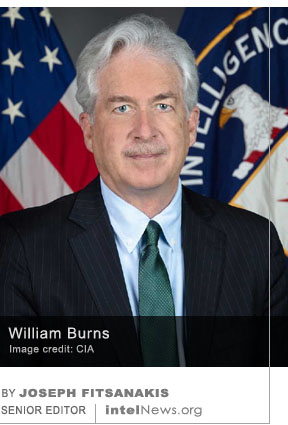
William BurnsTHE DIRECTOR OF THE United States Central Intelligence Agency has returned to Washington from a surprise visit to Russia, where he led a high-level team of American officials in meetings with their Russian counterparts. The two-day visit was announced almost simultaneously by both the American and Russian governments, following the arrival of the CIA director, William Burns, to Moscow on Tuesday.

Little information has emerged about the participants in the meetings. A statement from the American embassy in Moscow said simply that Burns had traveled there at the request of President Joe Biden, and that other United States officials had traveled with him. It is believed that Karen Donfried, the State Department’s assistant secretary for European and Eurasian Affairs, traveled with Burns. According to the American embassy, the meetings were held on Tuesday and Wednesday and concerned “a range of issues in the bilateral relationship between the United States and Russia.

A minute-long video, which was posted on social media by the Russian TASS news agency on Tuesday, showed a group of five American officials meeting with five Russian officials. The latter appeared to include Nikolai Patrushev, a close political ally of Russian President Vladimir Putin, who heads the Security Council of Russia —a body that is roughly equivalent to the United States National Security Council. Prior to his current role, Patrushev served as director of the Russian Federal Security Service (FSB).

It is worth noting that Burns speaks Russian and served twice as a diplomat in Russia, most recently as the American ambassador there. Some observers noted that Burns’ trip to Moscow is part of a broader pattern of increasingly frequent meetings between American and Russian officials in recent months. The last four months have seen at least four visits to Russia by senior officials in the Biden administration.

Author: Joseph Fitsanakis | Date: 04 November 2021 | Permalink

Mossad officials visited Sudan before coup, but had no warning, reports claim

Sudan civil unrest

A DELEGATION OF ISRAELI government officials, which likely included members of the Mossad spy agency, paid a secret visit to Sudan in the days prior to the October 25 coup d’état, but were given no indication of what was about to happen, according to reports from Israel. The Israeli delegation’s goal was to assess the Sudanese government’s ongoing interest in establishing bilateral relations with the Jewish state, according to Walla News, which is among Israel’s most popular news websites.

According to the report, the Israeli delegation held several meetings with leading Sudanese government officials, among them Abdel Rahim Hamdan Dagalo, a general in Sudan’s notorious Rapid Support Forces (RSF) paramilitary group. The RSF was a leading actor in the October 25 coup, which resulted in the arrest of Prime Minister Abdalla Hamdok and most of his cabinet. In Hamdok’s place, the coup plotters installed Sudanese Army General Abdel Fattah Abdelrahman al-Burhan, who proceeded to declare a state of emergency and suspend civil liberties across the nation.

According to the report, the main purpose of the Israeli delegation’s secret visit was to assess the prospects of continuing normalization between Sudan and Israel —a process that began in early 2020 under American tutelage. Anonymous officials told Walla News that the Israeli delegation was given no indication by the Sudanese military officials that they were planning a coup d’état, though they could easily have expected it, given the volatile state of Sudanese politics in the past year.

It is worth pointing out that, as noted recently by The Times of Israel, although “much of the Western world has condemned the [Sudanese] coup, Israel has remained noticeably silent”. According to observers, this is likely the case because the Sudanese military, which carried out the October 25 coup, is the main supporter of normalizing Sudan’s relations with Israel. On the other hand, the civilian-led revolutionary movement, which helped topple Sudan’s longtime dictator Omar al-Bashir in 2019, has been critical of Israel and has expressed strong support for the Palestinians.

Author: Joseph Fitsanakis | Date: 02 November 2021 | Permalink

Some US-trained Afghan elite soldiers and intelligence officers are joining ISIS

Armed guerillas Khost Afghanistan

SMALL BUT GROWING NUMBERS of American-trained members of Afghanistan’s elite special forces and intelligence agencies are joining the Islamic State in order to fight the Taliban, according to a new report. Some observers are expressing concerns that these new recruits are equipping the Islamic State’s Afghanistan affiliate with advanced skills and expertise that might make the group difficult to defeat in the coming months or even years.

In the weeks after the Taliban’s take-over of Afghanistan, a small group of fighters in the northern regions of the country vowed to engage in armed resistance against the group. They teamed up under Ahmad Massoud, son of anti-Soviet and anti-Taliban commander Ahmad Shah Massoud. They since seem to have been defeated, however, and most of them have now fled the country —a development that apparently marks the end of all armed resistance to the Taliban by former members of the American-supported Afghan government. Other Afghans with access to weapons, most of them members of the army and security forces, have not returned to work since the Taliban take-over, fearing that they will be killed.

For now, the only armed resistance to the Taliban comes from the Islamic State of Iraq and Syria-Khorasan Province, also known as ISIS-K. According to The Wall Street Journal, “relatively small, but growing” numbers of former members of Afghanistan’s security and intelligence agencies, are now joining ISIS-K. In making this claim, the paper cites “Taliban leaders, former Afghan republic security officials and people who know the defectors”. Some of those joining ISIS-K have been trained in unconventional warfare and intelligence-gathering by the United States, claims the paper.

According to the report, those joining ISIS-K appear to do so for two reasons: first, in order to secure a regular income, as they have been left without wages since the collapse of the Washington-supported government in Kabul. Second, because ISIS-K is currently the only armed group that is putting up resistance against the Taliban. Thus, in addition to fighting the Taliban, the former members of Afghanistan’s security and intelligence forces, are also receiving protection from ISIS-K fighters, says the paper.

Author: Joseph Fitsanakis | Date: 01 November 2021 | Permalink

Unusual trial of alleged Chinese state intelligence officer begins in the United States

General Electric

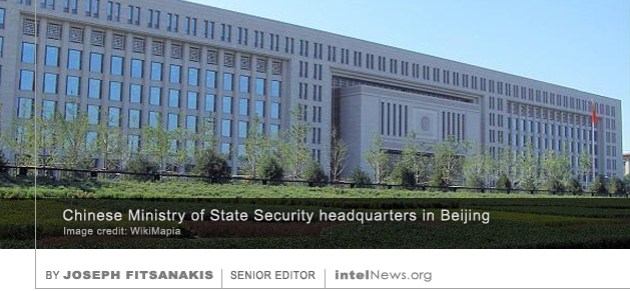
AN UNUSUAL TRIAL OF an alleged Chinese spy is taking place in the United States, which observers say marks the first time that an employee of a Chinese intelligence agency is being tried on American soil. The court case centers on Yanjun Xu, also known as Qu Hui or Zhang Hui. According to prosecutors, Xu is a deputy division director in the Ministry of State Security (MSS) —China’s intelligence agency.

Xu was arrested by Belgian police in April 2018 and was eventually extradited to the US. Following his extradition, he was indicted by a federal grand jury for conspiring to commit acts of economic espionage against GE Aviation, a subsidiary of General Electric, which is headquartered in the US state of Ohio. Throughout the trial, which began last week at a District Court in the city of Cincinnati, prosecutors have been making the case that Xu’s espionage activities were part of a broader plan by the MSS to spy on aviation manufacturers around the world. The alleged espionage campaign has been taking place since at least 2013, say the prosecutors.

According to the prosecutors, the purpose of the MSS’ espionage campaign is to reverse-engineer GE Aviation’s advanced gas turbine engine, which, according to one witness who testified at the trial, Beijing has been trying to steal for many years. Among other activities, Xu is accused of having tried to pay off employees of aviation contractors, in return for access to proprietary blueprints of engines and other components. In other cases, computer viruses were used in efforts to compromise secrets. In one alleged example, a project manager with French aviation manufacturer Safran testified this week that his laptop computer was infected with a malware during a 2014 business trip to China.

The trial is expected to last until the middle of November.

Author: Joseph Fitsanakis | Date: 27 October 2021 | Permalink

Turkish pro-government newspaper publishes interview with alleged Mossad spy

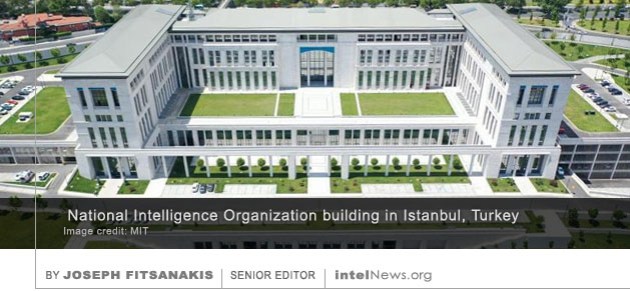
Ram Ben-BarakA POPULAR TURKISH NEWSPAPER has published an interview with a member of a network of spies who were allegedly recruited by the Israeli agency Mossad to spy on Palestinian students living in Turkey. As intelNews reported last week, Turkish intelligence announced the arrests of 15 members of an alleged spy ring for the Mossad. Turkish media said that the 15 individuals were arrested on October 7 during simultaneous raids that took place across four different provinces. The counterintelligence operation to arrest the alleged spies took nearly a year and involved more than 200 officers of Turkey’s National Intelligence Organization (MİT).
Last Friday, Turkey’s Sabah newspaper published a lengthy interview with one of the 15 alleged spies. The paper, which is politically aligned with the government of President Recep Tayyip Erdoğan, referred to the alleged spy using the initials “M.A.S.”, and claimed he is a Turkish citizen who was recruited by the Mossad. The alleged spy told the paper that he was first contacted in December 2018 by “an agent called A.Z.” through the WhatsApp phone application. After providing this individual with information about Turkish universities, he was sent funds via Western Union wire transfers. Other times he was paid by a man he met in a market in Istanbul, after showing him his identity card, along with a receipt that had been sent to him by A.Z.

Eventually, M.A.S. said he was instructed to travel to Switzerland, having first secured a visa for his trip through a company called European Student Guidance Center. Sabah claims the M.A.S.’ trip to Switzerland was paid for by the Mossad. While in there, M.A.S. met his alleged handlers, who taught him how to use strong encryption for sending documents and other information via secure email applications. However, even at that point he did not realize he was working for a foreign government, having been told by his handlers that they were employees of an “intelligence-like organization” in the private sector. According to Sabah, other members of the alleged spy ring met with their handlers, abroad, mostly in Switzerland and Croatia. Most were paid with cryptocurrency, conventional international money transfers, or sometimes in gold jewelry or foreign currency.

Importantly, Sabah did not say how its reporters were able to gain access to M.A.S. after his arrest by the Turkish authorities. The Turkish government has made no official statement about these arrests. Also on Friday, a number of Israeli public figures, including Ram Ben-Barak (pictured), former deputy director of the Mossad and current chairman of the Knesset’s Committee on Foreign Affairs and Defense, said that “none of the published names [in Turkey] were [of] Israeli spies”. Ben-Barak also cast doubt on the professionalism and capabilities of Turkish counterintelligence.

Author: Joseph Fitsanakis | Date: 25 October 2021 | Permalink

Turkey announces arrest of Russian and Israeli alleged spies following crackdown

MIT Turkey

THE GOVERNMENT OF TURKEY has announced the arrest of 21 individuals, among them foreign citizens, whom it accuses of “political and military espionage” on behalf of Israel, and of planning assassinations ordered by Russia. Turkish authorities released separately two statements on Thursday, announcing the arrests of alleged spies for Israel and Russia respectively. The two sets of arrests do not appear to be connected, despite the fact that they were announced on the same day.

Six alleged assassins operating under Russian command were arrested on October 8 in Antalya, a tourist resort located on Turkey’s southern coast. Turkey’s National Intelligence Organization (MİT) said the group includes four Russians, a Ukrainian and an Uzbek. They allegedly planned to kill a number of Chechen separatists who live in Turkey. In preparation of the alleged assassinations, group members “were in the process of obtaining weapons”, according to Turkish government prosecutors.

A court in Istanbul has reportedly ruled that the members of the alleged assassination team should remain behind bars, pending a trial for espionage. Meanwhile the a Russian government spokesman said on Thursday that the Kremlin was “not aware” of any Russian citizens having been arrested on espionage charges in Turkey, adding that the Russian embassy in Ankara had not been informed of any such arrests.

Meanwhile, in a separate announcement issued on Thursday, the MİT disclosed the arrests of 15 members of an alleged spy ring for Israel’s Mossad intelligence agency. Turkish media reports said the 15 individuals had been arrested in a series of raids that took place across four Turkish provinces on October 7, following a year-long counterintelligence operation. Turkish authorities claim that the spy ring monitored the activities of Palestinians living in Turkey and provided the information to the Mossad, in return “for tens of thousands of dollars and euros”. The Israeli government has not commented on these reports.

Author: Joseph Fitsanakis | Date: 22 October 2021 | Permalink

Germany arrests mercenaries who tried to sell their services to Saudi Arabia

Yemeni Civil War

AUTHORITIES IN GERMANY HAVE pressed terrorism charges against two former soldiers, who tried to establish a mercenary army and place it in the service of Saudi Arabia, with the ultimate goal of fighting in Yemen. The two men were arrested following police raids in the southern German city of Munich and the southwestern district of Breisgau-Hochschwarzwald, near Switzerland. They were identified in a government press release only as “Arend-Adolf G.” and “Acim A.”, in accordance with strict German privacy laws.

German government prosecutors described the two former soldiers as the “ringleaders” of a plan to recruit up to 150 men with prior military and law enforcement experience. Their ultimate goal was to establish “a private army” that would offer its services to the government of Saudi Arabia. The two alleged ringleaders allegedly hoped that the oil kingdom wound task them with carrying out illegal operations in Yemen. This would allow Riyadh to deny any involvement in these operations, if the German mercenaries were captured while fighting in Yemen.

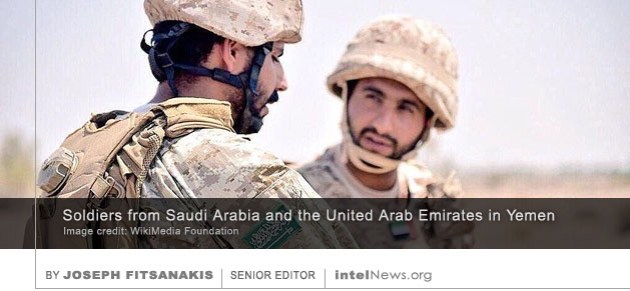
Saudi Arabia has been involved in the Yemeni Civil War since 2015. Riyadh’s involvement seeks to support the country’s Sunni-dominated government against the Shia-majority Houthi separatists. The Yemeni government is also supported by the United Arab Emirates and Qatar, while the United States has at times assisted the Saudi effort. The Houthi movement is believed to receive assistance from Iran. Over 100,000 people, most of them civilians, have perished so far in the war, which has been raging since 2014.

German government prosecutors allege that the two mercenary ringleaders hoped to convince the Saudi government to compensate each member of their private army with over $45,000 per month for their services. However, their efforts to attract the attention of the Saudi government and intelligence agencies were unsuccessful. Instead, they drew the attention of the German Military Counterintelligence Service, which alerted the police. The two men are now awaiting their pre-trial hearing, which is expected to take place next week.

Author: Joseph Fitsanakis | Date: 21 October 2021 | Permalink

Russia shuts down NATO mission in Moscow following espionage allegations

NATO headquarters

THE MILITARY LIAISON MISSION of the North Atlantic Treaty Organization (NATO) to Moscow is to be closed, in retaliation to the expulsion of several Russian diplomats from Belgium for alleged espionage earlier this month. The claims of espionage were made by NATO against members of staff of the Russian permanent mission to the military alliance. The mission was established in 1997 as a “mechanism of consultation, cooperation, joint decision-making and joint action […] between NATO and Russia”. At its height it was staffed by as many as 20 Russian diplomatic personnel, who were stationed in the Belgian capital Brussels.

But on Wednesday, October 6, the Western military alliance announced the expulsion of eight members of staff of the Russian military liaison mission. According to a NATO source, the eight diplomats were in reality undeclared intelligence officers operating in Brussels under official cover. The eight Russians had their diplomatic accreditations revoked and were ordered to leave Belgium by October 31. In addition to expelling the eight diplomats, NATO also eliminated two further positions at the Russian mission, which had been scheduled to be filled later this year. This effectively halved the size of the Russian mission from 20 to 10 diplomats.

Speaking in Moscow on Monday, Russian Minister of Foreign Affairs Sergei Lavrov said Moscow would be “suspending the activity of the NATO military liaison mission in Moscow and […] recalling the accreditation of its staff”. He added that the move was in retaliation to NATO’s expulsion of 10 Russian diplomats from Brussels earlier this month. When asked how Moscow would communicate with NATO from now on, Lavrov responded: “If NATO has some urgent matters, it may contact our ambassador in Belgium on these issues”.

Author: Joseph Fitsanakis | Date: 19 October 2021 | Permalink

Senior American, Japanese and S. Korean spy officials to meet behind closed doors

Avril HainesTHE INTELLIGENCE CHIEFS OF the United States, Japan and South Korea are to meet behind closed doors this week. The meeting will take place nearly two years after a major diplomatic spat between Japan and South Korea threatened to significantly harm intelligence cooperation between them. In November of 2019, the South Korean government threatened to terminate the General Security of Military Information Agreement (GSOMIA). The agreement was initiated in 2016 under American tutelage, with the aim of facilitating the sharing of intelligence between South Korea and Japan about North Korea’s missile and nuclear programs.

As intelNews explained at the time, the agreement fell victim to an escalating tit-for-tat row between the two Asian countries, which was rooted in the use of forced Korean labor by Japanese troops during World War II. The South Korean government demanded financial compensation for the use of slave labor, including sex slaves, by Japanese occupation troops during the annexation of Korea by Japan, which lasted from 1910 until 1945.

Tokyo responded to a mass boycott of Japanese goods in South Korea by limiting the export of electronics for use in South Korea’s ship-building industry. It also removed South Korea from the list of countries that can fast-track their exports to Japan. South Korea responded by threatening to not renew GSOMIA prior to it lapsing. With hours to go before GSOMIA’s expiration deadline, Seoul announced it would prolong the treaty. But the dispute continues to stymie intelligence cooperation between the two Asian nations.

On Saturday, the South Korean Yonhap News Agency cited “a government source” in reporting that the intelligence chiefs of the United States and Japan would travel to Seoul next week, in order to hold a series of meetings with their South Korean counterpart. Thus, United States Director of National Intelligence, Avril Haines, and Japan’s Director of Cabinet Intelligence, Hiroaki Takizawa, will meet with Park Jie-won, who heads South Korea’s National Intelligence Service.

The three officials will meet behind closed doors to discuss “strengthening their trilateral intelligence cooperation”, according to the report. There is renewed hope in Seoul and Tokyo that relations between the two nations can be mended, following the election of a new government in Japan earlier this month, under Prime Minister Fumio Kishida. The officials are also expected to discuss efforts to re-initiate negotiations with North Korea on a number of issues. Last month, South Korean President Moon Jae-in offered to begin negotiations with North Korea aimed at drafting a formal declaration to officially end the Korean War of 1950-1953.

Author: Joseph Fitsanakis | Date: 18 October 2021 | Permalink

Revealed: Turkey helped Iraqi intelligence capture senior Islamic State figure

Syria–Turkey border

AN ELABORATE OPERATION WHICH, carried out jointly by Iraqi and Turkish intelligence, led to the arrest of one of the most senior officials of the Islamic State to be ever captured alive, according to sources. As intelNews reported on Monday, the Iraqi government announced the capture of Sami Jasim Muhammad al-Jaburi, who served as deputy to the Islamic State’s late spiritual leader, Abu Bakr al-Baghdadi.

Jasim, also known by the name Abu Asya, was the Islamic State’s treasurer during the group’s heyday, when it controlled territory equal to the size of Germany in Syria and Iraq. He survived the demise of the Islamic State’s territorial power, but continued serving in the organization’s financial arm under its current chief, Abu Ibrahim al-Hashemi al-Quraishi. The Iraqi government announced Jasim’s capture on Sunday with a brief statement, which said he had been seized in a “complex operation outside the borders” of Iraq. No further details were made available.

On Tuesday, however, the Reuters news agency reported that Jasim was arrested on Turkish soil in a joint Turkish-Iraqi intelligence operation. Citing “a senior regional security source and two Iraqi security sources”, Reuters said that Jasim had been under surveillance in northwestern Syria for several months by Iraqi and Turkish intelligence. He was reportedly arrested by Turkish intelligence shortly after crossing into Turkey, where he was lured in an operation that included participants from Iraqi intelligence and “local security forces”. Reuters notes that the phrase “local security forces” most likely refers to Turkish backed Syrian militias, who operate along the Turkish-Syrian border.

The Reuters report also points out that Jasim’s arrest may illustrates a deepening cooperation between Turkish and Iraqi intelligence against the remnants of the Islamic State that continue to operate in northwestern Syria, a region that is largely under the control of Turkey. Turkish, Iraqi and American officials who were approached by Reuters refused to comment on the report.

Author: Joseph Fitsanakis | Date: 13 October 2021 | Permalink

Iraqi intelligence claims capture of Islamic State’s finance chief in ‘complex’ operation

Sami Jasim al-Jaburi

ONE OF THE ISLAMIC State’s senior leaders, who has headed the group’s financial arm since at least 2015, was captured in a “complex operation” by Iraq’s intelligence agency, according to announcements from Baghdad. Sami Jasim Muhammad al-Jaburi, also known by the name Abu Asya, has been close to senior Sunni Islamist figures since before the Islamic State emerged as a major player in Iraq and Syria. He is believed to have first met the Islamic State’s spiritual leader, Abu Bakr al-Baghdadi, in the northern Iraqi city of Mosul in 2012.

Once the Islamic State began conquering large swathes of territory in the Middle East, and proclaimed itself the government of a self-styled emirate, Jasim was appointed treasurer. He also served as one of al-Baghdadi’s senior deputies until at least 2017. He survived the fall of the Islamic State’s proto-state, but continued serving in the organization’s financial arm under its current chief, Abdullah Qardash.

Jasim’s arrest was announced on Monday by Iraq’s Prime Minister, Mustafa al-Kadhimi, through his personal account on Twitter. According to the tweet, the Iraqi National Intelligence Services conducted “a complex external operation to capture Sami Jasim”. Notably, the Iraqi Armed Forces revealed in a follow-up tweet that Jasim had been captured outside of Iraq’s borders. But the tweet did not reveal the precise location where the Islamic State leader was captured, nor did it discuss any other aspects of the operation.

The United States government had offered a $5 million reward for information leading to Jasim’s capture. It is not known whether American intelligence agencies or troops played any role in Jasim’s capture.

Author: Joseph Fitsanakis | Date: 12 October 2021 | Permalink

US charges couple with attempting to sell secrets to unidentified foreign country

SSN-774 Virginia class submarine

AUTHORITIES IN THE UNITED States have charged a married couple with contacting a foreign power and trying to sell it military secrets, which some reports describe as “some of the United States’ most closely held”. Court documents unsealed on Sunday identify the couple as Jonathan and Diana Toebbe, of Annapolis, Maryland. The husband is reportedly a nuclear engineer who has been working on naval nuclear propulsion for at least a decade.

From 2017 until 2020, Toebbe worked for the United States military as a civilian nuclear engineer. He had a top-secret clearance and even worked for over a year out of the office of the Chief of Naval Operations —the head of the US Navy, who is typically an admiral. Toebbe reportedly left his government post in December of 2020. According to the Federal Bureau of Investigation, a few months earlier he had sent a letter to a foreign government offering military secrets in return for money.

The US government claims that, in April of 2020, Toebbe sent a letter to a foreign government with a note asking its recipient to “please forward this letter to your military intelligence agency”. The note added: “I believe this information will be of great value to your nation. This is not a hoax”. However, the recipient of the letter forwarded the letter to the FBI, which proceeded to launch a sting operation targeting Toebbe. FBI special agents contacted Toebbe pretending to be representatives of the foreign government he had tried to contact by mail.

In a series of messages he exchanged with the FBI special agents, the nuclear engineer offered to share classified information relating to nuclear submarine propulsion, in exchange for $100,000 in cryptocurrency. According to the court documents, the information related to the propulsion system of the US Navy’s SSN-774 “Virginia” class submarines, which, according to The New York Times, is among “the United States’ most closely held secrets on submarine technology”.

Notably, the FBI affidavit does not identify the country that Toebbe attempted to solicit payments from. Given the fact that the country Toebbe had in mind voluntarily shared the information with the FBI, it is possible that it may be a Western country, rather than a country with which Washington has traditionally had adversarial relations. It is also important to note that the SSN-774 class submarine was at the heart of a recent diplomatic controversy between the United States, Australia and France.

Author: Joseph Fitsanakis | Date: 11 October 2021 | Permalink

CIA asks its case officers to focus more on security in ‘unusual’ message

CIA

IN A MESSAGE DESCRIBED by observers as “unusual”, the United States Central Intelligence Agency has warned its case officers to give priority to security when recruiting spies in foreign countries. Fictional treatments of espionage work usually refer to CIA personnel as “spies”. In real-life espionage work, however, this term is actually reserved for citizens of foreign countries who are recruited by CIA case officers to work as informants.

According to The New York Times, large numbers of these foreign CIA informants have been “captured or killed” in recent years. The number is reportedly so high that the CIA’s counterintelligence mission center sent “an unusual top secret cable” last week to every CIA station around the world, drawing attention to that fact. The cable was unusual in its candor and even went so far as to relay the precise number of informants who had been captured, killed or compromised in recent times. According to the paper, the cable made specific mention of informants who were neutralized in countries such as Pakistan, Iran, China and Russia.

The top-secret cable continued by highlighting the importance of placing security at the center of the CIA’s mission, especially when recruiting new informants, said The Times. Case officers —personnel in the CIA’s Directorate of Operations, whose job is to recruit foreigners— are expected to recruit with consistency, and are promoted based on that consistency. But the top-secret cable “reminded CIA case officers to focus not just on recruiting sources, but also on security issues, including vetting informants and evading adversarial intelligence services”, according to The Times. The paper added that the language in the cable implied that CIA case officers have often underestimated the agency’s adversaries abroad.

The Times said it reached out to the CIA with questions about the top-secret memo, but “a CIA spokeswoman declined to comment”.

Author: Joseph Fitsanakis | Date: 07 October 2021 | Research credit: J.S. | Permalink

Iran denies murder plot after alleged assassin caught with gun and silencer in Cyprus

Nicosia Cyprus

ISRAEL HAS ACCUSED IRAN of being behind a plot to kill Israeli citizens in the Republic of Cyprus, following the arrest of a man who was reportedly found carrying a gun fitted with a silencer in the Cypriot capital Nicosia. The man reportedly entered Cyprus on a flight that landed at Larnaca International Airport last week. He is believed to be a 38-year-old Azeri national, who allegedly entered Cyprus using a Russian passport.

Cypriot police kept tabs on the suspected assassin as soon as he entered Cyprus, according to reports. IntelNews hears that the Israeli intelligence agency Mossad may have been behind a tip given to the Cypriots about the man’s presence on the island. In the days following his arrival, the suspect crossed several times into the Turkish-occupied northern region of Cyprus, using his Russian passport and “trying to keep a low profile”, according to Israeli media reports.

The Azeri man was eventually arrested in Nicosia, shortly after entering from northern Cyprus at the Agios Dometios checkpoint. Some local news reports suggest that he was found to be carrying a gun fitted with a silencer, and that he was planning to target a number of prominent Israeli business people who live on the island. Reports in Israel claim that the alleged assassin’s primary target was Teddy Sagi, an Israeli investor who owns online gambling platforms, as well as properties in the United Kingdom and Cyprus. He is believed to be among Israel’s richest citizens.

Iran has vehemently denied Israel’s claim that Cypriot police averted “an act of terror [that] was orchestrated by Iran against Israeli business people” in Cyprus. However, the Israeli government’s announcement did not go into details, while Israeli officials refused to confirm that Teddy Sagi was the target of the alleged operation.

Author: Joseph Fitsanakis | Date: 05 October 2021 | Permalink