New book claims former Irish head of government was Provisional IRA informant
December 9, 2021 Leave a comment
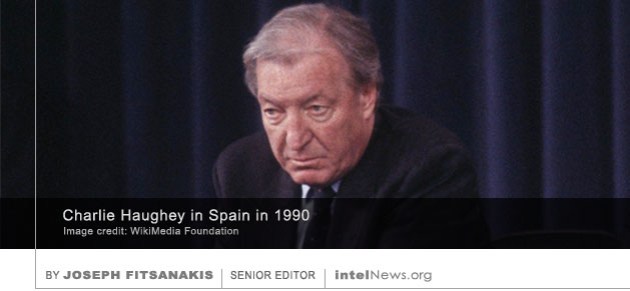 A NEW BOOK BY a veteran Irish journalist claims that the late Taoiseach (prime minister and head of the government of Ireland) Charlie Haughey was in effect an informer of the Provisional Irish Republican Army in the 1960s and 1970s. Written by Kevin O’Connor, the longtime political correspondent of The Sunday Independent, the book also claims that Haughey maintained regular contact with the leadership of the IRA throughout the 1970s.
From the mid-1960s and until his retirement in the early 1990s, Haughey was a towering —and controversial— figure in Irish politics. He was first elected to the Dáil Éireann (Ireland’s parliament) in 1957 with Fianna Fáil, one of Ireland’s two major centrist political parties. Throughout his career, he served as Taoiseach from 1979 to 1981, for a short period in 1982, and from 1987 until his retirement in 1992. He also held scores of ministerial appointments in the 1970s and 1980s.
Haughey’s political career almost ended in 1970, when the so-called ‘arms crisis’ nearly brought down the Irish government. It was sparked by allegations that leading members of the Irish government were involved in a conspiracy to smuggle weapons to British-held Northern Ireland, in an effort to support the activities of the IRA. During the ensuing investigation, Haughey was found to have met with Cathal Goulding, who as chief of staff for the IRA. Consequently, Haughey was among several cabinet ministers who were either fired or voluntarily resigned in the aftermath of the arms crisis.
During the lengthy trial that followed the explosive allegations, Haughey claimed that his meeting with Goulding was nothing more than an unplanned encounter. He was eventually found not guilty. But many were doubtful about his innocence, and there were numerous claims that the Irish government —even the Taoiseach at the time— were fully aware and supportive of the conspiracy.
Now a new book by O’Connor, titled Political Betrayal: How Charlie Haughey Acquired €70 Million, claims that Haughey was closer to the IRA than even his staunchest critics realized. The allegations are based on what the author says are documents from the archives of the Special Branch Unit of the Garda Síochána, the police service of Ireland. The documents allegedly reveal that Haughey was routinely sharing classified information to the IRA, including warnings about government spies that operated within the organization.
In one instance, Haughey allegedly reached out to the IRA for assurances that they would not harm famous English artists who were living in Ireland at the time. Several artists moved there in the 1970s in order to take advantage of the country’s laws guaranteeing tax-free status for artists. This scheme was the brainchild of Haughey, and he was eager to ensure that it did not backfire. Among the famous artists who had taken advantage of these laws was the English journalist and novelist Frederick Forsyth, author of —among other books— The Day of the Jackal, who was a critic of the IRA. According to O’Connor, Haughey feared that the IRA might harm or kidnap Forsyth. But the militant group assured Haughey that Forsyth would not be harmed.
Haughey eventually left politics in 1992, when the government he was leading at the time was found to have illegally wiretapped the telephone lines of at least three investigative journalists. He never returned to politics. Despite his ungraceful fall from power, Haughey continues to be revered among Fianna Fáil supporters in Ireland today.
► Author: Joseph Fitsanakis | Date: 09 December 2021 | Permalink
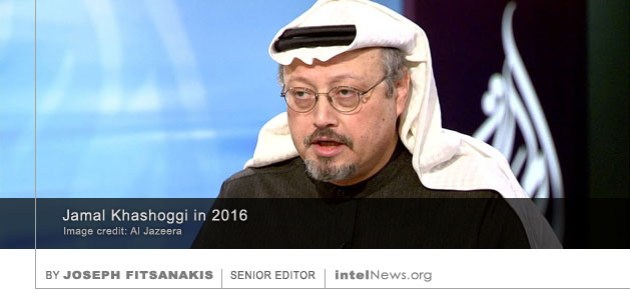 AN ALLEGED MEMBER OF the assassin squad that killed and dismembered Saudi journalist Jamal Khashoggi in Turkey in 2018, is reportedly under arrest in France, where he was caught trying to board an international flight. Khashoggi, 59, was a Saudi government adviser who became critical of the Kingdom’s style of governance. He moved to the United States and began criticizing Saudi Arabia from the pages of The Washington Post. He was
 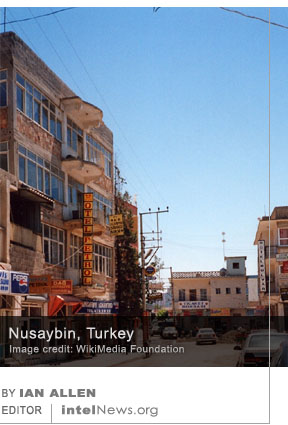 TURKISH AUTHORITIES HAVE LAUNCHED an investigation after a makeshift explosive device was found under the car of a police officer guarding an open-air speech by President Recep Tayyip Erdoğan. The rally took place on Saturday in Siirt, a Kurdish-majority town located about 90 miles from the Turkish-Syrian border. The town has a symbolic significance for Erdoğan, as it is the hometown of his wife, Emine Erdoğan, and was his constituency for four years. In 2003 he won a by-election there and entered the Turkish Grand National Assembly as a member.

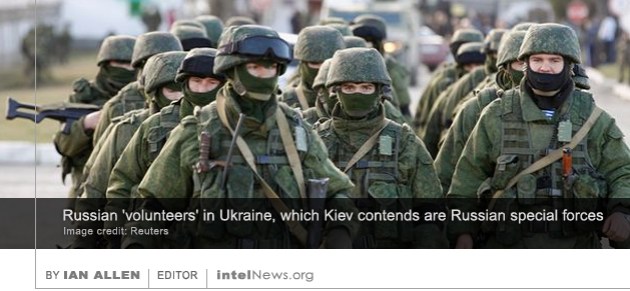 INTELLIGENCE OFFICIALS IN THE United States are becoming increasingly convinced that Russia is contemplating extensive military action in Ukraine, according to Western insiders. Russian troop concentrations near the Ukrainian border have been “large and unusual” for several weeks,
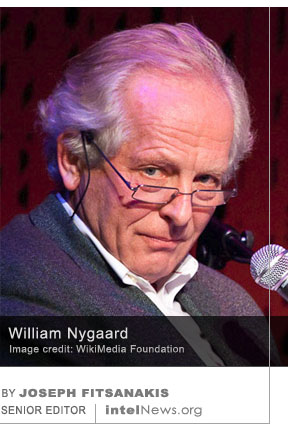 THE GOVERNMENT OF NORWAY has pressed charges against two men, among them a former diplomat in the Iranian embassy in Oslo, for the attempted murder of a high-profile Norwegian publisher in 1993. The case centers on an attempt against the life of William Nygaard, a Norwegian publisher and former director of the Norwegian Broadcasting Corporation.
 A HACKER WHO TARGETED a major Dutch-based reservations website has ties to intelligence agencies in the United States, according to a new report. The claim was made on Wednesday by three Dutch investigative journalists, Merry Rengers, Stijn Bronzwaer and Joris Kooiman. In a lengthy










Denmark arrests four intelligence officers for disclosing ‘highly classified’ information
December 13, 2021 by Joseph Fitsanakis Leave a comment
In its statement on Thursday, the PET said that four individuals had been arrested the day before during “searches at various addresses” in Denmark. It did not disclose the identities of the four suspects, but said they were all current or former members of Danish intelligence agencies. At least one of them is believed to be a current or former employee of the PET itself. Denmark’s external intelligence agency, the Danish Defense Intelligence Service (FE, or DDIS in English), is also involved, according to reports.
The four suspects are accused of having disclosed “highly classified information from the intelligence services”, according to the information made available by the PET on Thursday. However, PET officials declined requests to discuss further details about the case, stating only that the arrests came after a lengthy counterintelligence investigation, which continues at this time. All four suspects have now been charged with violating Section 109(1) of the Danish Criminal Code, which is the standard law used by Danish prosecutors in espionage cases.
The last major counterintelligence case in Denmark was in 2012, when a Finnish professor at the University of Copenhagen, Timo Kivimäki, was convicted and sentenced to a short prison sentence for spying for Russia. Kivimäki, who today continues to work as an academic, claims that he carried out contractual consulting work for the Ministry of Foreign Affairs of the Russian Federation, but denies that he knowingly contacted Russian intelligence operatives in the course of his consulting duties.
► Author: Joseph Fitsanakis | Date: 13 December 2021 | Permalink
Filed under Expert news and commentary on intelligence, espionage, spies and spying Tagged with counterintelligence, DDIS (Denmark), Denmark, News, PET (Denmark)