US government report details first-ever drone attack on energy grid
November 5, 2021 3 Comments
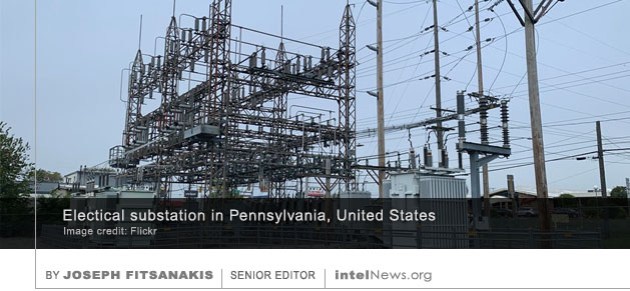
A REPORT ISSUED BY the United States government last month provides details of what is thought to be the first known attack on the country’s energy infrastructure by an unmanned aircraft system. The report appears in a Joint Intelligence Bulletin (JIB) dated October 28, 2021. The JIB is a collaborative intelligence product of the Department of Homeland Security, the Federal Bureau of Investigation and the National Counterterrorism Center.
The report documents an apparent drone attack that took place on July 16, 2020. The target of the attack was an electrical substation in the state of Pennsylvania. The document does not provide details about the geographic location of the attack, nor does it identify the substation that was targeted. It does, however, give details about the type of commercial drone that was used, which it identifies as a Chinese-built DJI Mavic 2. The DJI Mavic 2 is a compact quadcopter drone, which is popular among aerial photography enthusiasts in the United States. It costs between $1,300 and $4,450, depending on its design and amount of features.
The specific device used in the attack in Pennsylvania had been modified by its operator, most likely in order to cause a short circuit and damage the distribution lines or transformers it came in contact with. The device had a thick copper wire hanging from its body, which was attached with nylon cords. Additionally, the perpetrator of the attack had taken steps to anonymize the device, be removing its quality control markings and other identifying information from it. The camera and internal memory card, which are standard technical features of DJI Mavic 2 drones, had also been removed, according to the report. As a result, the operator of the device has not been identified.
The report concludes that illicit [drone] activity is expected “to increase over energy sector and other critical infrastructure facilities as use of these systems in the United States continues to expand”.
► Author: Joseph Fitsanakis | Date: 05 November 2021 | Permalink
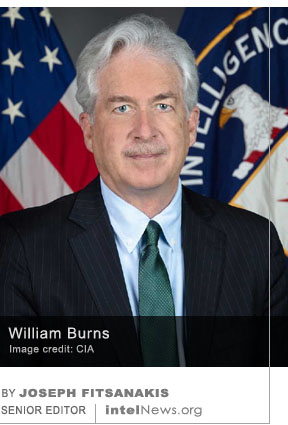 THE DIRECTOR OF THE United States Central Intelligence Agency has returned to Washington from a surprise visit to Russia, where he led a high-level team of American officials in meetings with their Russian counterparts. The two-day visit was


 A POPULAR TURKISH NEWSPAPER has published an interview with a member of a network of spies who were allegedly recruited by the Israeli agency Mossad to spy on Palestinian students living in Turkey. As intelNews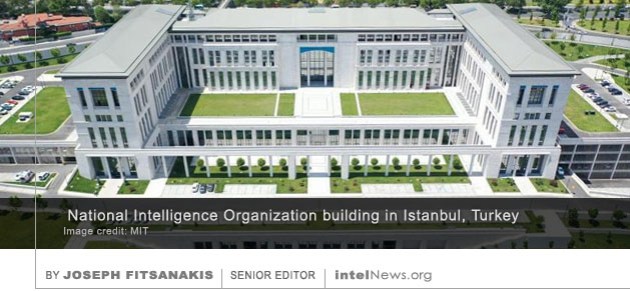

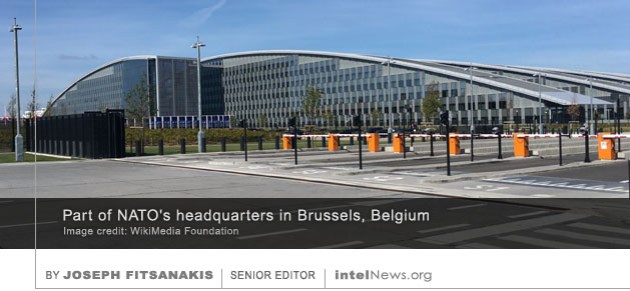
 THE INTELLIGENCE CHIEFS OF the United States, Japan and South Korea are to meet behind closed doors this week. The meeting will take place nearly two years after a major diplomatic spat between Japan and South Korea threatened to significantly harm intelligence cooperation between them. In November of 2019, the South Korean government threatened to terminate the General Security of Military Information Agreement (GSOMIA). The agreement was initiated in 2016 under American tutelage, with the aim of facilitating the sharing of intelligence between South Korea and Japan about North Korea’s missile and nuclear programs.









Percentage of unvaccinated US spy agency employees remains unknown: report
November 8, 2021 by Ian Allen 1 Comment
MOST AMERICAN INTELLIGENCE AGENCIES will not disclose the percentage of their employees who are vaccinated for COVID-19, or how many are resisting government vaccination mandates for federal workers. All United States federal government employees and federal contractors are required to comply with vaccination mandates by November 22. Those who refuse to get vaccinated without having been granted a medical exemption, are likely to face a suspension for up to 14 days, which could result in permanent dismissal.
The vaccine mandate for government workers is part of a nationwide effort to combat the coronavirus pandemic, which has killed more than 750,000 people in the United States since early 2020. Studies by the United States Centers for Disease Control and Prevention show that unvaccinated virus hosts are 11 times more likely to die from COVID-19 than those who are vaccinated. It is currently estimated that around 80 percent of the adult population of the United States has received at least one dose of the vaccine, and around 70 percent is fully vaccinated.
The percentage of intelligence employees and contractors who are vaccinated against the coronavirus is not known, though it is generally believed to be higher than the percentage among the general population in the country. The Central Intelligence Agency has disclosed that fewer than 3% of its employees are unvaccinated, while the National Reconnaissance Office has stated that about 9 percent of its employees have yet to receive a single shot of the vaccine. No information is available about the 16 other agencies of the United States intelligence community.
Last week, Chris Stewart (R-UT), who is a member of the House of Representatives Permanent Select Committee on Intelligence, claimed that as many as 20 percent of government personnel remain unvaccinated in some of the intelligence agencies. He added that agencies “that are more closely affiliated with the military tended to report lower vaccination rates”. He did not elaborate, but questioned whether suspending or dismissing unvaccinated employees of intelligence agencies was a prudent course of action, given their role in national security.
But other lawmakers expressed support for implementing the government’s vaccination mandate in the intelligence community. Jason Crow (D-CO), who also belongs to the House Permanent Select Committee on Intelligence, said the nation’s intelligence agencies were seeing high rates of vaccination. He added that, if some employees are “not willing to do what’s necessary to protect their own health and the health of their unit, that actually calls into question their ability to effectively do the job” of protecting national security.
In reporting on this story, the Associated Press said last week it had contacted a number of intelligence agencies to inquire about the vaccination rates among their employees, but had received no information. The news agency said that several intelligence organizations, among them the National Geospatial-Intelligence Agency, the Defense Intelligence Agency and the National Security Agency, had “declined to provide their vaccination rate when asked”. Similarly, the Office of the Director of National Intelligence, which coordinates the activities of the intelligence community, also “declined several requests to provide figures for the intelligence community” as a whole.
► Author: Ian Allen | Date: 08 November 2021 | Permalink
Filed under Expert news and commentary on intelligence, espionage, spies and spying Tagged with biosecurity, Coronavirus, COVID-19, News, United States