Russia-linked PR firm asked social media influencers to spread doubts about vaccines

Coronavirus COVID-19

A PUBLIC RELATIONS FIRM with alleged links to Russia offered to pay French and German social media influencers if they published content casting doubts on the safety of the Pfizer-BioNTech COVID-19 vaccine. The allegations about the firm’s efforts were made on Twitter and on French websites, and later appeared in Britain’s Guardian newspaper.

According to the reports, French and German social media bloggers and influencers who are active on YouTube, TikTok, Instagram, and other social media platforms, were contacted last week by a public relations firm. The firm is called Fazze. It claims to be based in London and describes itself as an “influencer marketing platform […] connecting bloggers and advertisers”.

In an email sent to social media influencers, Fazze reportedly asked them to post information that draws attention to “the death rate among the vaccinated with Pfizer which is almost 3x higher than the vaccinated by AstraZeneca” [sic]. The email from Fazze also reportedly asked the social media influencers to draw attention to a leaked report that supposedly questions the safety of the Pfizer-BioNTech COVID-19 vaccine. The report, published recently by French newspaper Le Monde, is based on an internal document that was stolen by Russian hackers from the European Medicines Agency and was later posted on the Dark Web. The document contains no evidence of the supposed danger of the Pfizer-BioNTech COVID-19 vaccine. However, it has become the basis of anti-vaccine conspiracies on social media in Europe and the United States.

The social media influencers were encouraged to tell their audiences that the Pfizer-BioNTech COVID-19 vaccine is “dangerous to the health of the people” and to question why “governments [are] actively purchasing” this vaccine. They were also instructed to “act like you have the passion and interest in this topic” [sic] and to present the material “as your own independent view”. When asked, Fazze reportedly refused to identify its client, but said that its budget for the project was “considerable” and invited the social media influencers to name “the rate you wish” for their financial compensation.

The company claimed to be based at 5 Percy Street in London, but it is not registered there, according to the Guardian. The British paper also claimed that the company’s management “come from Moscow and have worked for an agency reportedly founded by a Russian entrepreneur”.

Author: Ian Allen | Date: 27 May 2021 | Permalink

China assesses emotions of subjects using AI technology that monitors skin pores

Xinjiang POLICE STATIONS IN CHINA are reportedly experimenting with a new technology that uses artificial intelligence to detect the emotions of subjects, and even monitors their skin pores, according to a source who spoke to the BBC. The source is a software engineer, whose identity has not been disclosed by the BBC. He said he helped install the controversial technology in a number of police stations in the Chinese region of Xinjiang.
Xinjiang, China’s most impoverished region, is home to 12 million Uighurs, most of whom are Muslims. The Chinese state is currently engaged in a campaign to quell separatist views among some Uighurs, while forcibly integrating the general population into mainstream Chinese culture through a state-run program of forcible assimilation. It is believed that at least a million Uighurs are currently living in detention camps run by the Communist Party of China, ostensibly for “re-education”. Xinjiang is often referred to as the world’s most heavily surveilled region.

According to the BBC’s Panorama program, patents filed by Chinese companies point to the development of facial recognition programs that can distinguish subjects by ethnicity, and appear to be “specifically designed to identify Uighur people”. Among them are artificial intelligence systems that are able to detect facial micro-expressions, so as to analyze the emotions of subjects. According to Panorama, some systems even monitor “minute changes” in skin pores on the face of subjects, as a means of detecting micro-expressions. The software then allegedly produces a pie chart that details a subject’s state of mind.

The BBC said it reached out to the Chinese embassy in London, which claimed to have “no knowledge” of these alleged surveillance programs. In a statement issued on Tuesday, the Chinese embassy said that “the political, economic and social rights and freedom of religious belief in all ethnic groups in Xinjiang are fully guaranteed”. It added that people in Xinjiang “live in harmony and enjoy a stable and peaceful life with no restriction to personal freedom”.

Author: Joseph Fitsanakis | Date: 25 May 2021 | Permalink

US Justice Department and CIA may intervene in Saudi lawsuit to protect secrets

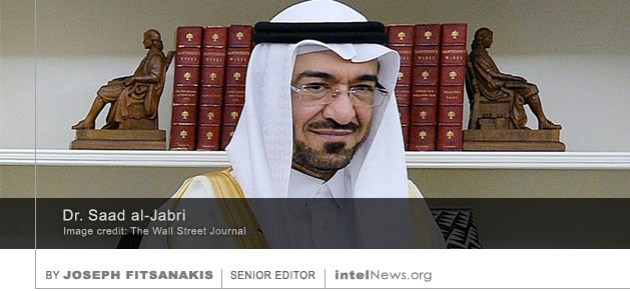
Saad al-Jabri

THE UNITED STATES DEPARTMENT of Justice and the Central Intelligence Agency may intervene in a civil lawsuit filed by an exiled Saudi spy against the oil kingdom’s de facto ruler, in order to protect state secrets. In a 106-page lawsuit, filed last year with the US District Court in Washington, DC, Dr. Saad al-Jabri claims that Saudi Arabia’s de facto ruler, Crown Prince Mohammed bin Salman, dispatched members of his “personal mercenary group”, known as the Tiger Squad, to North America, in order to assassinate him.

Al-Jabri was a courtier of Crown Prince Muhammad bin Nayef, grandson of Saudi Arabia’s founding monarch, King Abdulaziz. Bin Nayef, who was widely expected to be Saudi Arabia’s next king, eventually appointed al-Jabri Minister of State and made him his senior adviser on matters of security and intelligence —in essence his spy chief. But al-Jabri’s standing changed suddenly in 2015, when King Abdullah died and was succeeded by King Salman. Salman then named his son, Mohammed bin Salman, as his successor, effectively usurping al-Jabri’s mentor and protector, Prince bin Nayef. Within weeks, al-Jabri had been fired, while his patron, bin Nayef had gone under house arrest. Fearing for his life, al-Jabri took his eldest son, Khalid, and escaped to Canada in the middle of the night. They remain there to this day.

Bin Salman’s lawyers have dismissed al-Jabri’s lawsuit as baseless, and accuse the former spy chief of embezzling $3.4 billion from Saudi state coffers under the pretense of funding security programs. Al-Jabri’s lawyers have told the court that an “examination of the counterterrorism and national security activities of the United States government” may be necessary in order to demonstrate that their client has not embezzled state funds.

This development has US government officials worried, according to The Washington Post’s well-sourced David Ignatius. He reports that, in April of this year, the US Department of Justice filed a document in a federal court in Massachusetts, in which it outlines its plans to intervene in al-Jabri’s lawsuit against bin Salman. According to the Department of Justice, al-Jabri’s legal team may intend “to describe information concerning alleged national security activities”, which is something the US government would like to prevent.

According to Ignatius, the Department of Justice could invoke the rarely used “state secrets privilege”, which allows the US government to refuse to disclose information when ordered to do so by a court of law, if there is a “reasonable danger” that doing so could threaten US national security. Ignatius added that the Central Intelligence Agency is also looking into whether it could resist a judge’s orders to disclose information pertaining to the case of al-Jabri.

Author: Joseph Fitsanakis | Date: 24 May 2021 | Permalink

German army officer led double life as Syrian immigrant, planned to kill politicians

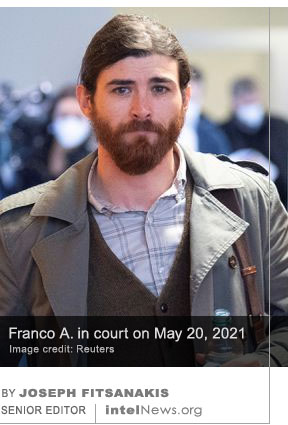
Franco AA GERMAN ARMY LIEUTENANT, who led a double life as a fake Syrian refugee, has gone on trial in Frankfurt, accused of planning to kill German politicians so as to provoke anti-Arab sentiment among Germans. The man has been identified by the German media as “Franco A.”, 32, due to strict German privacy laws. He lived in France, where he served in the Franco-German Brigade, an elite military force that combines units from the French and German armies, and is meant to symbolize Franco-German rapprochement in the postwar era.

In 2016, Franco A. approached German authorities and pretended to be a French-speaking Christian from Syria, having first dyed his beard black and darkened his complexion using make-up. Using the name “David Benjamin”, he convinced German immigration officials to provide him with temporary identity papers and grant him asylum in Germany. He also received a monthly allowance from the German state. In 2017, however, Franco A. was arrested in Vienna while trying to retrieve a loaded pistol he had hidden in a public bathroom. When searching his room at the Franco-German Brigade barracks, police discovered Nazi-era memorabilia. Further searches at his parents’ home in Germany uncovered stockpiles of ammunition and explosives.

German prosecutors now allege that Franco A. belonged in a secretive network of far-right German survivalists, whose members planned to take armed action on a day they referred to as “Day X”, which would mark the beginning of a civil war in Germany. Additionally, Franco A. is accused of having stolen ammunition from his barracks, and of keeping a list of possible victims for assassination. The latter included the German Foreign Affairs Minister Heiko Maas and Claudia Roth, a member of the German Green Party, who currently serves as Vice-President of the Bundestag —Germany’s federal parliament.

But the plot thickened once German authorities realized that Franco A.’s fingerprints matched exactly those of the Syrian immigrant, David Benjamin. They then realized Franco A. and David Benjamin were one and the same person. According to government prosecutors, Franco A. planned to kill at least one senior German political figure, then leave the gun bearing his fingerprints at the scene of the crime. His goal was to have the fingerprints match those of his fake Syrian identity, and in doing so stir anti-Arab sentiment among the German population.

During his court appearance on Thursday, Franco A. denied being a neo-Nazi, and claimed that the reason he posed as a Syrian refugee was because he wanted to “expose the flaws in Germany’s asylum system”. He faces 10 years in prison, if convicted.

Author: Joseph Fitsanakis | Date: 21 May 2021 | Permalink

Chinese state-owned fishing company is cover for spy activities, report claims

Paracel Islands

A CHINESE STATE-OWNED fisheries enterprise is in reality a front for military-related intelligence activities in the South China Sea, according to a new investigative report. The report was produced by Radio Free Asia (RFA), which is operated by the United States Agency for Global Media —an arm of the United States government. Entitled “Unmasking China’s Maritime Militia”, the report focuses on the Sansha City Fisheries Development Co., which is based on the island of Hainan, China’s southernmost province.

Established in February of 2015, Sansha City Fisheries Development Co. is a municipal state-owned enterprise that carries out industrial-scale fishing operations in the South China Sea. However, having analyzed official Chinese government data, including corporate records and third-party bidding contracts, RFA claims that “the company’s ships are engaged in more than just fishing”. In reality, the fishing company operates as an undercover arm of a shadowy force known as the Sansha City maritime militia, according to RFA.

The Sansha City maritime militia is believed to be headquartered at Woody Island (also known as Yongxing Island), the largest of the Paracel Islands in the South China Sea. It was allegedly established in 2013, with the goal of protecting China’s maritime claims in a region where Beijing is competing for influence against Malaysia, Philippines, Taiwan and Vietnam, among other regional actors. Today the maritime militia is said to consist of over 100 vessels and nearly 2,000 militiamen and women.

According to RFA, Sansha City Fisheries Development is known to prioritize hiring veterans of the Chinese People’s Liberation Army. Moreover, a number of service contracts signed between the state-owned fishing company and third party providers appear to include “state secrets protection” clauses, which typically refer to classified programs for the Chinese military or intelligence services. In recent years, at least two of the company’s ships were used to test classified information systems and command and communications systems, which “transformed [them into] mobile communications and surveillance platform[s] capable of transmitting intelligence back to the authorities on land”, according to RFA.

It should be noted that the Chinese government disputes these allegations. The RFA report quotes part of a statement by the Chinese embassy in the Philippines, which claims that “[t]here is no Chinese Maritime Militia as alleged”.

Author: Joseph Fitsanakis | Date: 20 May 2021 | Permalink

US Pentagon’s ‘secret army’ of clandestine operatives dwarfs CIA spy force: report

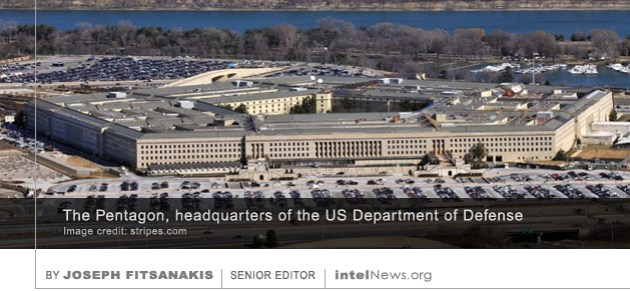
Pentagon

THE UNITED STATES DEPARTMENT of Defense maintains a “secret army” of over 60,000 operatives, many of whom work across the world in a clandestine capacity, with fake identities and manufactured backgrounds, according to a new report. Newsweek, which published the report on Monday, said that the Pentagon force is “more than ten times the size” of the clandestine wing of the Central Intelligence Agency, which is commonly associated with carrying out covert operations abroad.

According to William Arkin, author of the Newsweek report, the Pentagon’s secret operatives are part of a wider US government effort known as “signature reduction”. The program provides undercover government operatives the ability to operate domestically and around the world without the fear of having their links to spy agencies or the military discovered by online sleuths. Some of these operatives carry out clandestine tasks under their real names, claims Arkin, but without having any formal connections with the US government, or even their country of citizenship.

Others operate under manufactured identifies, which, according to the report, are created by the Pentagon’s Operational Planning and Travel Intelligence Center. Its purpose is to alter databases of US government agencies, such as the US Citizenship and Immigration Services, or the Customs and Border Protection agency, so as to protect the manufactured identities of covert operatives. Such operatives are also provided with technologies that allow them to evade face-recognition and other biometric identification measures, including fingerprint scanners, according to Newsweek.

Another part of the “signature reduction” program, according to the report, consists of private-sector enterprises that work with the Pentagon to provide its clandestine operatives with contractual covers. These allow the operatives to work abroad under civilian cover and without any official connection to US embassies or military bases, according to Newsweek.

The report claims that the largest component of the Pentagon’s “signature reduction” program consists of members of Special Operations Forces. The remaining components of the program are made up of military intelligence and counterintelligence specialists with a variety of skills, including linguistics specialists and cyber operations. The latter form “the fastest growing” group within the program, and are tasked with collecting information about targets online, as well as engaging in influence campaigns utilizing social media platforms around the world.

Author: Joseph Fitsanakis | Date: 19 May 2021 | Permalink

Polish counterintelligence arrest man for giving military secrets to Russia

Poland ABW

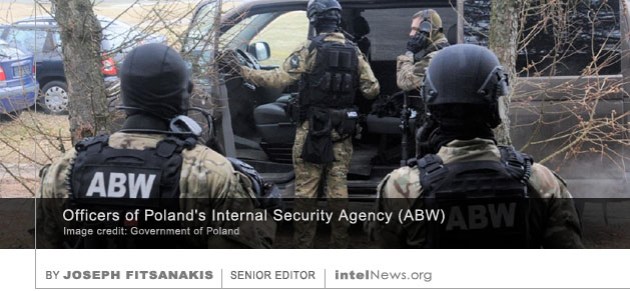
POLAND’S COUNTERINTELLIGENCE AGENCY HAS announced the arrest of a Polish citizen, who reportedly admitted spying for Russian military intelligence. The 43-year-old man has been named only as “Marcin K.”, in compliance with Polish law. He was reportedly arrested on May 5 by officers of the Internal Security Agency (ABW), Poland’s domestic counter-intelligence agency.

According to ABW spokesman Stanisław Żaryn, the accused spy had been handing over classified “information and materials” to the Russian secret services. Much of the classified information reportedly related to the “military field”. The Russians also received sensitive information relating to “Polish entities and citizens”, according to government prosecutors. The Polish government described the information as “extremely important for Russian operations […] and to the detriment of the Republic of Poland”. No further information has been provided about the case.

Importantly, Polish authorities have not shared information about Marcin K.’s possible Russian handlers, who are likely to be employees of the Russian embassy in Warsaw. Regular intelNews readers will recall that Poland was among several European countries that expelled Russian diplomats last month, following a call for solidarity by the Czech Republic. Prague issued the call after it expelled 18 Russian diplomats in protest against an explosion that totaled a remote munition depot in the east of the country, which the Czechs claim was part of a Russian intelligence operation. In addition to expelling a number of Russian diplomats, Poland joined Hungary and Slovakia in issuing a joint statement decrying what it described as “deplorable act[s] of aggression and breach of international law committed by Russia on European soil”.

According to news reports, Marcin K. has been placed in pre-trial detention for three months, as investigators are interviewing witnesses and gathering material evidence for a pending trial.

Author: Joseph Fitsanakis | Date: 18 May 2021 | Permalink

US Army Special Forces soldier sentenced to 15 years for spying for Russia

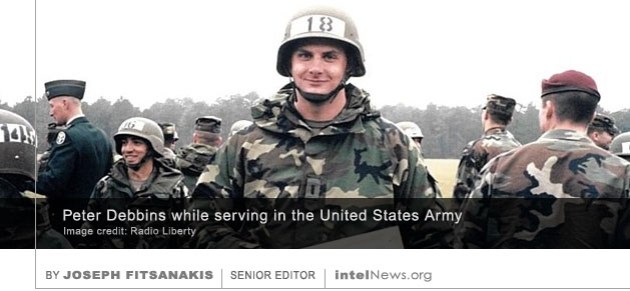
Peter Debbins

A FORMER MEMBER OF the United States Army’s Special Forces has been sentenced for spying for Russia for 15 years, after he was reportedly groomed by Russian military intelligence at a young age. Peter Debbins, 46, born in the US to an American father and a Soviet-born mother, admitted in 2020 to spying for Russia for over 20 years.

Even though he had Russian background from his mother’s side of the family, he had never been to Russia until he traveled there in 1994. On that trip he met his Russian family members for the first time, as well as a young Russian woman who would eventually become his wife. In 1996 Debbins returned to Russia as an exchange student from the University of Minnesota, and reconnected with a Russian woman. She was from the city of Chelyabinsk, located near the Russian-Kazakh border. The woman’s father was reportedly a colonel in the Russian Air Force.

It was during that second trip, according to the Federal Bureau of Investigation, that he was spotted by the Main Directorate of the Russian Armed Forces’ General Staff, known commonly as GRU. By 1997, when Debbins returned to Russia to marry his girlfriend, he was already working for the GRU, according to US government prosecutors. It is stated in his indictment that he told his GRU handler he saw himself as a “son of Russia” and sought to limit America’s dominance in the world.

Between 1998 and 2005, Debbins served in the US Army, where he became a Green Beret. He was discharged and lost his security clearance after “violating protocols” while he was stationed in Azerbaijan. Throughout his time in the US Army, Debbins frequently traveled to Russia, where his wife was studying at the time. While there he met with his GRU handlers. The court heard that he gave the GRU information on a variety of classified subjects, as well as private information on other members of the Green Berets. This information was intended to be used to blackmail these soldiers to work for the GRU.

Following his stint in the US Army, Debbins worked as a contractor for the US military, on topics relating to Russian language translation, as well as counterintelligence. Throughout that time, he reportedly continued to apply for dozens of positions in the US intelligence community, but without success. He is believed to have stopped spying for Russia in 2011.

The judge who hand down Debbins’ sentence ordered that his incarceration should begin immediately. Debbins’ legal team has requested that he be incarcerated near the Washington Metropolitan Area, so that he can remain in contact with his wife and four daughters.

Author: Joseph Fitsanakis | Date: 17 May 2021 | Permalink

Swiss intelligence chief to step down following dispute over Crypto AG spy scandal

Crypto AG

THE DIRECTOR OF SWITZERLAND’S spy service will step down once his mandate ends in August, allegedly over a dispute with the country’s governing council about the Crypto AG affair, which shook Swiss politics last year. Jean-Philippe Gaudin headed Switzerland’s Military Intelligence Service from 2008 to 2015. He then served as a defense attaché at the Swiss embassy in Paris, France, before being appointed by the then-Defense Minister, Guy Parmelin as director of the Federal Intelligence Service (FIS). Founded in 2010, the FIS performs both domestic and external intelligence functions in the Alpine state.

But, according to reports in the Swiss media, Gaudin is not expected to continue in his post once his mandate ends, on August 31. The reason seems to be tensions within the Swiss government over the so-called Crypto AG affair. The scandal centers on the world’s leading manufacturer of cryptologic equipment during the Cold War, Crypto AG, whose clients included over 120 governments around the world. In February of last year, The Washington Post and the German public broadcaster ZDF confirmed reports that had been circulating since the early 1980s, that Crypto AG was a front for American intelligence. According to the revelations, the Central Intelligence Agency and West Germany’s Federal Intelligence Service secretly purchased the Swiss company in the 1950s and paid off most of its senior executives in order to buy their silence.

The secret deal, dubbed Operation RUBICON, allegedly allowed the US and West Germany to spy on the classified government communications of many of their adversaries —and even allies, including Austria, Italy, Spain, Greece, Jordan, Saudi Arabia and the United Arab Emirates. The revelation about the secret deal shocked Swiss public opinion and embarrassed the government of a nation that bases its national identity and international reputation on the concept of neutrality.

Earlier this year, a parliamentary report into the Crypto AG affair concluded that Gaudin had essentially mishandled the case and had waited too long to inform the nation’s leadership about it. Gaudin’s behavior resulted in tension in his relationship with the Swiss Federal Council —a seven-member executive body that forms the federal government and serves as the collective decision-making body of the Swiss Confederation. According to reports, the spy chief’s relationship with Switzerland’s Defense Minister, Viola Amherd, is beyond repair, and the minister has been pushing for his resignation for several months.

In a statement released on Wednesday, the Swiss government gave no reason for Gaudin’s pending career change, saying only that the spy chief would move on to “new challenges” in the private sector. He will reportedly be replaced by Juerg Buehler, who will serve as interim director of the FIS until further notice. Neither the FIS nor Gaudin have made public comments about this sudden development.

Author: Joseph Fitsanakis | Date: 13 May 2021 | Permalink

US Homeland Security Department unveils new domestic counter-terrorism branch

DHS

THE UNITED STATES DEPARTMENT of Homeland Security has unveiled plans to establish a dedicated counter-terrorism branch within its intelligence wing, as part of a broader push to focus on domestic violent threats. In a statement published on Tuesday, the DHS said the new domestic counter-terrorism branch will be bringing together “several full-time personnel” under its Office of Intelligence and Analysis (OIA).

According to the statement, the new branch will aim to “ensure DHS develops the expertise necessary to produce the sound, timely intelligence needed to combat threats posed by domestic terrorism and targeted violence”. In a related move, the DHS also announced plans this week to implement a new strategy of “gathering and analyzing intelligence about security threats from public social media posts”. The purpose of the new strategy will be to establish an early-warning mechanism that will take into account the kinds of social media posts that preceded the attack on the US Capitol Complex on January 6 of this year.

In addition to its new OIA branch, the DHS said it will dissolve its controversial Office of Targeted Violence and Terrorism Prevention, which was set up during the administration of President Donald Trump. Critics have accused the Trump-era outfit of failing to focus on domestic far-right militancy for political reasons. It will now be rebranded as the Center for Prevention Programs and Partnerships, and will rely on outside expertise to identify and mitigate sources of domestic radicalism. According to DHS, the new center will “gauge the threat people may face based on behavioral assessments, rather than ideology”.

Author: Joseph Fitsanakis | Date: 12 May 2021 | Permalink

US warship seizes massive cache of illicit weapons in North Arabian Sea

uss monterey

AN AMERICAN WARSHIP HAS seized a massive cache of illicit Russian- and Chinese-made weapons, which were found hidden inside a small fishing vessel sailing in the North Arabian Sea, according to the United States Navy. A statement describing the seizure was issued on Monday by the US Navy’s Fifth Fleet, which is based in the Gulf state of Bahrain. It said that the seizure was carried out by a US Coast Guard Team aboard the USS Monterey, which is a guided-missile cruiser.

According to the statement, the weapons were found on May 6, during a “routine operation” aimed to verify the ship’s registry. The statement describes the vessel as “a stateless dhow”, a term referring to traditional sailing vessels found in the Indian Ocean and the North Arabian Sea. The vessel was boarded by a US Coast Guard Advanced Interdiction Team, whose members are trained in boarding vessels with potentially non-compliant crews.

The Coast Guard force found thousands of Chinese- and Russian-made weapons onboard the ship, according to the US Navy. They included several dozen advanced anti-tank guided missiles and thousands of Chinese-made Type 56 rifles, which are variants of the Russian-made AK-47 automatic rifle. The cache also included rocket-propelled grenade launchers, machine guns, sniper rifles, and advanced optical sights. So large was the volume of weapons that it took two days to transfer them onboard the USS Monterrey.

The US Navy said that the source of the illicit weapons is currently unknown. Additionally, the destination of the ship remains under investigation. However, several experts noted on Monday that similar shipments of weapons that have been confiscated in the North Arabian Sea in recent years were destined for Yemen, where a civil war has been raging since 2015. The Yemeni government, supported by the United States and Saudi Arabia, is fighting a coalition of Shiite rebels, known as the Houthis, who are aided by Iran.

Author: Ian Allen | Date: 11 May 2021 | Permalink

Belgian minister raises spy concerns about Chinese e-retail center at Liege airport

Liège Airport

BELGIUM’S MINISTER OF JUSTICE has raised espionage concerns about a new logistics hub that is under construction in eastern Belgium by a firm operating on behalf of Chinese e-commerce giant Alibaba. The hub is currently being built on a lot adjacent to the Liège Airport, which is situated 25 miles southwest of the Dutch city of Maastricht.

Based in the Chinese province of Zhejiang, Alibaba is a multinational technology firm that specializes in e-commerce and e-retail. It is often described as the Chinese version of the American e-retail giant Amazon. Today it is among the world’s 10 wealthiest companies and among the 30 largest public firms in the world. In its effort to expand its area of operations beyond Asia, Alibaba recently announced the construction of six global logistics hubs, which will enable it to deliver products anywhere in the world within 72 hours.

Scheduled to become operational by the end of this year, the logistics center in Liège is part of that larger effort by Alibaba. When completed, the center will be operated by Cainiao, which is Alibaba’s logistics arm. When it was announced last year, the project was praised by Belgian officials in the state of Wallonia, where the hub will be based, as a great innovation that will create new jobs and other employment opportunities for local people.

But now Belgium’s Justice Minister, Vincent Van Quickenborne, has expressed concerns about the project. Speaking last Thursday before the Belgian Federal Parliament’s Committee on Justice, Van Quickenborne was asked by a parliamentarian whether the Alibaba hub posed security concerns for the state. The minister responded saying that the placement of Chinese workers and logisticians at the hub could potentially be exploited by the Chinese government to plant intelligence operatives at the airport. Additionally, the logistics center could have access to commercial and personal data of Alibaba’s European customers, and could share them with Beijing, said Van Quickenborne.

The minister claimed that, like every other Chinese firm, Alibaba is obligated to “obey the Chinese security apparatus” and hire government spies as employees when asked to do so. He added that “this interest [by the Chinese state] is not limited to intelligence and security purposes but can be viewed within a broader political and economic framework”. Van Quickenborne concluded his remarks by saying that his ministry had been warned by the Surete de l’Etat —Belgium’s counterintelligence agency— of the security dangers embedded in China’s growing economic influence in the country.

On Friday a press statement issued by the embassy of China in Brussels decried Van Quickenborne’s comments as “baseless allegations” that harmed relations between Belgium and China. The statement added that, contrary to reports in the Western media, the Chinese state does not “demand Chinese enterprises to engage in activities that breach local laws or regulations”.

Author: Ian Allen | Date: 10 May 2021 | Permalink

CIA task force examines ‘Havana Syndrome’ after more officers fall ill

CIA

THE UNITED STATES CENTRAL Intelligence Agency has established a task force to examine recent cases of the so-called “Havana Syndrome”, a mysterious medical condition that continues to puzzle experts. The matter came to light in 2017, soon after Washington recalled the majority of its personnel from its embassy in Havana, Cuba, and at least two more diplomats from its consulate in the Chinese city of Guangzhou. The evacuees reported experiencing “unusual acute auditory or sensory phenomena” and hearing “unusual sounds or piercing noises”.

Subsequent tests showed that the diplomatic personnel suffered from sudden and unexplained loss of hearing, and possibly from various forms of brain injuries. In April of 2019 the Canadian embassy evacuated all family members of its personnel stationed in the Cuban capital over similar health concerns. A subsequent study by the National Academies of Sciences reported the collective findings of leading toxicologists, epidemiologists, electrical engineers and neurologists, who examined the symptoms experienced by nearly 40 US government employees.

There are now reports that “more than a dozen” officers of the CIA have returned to the US for medical tests, after reporting symptoms that are associated with the “Havana Syndrome”. Citing “current and former US officials and people familiar with the matter” CBS News said on Thursday that some of the officers required emergency medical evacuation after feeling sick all of a sudden. They returned to the US from three different continents in the early months of 2021, according to CBS.

A White House spokesperson told the news station that the “Havana Syndrome” continued to be an area of “active inquiry”. A spokesperson from the National Security Council added that it was not possible to discuss specifics regarding the CIA personnel. The spokesperson went on to say that a “government-wide effort” was underway to determine those responsible for the phenomenon, and to protect US government personnel serving abroad.

Author: Joseph Fitsanakis | Date: 07 May 2021 | Permalink

US is far from rejoining Iran nuclear deal, Biden reportedly tells Mossad chief

Yossi CohenUNITED STATES JOE BIDEN reportedly told the director of Israel’s external intelligence agency, the Mossad, that Washington has “a long way to go” before rejoining a 2015 agreement aimed at halting Iran’s nuclear ambitions. The meeting between Biden and Mossad director Yossi Cohen reportedly took place last Friday, during Cohen’s visit to Washington last week, to discuss bilateral security issues with a series of American officials. On Thursday Cohen met with a number of Biden administration officials, including Secretary of State Anthony Blinken and Brett McGurk, who is the National Security Council’s Coordinator for the Middle East and North Africa.

The following day, the Mossad chief visited the White House to discuss a variety of “regional security issues” with Biden’s National Security Adviser, Jake Sullivan, and Central Intelligence Agency director William Burns. It was during that meeting, according to reports from Israel’s Channel 12 television, that the US president “dropped in” unexpectedly, allegedly in order to express his administration’s condolences for the fatal stampede that killed dozens in Israel last week. Biden’s unexpected appearance at the meeting was later confirmed by a spokesperson for the National Security Council.

During the weekend, however, a number of Israeli news outlets, as well as the American website Axios, cited “a senior Israeli official” who said that Biden’s appearance at the meeting was not an impromptu incident, but had actually been “pre-scheduled”. The US president wanted to “discuss Iran” with Cohen, according to Axios, and did so for “about an hour”. According to Israeli sources, Cohen shared Israel’s position that “it would be a mistake for the US to return to the [Joint Comprehensive Plan of Action] without improving it first”. Biden did not directly respond to Cohen’s view of the agreement, but said that his administration was not yet ready to re-enter the agreement. He reportedly added that Washington would consult Israel on the matter.

Neither the White House nor the office of the Israeli prime minster have commented on these reports.

Author: Joseph Fitsanakis | Date: 04 May 2021 | Permalink

Lawmaker with CIA background urges US spies to monitor foreign far-right groups

Elissa SlotkinA MEMBER OF THE United States Congress, who previously worked for the Central Intelligence Agency, has called for foreign white supremacist groups to be closely monitored, warning that they have ties to American militants. Democratic Representative Elissa Slotkin, of Michigan, wrote in a letter that the US should apply the label of “terrorist organizations” to a number of foreign white supremacist groups. She argued that the move would allow US authorities to take more aggressive measures against supporters of such groups inside the US.

Prior to being elected in Congress, Slotkin was an intelligence analyst for the CIA analyst. While at the CIA, she made use of her language fluencies in Arabic and Swahili, while also serving three tours in Iraq. Throughout her tenure in Congress, which began in 2018, Slotkin has shown considerable interest in national and international security affairs.

Last Friday, Slotkin reportedly sent letters to the Director of the FBI, Christopher Wray, and to the new Director of the CIA, William Burns. In her letters, Slotkin urges for a significant increase in the intensity and sophistication of intelligence collection against foreign white supremacist organizations. She argues that the CIA and the FBI must “prioritize resources” so as to collect more, and better, information on these organizations. According to Slotkin, American far-right militants could rely on their existing connections with foreign white supremacist organizations, so as to receive training and resources. These could enable them to carry out attacks in the homeland.

Earlier in April, Slotkin had sent a similar letter to the leadership of the Department of State, urging for more emphasis to be paid to efforts to designate white supremacist groups operating abroad “foreign terrorist organizations”. This would equip the US government with more powers to collect evidence on, and prosecute, Americans who have links with such foreign groups. However, to officially label a foreign organization “terrorist”, the Department of State must first be in possession of significant evidence from intelligence channels.

Thus, Slotkin’s letter to the FBI and the CIA aims to provide the Department of State with intelligence that will allow it to label such groups “terrorist”. In April of last year, the US government designated the Russian Imperial Movement a “Specially Designated Global Terrorist” (SDGT) organization. The move marked the first time in history that the US Department of State formally applied the label of terrorist to a white supremacist organization.

Author: Joseph Fitsanakis | Date: 03 May 2021 | Permalink