Catalan pro-independence leader’s phone hacked using Israeli spy software
July 15, 2020 Leave a comment
 The personal smartphones of leading Catalan pro-independence politicians were hacked using a highly invasive software built by a controversial Israeli firm, according to an investigative report by two newspapers. The revelation is likely to reignite a tense row between Madrid and pro-independence activists in one of the country’s wealthiest regions, which led to a major political crisis in 2017.
An estimated 50 percent of the population of the autonomous Spanish region of Catalonia wishes to secede from Spain. However, Madrid refused to recognize the legitimacy of an independence referendum organized by secessionist activists in 2017. The stalemate led to massive protests throughout the country, which were marred by violence and thousands of arrests, as Spain faced its deepest political crisis since the 1970s. In response to the protests, the central government suspended Catalonia’s autonomous status and arrested many of the independent movement’s leaders. Many of them have been given lengthy jail terms, while others remain abroad and are wanted by the Spanish government for promoting insurrection.
On Monday, British newspaper The Guardian and Spanish newspaper El País revealed the results of a joint investigation, according to which the smartphones of senior Catalan pro-independence politicians were targeted by hackers in 2019, and possibly even earlier. Among them was Roger Torrent, who serves as the speaker of the Parliament of Catalonia. The newspapers said he had been alerted to the hacking by cybersecurity employees of WhatsApp, a Facebook-owned company whose application was allegedly used by the hackers to take control of Torrent’s phone.
The software that was allegedly used to hack the Catalan politicians’ phones was Pegasus. It was built by NSO Group, an Israeli software development company that specializes in surveillance technologies. According to WhatsApp, which sued NSO Group in 2019, NSO Group specifically developed the Pegasus hacking platform to enable its users to exploit flaws in WhatsApp’s servers and to gain access to the telephone devices of targeted individuals. Pegasus allegedly allows its users to covertly operate a compromised phone’s camera and microphone. Read more of this post
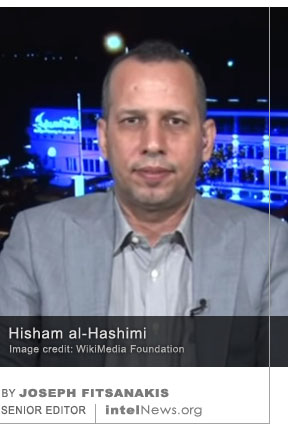 A leading Iraqi expert on paramilitary groups has been shot dead outside his home in Baghdad, raising concerns that the Iraqi government is unable to curtail the activities of militias in the country. Hisham al-Hashimi, 47, was a Baghdad University-educated historian, who rose to prominence in post-Ba’athist Iraq as an expert on paramilitary groups in the country. He was seen as a leading local authority on the Islamic State and advised the United States-led coalition on the group’s inner workings.
 A court in Paris has sentenced to prison two former employees of France’s external intelligence agency, who were accused of spying for the government of China. A third person, the wife of one of the accused, was also handed a jail sentence.
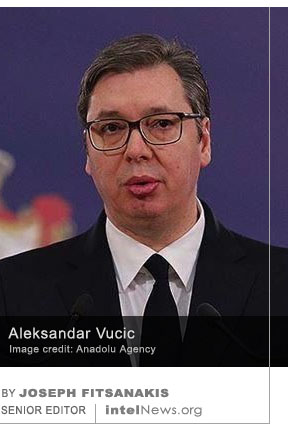 The president of Serbia has said that foreign intelligence services were partly behind a violent protest on Tuesday, which ended up with rioters storming the national parliament building in the capital Belgrade. The protest began in the afternoon, apparently prompted by the government’s decision to reintroduce lockdown measures following a resurgence of COVID-19 incidents in the country. But by the evening the rally had evolved into a full-scale riot led by far-right militants, as well as by some far-left groups.
 Russia’s security service has arrested the media advisor to the director of the country’s space agency, accusing him of supplying military secrets to a spy agency of an unnamed Western country. The Russian Federal Security Service (FSB)
 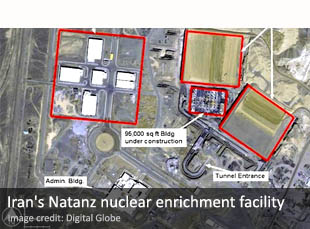 There is growing speculation that Israel’s intelligence services may be behind a spate of blasts that have damaged military and civilian industrial sites in Iran in recent days. Citing a “Middle Eastern intelligence official”, The New York Times
  The trial of two French former intelligence officers begins today in Paris, with the two men accused by French authorities of having spied for China in the 1990s and 2000s. French officials have remained largely silent on the two cases, but media reports have suggested that the two former intelligence officers were found to have carried out espionage tasks for the Chinese government.
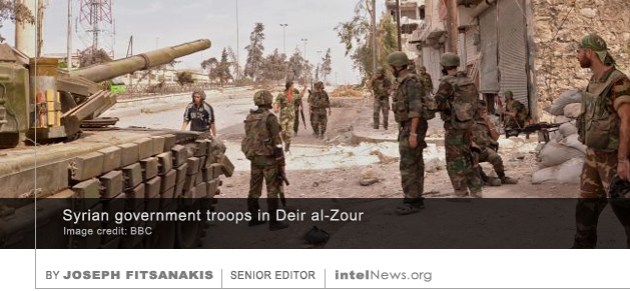 As an intense debate rages in the United States about Moscow’s alleged subversion of American military goals in Afghanistan, sources warn that Russia is increasingly challenging Washington’s troops in Syria. Recent
  Police in Italy have announced the seizure of the largest shipment of amphetamines in counter-narcotics history, containing drugs believed to have been manufactured by the Islamic State in Syria. The drugs shipment was intercepted at the port of Salerno, located south of Naples in southwestern Italy.
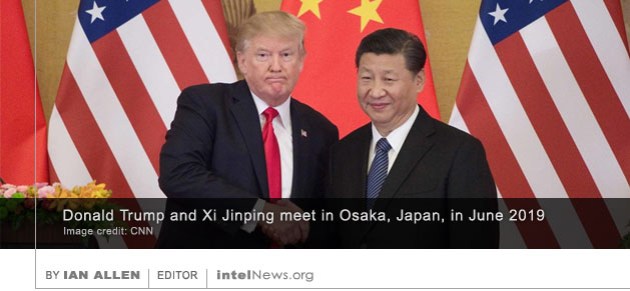 A
A  There was growing tension in Iraq over the weekend, as the government in Baghdad announced it had arrested over a dozen members of a powerful Shi’a militia backed by Iran. The arrests marked the first time that the Shi’a dominated Iraqi government moved to curtail the growing power of these heavily armed groups, which some say are threatening the cohesion of the country’s fragile state institutions.
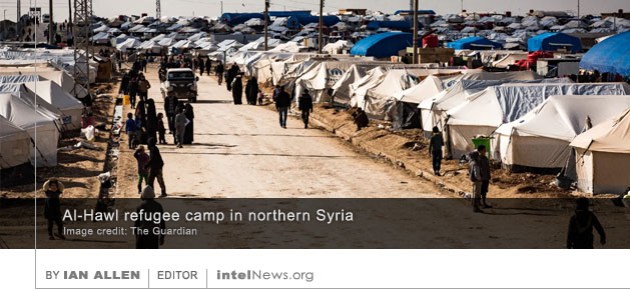 • South African intelligence concerned about spread of insurgency in Mozambique. This is the first public
  Authorities in the United States have formally charged an American soldier for helping a secretive neo-Nazi organization plan a terrorist attack on his own unit. Meanwhile, a government fusion center has warned law enforcement agencies that extremists may be planning violent acts in the Washington DC area.
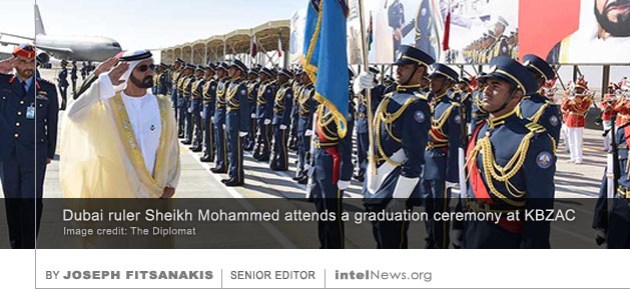 The United Arab Emirates, one of the United States’ closest Arab allies, is training Syrian intelligence and military officers and is giving financial aid to government-owned civilian facilities in Damascus, a report claims. The UAE broke off diplomatic relations with Damascus at the beginning of the Syrian civil war in 2011. But relations between the two countries were restored in 2018, when the oil kingdom reopened its embassy in the Syrian capital.






 intelNews.org
In major victory over Pentagon, CIA is authorized to expand offensive cyber operations
July 16, 2020 by Joseph Fitsanakis 1 Comment
The two-year-old authorization was disclosed by Yahoo News, which cited “former US officials with direct knowledge of the matter” in its report. The website said the authorization came in the form of a presidential finding. A presidential finding, also known as a Memorandum of Notification, refers to a directive, which is authored by the president of the US and is given to the intelligence committees of Congress. Its purpose is to explain the reasoning behind a covert operation that is to be carried out abroad. Following that disclosure by the president, government funds can be appropriated for use in that operation or series of operations.
According to Yahoo News, the 2018 presidential finding provides the CIA with “more freedom in both the kinds of operations it conducts and who it targets”, when it comes to covert action carried out online. The goal of the White House was to enable the CIA to unleash a series of offensive measures against “a handful of adversarial countries”, which include North Korea, Iran, China and Russia, according to the report. Such offensive operations differ substantially from those typically carried out by CIA personnel on cyberspace, which focus on clandestine information collection. In contrast, offensive operations aim to disrupt, sabotage or even destroy targeted systems.
In addition to enhancing the scope of the CIA’s cyber operations, the presidential directive is also believed to make it easier for the agency to target non-state actors and agencies, including financial intuitions, charities, news media, or businesses. Such targets may be attacked when they are found to be operating on behalf of adversarial intelligence agencies. Moreover, it makes it easier for the spy agency to leak secret information about targeted adversaries to media organizations, a tactic that Russian spy services are believed to have utilized in the past.
The Yahoo News report notes that the presidential directive is seen as a major victory for the CIA in its long bureaucratic battle with the Department of Defense. The latter has traditionally been entrusted by the US government with carrying out offensive cyber operations. There are also questions about potential operational overlap between the CIA and the Pentagon, as the two actors may at times be attacking the same targets. This brings up the issue of inter-agency coordination between two bodies, which has not always been smooth in the past.
Yahoo News said it submitted “an extensive list of questions” to the CIA, but the agency declined to comment. The National Security Council, which oversaw the drafting of the alleged presidential finding, did not respond to questions stemming from the news report.
► Author: Joseph Fitsanakis | Date: 16 July 2020 | Permalink
Filed under Expert news and commentary on intelligence, espionage, spies and spying Tagged with CIA, computer hacking, News, offensive cyber operations, Presidential Finding, United States