US threatens to de-fund Africa disease control program over Chinese influence
February 7, 2020 1 Comment
 The United States has threatened to pull its funding for an Africa-wide disease control program if the African Union decides to accept an offer from China to build the program’s new headquarters. The dispute accentuates a growing competition between Washington and Beijing to exert political control in Africa and places the African Union at the center of a difficult dilemma.
The quarrel concerns the Africa Centers for Disease Control and Prevention, or Africa CDC, a network of five biomedical research hubs that are located in Zambia, Kenya, Gabon, Nigeria and Egypt. The network was established in 2017 in response to the outbreak of the Ebola epidemic in western Africa. Its mission is to gather data that can help monitor and contain disease outbreaks and other health crises throughout the continent. The network’s central hub is located at the headquarters of the African Union in Addis Ababa, Ethiopia.
Africa CDC is an initiative of the African Union, but it is partly funded by outside countries and bodies, including China, the United States, and the World Bank. Washington supported the establishment of Africa CDC with a donation of $14 million, and an offer to pay the project director’s salary, as well as assign scientists to work there from the US CDC. But the United States has expressed concerns about a recent offer by China to double its funding of Africa CDC and to build a the organization’s new headquarters, at the cost of $80 million. Foreign affairs ministers from the African Union’s 55 states began discussing Beijing’s offer on Thursday during a meeting in Ethiopia.
There are some among them who question China’s intentions. They refer to news reports that surfaced in the French press in 2018, according to which the Chinese-built headquarters of the African Union was comprehensively ‘bugged’ by Beijing. According to the reports, the $200 million, 19-storey skyscraper in the Ethiopian capital was hardwired with computer servers that secretly communicate with Chinese government computers, without the consent of African Union network managers.
On Thursday The Wall Street Journal quoted an anonymous United States government official, who said that “if the Chinese build the headquarters [of Africa CDC], the US will have nothing to do with” the organization. The African Union has not commented on The Journal’s article.
► Author: Joseph Fitsanakis | Date: 07 February 2020 | Permalink
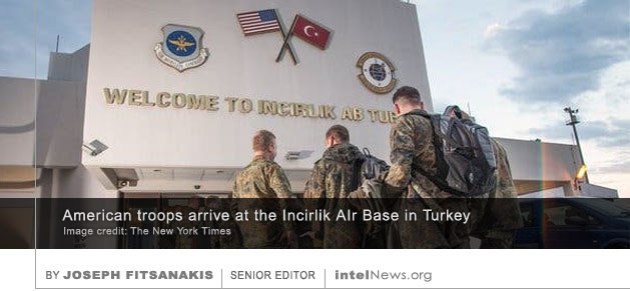 The United States has indefinitely suspended a longstanding military intelligence-sharing program with its North Atlantic Treaty Organization ally Turkey. The program, which targets a Kurdish separatist group, is believed to have been in place since 2007. According to the Reuters news agency, which published the story on Wednesday, it has never before been reported on by news media.
 Authorities in Denmark have announced the arrests of three Iranian Arab separatists, who are charged with carrying out espionage on behalf of the intelligence services of Saudi Arabia. The arrests were announced on Monday by the Danish Security and Intelligence Service, known as PET.
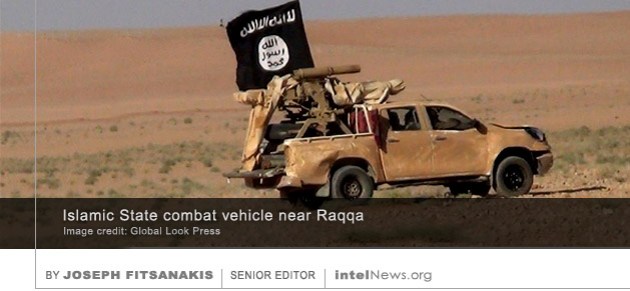 The Islamic State remains committed to its goals and continues to utilize ample funding sources, according to a new report by the United Nations. The report warns that the militant Sunni group, which was previously known as the Islamic State of Iraq and Syria (ISIS), is quickly reasserting itself in the Middle East.
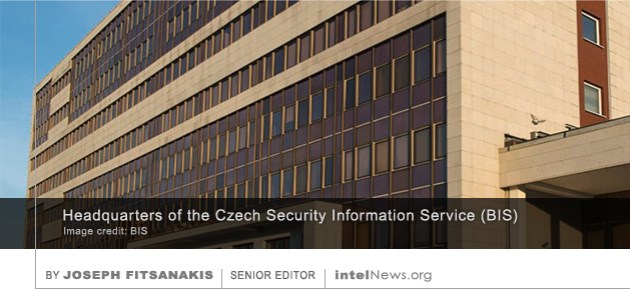 The Czech intelligence services foiled a secret plan by North Korea to smuggle weapons parts and surveillance drones, leading to the expulsion of a North Korean diplomat from the country, according to a report. The report,
 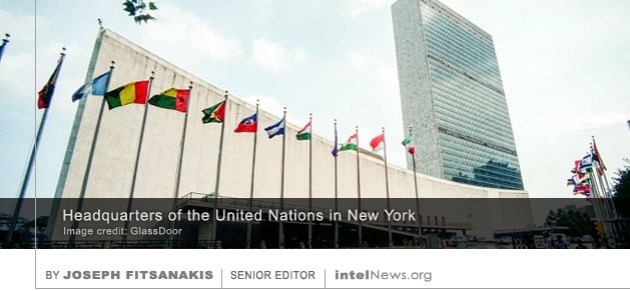 One of the United Nations’ most sensitive computer systems was targeted in a highly sophisticated cyber-espionage operation that appears to have been sponsored by a state, according to a leaked study. The study was leaked to the media earlier this week, and was reported by the Associated Press on Wednesday.
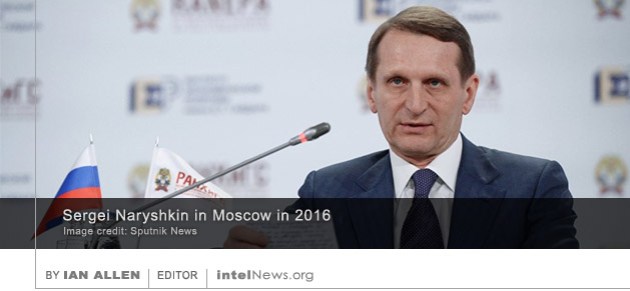 In an extremely rare move, the head of Russia’s spy agency has disclosed the identities of several undercover officers during an event marking the centenary of the KGB and its modern-day successor, the Russian Foreign Intelligence Service, or SVR.
 Russian authorities detained a Japanese journalist last month, and eventually expelled him after accusing him of espionage, according to sources. Even though it occurred last month, the incident was reported only on Monday by Russia’s RIA Novosty news agency.
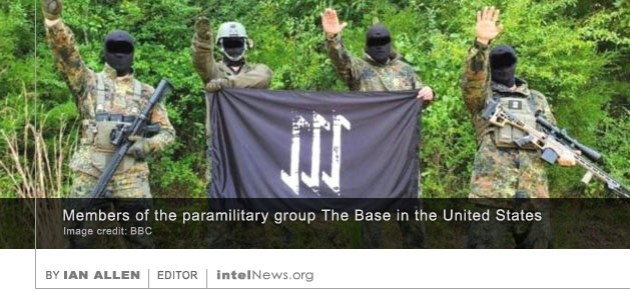 The mysterious leader of an American far-right paramilitary group, which authorities say is seeking to overthrow the United States government, runs the organization from Russia, according to a probe conducted by the BBC. The group, which calls itself The Base, is thought to have been formed in the summer of 2018. Since then, it is believed to have recruited dozens of members using encrypted messaging applications.
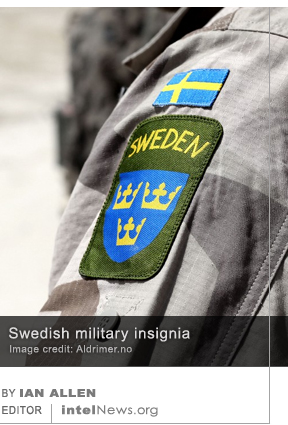 A man who rose through the ranks of the Swedish Armed Forces by using forged credentials, and worked as an intelligence officer in NATO while liaising with the Russian security services, did not betray national secrets, according to Swedish officials.
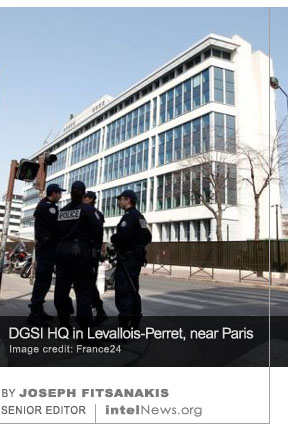 An officer in France’s elite counterterrorism agency is to be tried along with four accomplices for selling forged identity documents and private data on the darknet. The case first emerged in 2018, after officers with France’s Central Office for the Prevention of Illegal Immigration (OCRIEST) detected a seller of high quality forged copies of official documents on the darknet.
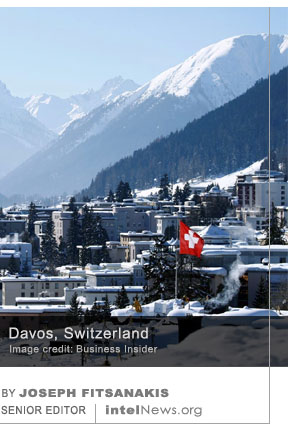 A Swiss newspaper has revealed a previously unreported detention of two Russian diplomats in the luxury Swiss Alpine resort of Davos, which is currently hosting the annual meeting of the World Economic Forum (WEF). The development prompted British authorities to warn some British citizens participating in the WEF meeting that they may be in physical danger.
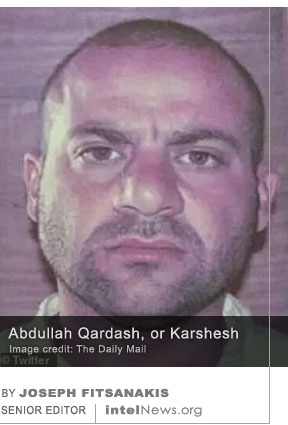 Western intelligence agencies have reportedly confirmed that a non-Arab is now leading the Islamic State for the first time in the organization’s history. Rumors of a new leader of the group began to circulate just hours after American forces
 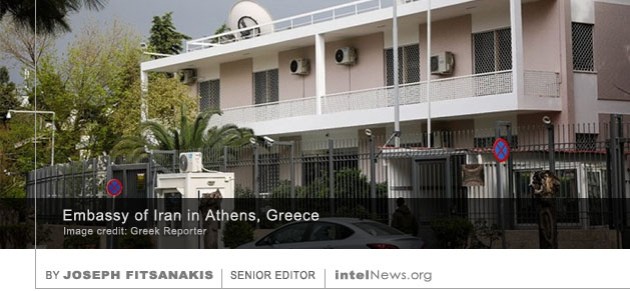 Iran has issued a warning against Greece, saying that it will retaliate if the United States attacks the Islamic Republic using its military bases on Greek soil. It is the first time that Iran has threatened to launch attacks against a member of the European Union in connection with the recent rise in tensions between Tehran and Washington.






 intelNews.org
Pakistani Taliban leaders found dead in Kabul hotel, culprits unknown
February 10, 2020 by Joseph Fitsanakis Leave a comment
According to the BBC, which reported on the incident on Friday, the bodies of the two men were found in or near the Inter-Continental, a five-star hotel located in western Kabul. According to Afghan government sources, the two men were carrying forged identification papers. In a statement issued on Thursday, the Pakistani Taliban identified the dead men as Sheikh Khalid Haqqani and Qari Saif Younis. Sheikh Haqqani had served as the group’s deputy leader, and was a member of its leadership council. Younis was among the group’s most powerful military commanders.
The Pakistani Taliban said that the two men had secretly traveled to Kabul from Paktika, a Taliban stronghold in the east-central region of Afghanistan, in order to attend a high-level meeting. The group did not say who the two men were meeting and why. But it is rare for leading figures of the Pakistani Taliban to leave the areas that the group controls, and even rarer for them to travel to Kabul or any other big city in the region.
The statement from the Pakistani Taliban claimed that the two men were killed “in a clash with American forces”. But the BBC quoted an unnamed “source within the group” who said that they could also have been targeted by militant groups linked to the Pakistani government, which is a sworn enemy of the Pakistani Taliban. United States officials have yet to comment on this developing story.
► Author: Joseph Fitsanakis | Date: 10 February 2020 | Permalink
Filed under Expert news and commentary on intelligence, espionage, spies and spying Tagged with Afghanistan, assassinations, Inter-Continental Hotel (Kabul), Kabul (Afghanistan), News, Pakistani Taliban, Qari Saif Younis, Sheikh Khalid Haqqani, suspicious deaths