Security official confirms ‘unprecedented’ anti-corruption campaign in Iran’s judiciary

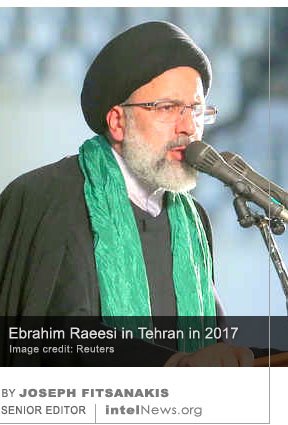
Ebrahim RaeesiA senior Iranian intelligence official has confirmed widespread rumors that an unprecedented anti-corruption campaign is taking place at the top echelons of Iran’s all-powerful judiciary, with some senior figures already in prison. The Iranian judiciary is one of the most powerful and secretive institutions in the Islamic Republic. It is nominally supervised by the Iranian Justice Ministry, but its senior officials, including the chief justice (the head of the judiciary), are appointed directly by Iran’s Supreme Leader Ali Khamenei. It follows that the judiciary has been a deeply conservative institution throughout the country’s existence, and especially after the 1979 Islamic Revolution.

Until earlier this year, the judiciary was headed by Ayatollah Sadeq Amoli Larijani, a protégé of Khamenei, who named him chief justice in August of 2009. Throughout Larijani’s decade-long tenure, there were rumors of rampant corruption in the judiciary, but Khamenei never seemed to intervene. However, in March of this year Larijani was suddenly removed from his position and replaced with Ebrahim Raeesi (pictured), a conservative former attorney general with middle-to-low-rank clerical credentials. Almost as soon as he took charge of the judiciary, Raeesi announced a sweeping anti-corruption campaign. In July, rumors began to circulate in the media that Iran’s Deputy Chief Justice, Akbar Tabari, had been arrested.

On Wednesday, Ali Abdollahi, head of the judiciary’s intelligence and security wing, said during a speech that Tabari had indeed been imprisoned for “exerting influence on some legal cases” and “having unlawful and unethical relationships”. He added that a number of other members of the judiciary had been placed under arrest in connection with the investigation on Tabari. On Thursday, Abdollahi said that the arrests had taken place under the direction of Supreme Leader Khamenei and that they would continue both inside and outside the judiciary. There would be “no delay in cleansing the inside and outside of the judiciary”, said Abdollahi. Raeesi and Khamenei have not made any public comments. But observers now believe that the unprecedented wave of arrests would never have reached the upper levels of the judiciary unless the supreme leader had personally given the anti-corruption campaign the green light.

Author: Joseph Fitsanakis | Date: 16 August 2019 | Permalink

Spies are known to use journalistic cover, claims Australian intelligence agency

ASIO AustraliaForeign spies are known to pose as journalists, which is why journalists should not be exempted from national security investigations, according to testimony by a senior Australian counterintelligence official. The testimony was given on Wednesday at a public hearing held in the Australian parliament to address a series of raids of journalists’ homes and offices by Australian Federal Police in June. The raids were carried out to assist in the investigation of a leak of classified documents in April of last year. According to the leaked documents, Australian government officials have been considering the possibility of authorizing the Australian Signals Directorate (ASD) to collect information on Australians for the first time in the country’s history. The ASD is Australia’s signals intelligence agency, and is equivalent to the Government Communications Headquarters in Britain and the National Security Agency in the United States. It is currently not allowed to collect information on Australian citizens.
At the parliamentary inquiry that started on Monday, members of the media have argued that journalists should have the right to scrutinize the government’s actions and that journalism in the public interest is not harmful to the national security of Australia. But this argument was refuted yesterday by Heather Cook, deputy director-general of the Australian Security Intelligence Organisation (ASIO), Australia’s primary counterintelligence agency. Cook warned that if Australia exempted journalists from national security investigations, hostile foreign powers would exploit journalism to spy on the country. She added that the journalistic profession was being “used nefariously” by foreign intelligence agencies to spy on Australia. “In Australia today, journalism is being used as a cover by foreign intelligence actors”, said Cook, and went on to note that “there is a long history of this worldwide”. She said that journalism offers a convenient cover for spies because it provides “access to senior people and sensitive information” held by those in power.

Journalistic covers are therefore used by “foreign intelligence actors” who seek to “exploit vulnerabilities” and harm the security of Australia, said Cook. She went on to claim that members of foreign intelligence agencies regularly attempt to recruit Australian journalists for purposes of espionage. “In light of this”, said Cook, “ASIO has concern about the concept of exemptions for particular classes of people in the community, such as journalists. Broad exemptions for the media and journalists would invite exploitation by foreign intelligence actors and may increase the intelligence threat faced by Australian journalists”, she concluded. Also on Wednesday, the Australian Federal Police said that it would not rule out further raids on journalists’ offices and homes.

Author: Joseph Fitsanakis | Date: 15 August 2019 | Permalink

New report details growing presence of Russian private security firms in Africa

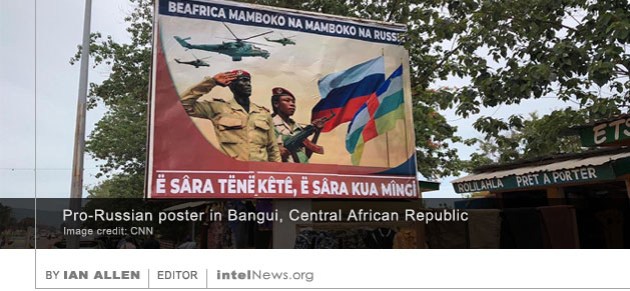
Central African Republic RussiaA new report by the American news network CNN has shed new light into the little-researched subject of Russian-owned private military and security operations in Africa. CNN said the report took a month to complete. It claims that a Russian tycoon by the name of Yevgeny Prigozhin has been instrumental in the growth of Russian private security operations in the continent. Prigozhin is one of the closest confidantes of Russian President Vladimir Putin. The United States accuses him of helping fund the Internet Research Agency, a Russian company based in Saint Petersburg, which allegedly participated in the Kremlin’s efforts to meddle in the 2016 US presidential election. CNN claims that Prigozhin is also connected with PMC Wagner, a Russian security contractor with presence on the ground in Syria and eastern Ukraine. Western officials allege that firms like Wagner could not operate without permission from the Kremlin.
According to the CNN report Prigozhin turned to African countries like Sudan, Libya and the Central African Republic in order to make up for his financial losses in Syria and Ukraine. He allegedly has a role in many of Russia’s 20 military agreements with African states where he provides security and weapons training on behalf of Moscow. In return, his group of companies, headed by a firm called Concord, receives exploration permits and the rights to exploit precious metals found throughout Africa, according to CNN. The network sent correspondents to the Central African Republic where they found that a radio station and a major military training base are run by a group of 250 Russian contractors. None of them will say who pays them, according to CNN, and at least one of them claims to be a “security adviser” for Central African Republic President Faustin-Archange Touadéra. Most of the Russians operate out of Palais de Berengo, a dilapidated presidential palace located 30 miles south of the capital Bangui, which used to belong to the country’s late dictator Jean-Bedel Bokassa. At a nearby mining site there are now hundreds of locals who work for the Russians, said CNN.

The CNN report also notes that last year three Russian journalists, Kirill Radchenko, Alexander Rastorguyev and Orkhan Dzhemal, were ambushed and executed near Sibut in the central region of the country, allegedly “by men wearing turbans and speaking Arabic after refusing to surrender their vehicle and equipment”. They were in the Central African Republic to research the presence of Russian private security firms. Their trip was funded by the Center for Investigation, a London-based foundation owned by the Russian exiled billionaire Mikhail Khodorkovsky. No one has been arrested or charged for the killings of the three Russian journalists. Central African Republic authorities told CNN that “investigations were continuing” into the matter.

Author: Ian Allen | Date: 14 August 2019 | Permalink

French intelligence made secret deal with Palestinian militants, ex-spy chief claims

Goldenberg RestaurantFrance allowed Palestinian militants to operate freely on its soil in exchange for not carrying out terrorist attacks there, according to the former director of France’s domestic security service. The alleged deal was struck between the French government and a die-hard Palestinian militant group known as the Abu Nidal Organization, or ANO. The group’s official name was Fatah – The Revolutionary Council, but it was usually referred to by the name of its founder and leader, Abu Nidal. The group was formed in 1974 after a split in Fatah, the Palestinian armed group led by Yasser Arafat. Abu Nidal (real name Sabri Khalil al-Banna) accused Arafat and other senior officials of Fatah and the Palestine Liberation Organization (PLO) of being conciliatory toward Israel. Eventually Abu Nidal moved to Iraq and declared war on Fatah and the PLO, accusing them of betraying the Palestinian cause.

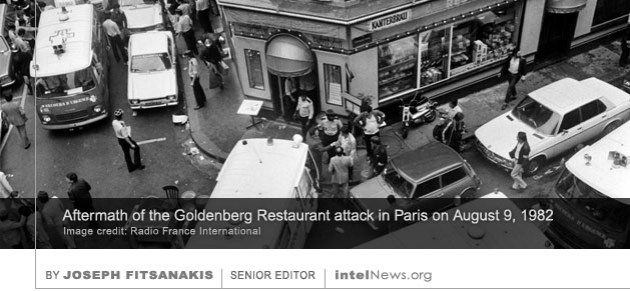
Over the next 20 years, ANO carried out dozens of violent attacks that killed over 1500 people around the world, in countries such as Britain, Austria, Italy, Tunisia, Sudan, Turkey, Pakistan and India. The main targets of the ANO were Israel, the United States, and other Palestinian groups, which the group saw as deserters from the struggle for an independent Palestine. On August 9, 1982, ANO guerillas used grenades and machine guns to attack the Goldenberg Restaurant in Paris, France, killing six and wounding 22 people (pictured above). The attackers fled the scene of the crime and were never captured. It was only in 2015 that some former ANO members provided evidence about the terrorist attack to French magistrates, after having been granted immunity from prosecution. Based on these testimonies, the French government issued arrest warrants for three of the attackers who today live in Europe and Palestine. None, however, have been extradited to France to face justice.

The plot thickened last Thursday, however, when France’s Le Parisien newspaper reported excerpts of testimonies given to the magistrates who are investigating the Goldenberg Restaurant attack. One of the testimonies was allegedly provided by former spy Yves Bonnet, who directed the Directorate of Territorial Surveillance (DST) in the 1980s. Until 2008 the DST operated as the counterintelligence and counterterrorism wing of the French National Police. According to Le Parisien, Bonnet, now 83, said in his testimony that the DST struck a deal with Abu Nidal after 1982, which allowed them to continue to operate in France on the understanding that they would not carry out further terrorist attacks on French soil. “We made something of an oral agreement”, Bonnet is quoted as having told the magistrates. “I want no further attacks on French soil, and in return I will allow you to enter France and promise that you will face no harm”. The former spy added that the DST informed the chief of staff of France’s president at the time, François Mitterrand, about the secret deal. However, nothing about the agreement was ever recorded in official meeting minutes, he said. The agreement between the DST and Abu Nidal “was successful”, said Bonnet, as the group carried no more attacks on French soil after the attack on the Goldenberg Restaurant.

As can be expected, the allegations by Le Parisien angered France’s Jewish community. A committee representing the victims and affected families of the Goldenberg Restaurant attack said through its lawyer that, if true, Bonnet’s admission was “disgraceful”. The committee called on the French government to declassify all documents relating to exchanges between the French state and the Abu Nidal Organization.

Author: Joseph Fitsanakis | Date: 12 August 2019 | Permalink

Despite imminent US-Taliban deal, CIA plans to keep proxy units in Afghanistan

Armed guerillas Khost AfghanistanThe United States Central Intelligence Agency plans to retain a strong presence on the ground in Afghanistan, despite reports that American troops may soon be leaving the country following a deal with the Taliban. Several news outlets reported this week that Washington has resolved its differences with the Taliban about withdrawing American troops from Afghanistan, after receiving assurances by the Taliban that they will not cooperate with other militant Islamist groups, including al-Qaeda. An announcement of an agreement between the United States and the Taliban may thus be imminent. But in an article for Foreign Policy, Stefanie Glinski points out that the CIA is not planning to leave the Central Asian country any time soon.
The American intelligence agency is known to support, arm and train several proxy forces throughout Afghanistan. Langley plans to keep those proxy forces operating in the country for the foreseeable future, regardless of whether US troops pull out, says Glinski. She gives the example of the Khost Protection Force (KPF), a 6,500-strong unit of Afghan soldiers who are “trained, equipped and funded by the CIA”. The KPF is the most active and visible of an extensive network of CIA-sponsored paramilitary groups in Afghanistan. It operates almost exclusively along the Afghan-Pakistani border and has a strong presence in Taliban strongholds like Ghazni, Paktia and Khost. The roots of the KPF go back to the days immediately after the attacks of September 11, 2001, which prompted the US military invasion of Afghanistan. It therefore precedes the Afghan National Army, Afghanistan’s state-run military apparatus, and does not operate under its command. Instead, it is solely directed by the CIA, which uses it to secure the Afghan-Pakistani border and disrupt the activities of Taliban, al-Qaeda and Islamic State fighters in the Afghan borderlands.

Members of the KPF claim that they are “better trained than the Afghan National Army”. They are also paid much better, over $1000.00 per month, which is an enormous sum for Afghanistan. Perhaps unsurprisingly, Glinski reports that most KPF fighters joined the group for the money and the ability to eventually seek permanent resettlement in the United States. But alongside the group’s elite image, KPF members have acquired notoriety and are often seen as trigger-happy and unaccountable. Several reports in Western media have said that the KPF’s tactical accomplishments have come at a high price, with countless reports of civilian deaths and, some claim, even war crimes. These risk “alienating the Afghan population”, said a New York Times report last year. Glinski says it is possible the KPF’s aggressive tactics may be “radicalizing portions of the very population it intends to pacify or frighten into submission”. In April of this year, a United Nations report alleged that more Afghan civilians died as a result of attacks by Afghan government and American military attacks than at the hands of the Taliban and other guerilla groups. The CIA did not respond to several requests for comment from Foreign Policy, says Glinski.

Author: Joseph Fitsanakis | Date: 09 August 2019 | Permalink

Australian ex-intelligence officer pleads guilty to disclosing spy operation

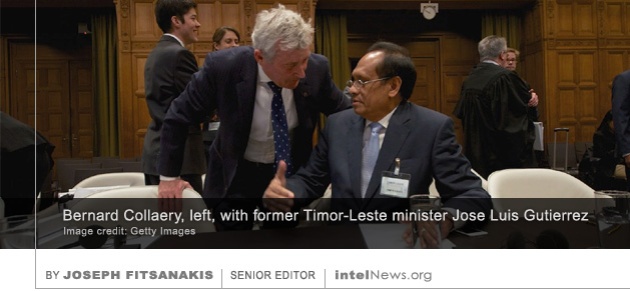
Bernard CollaeryAn Australian former intelligence officer will plead guilty to revealing an Australian spy operation against the impoverished nation of East Timor, which prompted international outcry and damaged Canberra’s reputation. IntelNews has covered the case of the former intelligence officer, known only as “Witness K.” since 2013, when it was first revealed. It is believed that Witness K. served as director of technical operations in the Australian Secret Intelligence Service (ASIS), Australia’s foreign-intelligence agency. In 2013, he publicly objected to an intelligence-collection operation that targeted the impoverished Pacific island nation of Timor-Leste, also known as East Timor.
According to Witness K., a group of ASIS officers disguised themselves as members of a renovation crew and planted several electronic surveillance devices in an East Timorese government complex. The inside information gathered from those devices allegedly allowed the Australian government to gain the upper hand in a series of complex negotiations that led to the 2004 Certain Maritime Arrangements in the Timor Sea (CMATS) treaty. The treaty awards Australia a share from profits from oil exploration in the Greater Sunrise oil and gas field, which is claimed by both Australia and East Timor. But in 2013, the East Timorese government took Australia to the Permanent Court of Arbitration in The Hague, claiming that the CMATS treaty should be scrapped. The East Timorese argued that during the sensitive negotiations that preceded the CMATS treaty, the Australian government was in possession of intelligence acquired through illegal bugging.

The claim of the East Timorese government was supported by Witness K., who argued that ASIS’ espionage operation was both “immoral and wrong” because it was designed to benefit the interests of large energy conglomerates and had nothing to do with Australian national security. It is worth noting that Witness K. said he decided to reveal the ASIS bugging operation in 2012, after he learned that Australia’s former Minister of Foreign Affairs, Alexander Downer, had been hired as an adviser to Woodside Petroleum, an energy company that was directly benefiting from the CMATS treaty.

However, as soon as the East Timorese told the Permanent Court of Arbitration that they would be questioning a witness from ASIS, officers from the Australian Security Intelligence Organisation (ASIO), the country’s domestic intelligence agency, raided the Canberra law offices of Bernard Collaery, East Timor’s lawyer in the case. The raiders took away documents that revealed the identity of Witness K., and then proceeded to detain him for questioning. They also confiscated his passport, which prevented him from traveling to the Netherlands to testify in the case. Read more of this post

Al-Qaeda is enduring security threat despite Hamza bin Laden’s death, experts warn

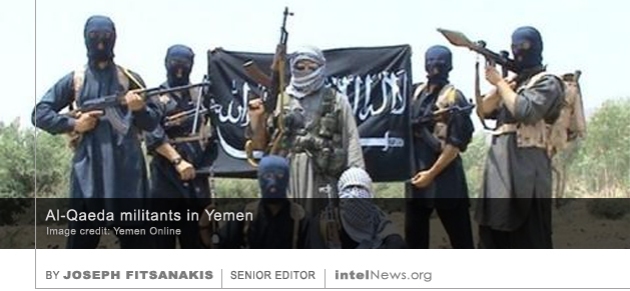
Al-Qaeda in YemenAl-Qaeda and its affiliate groups continue to be the most persistent transnational threats to the security of the West, according to experts who spoke after the alleged death of Osama bin Laden’s son, Hamza. Last week The New York Times reported that Hamza bin Laden, widely seen as an ascending figure in the group that his father co-founded in the 1980s, was killed sometime after 2017. The paper cited two anonymous United States government officials who said that Hamza bin Laden died in 2017 or 2018 as a result of a military operation led by an unnamed state.
But experts have since warned that the death of Hamza bin Laden has not significantly weakened al-Qaeda. At a briefing in Washington on Thursday, Nathan Sales, a US Department of State acting under secretary who focuses on security and terrorism, stressed that “al-Qaeda is as strong as it has ever been”. The group’s relative quietness in recent years should not be perceived as an indication of weakness or resignation, said Sales. On the contrary, the Sunni militant group remains “very much in this fight”, he cautioned. Unlike the Islamic State of Iraq and Syria (ISIS), al-Qaeda has been patient in the past five years and has strategically allowed ISIS to “absorb the brunt of the world’s counterterrorism efforts”, said Sales. During that time, al-Qaeda patiently rebuilt itself and largely recovered from the blow it suffered in the years leading up to the killing of Osama bin Laden.

Today al-Qaeda retains significant territory in northwest Syria and is also present throughout Yemen, where it counts on the support of many thousands of armed fighters, according to Sales. Its affiliate group in Somalia was behind a car bombing in Mogadishu in July, while the group also took responsibility for an armed attack in an upscale suburb of Kenya in January of this year. Another expert, Jason Blazakis, who until last year directed the US Department of State’s Center on Terrorism, Extremism and Counterterrorism, appears to agree with Sales. In an article published last Friday, Blazakis cautioned that Hamza bin Laden’s demise, if true, “doesn’t mean that al Qaeda no longer represents a critical threat to US national security”. On the contrary, he said, the group’s “strategic patience and focus on the ‘far enemy’”, i.e. the United States, make it “the most enduring transnational threat to US national security interests”.

Author: Joseph Fitsanakis | Date: 06 August 2019 | Permalink

Taiwan president’s security detail implicated in cigarette smuggling scandal

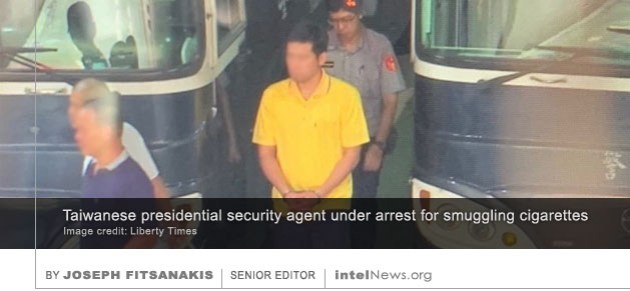
Taiwan cigarette smugglingAt least 70 members of Taiwan’s presidential security detail used the president’s official trips abroad to smuggle thousands of cigarettes into the country, it has been announced by Taiwan’s’s spy chief. According to news reports from Taiwan, the smuggling scandal was uncovered last month, when the country’s President, Tsai Ing-wen, concluded an official tour of several Caribbean nations. Taiwanese customs officers stopped a security agent in President Tsai’s entourage, who allegedly tried to bring nearly 10,000 cartons of duty-free cigarettes into the country. The agent had ordered the cigarettes online prior to the presidential trip. He then concealed the cartons in an airport warehouse and planned to bring them into the country by disguising them as supplies used by President Tsai’s motorcade.
The customs officials contacted China Airlines, the national carrier of Taiwan, and requested information on the number of duty-free cigarette cartons that had been brought onboard by members of the president’s entourage during her foreign trips. The data revealed that thousands of cartons had been transported during presidential trips, which pointed to an organized smuggling operation by dozens of members of Tsai’s entourage. A subsequent investigation by the National Security Bureau (NSB), Taiwan’s spy service, revealed that the smuggling network had begun operating during the presidency of Ma Ying-jeou, Tsai’s predecessor. The scandal prompted the resignation of the director of the NSB. On Friday, the NSB’s new Director, Chiu Kuo-cheng, gave a rare press conference in which he provided further details on the case. According to Chiu, 49 members of the presidential security detail, 25 NSB officers and two members of Taiwan’s Military Police, participated in the smuggling network. Most smuggled between 10 and 50 cartons of cigarettes per trip; but some smuggled over 1,000 cartons per trip.

Chiu said on Friday that two NSB officers had been placed under arrest for their participation in the smuggling ring, and further arrests were being planned. He warned those responsible that he had personally taken command of the NSB’s investigation, and that punishment would be “severe” for those found to have participated in the smuggling. Chiu added that a number of China Airlines officials were also implicated in the smuggling network and were being questioned. On Saturday, President Tsai said she had no knowledge that members of her own security detail were smuggling duty-free cigarettes into Taiwan.

Author: Joseph Fitsanakis | Date: 05 August 2019 | Permalink

ISIS will launch ‘complex international attacks’, warns UN intelligence report

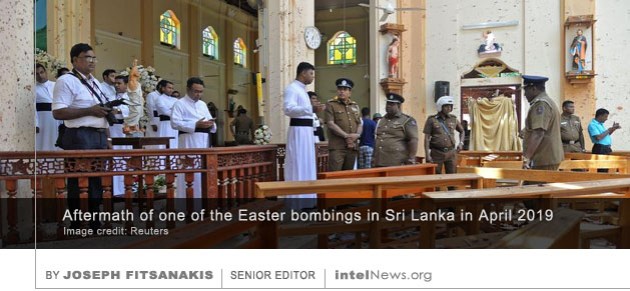
Sri Lanka Easter bombingsDespite its military defeat in the Middle East, the Islamic State retains the ability to launch “complex international attacks” and will likely do so this year, according to a new report by a United Nations monitoring team. These attacks will occur in “unexpected locations” around the world, says the report, which was authored by a committee of the UN’s Security Council that monitors the impact of UN-imposed international sanctions designed to weaken the Islamic State, al-Qaeda and groups aligned with them.

On April 21 of this year, the Islamic State (known also as the Islamic State of Iraq and Syria, or ISIS) claimed responsibility for nine suicide blasts that targeted Catholic churches and five-star hotels in Sri Lanka’s western and eastern coastal regions. The near-simultaneous bombings killed 258 people and injured over 500. They are believed to constitute the bloodiest terrorist attack in Sri Lanka’s history. But the United Nations report published on Wednesday claimed that the Sri Lanka attacks were the beginning of a worldwide campaign by ISIS, which will continue to occur throughout 2019. The absence of major ISIS attacks after April 21 is a temporary “abatement”, says the report, and will likely end before the this year concludes. Between now and then, “more Islamic State-inspired attacks will occur”, it notes. Since the fall of its self-styled caliphate in the Middle East, the militant Sunni group has maintained a sophisticated online media profile and propaganda campaign and continues to “aspire to have global relevance”, according to the report. To achieve this aim, the Islamic State’s leadership believes that the group must continue to carry out large-scale international attacks. In their effort, ISIS planners are assisted by the group’s substantial fortune, which is estimated to approach $450 million. These funds are being used to sponsor terrorist operations by ISIS affiliates in Asia, Africa and the Middle East, the report claims.

In an earlier intelligence report published in August of last year, the United Nations warned that the Islamic State had recovered from its recent defeats in the battlefield and retained as many as 30,000 committed members in Iraq and Syria alone. The report appeared to contradict earlier proclamations by the Iraqi government that the war against the group had been won. Similar proclamations were issued last year by United States President Donald Trump, who said that the war against the militant Sunni group was “98 percent” over.

Author: Joseph Fitsanakis | Date: 01 August 2019 | Permalink

Many countries, not just Russia, are trying to influence US elections, experts warn

TwitterSeveral countries are behind organized efforts to influence electoral politics in the United States, with Russia being one among a growing list of culprits, according to experts. Speaking to The Washington Post last week, cybersecurity experts issued what they described as “a wake-up call” to voters and warned that America’s information space is becoming “a free-for-all for foreign intelligence”. Foreign spy services that are utilizing information operations in order to influence US elections reportedly include —aside from Russia— Israel, Saudi Arabia, the United Arab Emirates, Venezuela and China.

The majority of foreign information operations take place on social-media platforms such as YouTube, Twitter, Instagram and Facebook. But there are also campaigns to influence more traditional American media, for instance by tricking newspapers into publishing letters to the editor that are in fact authored by foreign intelligence operatives. Analysts from FireEye, Graphika and other cybersecurity and network-analysis firms told The Post that some information operations are difficult to detect, because the presence of a state security service is not always apparent. However, the messages that are communicated in tweets, Facebook postings, online videos, etc., tend to echo —often word for word— the rhetoric of foreign governments, and promote their geopolitical objectives. As can be expected, these objectives vary. Thus, Russian, Israeli and Saudi information operations tend to express strong political support for US President Donald Trump, arguably because these governments see his potential re-election as a development that would further their national interest. In contrast, Iranian information operations tend to lambast Trump for his negative stance on the Iranian nuclear deal and for his support for Saudi Arabia’s intervention in the Yemeni Civil War.

The Washington Post article notes that all major social-media companies employ teams of screeners whose mission is to detect and eliminate disinformation campaigns by both state and non-state actors. However, experts remain skeptical about their ability to combat the phenomenon, given that the quantity and sophistication of disinformation campaigns is constantly increasing. Many countries —including Israel and the United States— now maintain advanced information operations targeting national elections on several continents. There are also many governments —such as Qatar, the Philippines and Turkey— that use these techniques on their own voters and could potentially use them in the near future to target foreign populations, including Americans. The 2020 presidential election in the US is expected to be the most hotly contested in many decades, so it is certain that numerous foreign spy agencies will try to influence it in numerous ways, says The Post.

Author: Joseph Fitsanakis | Date: 29 July 2019 | Permalink

Austria issues international arrest warrant for alleged Russian spy

Igor Egorovich ZaytsevThe Austrian government has issued an international arrest warrant for a Russian man who allegedly recruited a retired colonel in the Austrian Federal Army to spy for Moscow. The arrest warrant was issued on Tuesday by the public prosecutor’s office in the city of Salzburg. It identifies the Russian man as Igor Egorovich Zaytsev. Austrian officials allege that the Moscow-born Zaytsev is in fact an intelligence officer for the Main Directorate of the General Staff of the Russian Armed Forces. Known as GRU, the organization is Russia’s primary military-intelligence agency.

In an accompanying press statement issued on Tuesday, the Austrian Ministry of the Interior said that Zaytsev had facilitated the “betrayal of state secrets” and that his actions had been “to the detriment of the Republic of Austria”. The arrest warrant accuses Zaytsev of having participated in the “intentional disclosure of a military secret”, but does not provide details. However, in a subsequent statement, Austrian police directly linked the search for Zaytsev with an espionage case that was reported in the Austrian media last year. The statement said that Zaytsev is believed to have recruited a man known as “Martin M.” to spy on Austria. This appears to refer to the arrest last November of a 70-year-old colonel in the Austrian Army, who was stationed in Salzburg. He is believed to have spied for Russia from at least 1992 until his arrest. Austrian media reported that the accused spy was believed to have given Russia information on a range of weapons systems used by the Austrian Army and Air Force, as well as the personal details of high-ranking officers in the Austrian Armed Forces.

Soon after the arrest of “Martin M.”, Austrian authorities arrested a second man, identified only as “O.”, who is also suspected on having spied for Russia. According to the Vienna Public Prosecutor’s Office, “O.” was an employee of the Austrian Office for Protection of the Constitution and Counterterrorism, known as BVT. He had been investigated on suspicion of espionage for more than a year prior to his arrest. The man’s arrest took place alongside simultaneous raids at two residential addresses associated with him, according to reports. No further details have been made available since the arrest. It is not known whether Zaytsev’s is also connected with the case of “O.”.

Author: Joseph Fitsanakis | Date: 26 July 2019 | Permalink

‘Sonic attacks’ may have shrunk brains of US diplomats in Cuba, study finds

US embassy in CubaA series of alleged “sonic attacks” by a mysterious weapon may have caused the brains of American diplomats who served at the United States embassy in Cuba to shrink, according to a new scientific study. In 2017 Washington recalled the majority of its personnel from the US embassy in Havana and at least two more diplomats from the US consulate in the Chinese city of Guangzhou. The evacuees reported experiencing “unusual acute auditory or sensory phenomena” and “unusual sounds or piercing noises”. Subsequent tests showed that they suffered from sudden and unexplained loss of hearing, and possibly from various forms of brain injuries. In April of this year the Canadian embassy evacuated all family members of its personnel stationed in the Cuban capital over similar health concerns. Subsequently, the US issued a travel warning advising its citizens to stay away from the island and accused Cuba of neglecting to ensure the safety of US diplomatic personnel stationed there.

The theory that a sonic weapon caused the diplomats’ ailments is not universally held, with some scientists doubting the validity of such claims. But now a new study may have provided a tangible and measurable link that connects the physiological symptoms suffered by the diplomats. The study, published in the latest issue of the Journal of the American Medical Association,The study, published in the latest issue of the Journal of the American Medical Association, is based on a detailed examination of data from magnetic resonance imaging studies that assessed both structural and functional endpoints of the brains of the victims of the alleged sonic attacks. Scientists at the University of Pennsylvania took these images of the brains of 40 individuals who complained of acute auditory and other sensory disturbances while in Cuba, and compared them with those of healthy participants. The latter were matched with the patients for age, lifestyle and general background. According to the study, the comparison revealed statistically significant differences in various structures of the subjects’ brains. The differences were most pronounced in the white matter of their brains. The white matter is important because it is comprised of the myelin-protected nerve fibers that are responsible for transmitting the electrical signals from one brain cell (neuron) to another. Damage to these regions would result in a reduction of the brain’s ability to process information as rapidly as the brains of non-affected individuals. According to the study, the volume of white matter in the brains of the alleged sonic attack victims was approximately five percent smaller than that in the brains of healthy adults.

One of the scientists behind the study told the British newspaper The Daily Telegraph that his team of researchers have not seen “anything like it before”. But he added that he and his colleagues are “not sure […] what it is”, though “there does appear to be something there”. Another expert told the paper that the findings of the University of Pennsylvania study supported the validity of the symptoms reported by the American diplomats. However, they do not help answer the question of whether they suffered actual brain injuries. A spokesman from the United States Department of State told The Telegraph that the Department is “aware of the study and welcomes the medical community’s discussion of this incredibly complex issue”.

Author: Joseph Fitsanakis | Date: 25 July 2019 | Permalink

Hundreds of ISIS fighters returning to Iraq to wage low-level insurgency

Islamic State ISISAbout 1,000 Islamic State fighters have returned to Iraq in recent months and are waging a low-level insurgency that threatens to destabilize rural areas and may be the forerunner of a new sectarian war, an expert has warned. Thousands of fighters belonging to the Islamic State —known also as the Islamic State of Iraq and Syria, or ISIS— crossed into Syria in late 2017. In December of that year, the Iraqi government of Prime Minister Haider al-Abadi declared victory in the war against the militant Sunni group. Since then, however, many of these fighters have been slipping back into Iraq from Syria and are now picking up arms again against the Iraqi state, which they see as being dominated by Iran-allied Shiites.

In an article published on Sunday, The Washington Post cites Hisham al-Hashimi, an Iraqi security advisor to the government in Baghdad, as well as several foreign aid groups, who warns that ISIS is regrouping in Iraq. Al-Hashimi told The Post that approximately 1,000 ISIS fighters are believed to have crossed into Iraq from Syria since December of 2018. Most of them are Iraqi nationals who are essentially returning to the Sunni-majority areas of the country that were considered ISIS strongholds before 2018. Upon their return, the fighters join small ISIS cells that operate mostly in rural areas in central and northern Iraq. They move at night and are intimately familiar with the local terrain, which allows them to utilize effectively a variety of hiding places. These cells can now be found in locations ranging from the city of Kirkuk in the north to the province of Diyala, east of Baghdad. They are responsible for scores of kidnappings, roadside bombings and sniper attacks that target local officials and security personnel. Local observers stress that the re-emerging ISIS cells are too weak to threaten the territorial control of the country by the Iraqi government. However, they are rapidly destabilizing rural areas in the country and appear to be preparing for a protracted insurgency that could potentially lead to another major sectarian war.

The Washington Post report comes a month after a group of researchers with the Institute for the Study of War warned that the Islamic State is capable of making a sudden comeback in the Middle East that could be “faster and even more devastating” than 2014, when the group quickly conquered territory the size of Britain. In a 76-page paper entitled ISIS’s Second Comeback: Assessing the Next ISIS Insurgency, the researchers said that the militant group had managed to subvert Iraqi and Syrian government efforts to reintroduce stability and safety in areas previously under ISIS domination. Not only were government forces finding it “increasingly difficult to establish durable and legitimate security and political structures” in those areas, but they should be worried about the possibility of ISIS actually reconquering territory in both Iraq and Syria, the report warned.

Author: Joseph Fitsanakis | Date: 24 July 2019 | Permalink

South Korean spy agency says North Korean nuclear negotiators were not executed

Kim Jong-unThe spy agency of South Korea has dismissed media reports that North Korea had several of its top nuclear negotiators executed or sent to labor camps, but has not rejected rumors of a major reshuffle in Pyongyang. In early June, media reports in Seoul claimed that North Korea had executed at least five of its senior nuclear negotiators and imprisoned several others. Prior to these reports, rumors of executions of North Korean nuclear negotiators had circulated in international diplomatic circles since February, but no specific allegations had surfaced in the news media. That changed when Chosun Ilbo, South Korea’s highest-circulation newspaper, alleged that at least five executions of nuclear negotiators had taken place in Pyongyang in March.

The paper claimed that the most senior North Korean official to be executed was Kim Hyok-chol, who led the nuclear negotiations with Washington prior to the Vietnam summit. The summit culminated with a —seemingly fruitless— face-to-face meeting between the North Korean Supreme Leader Kim Jong-un and US President Donald Trump. Citing an “anonymous source” Chosun Ilbo said that Kim had been executed by a firing squad at the Pyongyang East Airfield in Mirim, a suburb of the North Korean capital. Four other Ministry of Foreign Affairs officials were executed at the same time, allegedly for having been “swayed by American imperialists to betray the Supreme Leader”, said the newspaper. Two more senior North Korean nuclear negotiators, Kim Yong-chol and Kim Song-hye, were allegedly stripped of their government posts and sent to labor camps, according to the report.

On Tuesday, however, South Korea’s National Intelligence Service (NIS) directly contradicted Chosun Ilbo’s account. The spy agency told a closed-door meeting with members of parliament in Seoul that Kim Yong-chol had made recent appearances at senior-level events of the ruling Workers’ Party of Korea (WPK), and that Kim Hyok-chol was still alive. But the NIS did not rule out the possibility of a major reshuffle among the ranks of Pyongyang’s nuclear negotiators and the replacement of some of the top figures with new officials from the ranks of the WPK. Most international observers agree that Kim Jong-un is displeased with the impasse in the nuclear negotiations with Washington and has criticized —in some cases publicly— the performance of his team of negotiators.

Author: Joseph Fitsanakis | Date: 18 July 2019 | Permalink

Swiss to extradite brother of ‘leading biochemist’ who spied for Chinese firm

GlaxoSmithKlineA Swiss court has ordered the extradition to the United States of the brother of one of the world’s leading biochemists, who spied on a British pharmaceutical firm to help a Chinese startup. The extradition is part of a large corporate espionage case centered on Yu Xue, a Chinese scientist described by US federal prosecutors as “one of the world’s top protein biochemists”. Yu specializes in drug research for cancer and other serious terminal illnesses. From 2006 until 2016 he worked in the US for GlaxoSmithKline (GSK), a leading British pharmaceutical group.

In 2018, Yu was arrested by US authorities for stealing trade secrets from a GSK research facility in the US state of Pennsylvania, and giving them to a Chinese startup pharmaceutical company called Renopharma. He eventually pleaded guilty to stealing proprietary data from GSK, in a case that the US Department of Justice described as a textbook example of Chinese “economic warfare” against America. US government prosecutors also claim that Renopharma is almost wholly funded the Chinese government. The three co-founders of the Chinese firm have also been charged with corporate espionage targeting a US firm.

On May 28 Yu’s brother, Gongda Xue, was arrested in Basel, Switzerland. According to the US government, Gongda used GSK data stolen by his brother to carry out drug experimentation at the Friedrich Miescher Institute for Biomedical Research, where he worked as a post-doctoral trainee between 2008 and 2014. On Tuesday, the Swiss Federal Office of Justice (FOJ), ruled in favor of a request by the US government to extradite Gongda so he can be tried in Pennsylvaia. According to the FOJ, the Chinese scientist will be extradited as soon as his 30-day appeal period expires.

Author: Ian Allen | Date: 17 July 2019 | Permalink