China accuses ‘foreign governments’ of installing fake weather stations to collect data

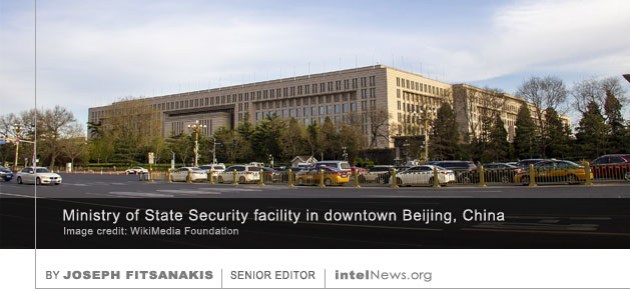
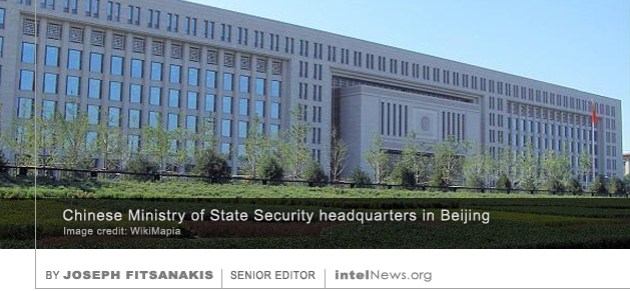
Chinese Ministry of State SecurityBEIJING HAS ACCUSED “FOREIGN governments” of collecting data on China through hundreds of fake meteorological stations that have been illegally installed throughout Chinese territory. The announcement appears to form part of a broader “people’s anti-espionage war” that the Communist Party of China launched in 2015 in order to create a “positive atmosphere of national security” across the nation.

On Tuesday of last week, China’s civilian spy agency, the Ministry of State Security (MSS), shared information about the alleged fake meteorological stations on its WeChat social media account. The agency said it had discovered hundreds of fake stations in over 20 Chinese provinces. The discovery resulted from an investigation of 10 firms that specialize in installing meteorological stations, which was broadened to include a probe of over 3,000 “foreign-linked” meteorological stations across China.

The MSS claims that some of the foreign companies involved in installing meteorological stations had not obtained the required administrative licenses. Furthermore, some of the stations had been placed in the vicinity of food-production hubs or defense-related installations, allegedly in order to record geolocational data. The latter were transmitted abroad in real time, the MSS said.

According to the spy agency, some of the fake meteorological stations were “directly funded by foreign governments”. However, there was no mention in the statement of the specific governments that allegedly funded these stations. Instead, the statement noted that “the illegal collection and cross-border transmission of meteorological data endangers China’s sovereignty, security, and development interests”.

It is rare for the reclusive and secrecy-prone MSS to make any public announcements relating to counter-espionage. In the past year, however, it has announced the arrests of several Chinese officials who allegedly spied on China for the United States Central Intelligence Agency. There is no information about whether the alleged fake meteorological stations are connected to prior arrests of Chinese officials for espionage.

Author: Joseph Fitsanakis | Date: 06 November 2023 | Permalink

Ex-Russian spy can sue British government for revealing his identity, court rules

High Court UKA FORMER SOVIET KGB officer, who now lives in the United Kingdom under witness protection, can sue the British state for revealing his identity to Latvian authorities, which may have put his life in danger, a judge has ruled. Boris Karpichkov, 64, joined the Soviet KGB in 1984, but became a defector-in-place for Latvian intelligence in 1991, when the Soviet Union disintegrated.
He then allegedly spied on Latvia for one of the KGB’s successor agencies, the Federal Security Service, before switching sides again and spying on Russia for the Latvians. He also claims to have spied on Russia for French and American intelligence. In 1998, carrying two suitcases filled with top-secret Russian government documents, and using forged passports, he arrived with his family in Britain, where he has lived ever since. Shortly after he was granted asylum, the British government issued Karpichkov with a new identity to protect him from the Russian security services. In 2018, Karpichkov claimed that, despite the British government’s efforts to protect him, Russian intelligence had tried to kill him three times since 2006.

Since Karpichkov’s relocation to the United Kingdom, Latvian authorities have twice attempted to have him extradited there. A High Court judge rejected the first extradition request, ruling that Karpichkov’s life would be in danger if he were to be handed over to Latvia. But in 2018 the Latvian authorities issued a follow-up request for Karpichkov’s extradition. At that time the United Kingdom’s National Crime Agency (NCA), which manages the UK Protected Persons Service, shared information about Karpichkov’s protected identity with the Latvians. A judge later quashed that extradition request too, warning that the former KGB intelligence officer had “an abundance of dangerous enemies in both Latvia and Russia”.

Karpichkov claims that the information that the NCA shared with the Latvians during the extradition negotiations, resulted in him receiving death threats from his enemies abroad. The NCA claims it was under a European Arrest Warrant legislation mandate to disclose Karpichkov’s protected identity to the Latvian authorities. On Friday, however, a High Court judge ruled that Karpichkov had the right to sue the NCA for unlawfully disclosing Karpichkov’s details in violation of data protection rules. This means Karpichkov is now entitled to file a lawsuit against the British government for allegedly misusing his private information.

Author: Joseph Fitsanakis | Date: 30 October 2023 | Permalink

Ukraine’s spy services are using assassinations as weapons or war, report claims

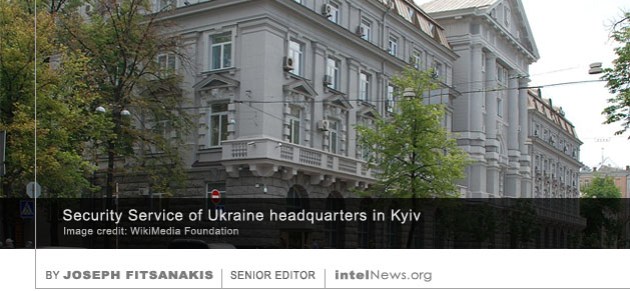
Security Service of Ukraine SBUTHE GROWING LIST OF assassinations of prominent Russians and Ukrainian separatists shows that the Ukrainian intelligence services are using “liquidations” as a weapon of war, according to The Washington Post. Citing “current and former Ukrainian and United States officials”, the paper said on Monday that funding and training by the Central Intelligence Agency (CIA) explains much of the success of Ukraine’s covert operations against Russia. However, the CIA is not involved in Ukraine’s state-sponsored assassination efforts at the operational level, and some US officials are uneasy about these activities.

A CIA Spy Directorate in Ukraine

In 2014, when Russia invaded Crimea, Ukrainian intelligence services were in an almost paralytic state. Like most of Ukraine’s state sector, the intelligence agencies were endemically bloated and closely resembled Soviet-style bureaucracies in sluggishness and corruption. More importantly, they were “riddled with Russian spies, sympathizers and turncoats”, according to observers. Few were surprised when, almost as soon as Russia annexed Crimea, the local head of the domestic security agency, the Ukrainian Security Service (SBU) defected to Russia.
According to The Washington Post, immediately after the Russian invasion of Crimea, the CIA sought to prevent further Russian encroachment in Ukraine. That is why in 2015 it built the SBU’s Fifth Directorate. That entirely new directorate was —and today remains— insulated from the rest of the SBU. The CIA also reportedly built a new division, complete with a brand-new headquarters building, inside Ukraine’s Main Directorate of Intelligence (GUR), which operates as the intelligence wing of the Ministry of Defense.

Active-Measures Training

Seeing the GUR as a more agile and flexible agency than the SBU, the CIA began to train GUR paramilitary “spetsnaz” divisions in “active measures” —a term that describes methods of political warfare, ranging from propaganda, sabotage operations, and even assassinations. However, The Washington Post claims that the CIA training focused on “secure communications and tradecraft” with an eye to enabling GUR teams to operate covertly behind enemy lines using clandestine maneuvers. Targeted assassinations were not included in the training. Read more of this post

NSA, CIA senior officials address artificial intelligence threats and opportunities

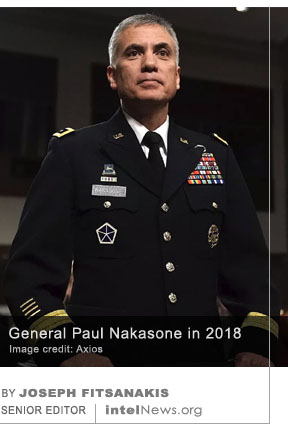
Paul NakasoneLAST WEEK, TWO SENIOR UNITED States intelligence officials shared rare insights on artificial intelligence, as they discussed some of the opportunities and threats of this new technological paradigm for their agencies. On Wednesday, Lakshmi Raman, Director of Artificial Intelligence at the Central Intelligence Agency, addressed the topic during an on-stage interview at Politico’s AI & Tech Summit in Washington, DC. On Thursday, the National Security Agency’s outgoing director, Army General Paul Nakasone, discussed the same subject at the National Press Club’s Headliners Luncheon in the US capital.

Nakasone (pictured) noted in his remarks that the US Intelligence Community, as well as the Department of Defense, have been using artificial intelligence for quite some time. Thus, artificial intelligence systems are already integral in managing and analyzing information on a daily basis. In doing so, such systems contribute in important ways to the decision-making by the NSA’s human personnel. At the same time, the NSA has been using artificial intelligence to develop and define best-practices guidelines and principles for intelligence methodologies and evaluation.

Currently, the United States maintains a clear advantage in artificial intelligence over is adversaries, Nakasone said. However, that advantage “should not be taken for granted”. As artificial intelligence organizational principles are increasingly integrated into the day-to-day functions of the intelligence and security enterprise, new risks are emerging by that very use. For this reason, the NSA has launched its new Artificial Intelligence Security Center within its existing Cybersecurity Collaboration Center. The mission of the Cybersecurity Collaboration Center is to develop links with the private sector in the US and its partner nations to “secure emerging technologies” and “harden the US Defense Industrial Base”.

Nakasone added that the decision to create the Artificial Intelligence Security Center resulted from an NSA study, which alerted officials to the national security challenges stemming from adversarial attacks against the artificial intelligence models that are currently in use. These attacks, focusing on sabotage or theft of critical artificial intelligence technologies, could originate from other generative artificial intelligence technologies that are under the command of adversarial actors.

Last Wednesday, the CIA’s Raman discussed some of the ways that artificial intelligence is currently being put to use by her agency to improve its analytical and operational capabilities. Raman noted that the CIA is developing an artificial intelligence chatbot, which is meant to help its analysts refine their research and analytical writing capabilities. Additionally, artificial intelligence systems are being used to analyze quantities of collected data that are too large for human analysts to manage. By devoting artificial intelligence resources to the relatively menial and low-level tasks of data-sifting and sorting, the CIA enables its analysts to dedicate more time to strategic-level products.

At the same time, however, the CIA is concerned about the rapid development of artificial intelligence by nations such as China and Russia, Raman said. New capabilities in artificial intelligence, especially the generative kind, will inevitably provide US adversaries with tools and capabilities that will challenge American national security in the coming years, she concluded.

Author: Joseph Fitsanakis | Date: 02 October 2023 | Permalink

Canada expels Indian diplomat, accuses India of assassinating Canadian citizen

Sikh KhalistanTHE GOVERNMENT OF CANADA expelled a senior Indian diplomat on Monday, after accusing “agents of the government of India” of having perpetrated the assassination of a Canadian citizen on Canadian soil last June. Canadian Prime Minister Justin Trudeau released information about the alleged assassination during a rare emergency statement to parliament on Monday morning. He also warned India that Canada would continue to work with its allies around the world, including the United Kingdom, to unearth further intelligence about the alleged assassination.
The case involves the killing of Hardeep Singh Nijjar, who was gunned down on June 18, 2023, outside a Sikh cultural center in Surrey, British Columbia. Nijjar was an outspoken activist and a member of Canada’s Sikh community. The adherents of Sikhism follow a monotheistic religion that originated during the late 15th century in what today in northern India’s Punjab region. Many Sikhs support the creation of Sikh homeland, which they refer to as Khalistan —an aspiration that has sparked numerous armed conflicts in India’s history. The government of India considers such aspirations a threat to its national security and regularly refers to leading Sikh activists as terrorists.

Over half of the 1.4 million Canadians of Indian origin identify as Sikhs. This makes Canada’s Sikh population the largest in the world outside of the Punjab region of India. Canadian Sikhs tend to be outspoken in their criticism of the government of India. Many of them campaign openly about what they see as the need for the establishment of an independent Sikh homeland. Nijjar was one such outspoken activist, having risen “to become a prominent advocate for the creation of Khalistan”, according to one recent biographical article. Indian authorities had accused Nijjar of terrorism and had issued a warrant for his arrest.

On Monday, Prime Minister Trudeau referred to Nijjar’s assassination as “an unacceptable violation of [Canada’s] sovereignty, adding that the murdered man was Canadian citizen. He went on to state that Canadian security agencies had been “actively pursuing allegations of a potential link” between Nijjar’s death and “agents of the government of India”. The Canadian leader also called on the government of India “to cooperate with Canada to get to the bottom of this matter”. As of early this morning local time, the Indian embassy in Ottawa was not responding to requests for comment.

Author: Joseph Fitsanakis | Date: 19 Septembrer 2023 | Permalink

Germany charges two with ‘high treason’ for spying for Russia

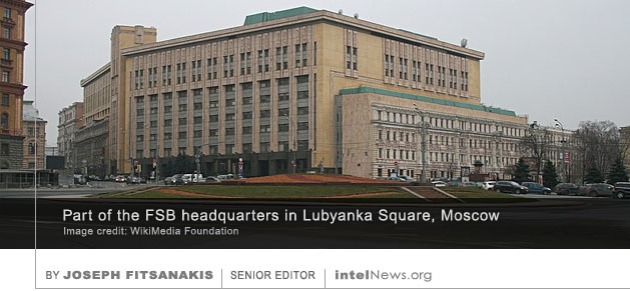
FSB RussiaGERMANY HAS CHARGED TWO men, among them a German intelligence officer, with spying for Russia, in a case that has shocked German public opinion and alarmed Germany’s allies. The two men have been identified only as “Carsten L.” and “Arthur E.”, in compliance with Germany’s privacy laws. Carsten L. is accused of having provided the Russian Federal Security Service (FSB) with intelligence about the Russo-Ukrainian war, in return for nearly $500,000. Arthur E. is believed to have been Carsten L.’s accomplice and to have acted as an intermediate between him and his Russian handlers.

The German prosecutor general has charged both men with “high treason in a particularly serious case”. However, there is no public information about the timeline of Carsten L.’s recruitment by the FSB and his espionage for the Russians. He reportedly met his accomplice, Arthur E., a Russian-born German diamond trader, in Bavaria in 2021. After being recruited by Carsten L., Arthur E. is believed to have traveled frequently between Germany and Russia. During those trips, he is thought to have met with FSB officers in order to provide them with intelligence and receive payments.

When they announced the arrests of the two men back in January of this year, German officials said they had been tipped by a foreign intelligence agency. The foreign intelligence agency had allegedly found a document from the BND’s internal files in the possession of an unnamed Russian spy agency. However, the identity of the intelligence agency that provided the tip to the Germans is among several important details about this case that remain unknown for the time being. Among them are the estimated duration of Carsten L.’s alleged espionage for Moscow, the damage he caused to German intelligence, as well as his motives for spying for the FSB.

Author: Joseph Fitsanakis | Date: 12 September 2023 | Permalink

Two arrested in Britain for spying for China, report reveals

House of Commons Parliament Britain United KingdomAUTHORITIES IN BRITAIN HAVE arrested two individuals on charges of espionage, among them a researcher for the British parliament who is being investigated for spying for China. According to the British newspaper The Sunday Times, the two individuals were arrested on March 13 of this year in two different addresses. One of the suspects, reportedly in their 30s, was arrested in or around the city of Oxford. The other, reportedly an individual in their mid-20s, was apprehended in the Scottish capital Edinburgh.
A third address, located in an eastern borough or London, was also searched by the Counter-Terrorism Command of the Metropolitan Police, which is leading the investigation into the two suspects. Notably, the parliamentary researcher had worked for prominent members of the Conservative Party, including members of parliament. These reportedly included Alicia Kearns, who chairs the Foreign Affairs Select Committee of the British House of Commons. The Times reported that the suspect had also worked for the Minister of State for Security Tom Tugendhat. The Guardian newspaper reported that Tugendhat said he had not been in touch with the suspect since he assumed his current ministerial role in September of 2022. Kearns did not comment on the case.

The last time a British newspaper reported claims of Chinese espionage was in February of 2021, when The Telegraph reported on the expulsion of three Chinese citizens, who were working as journalists. The paper claimed that the three had been “quietly expelled” after they were caught carrying out espionage. Citing an anonymous “government source”, The Telegraph said that, according to Britain’s Security Service (MI5), the three Chinese journalists were in reality employees of China’s Ministry of State Security. The report did not provide details about when the three Chinese citizens had been expelled, saying only that the expulsions had occurred at different times in the previous year.

According to The Times, the two suspects who were arrested in last March were initially transferred to a south London police station, where they were arraigned. They were then released on bail and are expected to appear in court in October.

Author: Ian Allen | Date: 11 September 2023 | Permalink

Alleged Israeli spies with Russian citizenship arrested in Lebanon

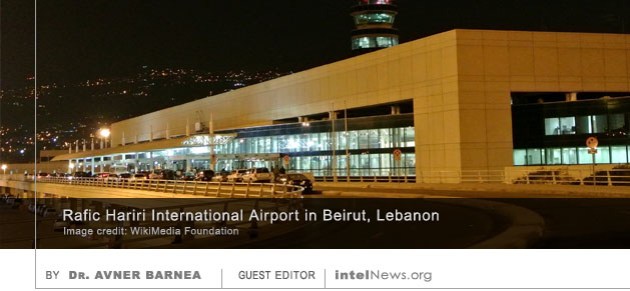
Rafic Hariri International Airport Beirut LebanonLAST WEEK, LEBANON’S GENERAL Security Directorate charged two Russian citizens with spying for Israel. The two Russians, who appear to be legally married to each other, were detained by authorities at Beirut’s Rafic Hariri International Airport as they were attempting to leave the country. The detentions were reported by the Lebanese newspaper Al-Akhbar, which is affiliated with the Lebanese militant group Hezbollah.

According to the Al-Akhbar report, one of the suspects admitted that he had been recently recruited into Israeli intelligence. He also reportedly admitted that, as part of his espionage activities, he received maps of sites and instructions about gatherings at facilities in Lebanon belonging to the Hezbollah organization. He added that he had been instructed to access, inspect and, if possible, photograph these facilities. He also reportedly admitted that he had visited southern Lebanon and entered Hamas-controlled areas of southern Beirut, where he had collected data and verified it against the information available to his handlers.

The report added that the suspect’s wife, who was also arrested, admitted under interrogation that she was aware of her husband’s work and that she had assisted him in his tasks. According to the report the General Security Directorate had suspected the Russian citizen, because he had traveled in southern Lebanon several times. Lebanese authorities were able to track his movements and connections, eventually tracing his place of residence. He was arrested along with his wife soon after being notified by his handlers that he should leave the country immediately.

Al-Akhbar added that, prior to the arrest, the General Security Directorate had informed the Russian Embassy in Beirut of its intention to arrest the Russian citizens. The agency’s Director, Elias Elbisri, said following the arrest: “A spy ring for the benefit of the Israeli enemy was foiled at the Beirut airport, consisting of two people who tried to leave Lebanon”. According to Elbisri, “we carried out the necessary investigations; this cell posed a threat to Lebanon”.

Israeli authorities did not respond to news about the incident. It should be noted that, if Russian citizens were indeed recruited and employed by Israeli intelligence, this development could further-damage the relationship between Israel and Russia, which is already fragile due to ongoing developments in Syria and Ukraine. Israel regularly launches attacks on Iranian facilities and equipment in Syria —a Russian ally. Israel is also believed to provide security assistance to Ukraine, which is engaged in a bloody war over territory with Russia.

In recent days, there have been leaks in Israel that an intense debate took place in the Israeli Security Cabinet, following the rise in Palestinian acts of terrorism in Israel, which, according to Israeli security agencies, are guided by Hezbollah and Hamas. As a result, Hamas operatives in the Gaza Strip are taking protective actions, fearing the renewal of targeted killings by Israeli forces. Salah al-Aruri, commander of Hamas’ Izz ad-Din al-Qassam Brigades, who is directing his forces against Israel from abroad, could also be a target for the Israeli intelligence community.

Author: Avner Barnea | Date: 04 September 2023 | Permalink

Dr. Avner Barnea is research fellow at the National Security Studies Center of the University of Haifa in Israel. He served as a senior officer in the Israel Security Agency (ISA). He is the author of We Never Expected That: A Comparative Study of Failures in National and Business Intelligence (Lexington Books, 2021).

Leading German university suspends Chinese state-funded researchers

FAU UniversityONE OF GERMANY’S LEADING universities has suspended researchers funded by the Chinese government, citing concerns about academic freedom and industrial espionage. The Friedrich Alexander University of Erlangen-Nuremberg (FAU) announced the suspension of Chinese government-funded researchers in June of this year. In announcing the measure, the university stated that the move was designed to protect academic freedom and freedom of expression among its faculty and staff. Earlier this week, however, German media reported the contents of an internal FAU email, which expressed concerns that the Chinese state could be utilizing government-funded researches as spies.

Founded in Bavaria in 1743, FAU is among Germany’s leading universities. On June 1, it became the first university in Germany to suspend researchers funded by the China Scholarship Council (CSC). The CSC is an outreach unit of the Chinese Ministry of Education, which funds the work of Chinese researchers in foreign universities, while also providing scholarships to foreign citizens who apply to study in China. In January 2023, Swedish daily Dagens Nyheter reported that, in order to become recipients of CSC scholarships, Chinese citizens were required to pledge “support [to] the leadership of the Chinese Communist Party […] and to have a correct world view, outlook on life, and values system”.

On June 1, the FAU leadership announced that the CSC funding methods conflicted with Germany’s Basic Law (the country’s Constitution). Furthermore, according to the FAU leadership, the CSC funding methods violated the principles of academic freedom and freedom of expression for its faculty, as practiced in Germany. On Saturday it was reported that, according to an internal FAU email, university officials also expressed concerns that the Chinese state could use CSC researchers to spy on FAU scientific and industrial research, and to compromise FAU’s data security and intellectual property practices.

FAU’s decision was reportedly met with support by Germany’s Minister for Education, Bettina Stark-Watzinger, who said that German universities and research establishments have “a responsibility to safeguard themselves against espionage activities conduced by students receiving scholarships from the Chinese government”. It is also reported that other universities in Germany and elsewhere in Western Europe are considering following FAU in suspending CSC-funded Chinese researchers.

Author: Joseph Fitsanakis | Date: 31 August 2023 | Permalink

Alleged Islamic State informant sues Danish spy services over prison sentence

PET DenmarkA DANISH CITIZEN IS suing two Danish spy agencies, claiming that he was wrongly jailed for being a member of the Islamic State, when in fact he had been asked by his handlers to join the group as an undercover informant. The lawsuit has been brought in Copenhagen by Ahmed Samsam, a 34-year-old Danish citizen of Syrian origin. Samsam’s father, Jihad Samsam, fled to Denmark from Syria following the 1982 Hama massacre, when the Syrian military violently quelled an anti-government uprising by members of the Muslim Brotherhood.

Ahmed Samsam grew up in Copenhagen with his six siblings. He was involved in numerous criminal activities, including robbery and drugs possession. In September 2012, he traveled to from Denmark to Turkey. From there he entered Syria, intending to join the civil war on the side of the anti-government rebels. Upon returning to Denmark in December of that year, Samsam was imprisoned for a prior criminal offense. It was during his time in prison that members of the Danish Security and Intelligence Service (PET) allegedly approached him, asking him to work as an undercover informant abroad. Samsam claims that he undertook several trips to Syria as an informant between 2013 and 2015. While he was there, he claims that he spied on the Islamic State on behalf of the PET and the Danish Defense Intelligence Service (FE), which also recruited him as a spy.

Samsam eventually returned to Denmark, but in 2017 fled to Spain, allegedly to escape harassment by a rival criminal gang in Copenhagen. In June of that year, he was arrested by Spanish police near the coastal city of Malaga in southern Spain. Samsam was charged with terrorism, after police discovered several photos of himself posing with Islamic State symbols and flags on his mobile telephone. He was eventually convicted to eight years in prison, which were later reduced to six. Since 2020, Samsam has been serving his prison sentence in Denmark.

But, in a lawsuit he brought against the Danish state, Samsam claims he had engaged with Islamic State fighters in Syria at the behest of the PET and the FE, and argues that he should not be jailed for terrorism offenses. However, the Danish intelligence agencies have rejected calls to confirm or deny that Samsam had been recruited by them as an informant. Attorney Peter Biering, who represents the defendants in the case, told the court last week that forcing the intelligence agencies to identify their informants would “harm [the agencies’] ability to […] protect [their sources] and prevent terrorism”. Samsam’s attorney, Erbil Kaya, argues that the Danish state is morally obligated to admit to his client’s role as an undercover informant, even if this is formally prevented by the law of the land.

The trial is expected to conclude on September 8. Several witnesses, including government officials and investigative reporters, have been scheduled to testify in court, almost certainly behind closed doors.

Author: Joseph Fitsanakis | Date: 28 August 2023 | Permalink

Chinese government arrests second alleged CIA spy in 10 days

Chinese Ministry of State SecurityFOR THE SECOND TIME in 10 days, the government of China has announced the arrest of a Chinese government employee on suspicion of spying for the United States Central Intelligence Agency (CIA). In a statement issued on Monday, China’s civilian intelligence agency, the Ministry of State Security (MSS), said it had launched an investigation into an official of a government ministry, who was allegedly caught conducting espionage on behalf of the CIA.

The MSS statement did not name the government ministry where the alleged spy works. But it identified the accused by his surname, Hao, describing him as a 39-year-old Chinese national. According to the MSS statement, Hao spent a number of years as a graduate student in Japan. While he was studying in Japan, he allegedly visited the United States embassy in Tokyo, in order to apply for a travel visa. During his visit to the embassy, he met a United States embassy official, who befriended him.

Over time, Hao allegedly formed a close relationship with the unnamed American embassy official. The latter treated him to meals, sent him gifts in the mail, and secured funds for him to conduct research. Eventually, the embassy official introduced Hao to another American official, who, according to the MSS, was a CIA case officer. The CIA case officer allegedly recruited Hao to spy for the United States and instructed him to seek employment at “a core and critical department” of the government upon his return to China.

After completing his studies in Japan, Hao returned to China and secured employment in a government agency. He continued to meet regularly with his alleged CIA handler and other CIA officers, who to whom he “provided intelligence” in return for “espionage funds”, according to the MSS statement. The statement said that Hao’s case remains under investigation and that no official charges have yet been filed.

The MSS statement about Hao’s case came exactly 10 days after the spy agency posted on its WeChat social media account that it had caught another government official spying for the CIA. On August 11, the MSS said it had detained an alleged CIA spy named Zeng, whom it described as a 52-year-old “staff member of a Chinese military industrial group and an important confidential employee” of the Chinese state. Zeng had reportedly been sent to Italy by his employer, presumably in order to pursue graduate studies or receive technical training. While in there, he was allegedly accosted and eventually recruited by an employee of the United States embassy in Rome.

It is not known if the two cases are in any way connected. Government officials in Washington and at the United States embassy in Beijing have not commented on the story.

Author: Joseph Fitsanakis | Date: 23 August 2023 | Permalink

Eighth person detained in sprawling Taiwanese probe of Chinese spy ring

Kaohsiung High Court, TaiwanA SEVENTH PERSON HAS been detained in Taiwan as a result of a broadening investigation into a Chinese spy ring that allegedly provided Beijing with sensitive military intelligence. The existence of the investigation was revealed in January of this year, when the Taiwanese authorities announced the arrests of one retired and six active-duty military officers, all of whom were charged with spying for China.

On January 6 of this year, a retired Taiwanese Air Force colonel, identified only by his last name, Liu, was arrested for spying. According to court documents unsealed at the Taiwan High Court branch in Kaohsiung, Liu retired from the Air Force 2013. Soon afterwards, he began business dealings in China. It was during one of his trips to China when Liu was allegedly recruited by the Chinese government. He then carried out espionage operations on behalf of Beijing for approximately eight years.

Throughout his espionage activities, Liu allegedly used his military contacts to recruit six active-duty Taiwanese Air Force and Navy officers to carry out espionage, in return for monetary payments. The six active-duty military officers were arrested along with Liu on January 6. In April of this year, all seven individuals were formally charged with spying for China, in violation of Taiwan’s Classified National Security Information Protection Act.

Taiwanese government prosecutors alleged that each member of the spy ring received between NT$200,000 and NT$700,000 (approximately US$6,500-23,000) for agreeing to spy for Beijing. As the principal agent, Liu received individual bonuses of between NT$30,000 and NT$100,000 (US$1,000-3,200) each time he gave his Chinese handlers information gathered by one of the members of the spy ring.

On August 16, the Taiwanese government announced that one more individual, referred to as “a field officer” was detained on suspicion of spying for China. The suspect was identified only by his last name, Cheng. He was reportedly arraigned in the Taiwan High Court branch in Kaohsiung, the same court that last January delivered espionage charges against the other seven suspects involved in the spy ring investigation. All eight suspects have been denied bail. Their trial has not yet been set.

Author: Joseph Fitsanakis | Date: 21 August 2023 | Permalink

UK charges three Bulgarians with spying for Russia in ‘major national security’ case

Bizer Dzhambazov and Katrin IvanovaAUTHORITIES IN BRITAIN HAVE charged three Bulgarian nationals with spying for Russia, as part of “a major national security investigation” that led to at least five arrests as early as last February. Two of the Bulgarians appear to be legally married. They have been identified as Bizer Dzhambazov, 41, and Katrin Ivanova, 31, who live in Harrow, a northwestern borrow of Greater London. The third Bulgarian, Orlin Roussev, 45, was arrested in Great Yarmouth, a seaside town in the east coast identity dof England. None of the suspect appears to have a formal diplomatic connection to either Bulgaria or Russia.

The Bulgarians were reportedly arrested in February of this year by the Counter-Terrorism Command of the Metropolitan Police, whose law enforcement mandate includes working on counterespionage cases. Two other individuals who were arrested at the time have not been charged or named. The three suspects have been charged under Section 4 of the United Kingdom’s Identity Documents Act 2010, which prohibits the possession of fake identity documents with “improper intention” and with the owner’s knowledge that they are fake. According to British government prosecutors, the suspects possessed forged passports and identity cards for Spain, France, the United Kingdom, Croatia, Italy, Greece, Bulgaria, the Czech Republic, and Slovenia.

Dzhambazov and Ivanova are believed to have moved to the United Kingdom as a couple in 2013. Both worked in the British healthcare sector —Ivanova as a laboratory assistant for a private company and Dzhambazov as a driver for a hospital. Roussev moved to the United Kingdom in 2009 and worked on the technical side of the financial services industry. He claims to have worked as an adviser for the Ministry of Energy of Bulgaria. He also claims to have previously owned a private company that operated in the area of signals intelligence (SIGINT), which involves the interception of electronic communications.

Bulgaria was one of the Soviet Union’s closest allies during the Cold War. Relations between Bulgaria and Russia plummeted in the 2000s, but pro-Russian sentiments continue to survive among some nationalist segments of the Bulgarian electorate. In June of this year, Kiril Petkov, the leader of Bulgaria’s We Continue the Change party, which today backs Bulgaria’s Prime Minister, Nikolai Denkov, spoke publicly about “Moscow-backed agents” operating inside Bulgaria’s intelligence services. Petkov proposed an ambitious plan to reform the Bulgarian intelligence services in order to “diminish the influence of Russia”. He proposed to do this through the administration of “integrity and ethical tests” to intelligence personnel.

Author: Joseph Fitsanakis | Date: 15 August 2023 | Permalink

China arrests government worker who gave CIA ‘core information’ about military

US embassy Rome ItalyA CHINESE GOVERNMENT EMPLOYEE gave “core information” about China’s military to the United States, after he was recruited by a Central Intelligence Agency (CIA) officer in Italy, a Chinese state agency has said. The allegation was made in a statement that was issued on Friday by China’s civilian intelligence agency, the Ministry of State Security (MSS), on its WeChat social media account.

The MSS statement did not specify the period during which the alleged espionage took place. But it named the alleged spy as “Zeng” and described him as a 52-year-old “staff member of a Chinese military industrial group and an important confidential employee” of the Chinese state. According to China’s state-owned newspaper The Global Times, Zeng had been sent to Italy by his employer, presumably in order to pursue graduate studies or receive technical training. While in Italy, Zeng was allegedly accosted by an employee of the United States embassy in Rome, which the MSS identified as “Seth”.

According to the MSS, Seth was a CIA case officer, who befriended Zeng through “dinner parties, outings and trips to the opera”. The Chinese man “developed a psychological dependence” on Seth and was “indoctrinated” by him “with Western values”, the MSS statement claims. Seth eventually convinced Zeng to sign an agreement with the CIA to conduct espionage, after which the Chinese man allegedly received intelligence tradecraft training. Upon returning to China from his stay in Italy, Zeng is alleged to have carried out espionage on behalf of his CIA handlers. The MSS claims Zeng gave his CIA handlers “a great amount of core intelligence” during “multiple secret meetings” with them.

The information Zeng is alleged to have provided to the CIA concerned “key developments about China’s military” to which he had access through his employer. In exchange for this information, Zeng is accused of having received “a huge amount of [financial] compensation” by his CIA handlers. The latter also promised him that they would help his family emigrate to the United States, as per the MSS statement. The spy agency said that Zeng remains in detention while the case is under investigation. The MSS statement also warned other Chinese citizens living or traveling abroad of “the risks and perils” of recruitment by Western spy agencies.

The Reuters news agency said it contacted the United States embassy in Beijing about the MSS allegations, but received no response.

Author: Joseph Fitsanakis | Date: 14 August 2023 | Permalink

Poland’s super-secretive ‘school of spies’ marks 50 years of operation

ABW PolandDURING THE COLD WAR, Poland hosted the Eastern Bloc’s only known intelligence training facility for operations officers situated outside of the Soviet Union. The highly secretive training facility operated out of a heavily guarded compound located near the northern Polish village of Stare Kiejkuty in Gmina Szczytno county, approximately 65 miles from the Polish-Soviet border. Today, 50 years after its establishment, the facility continues to train the operations officers of post-communist Poland’s intelligence services.

During World War II, and in the immediate post-war period, Soviet authorities trained Polish intelligence personnel in Kuybyshev (in 1991 renamed to Samara) in southwestern Russia. This setup continued following the establishment of the Soviet-controlled Polish intelligence community. By the 1960s, the Polish intelligence community was being led by the Ministry of Public Security, referred to by its Polish initials, SB. The SB’s elite operations officers, which staffed its First Department, were all trained in the Soviet Union and in a Soviet-controlled facility in Warsaw.

But in 1970, Poland’s reformist President, Edward Gierek, put in motion a plan to modernize the Polish intelligence services. Gierek’s goal was for Polish intelligence to catch up with the pace of technological development, especially in the emerging digital realm. He also wanted Polish spy organizations to be able to compete directly against rival agencies in Western Europe. The rapid establishment of the Intelligence Personnel Training Centre near Stare Kiejkuty was the centerpiece of Gierek’s intelligence reforms.

Construction began in 1971 and was mostly completed within two years. In 1973, the heavily guarded training facility, which had been disguised as a “holiday resort” in official government maps, welcomed its first students. Students were taught how to operate undercover in the West and how to recruit sources in countries like West Germany, France and the United Kingdom. They were taught about Western European lifestyles and had access to Western products, including soft drinks and vending machines, which were absent from Polish life. Read more of this post