Russia possibly tried to kill Montenegro PM, says British foreign secretary

Boris JohsonBoris Johnson, the British foreign secretary has said in an interview that Russian spies may have orchestrated last year’s failed attempt to kill the then-prime minister of Montenegro, Milo Dukanović. Mr. Johnson, a senior figure in the Conservative Party of the United Kingdom, was a major contender for the prime minister’s position in 2016, after the administration of David Cameron collapsed under the weight of the Brexit vote result. Speaking on Sunday morning to reporter Robert Peston, of Britain’s ITV television network, Mr. Johnson said that the West should “engage” with Russia, but warned that it should also “beware” of Moscow’s “dirty tricks” in Europe and the United States.

The British foreign secretary spoke following reports that British intelligence services called an emergency meeting with representatives of the country’s major political parties, in order to warn them that Russia planned to use cyber-attacks to disrupt regional and national elections in the country. Mr. Johnson said that the government had “no evidence the Russians are actually involved in trying to undermine our democratic processes at the moment”. But he added that there was “plenty of evidence that the Russians are capable of doing that. And there is no doubt”, he went on, “that they’ve been up to all sorts of dirty tricks”. Some of those “dirty tricks”, said Mr. Johnson, targeted the former Yugoslav Republic of Montenegro, where last year there was “an attempted coup and possibly an attempted assassination”.

The British politician was referring to allegations made last October by authorities in Montenegro that “nationalists from Russia” and Serbia were behind a failed plot to kill the country’s then-Prime Minister Milo Dukanović and spark a pro-Russian coup in the country. The allegations surfaced after 20 Serbians and Montenegrins were arrested by police in Montenegro for allegedly planning a military coup against the government. The arrests took place on election day, October 16, as Montenegrins were voting across the Balkan country of 650,000 people. The plotters had allegedly hired a “long-distance sharpshooter” who was “a professional killer” for the task of killing Đukanović. After killing the Prime Minister, the plotters planned to storm the parliament and prompt a pro-Russian coup in Montenegro, according to authorities. In response to allegations that the coup had been hatched in neighboring Serbia, Serbian Prime Minister Vučić said that he would not allow Serbia to “act as the puppet of world powers”, a comment that was clearly directed at Moscow. Russia vehemently denied the allegations.

Meanwhile, Mr. Johnson is preparing to visit Moscow in a few days to meet with his Russian counterpart, Minister of Foreign Affairs Sergey Lavrov. He told ITV that he planned to deliver his “personal feeling” to Mr. Lavrov, which “is one of deep, deep sadness” about Russia’s foreign policy under President Vladimir Putin.

Author: Ian Allen | Date: 13 March 2017 | Permalink

Islamic State leader al-Baghdadi abandons Mosul, say intelligence sources

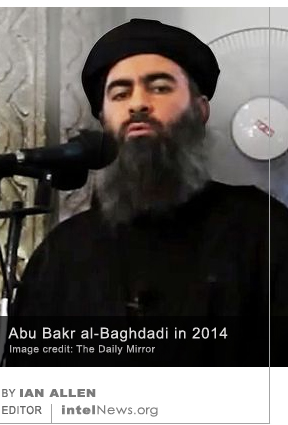
Abu Bakr al-BaghdadiThe leader of the Islamic State has abandoned the city of Mosul and is hiding in the desert zone of western Iraq, according to intelligence sources. Meanwhile Mosul, once the most populous city under the Islamic State’s control, is now reportedly being defended by a diminishing cadre of fewer than 3,000 Sunni militants, who are facing a 110,000-strong invading army.

Abu Bakr al-Baghdadi became the center of worldwide attention in July of 2014, when Islamic State troops swept rapidly through western Iraq and captured the region’s largest city, Mosul, in a spectacular coordinated attack. Soon after Mosul was captured by the Islamic State, al-Baghdadi led Friday prayers at Mosul’s Great Mosque and proclaimed himself caliph —emperor of the world’s Muslims. In the following months, the Islamic State reached the height of its power, commanding large expanses of land that stretched from the northern regions of Syria to the outskirts of Iraq’s capital Baghdad. Soon after al-Baghdadi’s public appearance in Mosul, the United States government set up a joint task force aimed at killing or capturing him. The group, which is still operational today, includes representatives from the Armed Forces, the National Security Council, and the Intelligence Community. Al-Baghdadi is believed to have stayed in Mosul, but has proven difficult to trace. He almost never uses electronic communications and is constantly on the move, sleeping at different locations every night.

Last October, US-backed Iraqi government troops, Shiite militias and Kurdish forces launched a large-scale military operation to recapture Mosul and drive out the Islamic State from the region. The assailants, whose combined forces are said to exceed 110,000 troops, reclaimed much of eastern Mosul earlier this year, and are preparing to launch a large-scale military advance on the western half of the city. While the operation to complete the recapture of Mosul is underway, American and Iraqi intelligence sources report that al-Baghdadi has not been public heard from since early November of last year. This leads many analysts to believe that the Islamic State leader has left the city and is now hiding in the vast and inhospitable desert that stretches along the Iraqi-Syrian border. Moreover, intelligence analysts claim that the Islamic State’s online activity has fallen sharply, to about half of what it was during the group’s peak in late 2014. This leads to the conclusion that the Islamic State is now increasingly focusing on essential functions aimed simply at the survival of the regime. The group has reportedly lost at least 3,000 fighters in Mosul, but an estimated 2,400 armed men have vouched to defend the city to the very end.

Author: Ian Allen | Date: 10 March 2017 | Permalink

FBI launches criminal investigation into WikiLeaks’ CIA disclosures

WikiLeaksThe United States federal government has launched a criminal investigation into the public disclosure of thousands of documents that purportedly belong to the Central Intelligence Agency. The documents were released on Tuesday by the anti-secrecy website WikiLeaks. They reveal what appear to be technical collection methods used by the CIA to extract information from digital applications and electronic devices, ranging from flash drives to smart screen televisions. WikiLeaks named the collection “Vault 7”, and said that it consists of nearly 8,000 web pages and 1,000 attachments. It also said that its editors redacted hundreds of pages of computer code, in order to prevent the public release of advanced cyberweapons allegedly used by the CIA to sabotage electronic devices and systems.
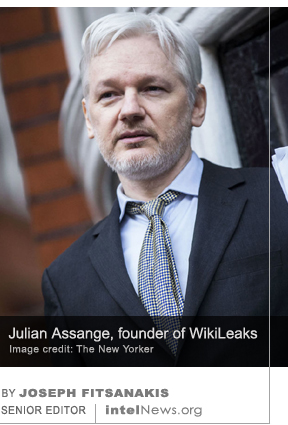
On Wednesday, former director of the CIA Michael Hayden told the BBC that the disclosure appeared “incredibly damaging”, because it revealed some of the methods that the CIA uses to acquire information. But some cybersecurity experts said that the techniques contained in the leaked documents did not appear to be uniquely advanced, and most focused on exploiting technical vulnerabilities that were generally known. Still, The New York Times reported on Wednesday that the CIA had begun to assess the damage caused by the release. The agency was also trying to contain the extent of the damage, and had even “halt[ed] work on some projects”, said The Times. Officials from the CIA are reportedly in communication with the Federal Bureau of Investigation, which on Wednesday launched a criminal investigation into the “Vault 7” release.

The main purpose of the FBI investigation is to find out how WikiLeaks acquired the files. The website said that the documents were leaked by a CIA contractor, which would imply that they were accessed from a server outside the CIA’s computer network. However, federal investigators are not excluding the possibility that the leaker of the information may be a full-time CIA employee. Reports suggest that the FBI is preparing to conduct hundreds, and possibly thousands, of interviews with individuals who are believed to have had access to the documents that were released by WikiLeaks. Meanwhile, neither the FBI nor the CIA have commented on the authenticity of the information contained in “Vault 7”. WikiLeaks said that Tuesday’s release, which it codenamed “Year Zero”, was the first part of several installments of documents that will be released under its Vault 7 program.

Author: Joseph Fitsanakis | Date: 09 March 2017 | Permalink

Files released by WikiLeaks show advanced CIA technical collection methods

Julian AssangeThousands of documents belonging to the United States Central Intelligence Agency, which were released on Tuesday by the international anti-secrecy website WikiLeaks, are almost certainly genuine. They reveal an entire universe of technical intelligence collection methods used by the CIA to extract information from digital applications and electronic devices, ranging from flash drives to smart screen televisions. WikiLeaks named the collection Vault 7, and said that it consists of nearly 8,000 web pages and 1,000 attachments. It also said that its editors redacted hundreds of pages of computer code, in order to prevent the public release of advanced cyberweapons that are allegedly used by the CIA to sabotage electronic devices and systems.

The information contained in the leaked documents is almost certainly genuine, and most likely belongs to the CIA —though many of the programs listed may be jointly run by the CIA and the National Security Agency (NSA). These programs, with names such as McNUGGET, CRUNCHYLIMESKIES, ELDERPIGGY, ANGERQUAKE and WRECKINGCREW, appear to be designed to compromise computer systems using a series of sophisticated methods that force entry or exploit built-in vulnerabilities or systems. Targets include popular communications systems like Skype and WhatsApp, smartphones produced by Google and Apple, commercial software like PDF and Microsoft Windows, and even so-called smart televisions that connect to the Internet.

The WikiLeaks revelations are most likely related to operations conducted under the auspices of the Special Collection Service (SCS), a joint CIA/NSA program that dates to the earliest days of the Cold War. The program was started by the United States Armed Forces but was eventually transferred to civilian hands and monitored by the CIA. It used advanced communications-interception facilities around the world to collect information. Over the years, the CIA collaborated with the NSA and developed many SCS projects targeting several foreign countries using technical and human means. In recent years the SCS has been primarily operated by the NSA, which oversees the program’s technical platforms.

WikiLeaks did not reveal the source of the documents. But it said that they had been “circulated [by the CIA] among former US government hackers and contractors” and that it was one of the latter that leaked them to the anti-secrecy website. A statement by WikiLeaks said that Tuesday’s release, which it codenamed “Year Zero”, was part one of several installments of documents that will be released under its Vault 7 program. The site also claimed that the information in “Year Zero” has “eclipsed the total number of pages published over the first three years of the Edward Snowden NSA leaks”. The CIA, the NSA and the White House have not commented on this development.

Author: Joseph Fitsanakis | Date: 08 March 2017 | Permalink

MI6 to revert to old-fashioned ways of recruitment, says director

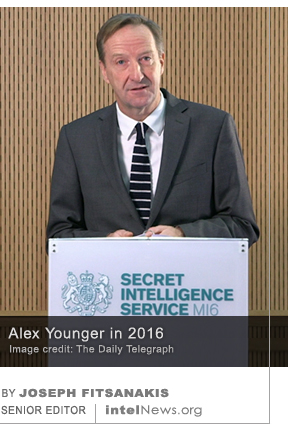
Alex YoungerBritain’s primary external-intelligence agency will revert to old-fashioned ways of recruiting employees, including the co-called “tap on the shoulder” method, according to its director. Known informally as MI6, the Secret Intelligence Service (SIS) was founded in 1908 to protect Britain’s national security by collecting intelligence from foreign sources. However, the agency has had difficulty recruiting a diverse group of people, and many still view it as a professional destination for a small wealthy elite, drawn primarily from Britain’s most prestigious universities such as Oxford and Cambridge.
MI6 is now trying to diversify the makeup of its employees, according to its director, Alex Younger. Younger, who is known at MI6 as ‘C’, gave an interview to British newspaper The Guardian on Thursday. He did so as the agency he leads prepares to increase its personnel numbers by 40 percent in the next four years. Last year, the British government announced that MI6’s personnel strength would grow from its current size of 2,500 employees to approximately 3,500 by 2020. The reason for the increase, said Younger, is that Britain is facing “more threats than ever before […] from terrorist groups and hostile states”. As a result, “the demands on our services [and] capabilities are on the up”, Younger told The Guardian in his first-ever interview with a national newspaper.

But MI6 would function more efficiently and achieve better results it if had a “more diverse workforce”, said Younger. Therefore, he said, the agency must go out of its way to “draw in a new cadre of black and Asian officers”. In doing so, the spy service would need to reach out to minority communities who are “selecting themselves out” of working for the British intelligence community. Useful in this process are what Younger called “old recruitment techniques”, such as the so-called “tap on the shoulder”. The term refers to the deliberate recruitment of individuals who will be approached by MI6 without having applied for employment with the agency. “We have to go to people that would not have thought of being recruited to MI6”, said Younger, adding that the “tap on the shoulder” method can be redeployed in order to increase diversity among MI6’s workforce and “reflect the society we live in”.

The spy agency is preparing to launch an aggressive recruitment campaign next week, aiming at bringing its overall size to 3,500 —a historic high, according to intelligence observers.

Author: Joseph Fitsanakis | Date: 03 March 2017 | Permalink

Islamic State faces imminent financial collapse, claims new study

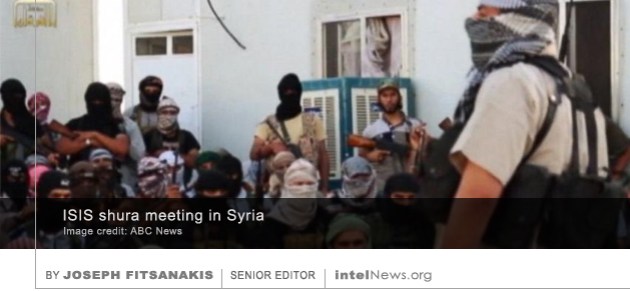
ISIS meetingThe Islamic State is facing imminent financial collapse, according to a new study conducted by a London-based research group in association with one of the world’s leading international accounting firms. The recently launched report is entitled Caliphate in Decline: An Estimate of Islamic State’s Financial Fortunes. The analysis that forms the basis of the report was conducted by scholars at the International Center for the Study of Radicalization, a research center that operates out of the Department of War Studies at King’s College in London. The report’s authors were joined by financial analysts at Ernst & Young, a British-based company that is often referred to as one of the world’s ‘big four’ accounting firms.
The report challenges the widely accepted claim that the Islamic State is the wealthiest terrorist organization in history. Its authors argue that the organization’s wealth is connected to its function as “a quasi-state”, with a geographical territory under its control and a subject population that lives in it. Territorial control, say the report’s authors, allows the Islamic State to amass significant revenue from sources like direct and indirect taxation, extraction of natural resources, and confiscation of property from citizens, among others. Even though much of the Islamic State’s financial activity is hidden, the study uses open sources to make the claim that the group’s income in 2014 was close to $2 billion. Last year, however, the overall income amassed from all sources dropped to less than $900 million, an estimated reduction of 45 percent, say the researchers.

The reason for the drop is that the financial revenue model of the Islamic State is directly linked to its territorial control. In comparison to the peak of its power in the spring of 2014, the Islamic State has today lost control of over 60 percent of its territory in Iraq and nearly a third of its territory in neighboring Syria. As coalition forces are beginning to retake Mosul, the Islamic State is facing the potential loss of the caliphate’s commercial capital. These developments will continue to seriously erode the group’s tax base and severely limit its revenue streams. There are no signs, say the researchers, that the Islamic State has been able to devise new forms of revenue streams that are not connected to direct territorial control. However, the authors of the study warn that a potential financial collapse of the Islamic State will not prevent the organization from carrying out terrorist activities in the Middle East and beyond.

Author: Joseph Fitsanakis | Date: 01 March 2017 | Permalink

Swedish intelligence says it identified foreign spies searching for secrets

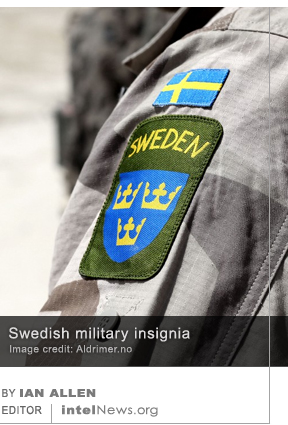
Sweden militaryThe military intelligence service of Sweden warned last week that there were increasing incidents of espionage perpetrated against Sweden by operatives identified “beyond doubt” as agents of foreign powers. In its annual report for 2016, the Swedish Military Intelligence and Security Service (MUST) said large numbers of spies were detected around “sensitive installations” mostly of a military nature. Headed by an Army general, MUST is responsible for military intelligence and counterintelligence in Sweden. Every year it produces a report of its activities for the Swedish government and defense establishment, and also publishes a declassified version. Its latest report warns about growing attempts by foreign countries to “gather intelligence about Sweden’s defense assets and capabilities”.

On Friday, Swedish newspaper Svenska Dagbladet published an interview with senior MUST official Jan Kinnander. He told the paper that MUST was able to identify beyond doubt that certain individuals were “connected to the intelligence services of foreign states”. These persons traveled to Sweden “under false pretenses”, according to the official. A few of them were diplomats, said Kinnander, while most attempted to travel around the Scandinavian country using “conspiratorial methods”. Many were detected prowling around government installations that are linked to Sweden’s national defense while having “no reasonable cause” to be there, said Kinnander.

When asked to identify the countries that engage in espionage against Sweden, Kinnander said he could not elaborate, except to say that MUST linked the alleged spies with “several countries, including Russia”. In December of last year, MUST Director Gunnar Karlsson told Swedish media that Russia was a leading perpetrator of intelligence operations against Sweden. These operations included active measures involving propaganda, deception and other psychological activities, he said. In recent years, the Swedish authorities have arrested Polish, Lithuanian and other Eastern European nationals, allegedly because they were seen photographing Swedish military installations.

Author: Ian Allen | Date: 27 February 2017 | Permalink

Trump administration instructs CIA to halt support for anti-Assad rebels in Syria

Free Syrian ArmyThe White House has instructed the Central Intelligence Agency to halt military support to armed groups that are associated with the Free Syrian Army (FSA), a group opposed to Syrian President Bashar al-Assad. Some believe that the move indicates a change in American policy under United States President Donald Trump. But Syrian rebel commanders say they believe the move is temporary, and that military aid will be restored. For several years, the CIA has provided training and other forms of assistance to rebel groups in Syria, such as the New Syrian Force, which operate under the umbrella of the FSA. Aside from training, the assistance has included light and heavy ammunition, including antitank missiles, mines and grenades.
However, it appears that the CIA was instructed nearly a month ago by the White House to freeze all assistance to these rebel groups. Correspondents from the Reuters news agency said they confirmed the change in policy by speaking to senior rebel commanders from five armed groups operating under the FSA. These commanders told Reuters that they had not been given any official reason for the sudden termination of all CIA assistance. The change coincided with the change of guard at the White House, from Barack Obama to Donald Trump. Some in Washington, as well as some members of rebel factions in Syria, are concerned that the change in the CIA’s stance might denote a broader policy shift in the White House. During his election campaign, Mr. Trump said repeatedly that he would end America’s overt and covert support for the FSA and would focus instead on defeating the Islamic State.

But the rebel commanders themselves told Reuters that the freeze in CIA support was due to a wave of renewed attacks against them by Jabhat Fateh al-Sham, a Sunni militant group that was previously affiliated with al-Qaeda. The rebels said that the CIA was concerned that weaponry provided to the FSA would end up in the hands of jihadist militants, so it temporarily halted its support until Jabhat Fateh al-Sham could be pushed back by FSA forces. Reuters published comments by two anonymous officials who were familiar with the CIA’s operations in Syria. They told the newspaper that the freeze of the CIA’s program had “nothing to do with US President Donald Trump replacing Barack Obama in January”. Additionally, said Reuters, Mr. Trump’s policy in Syria remains unknown. Several newspapers and news agencies contacted the CIA asking for comments, but the agency declined all requests on Wednesday.

Author: Ian Allen | Date: 23 February 2017 | Permalink

Indonesia to investigate North Korean restaurant reportedly used as spy base

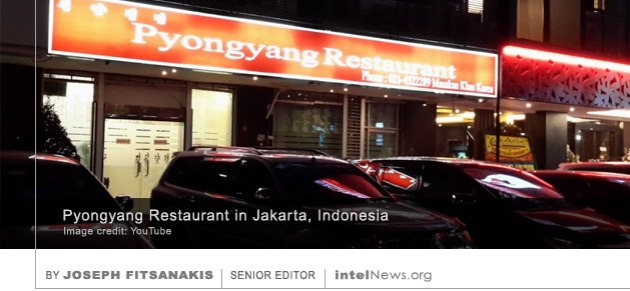
Pyongyang Restaurant in Jakarta, IndonesiaIndonesian authorities said on Sunday that they will investigate a North Korean restaurant in the country, after a Singaporean news agency claimed it was being used as a center for espionage. The announcement comes amidst heightened tensions between North Korean and its neighbors, following the murder last week in Malaysia of Kim Jong-nam, half-brother of North Korea’s Supreme Leader Kim Jong-il. Kim, the grandson of North Korea’s founder Kim Il-Sung, died after two women approached him at the Kuala Lumpur International Airport and splashed his face with liquid poison. Sources in South Korea and the United States have pointed at Pyongyang as the culprit of the assassination.
On Friday of last week, the Singapore-based news agency Asia One published a lengthy report into alleged North Korean espionage operations in Southeast Asia. The report claimed that North Korean intelligence agencies have operated extensive networks of operatives in Indonesia, Malaysia and Singapore, and that these networks have operated unimpeded for over two decades. The news agency cited an unnamed “intelligence source” as saying that the spy networks are operated by North Korea’s Reconnaissance General Bureau (RGB). The RGB is in charge of special activities abroad, which include covert operations and intelligence collection involving espionage. It operates under the Ministry of State Security and answers directly to North Korea’s supreme leader.

According to Asia One, the RGB maintains some of its largest spy networks abroad in Indonesia, Singapore and Malaysia, where Kim Jong-nam met a gruesome death last week. RGB personnel operating in these countries are North Korean citizens who are employed in the construction sector, as well as the tourism industry. Some operate North Korean restaurants, which are popular tourist attractions across Southeast Asia. The unnamed intelligence source told Asia One that North Korean restaurants serve “as a main front to conduct intelligence gathering and surveillance [against] Japanese and South Korean politicians, diplomats, top corporate figures and businessmen”. The RGB’s network in Indonesia is based in textile factories located in several Indonesian cities, said Asia One. There is also “an apartment located above a North Korean restaurant in [the Indonesian capital] Jakarta that is part of the RGB Indonesia office”, according to the report.

Following the news agency’s allegations, Argo Yuwono, senior commander for the Indonesian National Police, said that an investigation would take place into Asia One’s allegations. He said that his detectives would coordinate their activities with the Indonesian Foreign Ministry before moving ahead with the probe.

Author: Joseph Fitsanakis | Date: 21 February 2017 | Permalink

Turkish diplomats stepping up espionage in Europe, claims German report

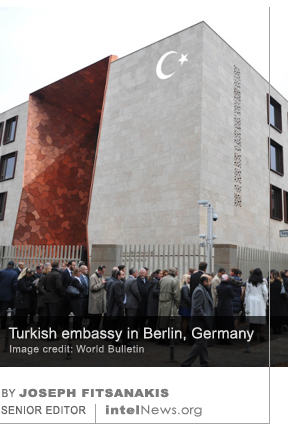
Turkish embassy in GermanyTurkish state agencies have asked the country’s diplomats stationed all over Europe to spy on Turkish expatriate communities there, in an effort to identify those opposed to the government, according to a German report. The government of Turkish President Recep Tayyip Erdoğan accuses members of the so-called Gülen movement of orchestrating a military coup in July of last year, which resulted in an armed attack on the country’s parliament and the murder of over 200 people across Turkey. The Gülen movement consists of supporters of Muslim cleric Fethullah Gülen, who runs a global network of schools, charities and businesses from his home in the United States. The government of Turkey has designated Gülen’s group a terrorist organization and claims that its members have stealthily infiltrated state institutions since the 1980s.
According to German newsmagazine Der Spiegel, the Erdoğan government has now tasked its diplomats stationed abroad to engage in intelligence collection targeting alleged Gülen sympathizers. The report cited “a confidential analysis by the Federal Office for the Protection of the Constitution” (BfV), Germany’s counterintelligence agency. The analysis allegedly states that Turkish diplomats are now conducting systematic espionage activities in Germany, Austria, Switzerland, Holland, Belgium, and other Western European countries. The BfV report allegedly claims that much of the espionage conducted by Turkish diplomats is directed by the country’s Religious Affairs Directorate, known as Diyanet. The agency is seen as the institutional guardian of Turkey’s Sunni Muslim orthodoxy. It provides schools with religious education that is carefully tailored to be compatible with the country’s secular constitution, and trains the country’s imams, who are employed by the state. Der Spiegel claimed on Monday that Diyanet has asked its religious representatives stationed in Europe to look for Gülen sympathizers. According to the German newsmagazine, information is now pouring in from Turkey’s embassies and consulates. It includes names of individuals, as well as student groups, cultural organizations, schools and day-care centers that are seen as not sufficiently critical of the Gülen movement. Der Spiegel said it had seen a report sent to Diyanet by the Turkish embassy in Berne, Switzerland, which warned that many Gülenists had left Turkey and were now operating in Switzerland.

Late last summer, Der Spiegel claimed that Turkey’s National Intelligence Organization (known by its Turkish initials, MİT) secretly contacted its German counterpart, the Federal Intelligence Service (BND) and asked for assistance to investigate and arrest supporters of the Gülen movement living in Germany, some of whom are German citizens. The BND reportedly refused to cooperate with the request. Another German news outlet, Die Welt, cited an unnamed German security official who said that the MİT employed more operatives in Germany than the East German spy agency did at the height of the Cold War.

Author: Joseph Fitsanakis | Date: 20 February 2017 | Permalink

Wall Street Journal alleges US spies hide sensitive intelligence from Trump

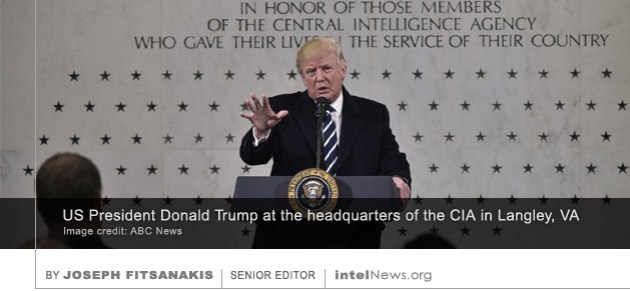
Donald Trump CIAIn a leading article published on Wednesday, The Wall Street Journal alleged that American intelligence officials are choosing to withhold sensitive intelligence from President Donald Trump, fearing that it might be compromised. The WSJ, America’s leading newspaper by circulation, which is highly influential in conservative circles, cited “current and former officials familiar with the matter”. The paper said it was unclear how much information had been withheld from President Trump. It added that at no point did intelligence officials keep the president in the dark about critical security threats by foreign states or potential terrorist attacks by non-state groups. However, intelligence officials are consciously and systematically withholding information from the White House that concerns “sources and methods”, said the article. The term refers to the precise methods used by the United States Intelligence Community to collect information, as well as the identification of sources —human or otherwise— of the information.
In recent weeks, several media outlets have alleged that American intelligence officials are skeptical about providing the White House with sensitive information. Late last month, Steve Hall, a former member of the Central Intelligence Agency’s Senior Intelligence Service, told National Public Radio that the matter of President Trump’s trustworthiness was “a live question” at the CIA. But this week’s article in The WSJ marks the first time that a conservative media outlet alleges that senior American intelligence officials mistrust the president. According to the New York-based newspaper, the Intelligence Community is uncomfortable with Mr. Trump’s “repeated expressions of admiration” for his Russian counterpart Vladimir Putin. Many intelligence officials are also disturbed by the US president’s public support for the alleged hacking of Democratic Party computer servers by the Kremlin.

Relations between the White House and the Intelligence Community are said to be extremely tense at the moment. On Wednesday, President Trump repeated his previously stated allegation that the US Intelligence Community is systematically leaking information to the media in order to subvert his administration’s work. The WSJ said it spoke to a representative from the Office of the Director of National Intelligence, which heads and oversees the US Intelligence Community. The representative questioned the accuracy of the newspaper’s allegations, saying that “any suggestion that the US intelligence community is withholding information and not providing the best possible intelligence to the president and his national security team is not true”. The report was also denied by an official at the White House, who said that Mr. Trump and his aides had no evidence “that leads us to believe that [The WSJ article] is an accurate account of what is actually happening”.

Author: Joseph Fitsanakis | Date: 17 February 2017 | Permalink

Two women arrested for assassinating North Korean leader’s half-brother

Kim Jong-namTwo women have been arrested in the past 48 hours in connection with the assassination of Kim Jong-nam, half-brother of North Korea’s supreme leader, who died in Malaysia on Monday. Kim, the grandson of North Korea’s founder Kim Il-Sung, died after two women approached him at the Kuala Lumpur International Airport and splashed his face with liquid poison. Some reports suggest that he was injected with a poisoned needle. According to Malaysian media, Kim was about to board a flight to Macau, where he had been living in self-exile since 2007. His relations with his brother, North Korean Supreme Leader Kim Jong-un, and the regime in Pyongyang, were adversarial, and some suggest that he had survived at least one assassination attempt in the past.

On Wednesday, Malaysian authorities announced the arrest of a woman carrying a Vietnamese travel document, which identified her as Doan Thi Huong (also reported as Doan Thin Hoang). No elaboration was offered on whether the travel document is genuine or forged. The 28-year-old woman is believed to have been arrested at the same airport where Kim’s assassination took place. Apparently she returned there by herself on Wednesday to catch an outbound flight to Vietnam, but was recognized by security personnel through the airport’s closed-circuit television monitoring system. Another woman, carrying an Indonesian passport, was arrested on Thursday in connection with the assassination, but no information was released about her. Some reports in the Malaysian media suggested that the second woman had been observed wandering around the Kuala Lumpur International Airport immediately following Kim’s assassination. It is believed that her co-conspirators inadvertently left her behind as they escaped the scene of the crime. Malaysian police said they also arrested a taxi driver who transported the women to the airport on the morning of the assassination. Four males, who are also believed to have helped organize the attack, remain at large.

Meanwhile South Korean and American government sources told news agencies that the assassins are thought to be agents of the North Korean government. Malaysian media said that senior North Korean diplomats were dispatched to Kuala Lumpur on Wednesday and held lengthy meetings with Malaysian government officials. Reports suggest that Pyongyang exercised pressure on Malaysian officials to cancel a planned post mortem examination of Kim’s body. But the request was allegedly denied. Malaysian officials did not respond to queries about whether Kim’s body will be handed to North Korea or flown to China for burial.

Author: Joseph Fitsanakis | Date: 16 February 2017 | Permalink

North Korean leader’s half-brother killed by female assassins in Malaysia

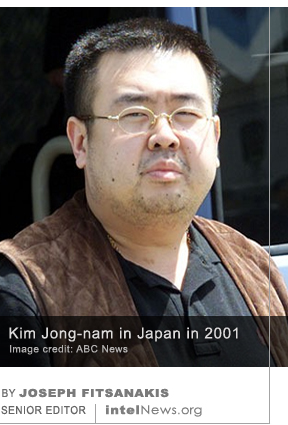
DPRK assassinThe half-brother of North Korean Supreme Leader Kim Jong-un has been killed in an audacious attack in Malaysia, reportedly by two female assassins who used a poisonous substance to murder him. Kim Jong-nam, was the eldest son of Kim Jong-il, and grandson of Kim Il-Sung, who founded the Democratic People’s Republic of Korea in 1948. However, he left the country in 2007, reportedly after it became clear that his younger half-brother, Kim Jong-un, was the regime’s preferred successor to his father, Kim Jong-il.
Since that time, it is believed that the self-exiled Kim split his time between Singapore and China, and that he had a residence in the former Portuguese colony of Macau. It is also believed that he employed a variety of passports, including South Korean, Portuguese and Swiss, some of which were reputed to be forgeries. Even though Kim kept a relatively low profile in the past decade, relations between him and the North Korean regime were adversarial. He made occasional comments to the press that were critical of the government in Pyongyang, and at times criticized his half-brother’s character and actions. Intelligence sources in South Korea claimed that the DPRK tried to kill him at least once in the past.

It appears that Pyongyang may have finally managed to kill Kim on Monday morning, at the Kuala Lumpur International Airport, Malaysia’s main international flight hub and one of Southeast Asia’s largest. The attack is believed to have taken place at 9:00 a.m. at the airport’s economy class terminal, where Kim was waiting to board a 10:00 a.m. flight to Macau. According to Malaysian news media, Kim was approached by two women, one of whom attacked him from behind. The female suspect reportedly covered Kim’s face with a “cloth laced with a poisonous liquid” that burned his eyes. A frantic Kim managed to run away and alert an airport employee, who called an ambulance. According to police, the victim told paramedics that someone had grabbed him from behind and “splashed a burning liquid on his face”. Some reports claimed that Kim was attacked with a poisonous needle or acid spray. According to Malaysian police spokesman Fadzil Ahmat, the grandson of North Korea’s founder expired on the way to a nearby hospital.

It was later confirmed that, at the time of his death, Kim was using a North Korean passport issued under the name “Kim Chol” and giving his date of birth as June 10, 1970. However, the travel document is believed to have been forged. Malaysian authorities said on Tuesday they had been unable to identify the suspects, but that an investigation was ongoing. Early on Wednesday, Malaysian authorities released CCTV footage of one of the suspects (pictured). Meanwhile, Kim’s body has been subjected to an autopsy, but the results remain unavailable. South Korean authorities told the Reuters news agency that Kim had been killed by assassins working for the North Korean government.

Author: Joseph Fitsanakis | Date: 15 February 2017 | Permalink

Top aide to Trump’s security adviser denied security clearance by CIA

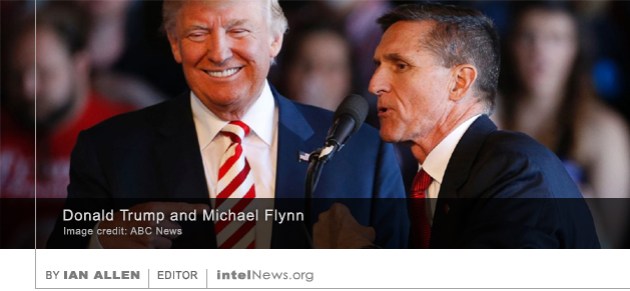
Michael FlynnA senior aide to Michael Flynn, National Security Adviser to United States President Donald Trump, will have to step down from his post because his application for a security clearance was rejected, say sources. Flynn had chosen Robin Townley, a former intelligence officer in the US Marine Corps, to serve as Senior Director for Africa on the National Security Council, a forum chaired by the president, which makes key decisions on domestic and foreign issues. Townley, who is described as “one of Flynn’s closest deputies”, held a top-secret security clearance for many years during his government career. But joining the National Security Council requires a so-called “sensitive compartmented information” clearance. This elite-status clearance allows designated individuals to access government programs and operations that are deemed highly sensitive.
According to Politico, Townley’s application for a sensitive compartmented information clearance was rejected last week. The news website cited two anonymous sources “with direct knowledge of the situation”, who said that Townley was informed on Friday that his application had been rejected. The rejection came from the Central Intelligence Agency, said Politico. One source told the website that the rejection had been met with agreement by Mike Pompeo, President Trump’s appointee to head the CIA. Townley cannot reapply for clearance, which means that he will have to give up his National Security Council post. Flynn will have to replace him.

The Politico report claims that Flynn and his team were “infuriated” by the CIA’s decision, which is expected to further-escalate tensions between the retired lieutenant-general and the Intelligence Community. Flynn has been criticized for his allegedly close connections to the administration of Russian President Vladimir Putin. In 2015, he delivered a speech in Moscow in return for a fee, and dined with Putin. Earlier this year, the Federal Bureau of Investigation investigated a telephone conversation between Flynn and Sergey Kislyak, Russia’s ambassador to the US, as part of a counterintelligence probe. Last week, The Washington Post alleged that Flynn and Kislyak discussed the topic of American economic sanctions on Russia, and that Flynn told the Russian diplomat that they would be lifted by the Trump administration.

The Politico report said that Flynn’s team views the rejection of Townley’s security clearance application as “a hit job from inside the CIA on Flynn and the people close to him”. It also said that Flynn’s team believe that the Intelligence Community feels “threatened by Flynn and his allies”. The website contacted the National Security Council and the CIA but received no responses.

Author: Ian Allen | Date: 13 February 2017 | Permalink

French intelligence warn of Russian meddling in upcoming election

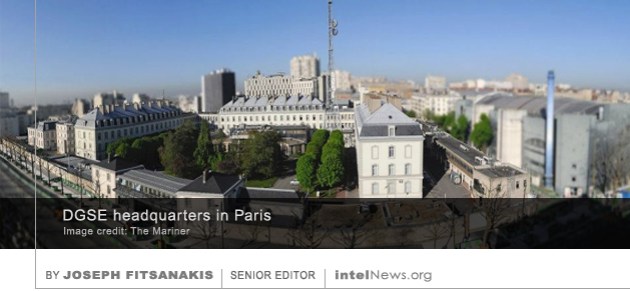
dgse franceFrance’s primary intelligence agency warned the country’s government this week that Russia has launched a secret operation to try to influence the outcome of the upcoming French presidential election in favor of the far right. According to the Paris-based weekly newspaper Le Canard Enchaîné, France’s Directorate-General for External Security (DGSE) has notified the country’s leadership that a covert operation by the Kremlin is already underway, and is expected to intensify in the run-up to April’s election. The spy agency allegedly believes that Russian efforts aim to promote Marine Le Pen, leader of the ultra-right National Front. Le Pen wants to curb immigration to France and remove the country from the European Union.


In an article published on Wednesday, Le Canard Enchaîné said the DGSE’s warning has alarmed the Élysée Palace. The paper also said that French President François Hollande, who chairs the country’s defense council, has decided to devote the entire agenda of the council’s next meeting to the subject of Russia’s alleged interference in the election. Anonymous sources told the paper that, according to a classified DGSE report, Russian spy agencies are using automated systems designed to “fill the Internet with tens of millions” of articles, images and memes that support the National Front candidate. Additionally, several news media that are controlled by Moscow will try to discredit Le Pen’s rivals for the presidency. At the same time, websites such as WikiLeaks —which some American commentators accuse of working with Moscow— will publish leaked information designed to damage Le Pen’s competitors.

The Le Canard Enchaîné allegations sound very similar to accusations leveled against the Kremlin by American intelligence agencies and by members of the United States Democratic Party. However, these allegations have not been supported by concrete evidence, and Russia denies that it had any involvement in last November’s presidential election in the US, which was won by Donald Trump.

Author: Joseph Fitsanakis | Date: 10 February | Permalink