Outgoing CIA director says scrapping Iran nuclear deal would be ‘disastrous’
December 2, 2016 Leave a comment
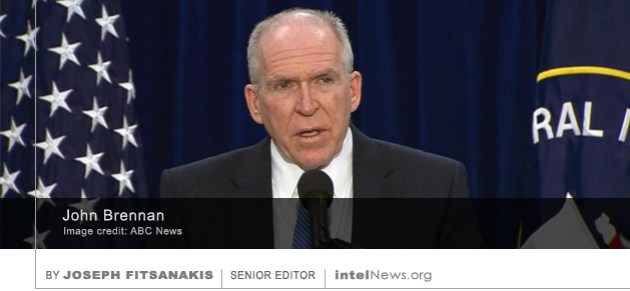 The outgoing director of the United States Central Intelligence Agency has warned in an interview that it would be “disastrous” for Washington to abandon a nuclear treaty with Iran, which was agreed in 2015. John Brennan is a career intelligence officer and fluent Arabic speaker, who has served in the CIA for 25 years. He was appointed director of the agency in March of 2013 by President Barack Obama and is scheduled to leave the position in January of 2017, after nearly four years at the helm of the CIA.
Earlier this week, in the first interview given by a serving CIA director to a British media agency, Brennan told the BBC that he hoped the incoming administration in Washington would show “prudence and discipline” in security matters. He was referring to the administration of US president-elect Donald Trump, which is currently taking shape in preparation for January. The business tycoon said during his election campaign that he would scrap the so-called Joint Comprehensive Plan of Action, an international agreement reached in 2015 between Iran and a group of nations known as the P5+1, namely the five permanent members of the United Nations Security Council plus Germany. As part of the deal, Iran has agreed to halt its nuclear weapons program in exchange for an end to economic sanctions.
The man chosen by Trump to replace Brennan at the helm of the CIA, Mike Pompeo, is a member of the so-called Tea Party Movement within the Republican Party and a fierce critic of the Iran deal. But Brennan told the BBC that “it would be the height of folly if the next administration were to tear up that agreement”. The outgoing CIA director said it would be “unprecedented” for an American administration to scrap an international agreement struck by its predecessor. Additionally, said Brennan, if Washington abandons the treaty it will strengthen hardliners in the Islamic Republic and would cause neighboring states to pursue their own nuclear programs in response to Tehran’s. During his interview, Brennan also cautioned the Trump administration to “be wary of Russian promises” and not to trust the advances of Russian President Vladimir Putin.
► Author: Joseph Fitsanakis | Date: 02 December 2016 | Permalink
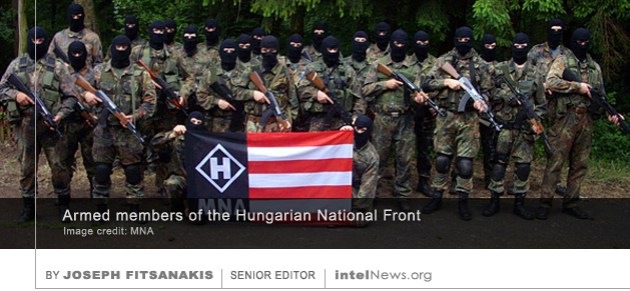 Media in Hungary have accused the Russian government of funding and training one of Hungary’s most notorious far-right organizations. The Hungarian National Front (MNA) was founded in 1989 as the Hungarian National Socialist Action Group. After the end of communism in Hungary, the organization began to espouse an openly neo-Nazi ideology, led by its leader, István Győrkös, a self-styled unreconstructed fascist. Győrkös, who idolizes Hungary’s wartime anti-Semitic Arrow Cross movement, set up links with similar groups in Central and Southern Europe. He served several prison terms in the 1990s for illegally possessing weapons and explosives and openly espousing pro-Nazi ideas. On November 6, Győrkös was taken to custody after opening fire against officers from the National Bureau of Investigation, who tried to enter his house to search for weapons. One officer
  Coordinated efforts by Anglo-American military and intelligence agencies have resulted in the killing or capturing of nearly every senior commander of the Islamic State’s online force. The close-knit group of Islamic State hackers and online propagandists, which are informally known as “the Legion”, is responsible for hacking and online recruitment incidents that led to several lone-wolf attacks in the West. In one incident in March of 2015, the Legion claimed responsibility for the unauthorized release of personal details of over 1,300 American government employees, with orders to Islamic State volunteers to kill them. In other instances, Legion operatives reached out to impressionable young men and women in Western Europe and the United States and convinced them to move to Syria or conduct attacks at home.
 A former employee of Germany’s spy agency, who was recalled from his post abroad after dating a foreign woman, has lost his legal battle to be compensated for lost earnings. The former intelligence officer, who has not been identified by name, worked for Germany’s Federal Intelligence Service, known by its initials, BND. From 2006 to 2008, he served as the BND’s station chief in Riga, Latvia. The post implies that he the highest-ranking German intelligence officer in the small Baltic state. According to court documents, the BND station chief had explicit directions from his employer, in writing, not to fraternize with locals while serving in the Latvian capital. The instructions expressly forbade romantic affiliations with locals.
 A Chinese diplomat, who made international news headlines in 2005 when he defected to Australia, has ended a decade of silence to warn about an alleged increase in Chinese espionage operations against his adopted country. Chen Yonglin was a seasoned member of the Chinese diplomatic corps in 2001, when he was posted as a political affairs consul at the Chinese consulate in Sydney, Australia. His job was to keep tabs on the Chinese expatriate community in Australia, with an emphasis on individuals and organizations deemed subversive by Beijing. He later revealed that his main preoccupation was targeting members of the Falun Gong spiritual movement, which is illegal in China. He also targeted supporters of Taiwanese independence, as well as Tibetan and East Turkestan nationalists who were active on Australian soil.
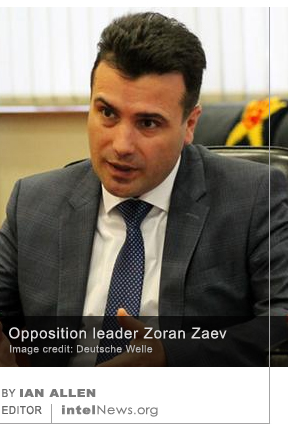 Several former and current intelligence officers, including a former director of the national spy service, have appeared in court in Macedonia, accused of illegally wiretapping thousands of people on orders of the government. The wiretap scandal has sparked the deepest political crisis in the impoverished Balkan country, which has existed since declaring independence from Yugoslavia in 1991.
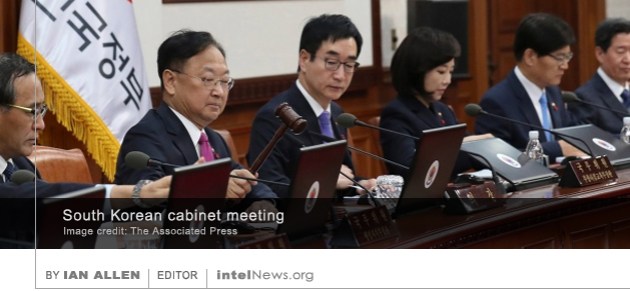 In a move that highlights the thaw in relations between South Korea and Japan, the two nations appear to be closer than ever to entering an intelligence agreement with each other. In 2014, Washington, Seoul and Tokyo signed a trilateral intelligence-sharing agreement on regional security issues, with the United States acting as an intermediary. But a proposed new agreement between South Korea and Japan would remove the US from the equation and would facilitate direct intelligence-sharing between the two East Asian nations for the first time in history.
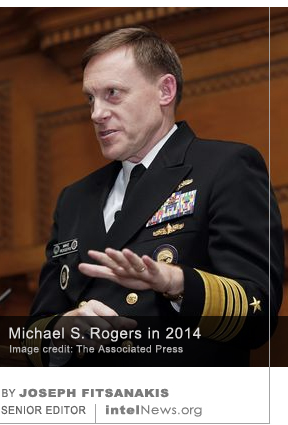 The director of the United States National Security Agency has taken the unprecedented step of entering talks with president-elect Donald Trump, amidst reports that President Barack Obama may fire him. Admiral Michael S. Rogers, 57, a US Navy cryptologist with a military career that spans over three decades, has been at the helm of the NSA since April of 2014. Last weekend, however, The Washington Post
 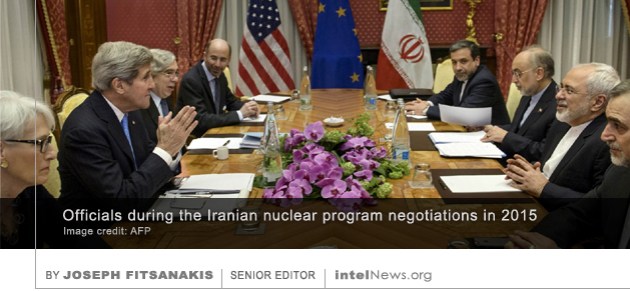 Iranian authorities have reportedly arrested at least 12 members of the country’s team of nuclear negotiators on charges of espionage. The 12 are believed to have represented Iran in international talks about its nuclear program between the Islamic Republic and a group of nations known as P5+1, representing the five permanent members of the United Nations Security Council plus Germany.
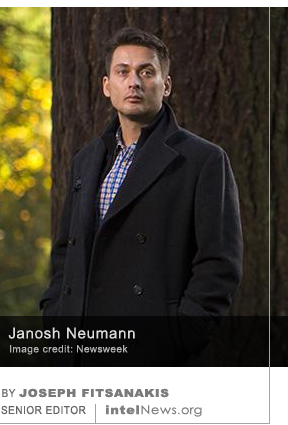 Two Russian intelligence officers, who defected to the United States in 2008, claim that they had to fend for themselves after American spy agencies failed to protect them despite promises to the contrary. Janosh Neumann (born Alexey Yurievich Artamonov) and his wife Victorya were employees of Russia’s Federal Security Service (FSB) specializing in investigations of money laundering and corruption. But in 2008 they traveled from Russia to Germany and from there to the Dominican Republic. Once in the Caribbean island, they entered the US embassy and offered to work for the Central Intelligence Agency (CIA).
 Authorities in Poland have exhumed the body of the country’s late prime minister and his wife as part of an investigation into the 2010 airplane disaster that killed them and nearly 100 others in Russia. The move has reignited persistent rumors that the crash that killed everyone onboard the plane, including Polish President Lech Kaczyński and his wife Maria, was not an accident. At the time of their death, the couple were leading a delegation of Polish officials and journalists traveling to Russia to participate in commemorations marking 70 years from the so-called ‘Katyn massacre’. The term refers to the extermination of approximately 22,000 Polish soldiers and civilians that was carried out by the Soviet military and secret services in 1940, following the Soviet invasion of Poland.
 Three United States Special Forces soldiers who were killed outside a Jordanian military base earlier this month were working for the Central Intelligence Agency, according to American government officials. The three soldiers were shot dead on November 4 by a Jordanian soldier, who was subsequently wounded in an exchange of fire, according to
 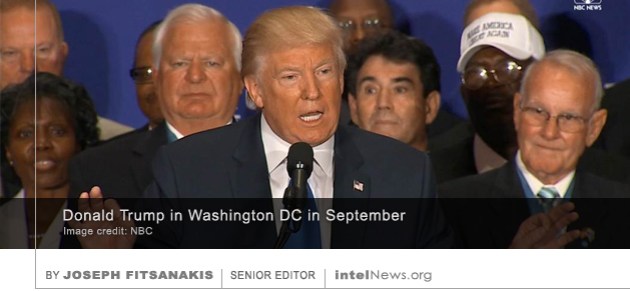 Members of the United States Intelligence Community will soon begin sharing top-secret information with the White House transition team of president-elect Donald Trump. According to a
  India is in the process of recalling eight of its diplomats from Pakistan, after their names and photographs were published in Pakistani newspapers with accusations that they are intelligence officers. According to anonymous sources in the government of Pakistan, three of the eight recalled diplomats have already left Islamabad for New Delhi. Five more are expected to leave the country before the end of the week. The three who left Pakistan yesterday were






 intelNews.org
Senior US intelligence official tells Congress not to ‘micromanage’ spy efforts
December 5, 2016 by Ian Allen 1 Comment
The legislation currently under debate includes instructions to the US Intelligence Community to set up an interagency committee to formulate responses to perceived Russian covert operations around the world. The term ‘covert operations’ refers to actions by intelligence agencies designed to influence foreign political, military or economic affairs or events. The topic received media attention during the 2016 US presidential election, when Washington repeatedly accused Moscow of trying to shape its outcome. This year’s Intelligence Authorization bill requires every US intelligence agency to appoint a representative to serve on a joint panel that will address alleged Russian covert operations in the US, Europe and elsewhere in the world.
But in September of this year, the Director of National Intelligence, James Clapper, America’s most senior intelligence official, authored a letter to Congress arguing that the requirement for an interagency panel to look into Russian covert operations should be scrapped. According to the Reuters news agency, which said last week that it saw a copy of the letter, Clapper argues that his letter echoes the unanimous view of the US Intelligence Community. He goes on to claim that the requirement to set up a special committee with an operational focus exceeds Congress’ role of overseer of the Intelligence Community and enters the realm of prescribing intelligence tasks. That, says Clapper in his letter, amounts to “micromanagement” of the Intelligence Community by Congress. Furthermore, he argues, the Intelligence Community has already taken steps to address Russian covert operations, thus the suggested panel would “duplicate current work” on the issue. Finally, Clapper’s letter suggests that the required panel would “hinder cooperation” with some of America’s overseas allies, though the Reuters report did not explain the precise justification for that claim.
► Author: Ian Allen | Date: 05 December 2016 | Permalink
Filed under Expert news and commentary on intelligence, espionage, spies and spying Tagged with covert operations, DNI, intelligence oversight, James Clapper, News, Russia, United States, US Congress