Islamic State leader al-Baghdadi abandons Mosul, say intelligence sources
March 10, 2017 1 Comment
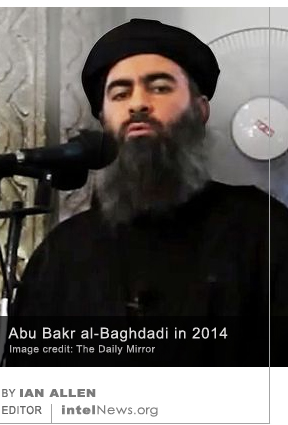 The leader of the Islamic State has abandoned the city of Mosul and is hiding in the desert zone of western Iraq, according to intelligence sources. Meanwhile Mosul, once the most populous city under the Islamic State’s control, is now reportedly being defended by a diminishing cadre of fewer than 3,000 Sunni militants, who are facing a 110,000-strong invading army.
Abu Bakr al-Baghdadi became the center of worldwide attention in July of 2014, when Islamic State troops swept rapidly through western Iraq and captured the region’s largest city, Mosul, in a spectacular coordinated attack. Soon after Mosul was captured by the Islamic State, al-Baghdadi led Friday prayers at Mosul’s Great Mosque and proclaimed himself caliph —emperor of the world’s Muslims. In the following months, the Islamic State reached the height of its power, commanding large expanses of land that stretched from the northern regions of Syria to the outskirts of Iraq’s capital Baghdad. Soon after al-Baghdadi’s public appearance in Mosul, the United States government set up a joint task force aimed at killing or capturing him. The group, which is still operational today, includes representatives from the Armed Forces, the National Security Council, and the Intelligence Community. Al-Baghdadi is believed to have stayed in Mosul, but has proven difficult to trace. He almost never uses electronic communications and is constantly on the move, sleeping at different locations every night.
Last October, US-backed Iraqi government troops, Shiite militias and Kurdish forces launched a large-scale military operation to recapture Mosul and drive out the Islamic State from the region. The assailants, whose combined forces are said to exceed 110,000 troops, reclaimed much of eastern Mosul earlier this year, and are preparing to launch a large-scale military advance on the western half of the city. While the operation to complete the recapture of Mosul is underway, American and Iraqi intelligence sources report that al-Baghdadi has not been public heard from since early November of last year. This leads many analysts to believe that the Islamic State leader has left the city and is now hiding in the vast and inhospitable desert that stretches along the Iraqi-Syrian border. Moreover, intelligence analysts claim that the Islamic State’s online activity has fallen sharply, to about half of what it was during the group’s peak in late 2014. This leads to the conclusion that the Islamic State is now increasingly focusing on essential functions aimed simply at the survival of the regime. The group has reportedly lost at least 3,000 fighters in Mosul, but an estimated 2,400 armed men have vouched to defend the city to the very end.
► Author: Ian Allen | Date: 10 March 2017 | Permalink
 The United States federal government has launched a criminal investigation into the public disclosure of thousands of documents that purportedly belong to the Central Intelligence Agency. The documents were
 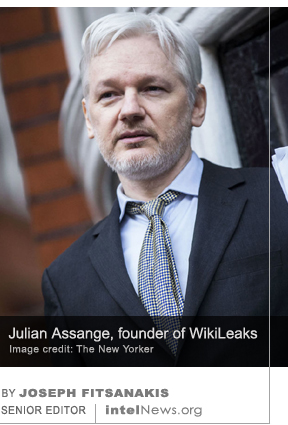 Thousands of documents belonging to the United States Central Intelligence Agency, which were released on Tuesday by the international anti-secrecy website WikiLeaks, are almost certainly genuine. They reveal an entire universe of technical intelligence collection methods used by the CIA to extract information from digital applications and electronic devices, ranging from flash drives to smart screen televisions. WikiLeaks named the collection
 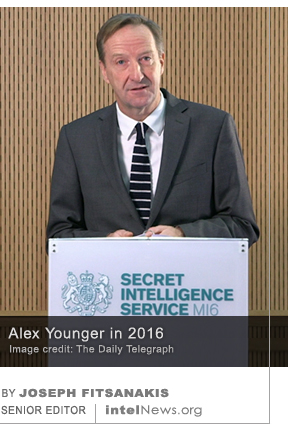 Britain’s primary external-intelligence agency will revert to old-fashioned ways of recruiting employees, including the co-called “tap on the shoulder” method, according to its director. Known informally as MI6, the Secret Intelligence Service (SIS) was founded in 1908 to protect Britain’s national security by collecting intelligence from foreign sources. However, the agency has had difficulty recruiting a diverse group of people, and many still view it as a professional destination for a small wealthy elite, drawn primarily from Britain’s most prestigious universities such as Oxford and Cambridge.
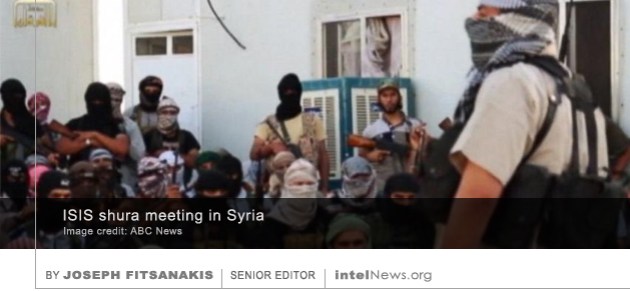 The Islamic State is facing imminent financial collapse, according to a new study conducted by a London-based research group in association with one of the world’s leading international accounting firms. The recently launched report is entitled
 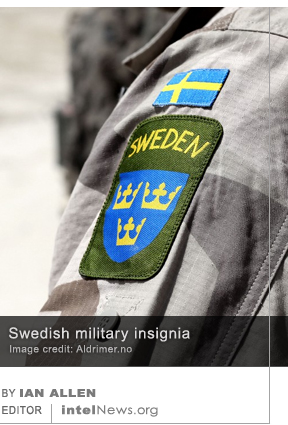 The military intelligence service of Sweden warned last week that there were increasing incidents of espionage perpetrated against Sweden by operatives identified “beyond doubt” as agents of foreign powers. In its
  The White House has instructed the Central Intelligence Agency to halt military support to armed groups that are associated with the Free Syrian Army (FSA), a group opposed to Syrian President Bashar al-Assad. Some believe that the move indicates a change in American policy under United States President Donald Trump. But Syrian rebel commanders say they believe the move is temporary, and that military aid will be restored. For several years, the CIA has
  Indonesian authorities said on Sunday that they will investigate a North Korean restaurant in the country, after a Singaporean news agency claimed it was being used as a center for espionage. The announcement comes amidst heightened tensions between North Korean and its neighbors, following the
 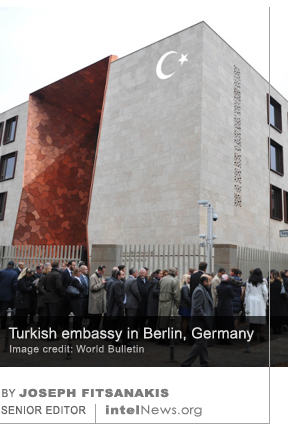 Turkish state agencies have asked the country’s diplomats stationed all over Europe to spy on Turkish expatriate communities there, in an effort to identify those opposed to the government, according to a German report. The government of Turkish President Recep Tayyip Erdoğan accuses members of the so-called Gülen movement of orchestrating a military coup in July of last year, which resulted in an armed attack on the country’s parliament and the murder of over 200 people across Turkey. The Gülen movement consists of supporters of Muslim cleric Fethullah Gülen, who runs a global network of schools, charities and businesses from his home in the United States. The government of Turkey has designated Gülen’s group a terrorist organization and claims that its members have stealthily infiltrated state institutions since the 1980s.
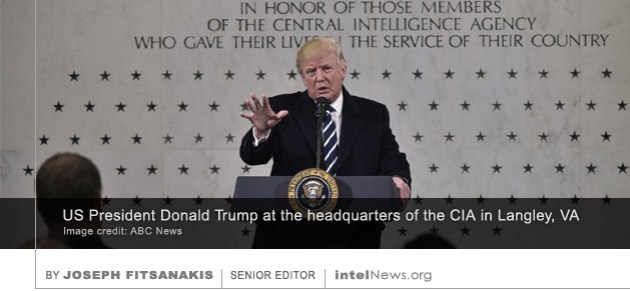 In a leading article published on Wednesday, The Wall Street Journal alleged that American intelligence officials are choosing to withhold sensitive intelligence from President Donald Trump, fearing that it might be compromised. The WSJ, America’s leading newspaper by circulation, which is highly influential in conservative circles,
 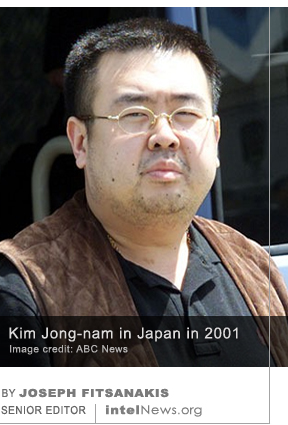 Two women have been arrested in the past 48 hours in connection with the assassination of Kim Jong-nam, half-brother of North Korea’s supreme leader, who died in Malaysia on Monday. Kim, the grandson of North Korea’s founder Kim Il-Sung, died after two women approached him at the Kuala Lumpur International Airport and splashed his face with liquid poison. Some reports suggest that he was injected with a poisoned needle.
  The half-brother of North Korean Supreme Leader Kim Jong-un has been killed in an audacious attack in Malaysia, reportedly by two female assassins who used a poisonous substance to murder him. Kim Jong-nam, was the eldest son of Kim Jong-il, and grandson of Kim Il-Sung, who founded the Democratic People’s Republic of Korea in 1948. However, he left the country in 2007, reportedly after it became clear that his younger half-brother, Kim Jong-un, was the regime’s preferred successor to his father, Kim Jong-il.
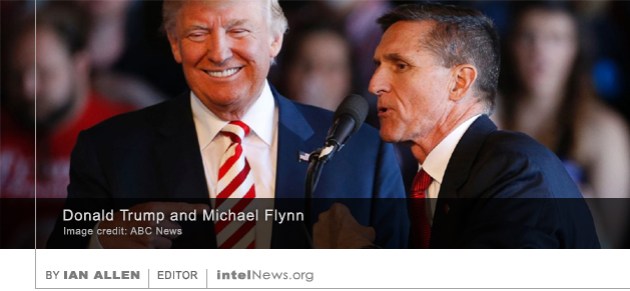 A senior aide to Michael Flynn, National Security Adviser to United States President Donald Trump, will have to step down from his post because his application for a security clearance was rejected, say sources. Flynn had chosen Robin Townley, a former intelligence officer in the US Marine Corps, to serve as Senior Director for Africa on the National Security Council, a forum chaired by the president, which makes key decisions on domestic and foreign issues. Townley, who is described as “one of Flynn’s closest deputies”, held a top-secret security clearance for many years during his government career. But joining the National Security Council requires a so-called “sensitive compartmented information” clearance. This elite-status clearance allows designated individuals to access government programs and operations that are deemed highly sensitive.
 France’s primary intelligence agency warned the country’s government this week that Russia has launched a secret operation to try to influence the outcome of the upcoming French presidential election in favor of the far right. According to the Paris-based weekly newspaper Le Canard Enchaîné, France’s Directorate-General for External Security (DGSE) has notified the country’s leadership that a covert operation by the Kremlin is already underway, and is expected to intensify in the run-up to April’s election. The spy agency allegedly believes that Russian efforts aim to promote Marine Le Pen, leader of the ultra-right National Front. Le Pen wants to curb immigration to France and remove the country from the European Union.








Russia possibly tried to kill Montenegro PM, says British foreign secretary
March 13, 2017 by Ian Allen 1 Comment
The British foreign secretary spoke following reports that British intelligence services called an emergency meeting with representatives of the country’s major political parties, in order to warn them that Russia planned to use cyber-attacks to disrupt regional and national elections in the country. Mr. Johnson said that the government had “no evidence the Russians are actually involved in trying to undermine our democratic processes at the moment”. But he added that there was “plenty of evidence that the Russians are capable of doing that. And there is no doubt”, he went on, “that they’ve been up to all sorts of dirty tricks”. Some of those “dirty tricks”, said Mr. Johnson, targeted the former Yugoslav Republic of Montenegro, where last year there was “an attempted coup and possibly an attempted assassination”.
The British politician was referring to allegations made last October by authorities in Montenegro that “nationalists from Russia” and Serbia were behind a failed plot to kill the country’s then-Prime Minister Milo Dukanović and spark a pro-Russian coup in the country. The allegations surfaced after 20 Serbians and Montenegrins were arrested by police in Montenegro for allegedly planning a military coup against the government. The arrests took place on election day, October 16, as Montenegrins were voting across the Balkan country of 650,000 people. The plotters had allegedly hired a “long-distance sharpshooter” who was “a professional killer” for the task of killing Đukanović. After killing the Prime Minister, the plotters planned to storm the parliament and prompt a pro-Russian coup in Montenegro, according to authorities. In response to allegations that the coup had been hatched in neighboring Serbia, Serbian Prime Minister Vučić said that he would not allow Serbia to “act as the puppet of world powers”, a comment that was clearly directed at Moscow. Russia vehemently denied the allegations.
Meanwhile, Mr. Johnson is preparing to visit Moscow in a few days to meet with his Russian counterpart, Minister of Foreign Affairs Sergey Lavrov. He told ITV that he planned to deliver his “personal feeling” to Mr. Lavrov, which “is one of deep, deep sadness” about Russia’s foreign policy under President Vladimir Putin.
► Author: Ian Allen | Date: 13 March 2017 | Permalink
Filed under Expert news and commentary on intelligence, espionage, spies and spying Tagged with assassinations, Boris Johnson, Milo Đukanović, Montenegro, News, Russia, Serbia, UK