Did Pakistan poison the CIA station chief in Islamabad?
May 6, 2016 Leave a comment
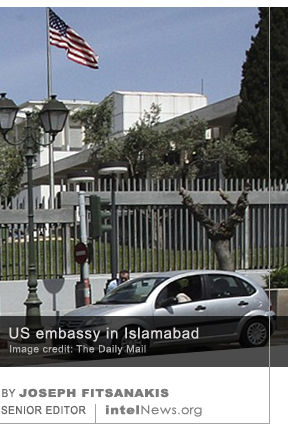 A leading article in The Washington Post suggests that the United States Central Intelligence Agency suspected that its most senior officer in Pakistan was poisoned by the host country’s intelligence services, in an attempt to kill him. The CIA pulled its station chief from Islamabad in the summer of 2011, two months after Operation NEPTUNE SPEAR, which saw the killing in Abbottabad of al-Qaeda founder Osama bin Laden. The CIA official, who has since been identified as Mark Kelton, acted as the senior US intelligence representative in the Asian country. He had assumed the post, which was supposed to last at least two years, only seven months earlier. His abrupt removal raised questions, which were informally answered by Langley. There were rumors that Kelton’s return to the US was health-related, but that the decision to replace him was also affected by his extremely poor relations with the Inter-Services Intelligence (ISI) directorate, Pakistan’s powerful spy service.
On Thursday, however, The Washington Post’s Greg Miller said in a leading article that Kelton’s illness, which led to his replacement, had been so violent that it led him and others in the CIA to suspect that he had been poisoned. Prior to replacing him, the Agency had repeatedly flown the official back to the US for medical treatment, which proved fruitless. Eventually, some at Langley began to examine the possibility that the Pakistanis had poisoned Kelton, at a time when relations between the CIA and the ISI had sunk to unprecedented lows. Miller cites unnamed US intelligence officials who confirmed that the CIA had strong suspicions that Kelton had been deliberately poisoned. Even if the suspicions were groundless, said Miller, “the idea that the CIA and its station chief considered the ISI capable of such an act suggests that the breakdown in trust [between the two agencies] was even worse than widely assumed”.
Kelton has since recovered and assumed the post of deputy director for counterintelligence at the CIA before retiring from the Agency. The 59-year-old has since revealed his CIA background and even spoke with Miller on the phone as the Post correspondent was preparing his story. Although he declined Miller’s request for a detailed interview, the former CIA Islamabad station chief said that the initial suspicions about his poisoning “did not originate with” him. He added, however, that he would “rather let that whole episode lie”. The CIA told Miller that it had not uncovered any concrete evidence that the elements in the Pakistani government had poisoned Kelton. The embassy of Pakistan in Washington told The Washington Post that Miller’s story was “fictional and not worthy of comment”.
► Author: Joseph Fitsanakis | Date: 06 May 2016 | Permalink
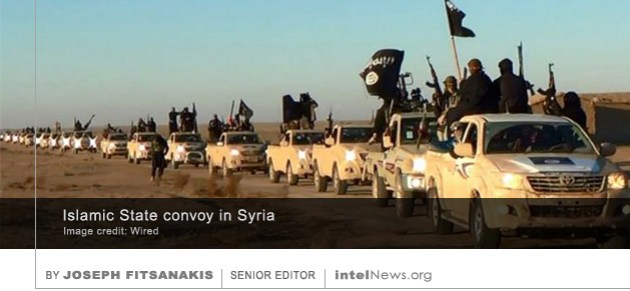 The two main warring parties in the Syrian Civil War, the government of Syria and the Islamic State, frequently contact one another in pursuit of commercial and military deals, according to internal Islamic State documents. British-based news agency Sky News said on Monday that it had acquired “secret Islamic State files”, which included handwritten orders to operatives sent directly from officials at the organization’s headquarters in Raqqa, Syria. The group said it received the documents from a regional branch of the Free Syrian Army (FSA), a largely secular armed opposition group that was formed in 2011 by defectors from the Syrian Armed Forces. The FSA unit in Raqqa left the Syrian city once it was occupied by the Islamic State, and is currently based in Turkey. One of the group’s core preoccupations is assisting Islamic State defectors in their efforts to escape from Raqqa and reach Turkey. It was through these defectors, according to Sky News, that the secret Islamic State documents were acquired.
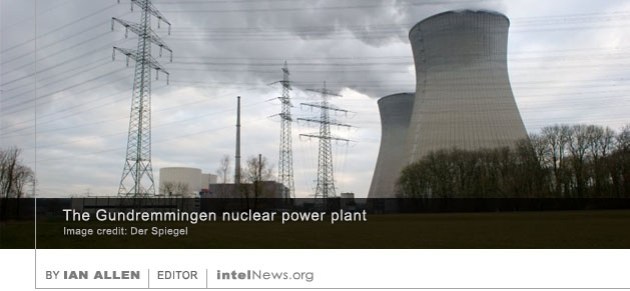 The computers of a nuclear power plant in southern Germany have been found to be infected with computer viruses that are designed to steal files and provide attackers with remote control of the system. The power plant, known as Gundremmingen, is located in Germany’s southern district of Günzburg, about 75 miles northwest of the city of Munich. The facility is owned and operated by RWE AG, Germany’s second-largest electricity producer, which is based in Essen, North Rhine-Westphalia. The company provides energy to over 30 million customers throughout Europe.
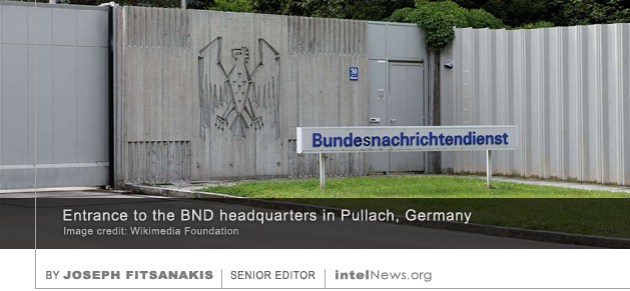 The head of Germany’s foreign intelligence agency has been removed from his post in a move described by observers as surprising. Gerhard Schindler, 63, had led Germany’s Federal Intelligence Service, known as Bundesnachrichtendienst, or BND, since 2012. Founded 60 years ago with direct input from the United States Central Intelligence Agency, the BND is today responsible for collecting intelligence abroad in the service of German national interests. Headquartered in the southern German city of Pullach, near Munich, the BND is directly subordinate to the office of German Chancellor Angela Merkel.
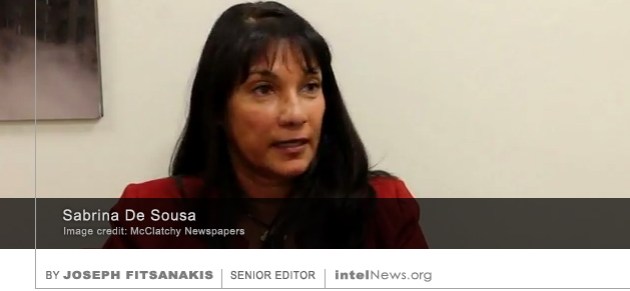 An appeals court in Portugal has ruled that a former officer of the Central Intelligence Agency is to be extradited to Italy, where she faces charges of helping kidnap a man as part of a secret operation sponsored by the United States government. Sabrina De Sousa, 59, was an accredited diplomat stationed at the US consulate in Milan, Italy, in 2003, when a CIA team kidnapped Hassan Mustafa Osama Nasr from a Milan street in broad daylight. Nasr, who goes by the nickname Abu Omar, is a former member of Egyptian militant group al-Gama’a al-Islamiyya, and was believed by the CIA to have links to al-Qaeda. Soon after his abduction, Nasr was renditioned to Egypt, where he says he was brutally tortured, raped, and held illegally for years before being released without charge.
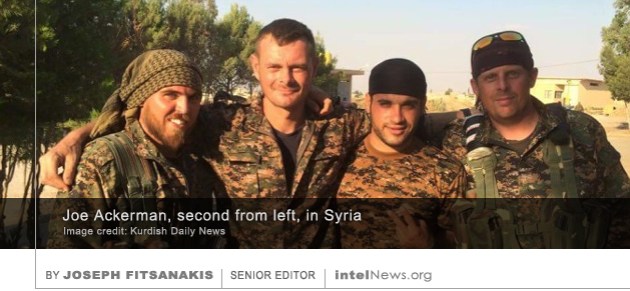 Two British and one Irish citizen, who fought with Kurdish units against the Islamic State in Iraq and Syria, but were imprisoned in Iraqi Kurdistan while they were trying to return to Europe, have been freed. The three men are Joshua Molloy, from County Laois in the Republic of Ireland, Jac Holmes from Bournemouth, England, and Joe Ackerman (pictured), from the West Yorkshire city of Halifax in England’s northern region. All three joined Kurdish militias and saw action in Syria and Iraq in recent months.
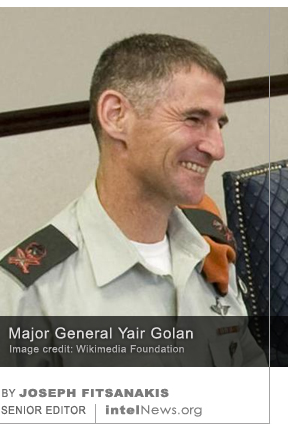 The governments of Israel, Egypt and Jordan have entered an intelligence-sharing agreement aimed at joining forces against the Islamic State, which a senior Israeli military commander has described as “unprecedented”. The comment was made on Wednesday by Major General Yair Golan at a press conference hosted by Israel’s Foreign Press Association. General Golan has been serving as Deputy Chief of the General Staff of the Israel Defense Forces since late 2014.
 A former computer technician who worked on cryptology has been sentenced to death in China after being found guilty in what some describe as one of the country’s most damaging espionage cases in recent years. The man, Huang Yu, is reportedly a 41-year-old computer expert who worked for a government-funded research institute specializing in cryptology —the science of making and breaking secret codes. He was arrested in 2011 in Chengdu, the capital of Sichuan province in southwestern China.
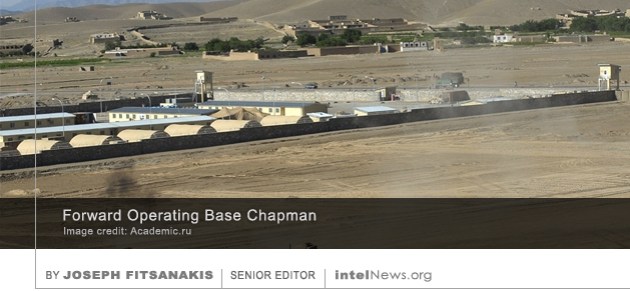 Two recently declassified United States government documents suggest that Pakistani intelligence officers may have been behind a suicide attack that killed seven employees of the Central Intelligence Agency in Afghanistan. The
 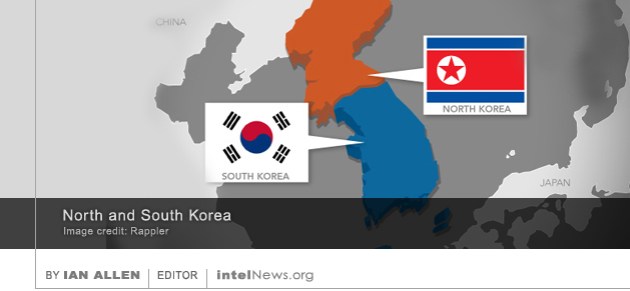 A North Korean intelligence official who sought refuge in South Korea last year is the most high profile defector to the South since the end of the Korean War in 1953, according to authorities in Seoul. An announcement issued by the South Korean government last week said the defector is a colonel in the Korean People’s Army who worked for the
 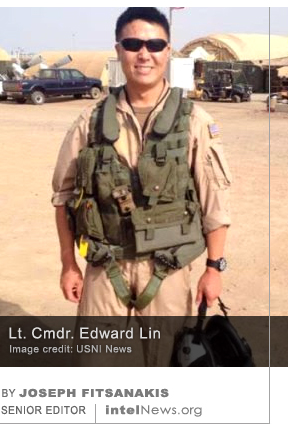 An American official has told Newsweek magazine that the possibility of further arrests in the espionage case of United States Navy flight officer Edward Lin should not be ruled out. Last Sunday, the US Navy reported the arrest Lt. Cmdr. Lin, who faces two counts of espionage and three counts of attempted espionage, among other charges. Aside from a three-page, heavily redacted charge sheet released by the Navy, almost nothing is known about this case. However, as intelNews
  The massive data leak of documents belonging to Panamanian law firm Mossack Fonseca has revealed the names of intelligence officials and agents form several countries, who employed front companies to conceal their financial activities. According to German newspaper Süddeutsche Zeitung, which was the initial recipient of the largest data leak in history last summer, the list of names includes intelligence officials from the Middle East, Latin America and Africa, as well as “close intermediaries of the [United States] Central Intelligence Agency”.
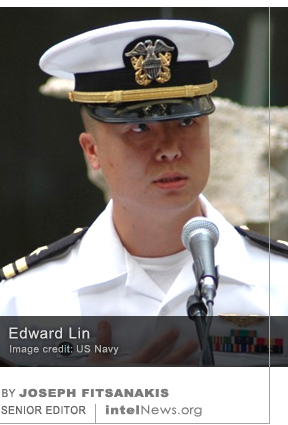 For the first time since 1985, when the Federal Bureau of Investigation broke the John Walker spy ring, an active United States Navy officer has been charged with espionage. On Sunday, the US Navy reported the arrest Lt. Cmdr. Edward C. Lin, who faces two counts of espionage and three counts of attempted espionage, among other charges. Aside from a three-page, heavily redacted
 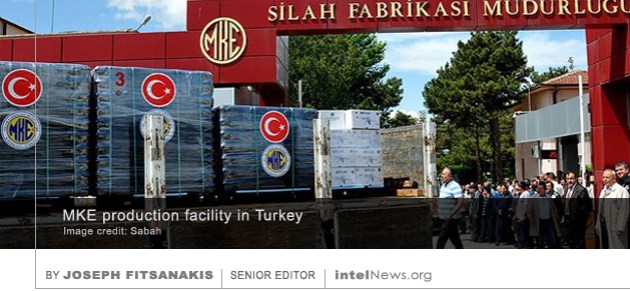 A senior official of Turkey’s state-run weapons manufacturer has been arrested on espionage charges, after he was caught selling weapons blueprints to the employee of an arms firm based in the United States. The official was named by Turkish authorities as Mustafa Tanriverdi, the general manager of one of Turkey’s largest weapons production facilities, located in the town of Kirikkale, 50 miles east of Turkish capital Ankara. Tanriverdi is reportedly employed by the Mechanical and Chemical Industry Corporation (MKE), a government-run manufacturing firm that provides much of the Turkish Armed Forces’ weaponry. The company also has a growing list of international buyers, which includes nearly 30 foreign governments.






 intelNews.org
Poland’s intelligence watchdog chief says 52 journalists were spied on
May 12, 2016 by Ian Allen Leave a comment
Kamiński made the spying allegation on Wednesday at the Sejm, the lower house of the Polish Parliament, during a parliamentary hearing held to assess the performance of the previous government. He said that dozens of journalists of all political persuasions had been illegally spied on by the ABW between 2007 and 2015, on direct orders by the previous government. He was referring to the administrations of Donald Tusk and Ewa Kopacz, who held successive prime ministerial posts until last year. The two politicians represented a center-left alliance between the Civic Platform (PO) and the Polish People’s Party (PSL), which ruled Poland from 2007 to 2015. But Kamiński, who is currently a member of the Sejm elected with the governing Law and Justice party (PiS), claimed that, under Tusk and Kopacz’s watch, the ABW spied on prominent journalists, their families and their contacts, secretly photographing them and tapping their telephones in order to see who they communicated with. He also claimed that the ABW spied on him and his colleagues at the Central Anti-Corruption Bureau in an attempt to intimidate them.
The center-right Law and Justice Party (PiS), which Kamiński represents at the Sejm, rose to power in October of last year after gaining a majority in both houses of the Polish Parliament. It had remained in opposition from 2007 to 2015, while the PO-PSL alliance governed the country. In his presentation, Kamiński claimed that the current center-right administration is “not placing anyone under surveillance due to their political views”, as these types of illegal activities would “directly violate freedom of speech and democracy” in Poland. At the end of his talk, Kamiński presented a list of journalists’ names who were allegedly targeted by the ABW. But opposition politicians dismissed Kamiński’s charges as being politically motivated and said they aimed to discredit the previous administration.
► Author: Ian Allen | Date: 12 May 2016 | Permalink
Filed under Expert news and commentary on intelligence, espionage, spies and spying Tagged with ABW (Poland), civil liberties, corruption, domestic intelligence, Mariusz Kamiński, News, Poland, Polish Central Anti-Corruption Bureau, political policing