US spied on 143-member Iran delegation to 2007 UN summit
September 24, 2015 1 Comment
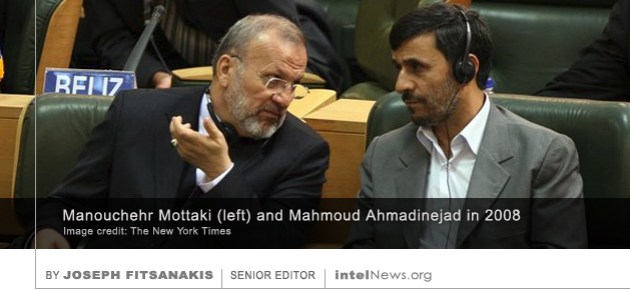 The United States National Security Agency spied on the Iranian president, foreign minister, and over 140 Iranian dignitaries who visited New York in 2007 to participate in the United Nations General Assembly. The allegation was aired on Wednesday by American television station NBC, which cited former intelligence officials and a top-secret report on the espionage operation. The original report was included in an October 2007 issue of SID Daily, an internal NSA newsletter published by the spy agency’s Signal Intelligence Division. The report, which is entitled “Tips for a Successful Quick Reaction Capability”, commends the espionage operation against the Iranian UN delegation as an exemplary illustration of a collaborative effort between managers, technical experts, and analysts.
The operation appears to have been directly initiated in early 2007 by the George W. Bush White House, which asked the NSA to spy on Iran’s UN delegation. The blanket permission included espionage conducted against the then Iranian President Mahmoud Ahmadinejad and Minister of Foreign Affairs Manouchehr Mottaki, who were scheduled to be in New York in September of that year to attend the 62nd session of the UN General Assembly. In response to the White House authorization, the NSA deployed a small army of technical experts and analysts to spy on the entire 143-member Iranian delegation for 19 hours a day during the summit.
The NSA teams were allegedly able to record, transcribe and analyze 2,000 conversations of various lengths per day. According to NBC, the NSA was able to intercept the personal conversations of President Ahmadinejad, a number of video conferences involving members of the Iranian delegation, as well as calls made using Skype. The latter were intercepted using a secret technology codenamed BLARNEY by NSA, while the agency also relied on bugs installed in hotel and conference rooms used by the Iranians, said NBC. The intercepted communications were subsequently examined by the NSA’s Social Network Analysis Office in an effort to map the “social networks” of the Iranian government’s senior echelons.
The Iranian government did not respond to NBC’s requests for comment. Iranian President Hassan Rouhani is scheduled to arrive in New York today to attend the 70th UN General Assembly debate.
► Author: Joseph Fitsanakis | Date: 24 September 2015 | Permalink
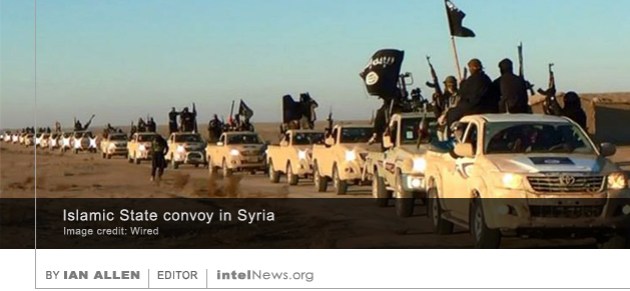 A new study by a British-based organization details for the first time the views of dozens of former Islamic State fighters who have defected from the group in the past year. The study shows that most defectors were disillusioned after witnessing high levels of corruption among Islamic State members, or in response to the extreme violence perpetrated by the group against other Sunni Muslims. The research was carried out by the London-based International Center for the Study of Radicalization and Political Violence (ICSR), which said it gathered the publicly expressed views of nearly 60 Islamic State members who left the organization between August 2014 and August 2015.
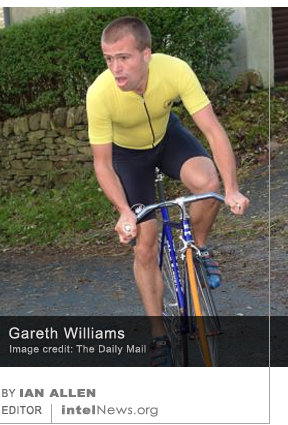 A British intelligence officer, who was found dead in his London apartment in 2010, was not a transvestite, as some media reports have speculated, but probably worked undercover dressed as a woman, according to a leading forensic investigator. Gareth Williams, a mathematician in the employment of Britain’s signals intelligence agency, GCHQ, had been seconded to MI6, Britain’s external intelligence agency, to help automate intelligence collection. He had also worked with several United States agencies, including the Federal Bureau of Investigation and the National Security Agency. But his career came to an abrupt end in August 2010, when he was
 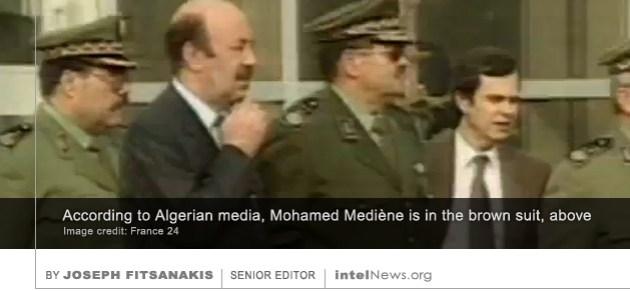 In an unprecedented development described by local media as the “end of an era”, the longtime director of Algeria’s main intelligence agency, and one of the country’s most powerful figures, has been removed from office. Until last Sunday, General Mohamed Mediène was described as the world’s longest-serving intelligence chief, having led Algeria’s Department of Intelligence and Security since 1990. Known by its initials, DRS, the organization grew rapidly in size and power during the Algerian Civil War of the 1990s. After an electoral victory by the Islamic Salvation Front (FIS) was quashed in a military-led coup, General Mediène took advantage of the country’s fragile security situation to strengthen the DRS and his own political influence. He became a staunch ally of Algerian President Abdelaziz Bouteflika and created what some have called “a state within a state”.
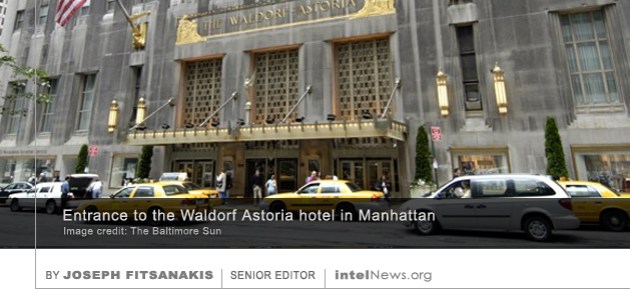 The president of the United States and his delegation will be housed at a different hotel during a United Nations General Assembly meeting later this month, allegedly due to concerns over Chinese espionage activity. Since the late 1940s, the American president and his diplomatic entourage have resided at the Waldorf Astoria for several days in September, while attending the annual UN General Assembly in New York. The luxury hotel, which is located on Park Avenue on the island of Manhattan, has also served since 1947 as the residence of the US ambassador to the UN. That is also why the American delegation is usually hosted there, courtesy of the ambassador. This year, however, President Barack Obama and his sizeable delegation will be staying at the New York Palace Hotel, located at the corner of Manhattan’s 50th Street and Madison Avenue. The announcement was made last week by the White House and the US Department of State.
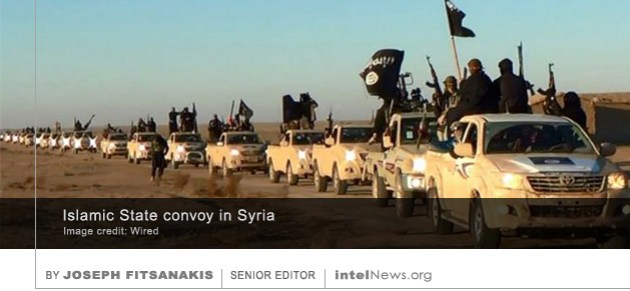 The United States Department of Defense is still probing claims that some of its officials doctored intelligence reports to give a falsely optimistic account of the campaign against the Islamic State. IntelNews has
 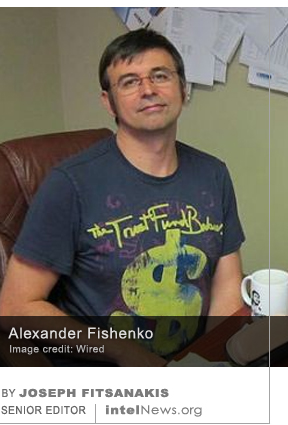 A resident of Texas, who is accused by United States authorities of setting up a front company in order to illegally acquire American technology on behalf of Russia’s intelligence services, has pleaded guilty to espionage charges. Alexander Fishenko, 49, was one of 11 people
 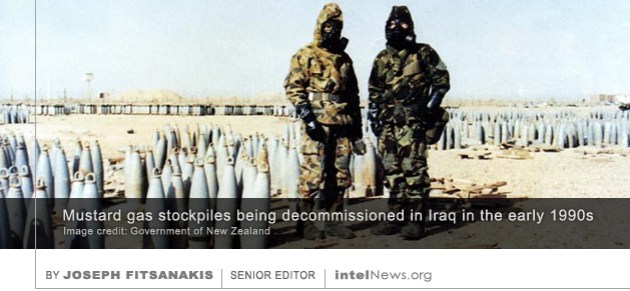 Germany’s foreign intelligence agency says it has evidence that the Islamic State is making use of chemical weapons in northern Iraq, according to media reports. The German Federal Intelligence Service, known as BND, says its operatives in the Middle East were able to collect biological samples from Kurdish fighters engaged in battles against the Islamic State forces. The samples pointed to chemical poisoning that most likely came from sulfur mustards, more commonly known as mustard gas. The chemical, which is banned from use in warfare by the 1993 Chemical Weapons Convention, causes skin irritation that gets progressively worse until sufferers develop debilitating blisters filled with yellow fluid.
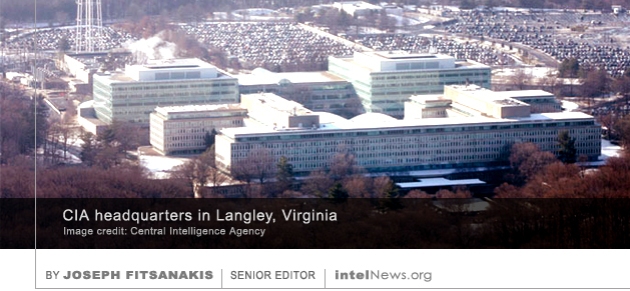 The United States Central Intelligence Agency had direct and unfiltered access to telecommunications data exchanged between German citizens, according to a new document that has surfaced in the German press. The program, codenamed GLOTAIC, was a collaboration between the CIA and Germany’s Federal Intelligence Service, known as BND. According to German newsmagazine Der Spiegel, which
 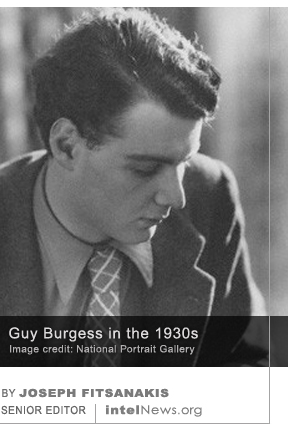 The life of Guy Burgess, one of the so-called ‘Cambridge Five’ double agents, who spied on Britain for the Soviet Union before defecting to Moscow in 1951, is
 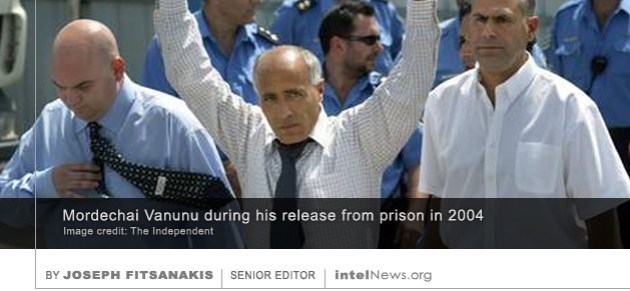 Israeli nuclear whistleblower Mordechai Vanunu, who spent 18 years in prison for revealing the existence of Israel’s nuclear program, has spoken for the first time about his 1986abduction by the Mossad in Rome. Vanunu was an employee at Israel’s top-secret Negev Nuclear Research Center, located in the desert city of Dimona, which was used to develop the country’s nuclear arsenal. But he became a fervent opponent of nuclear proliferation and in 1986 fled to the United Kingdom, where he revealed the existence of the Israeli nuclear weapons program to the The Times of London. His action was in direct violation of the non-disclosure agreement he had signed with the government of Israel; moreover, it went against Israel’s official policy of ‘nuclear ambiguity’, which means that the country refuses to confirm or deny that it maintains a nuclear weapons program.
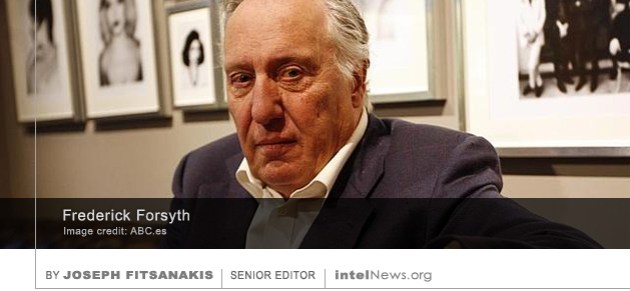 Frederick Forsyth, the esteemed British author of novels such as The Day of the Jackal, has confirmed publicly for the first time that he was an agent of British intelligence for two decades. Forsyth, who is 77, worked for many decades as an international correspondent for the BBC and Reuters news agency, covering some of the world’s most sensitive areas, including postcolonial Nigeria, apartheid South Africa and East Germany during the Cold War. But he became famous for authoring novels that have sold over 70 million copies worldwide, including The Odessa File, Dogs of War and The Day of the Jackal, many of which were adapted into film. Several of his intelligence-related novels are based on his experiences as a news correspondent, which have prompted his loyal fans to suspect that he might have some intelligence background.








Russia and Estonia conduct Cold-War-style spy swap
September 28, 2015 by Joseph Fitsanakis Leave a comment
Russia’s Federal Security Service (FSB) said that it had handed to the Estonian government a man going by the name of Eston Kohver. Last year, Estonian officials accused Moscow of abducting Kohver, an employee of the Internal Security Service of Estonia, known as KaPo, from the vicinity of Luhamaa, a border-crossing facility in southeastern Estonia. But the Russian government said that Kohver had been captured by the FSB on Russian soil and was found to be carrying a firearm, cash and spy equipment “relating to the gathering of intelligence”.
Kohver was exchanged for Aleksei Dressen, a former Estonian KaPo officer who was arrested in February 2012 along with his wife, Viktoria Dressen, for allegedly spying for Russia. The Dressens were caught carrying classified Estonian government documents as Viktoria was attempting to board a flight to Moscow. Aleksei Dressen was sentenced to 16 years in prison, while Viktoria Dressen to six, for divulging state secrets. Russian media have since reported that Dressen had been secretly working for Russian counterintelligence since the early 1990s.
Soon after the spy- swap, KaPo Director Arnold Sinisalu told a press conference that the exchange had been agreed with the FSB following “long-term negotiations”, during which it became clear that “both sides were willing to find a suitable solution”. Kohver, sitting alongside Sinisalu, told reporters that it felt “good to be back in my homeland”.
► Author: Joseph Fitsanakis | Date: 28 September 2015 | Permalink
Filed under Expert news and commentary on intelligence, espionage, spies and spying Tagged with Aleksei Dressen, Arnold Sinisalu, espionage, Eston Kohver, Estonia, FSB, imprisoned spy swaps, KaPo (Estonia), News, Piusa River, Russia, Viktoria Dressen