Analysis: Will the mass expulsion of diplomats affect Russia’s spy capabilities?

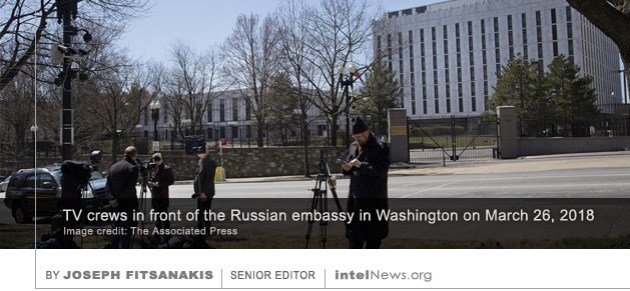
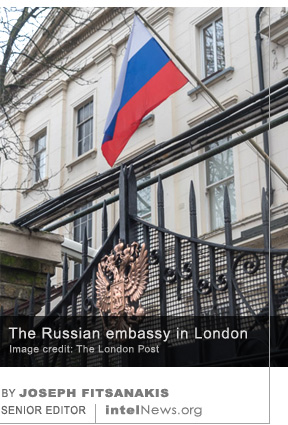
Russian embassy in WashingtonRelations between Russia and much of the West reached a new low on Monday, with the expulsion of over 100 Russian diplomats from two dozen countries around the world. The unprecedented expulsions were publicized on Monday with a series of coordinated announcements issued from nearly every European capital, as well as from Washington, Ottawa and Canberra. By the early hours of Tuesday, the number of Russian diplomatic expulsions had reached 118 —not counting the 23 Russian so-called “undeclared intelligence officers” that were expelled from Britain last week. Further expulsions of Russian diplomats are expected in the coming days.
It is indeed difficult to overstate the significance of this development in the diplomatic and intelligence spheres. Monday’s announcements signified the largest collective expulsion of Russian intelligence personnel (intelligence officers working under diplomatic cover) in history, and is remarkable even by Cold War standards. In the United States, the administration of President Donald Trump expelled no fewer than 60 Russian diplomats and shut down the Russian consulate in Seattle. Such a move would have been viewed as aggressive even for Mr. Trump’s predecessor, Barack Obama, and his Secretary of State Hillary Clinton, who is known for her hardline anti-Russian stance. In Europe, the move to expel dozens of Russian envoys from 23 different countries —most of them European Union members— was a rare act of unity that surprised European observers as much as it did the Russians.
RUSSIA’S ESPIONAGE CAPABILITY

However, in considering the unprecedented number of diplomatic expulsions from an intelligence point of view, the question that arises is, how will these developments affect Russia’s espionage capabilities abroad? If the Kremlin did indeed authorize the attempted assassination of the Russian defector Sergei Skripal, it must be assumed that it expected some kind of reaction from London, possibly in the form of limited diplomatic expulsions. The resulting worldwide wave of expulsions must have caught Russian intelligence planners by surprise. There is little question, therefore, that these are difficult hours for the GRU, Russia’s military-run Main Intelligence Directorate, and the SVR, Russia’s Foreign Intelligence Service. These agencies will be losing as much as two thirds of their official-cover officers in Europe and North America. The last time this happened on such a massive scale was during World War II, as Soviet embassies across Europe were unceremoniously shut down by the advancing Nazi forces. Read more of this post

Analysis: Decoding Britain’s response to the poisoning of Sergei Skripal

Russian embassy LondonAs expected, Moscow snubbed the British government’s demand for information into how a Russian-produced military-grade nerve agent ended up being used in the streets of Salisbury, England. As British Prime Minister Theresa May addressed the House of Commons on Wednesday afternoon, Sergei Skripal continued to fight for his life in a hospital in southern England. His daughter, Yulia, was also comatose, having been poisoned with the same Cold-War-era nerve agent as her father. This blog has followed the case of Sergei Skripal since 2010, when he arrived with his family in the United Kingdom after he was released from a Russian prison, having served the majority of a 13-year sentence for spying for Britain.

Just hours after the attack on the Skripals, British defense and intelligence experts concluded that it had been authorized by the Kremlin. On Wednesday, Prime Minister May laid out a series of measures that the British government will be taking in response to what London claims was a Russian-sponsored criminal assault on British soil. Some of the measures announced by May, such as asking the home secretary whether additional counter-espionage measures are needed to combat hostile activities by foreign agents in the UK, are speculative. The British prime minister also said that the state would develop new proposals for legislative powers to “harden our defenses against all forms of hostile state activity”. But she did not specify what these proposals will be, and it may be months —even years— before such measures are implemented.

The primary direct measure taken by Britain in response to the attack against Skripal centers on the immediate expulsion of 23 Russian diplomats from Britain. They have reportedly been given a week to leave the country, along with their families. When they do so, they will become part of the largest expulsion of foreign diplomats from British soil since 1985, when London expelled 31 Soviet diplomats in response to revelations of espionage against Britain made by Soviet intelligence defector Oleg Gordievsky. Although impressive in size, the latest expulsions are dwarfed by the dramatic expulsion in 1971 of no fewer than 105 Soviet diplomats from Britain, following yet another defection of a Soviet intelligence officer, who remained anonymous.
It is important to note, however, that in 1971 there were more than 500 Soviet diplomats stationed in Britain. Today there are fewer than 60. This means that nearly 40 percent of the Russian diplomatic presence in the UK will expelled from the country by next week. What is more, the 23 diplomats selected for expulsion are, according to Mrs. May, “undeclared intelligence officers”. In other words, according to the British government, they are essentially masquerading as diplomats, when in fact they are intelligence officers, whose job is to facilitate espionage on British soil. It appears that these 23 so-called intelligence officers make up almost the entirety of Russia’s “official-cover” network on British soil. This means that the UK Foreign Office has decided to expel from Britain nearly every Russian diplomat that it believes is an intelligence officer. Read more of this post

Analysis: All evidence points to professionals behind Skripal poisoning

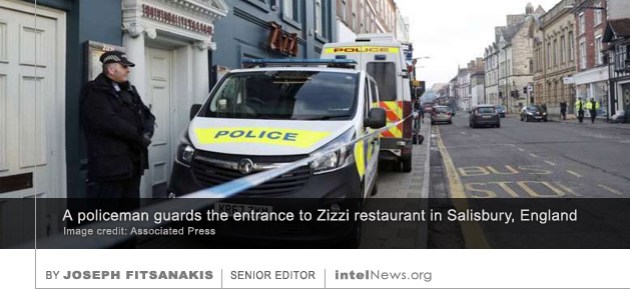
Skripal SalisburyMost state-sponsored assassinations tend to be covert operations, which means that the sponsoring party cannot be conclusively identified, even if it is suspected. Because of their covert nature, assassinations tend to be extremely complex intelligence-led operations, which are designed to provide plausible deniability to their sponsors. Consequently, the planning and implementation of these operations usually involves a large number of people, each with a narrow set of unique skills. But —and herein lies an interesting contradiction— their execution is invariably simple, both in style and method. The attempted assassination of Sergei Skripal last Sunday in England fits the profile of a state-sponsored covert operation in almost every way.

Some have expressed surprise that Skripal, a Russian intelligence officer who was jailed in 2004 for selling Moscow’s secrets to British spies, would have been targeted by the Russian state. Before being allowed to resettle in the British countryside in 2010, Skripal was officially pardoned by the Kremlin. He was then released from prison along with four other Russian double agents, in exchange for 10 Russian deep-cover spies who had been caught in the United States earlier that year. According to this argument, “a swap has been a guarantee of peaceful retirement” in the past. Thus killing a pardoned spy who has been swapped with some of your own violates the tacit rules of espionage, which exist even between bitter rivals like Russia and the United States.

This assumption, however, is baseless. There are no rules in espionage, and swapped spies are no safer than defectors, especially if they are judged to have caused significant damage to their employers. It is also generally assumed that pardoned spies who are allowed to resettle abroad will fade into retirement, not continue to work for their foreign handlers, as was the case with Skripal, who continued to provide his services to British intelligence as a consultant while living in the idyllic surroundings of Wiltshire. Like the late Russian defector Alexander Litvinenko, who died in London of radioactive poisoning in 2006, Skripal entrusted his personal safety to the British state. But in a country that today hosts nearly half a million Russians of all backgrounds and political persuasions, such a decision is exceedingly risky.
On Wednesday, the Metropolitan Police Service announced that Skripal, 66, and his daughter Yulia, 33, had been “targeted specifically” by a nerve agent. The official announcement stopped short of specifying the nerve agent used, but experts point to sarin gas or VX. Both substances are highly toxic and compatible with the clinical symptoms reportedly displayed by the Skripals when they were found in a catatonic state by an ambulance crew and police officers last Sunday. At least one responder, reportedly a police officer, appears to have also been affected by the nerve agent. All three patients are reported to be in a coma. They are lucky to have survived at all, given that nerve agents inhaled through the respiratory system work by debilitating the body’s respiratory muscles, effectively causing the infected organism to die from suffocation.

In the past 24 hours, at least one British newspaper stated that the two Russians were “poisoned by a very rare nerve agent, which only a few laboratories in the world could have produced”. That is not quite true. It would be more accurate to say that few laboratories in the world would dare to produce sarin or VX, which is classified as a weapon of mass destruction. But no advanced mastering of chemistry or highly specialist laboratories are needed to manufacture these agents. Indeed, those with knowledge of military history will know that they were produced in massive quantities prior to and during World War II. Additionally —unlike polonium, which was used to kill Litvinenko in 2006— nerve gas could be produced in situ and would not need to be imported from abroad. It is, in other words, a simple weapon that can be dispensed using a simple method, with little risk to the assailant(s). It fits the profile of a state-sponsored covert killing: carefully planned and designed, yet simply executed, thus ensuring a high probability of success.

By Wednesday, the British security services were reportedly using “hundreds of detectives, forensic specialists, analysts and intelligence officers working around the clock” to find “a network of highly-trained assassins” who are “either present or past state-sponsored actors”. Such actors were almost certainly behind the targeted attack on the Skripals. They must have dispensed the lethal agent in liquid, aerosol or a gas form, either by coming into direct physical contact with their victims, or by using a timed device. Regardless, the method used would have been designed to give the assailants the necessary time to escape unharmed. Still, there are per capita more CCTV cameras in Britain than in any other country in the world, which gives police investigators hope that they may be able to detect the movements of the attackers. It is highly unlikely that the latter remain on British soil. But if they are, and are identified or caught, it is almost certain that they will be found to have direct links with a foreign government.

Author: Joseph Fitsanakis | Date: 08 March 2018 | Permalink

Latvia warns of ‘hybrid war’ as central bank corruption probe widens

Ilmars RimsevicsLatvian defense officials have hinted that Russia is trying to destabilize Latvia’s economy, as a Western-backed anti-corruption probe at the highest levels of the Baltic country’s banking sector deepens. Developments have progressed at a high speed since Monday of last week, when Latvia’s Corruption Prevention and Combating Bureau arrested Ilmars Rimsevics, the longtime Governor of the Bank of Latvia —the country’s central bank. Bureau investigators said Rimsevics’ arrest related to charges that he received bribes in order to facilitate money laundering from Russia.
Rimsevics became deputy governor of the Bank of Latvia in 1992, just months after the country seceded from the Soviet Union. In 2001 he was promoted to governor, a post that he has held onto ever since. When the small Baltic country joined the European Union, in January 2014, Rimsevics automatically became a member of the Governing Council of the European Central Bank (ECB), which directs the Eurozone’s monetary policy and monitors the performance of the euro. But last week the Latvian government rescinded Rimsevics’ security clearance and a scheduled meeting of the ECB in Frankfurt took place without him.

This dramatic development underscores the troubled state of Latvia’s banking sector, which is a notorious reputation as one of Europe’s most lucrative money-laundering hubs. Soon after it gained its independence, the small country of 2 million became an attractive conduit for Russia’s nouveau riche seeking to funnel their money westward. The country’s sizeable Russian-speaking minority allowed the local banking sector to offer highly sought-after services in the Russian language, which further-facilitated its contacts with wealthy Russian clients. This was further-enhanced by Latvia’s integration into the economic structure of the European Union in 2014. But Western countries began voicing concerns about close links between Latvia’s banking sector and Russian oligarchs in 1996. By 2011, the United States Department of the Treasury had identified numerous Latvian banks as serious violators of laws designed to prevent money laundering. In 2014, and again in 2017, the Organized Crime and Corruption Reporting Project identified Latvia as part of an extensive international money-laundering scheme dubbed “the Russian Laundromat”.

Notably, Rimsevics was arrested less than a week after Washington vowed to impose penalties on ABLV, Latvia’s third largest bank, for “institutionalizing money laundering” and violating a host of financial sanctions imposed by the United Nations, including sanctions against North Korea’s nuclear program. There is no question, therefore, that Rimsevics’ dramatic arrest was designed to combat what The Financial Times recently called “a banking scandal on the Baltic”. In the past few hours, reports from Riga indicate that ABLV may be on the brink of collapse, being unable to withstand the financial effects of the public scandal that emerged in recent days.

But things are never simple in the Baltic region. Soon after Rimsevics’ release on bail, reports in the Latvian media pointed to alleged efforts by Russia to defame him, in an effort to further-tarnish the already damaged reputation of Latvia’s banking sector. On Tuesday of last week, the Latvian Ministry of Defense said it had evidence that Rimsevics was targeted in a “disinformation operation” directed from abroad. It added that there was a “high probability that [a] massive information operation” had been launched for “foreign centers” aimed at destabilizing Latvia’s banks. No evidence or further information about the allegation was revealed. But the Defense Ministry’s allegations seemed to be supported by an analysis of the relevant news reporting by the Atlantic Council’s Digital Forensics Research Lab in Washington.

On February 23, Latvia’s Prime Minister, Maris Kucinskis, and President, Raimonds Vejonis, seemed to endorse the Defense Ministry’s allegations. Despite the fact that both politicians have urged Rimsevics to resign “for the sake of the financial system”, they also warned that Latvia was under attack in an information war. The two men did not make specific allegations, but said that the information attacks experienced by Latvia were “identical” to those seen in recent years in France, Germany, and the United States. Meanwhile, shortly after his release, Rimsevics held a press conference in Riga, where he denied all charges against him. He accused Latvia’s private banks of conspiring against him and said he was the victim of “death threats” to destabilize the country. On the same day Moscow, Kremlin spokesman Dmitry Peskov said that Russia had no comment on the situation in Latvia. “This is an internal political matter for our Latvian comrades [and] we wouldn’t want to get involved”, he said.

Author: Joseph Fitsanakis | Date: 26 February 2018 | Permalink

Britain to set up intelligence unit to combat ‘fake news’ by foreign states

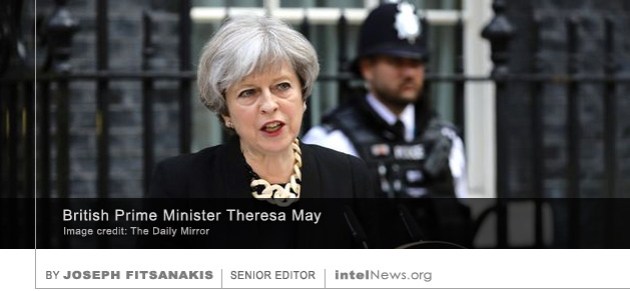
Theresa MayThe British government has announced that it will form a new intelligence unit tasked with preventing the spread of so-called “fake news” by foreign states, including Russia. The decision was revealed earlier this week in London by a government spokesman, who said that the new unit will be named “National Security Communications Unit”. The spokesman added that the unit will be responsible for “combating disinformation by state actors and others”. When asked by reporters whether the effort was meant as a response to the phenomenon often described as “fake news”, the spokesman said that it was.
According to The Times newspaper, the proposal for a National Security Communications Unit was presented during a scheduled meeting of the country’s National Security Council earlier this week. It was put forward by its strongest proponent, Sir Mark Sedwill, Britain’s former ambassador to Afghanistan and current national security adviser to the government. The unit will be directly accountable to the Cabinet Office, the government department that is responsible for providing support to the Prime Minister and her Cabinet. It will be staffed with professionals from Britain’s intelligence and security agencies, but will also rely on contributions from external experts in cybersecurity, communications and public relations. The unit will also include a “rapid response unit” that will be tasked with countering “fake news” in real time, according to The Times.

The move follows a similar development in the United States. In December of 2016, the then President Barack Obama signed a new law that designated $160 million to set up a government center for “countering foreign propaganda and disinformation”. The law, entitled “Countering Foreign Propaganda and Disinformation Act”, authorized the departments of State and Defense to work with other federal agencies in establishing the new body. According to a statement by the White House, the goal of the Center would be to collect and analyze “foreign government information warfare efforts” and to “expose and counter foreign information operations” directed against “US national security interests”.

On Wednesday it was announced in London that the British Secretary of Defense, Gavin Williamson, will be providing further details about the National Security Communications Unit in a speech to the House of Commons “within the next few days”.

Author: Joseph Fitsanakis | Date: 25 January 2018 | Permalink

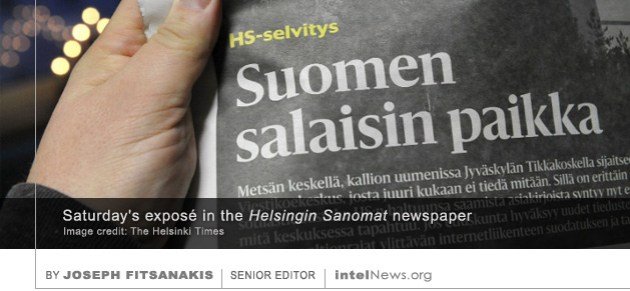
Finnish reporter destroys computer with hammer to protect spy source

Helsingin SanomatAn investigative journalist in Finland, who recently co-authored an exposé of a Finnish intelligence program targeting Russia, destroyed her computer with a hammer, prompting police to enter her house on Sunday. The journalist, Laura Halminen, co-wrote the exposé with her colleague, Tuomo Pietiläinen. Titled “The Secret Behind the Cliff”, the article appeared in the Saturday edition of the Helsingin Sanomat, Finland’s highest-circulation newspaper. It reveals the existence of a sophisticated electronic interception station in the northern suburbs of Jyväskylä, a city of about 140,000 people that is located in central Finland. Based on classified documents dating as far back as 1999, the article claims that the Finnish intelligence services have operated the top-secret program in Jyväskylä for years. It focuses on monitoring the maneuvers of Russian military units stationed around the St. Petersburg area, allegedly by tracking electromagnetic radiation emissions.

Over the weekend, the Finnish government reacted angrily to the Helsingin Sanomat report, accusing the newspaper of “revealing the content of highly classified documents” that are “critical to the [country’s] security and may cause grave damage to it”. The government, however, argues that the newspaper revealed without proper authorization the contents of classified military documents that were marked TOP SECRET, which is a crime under Finnish law. But the newspaper’s editors argue that the public has a right to know about the surveillance project. The dispute between the newspaper and the government reached new heights on Sunday evening, when a team of police officers arrived at the home of Helsingin Sanomat journalist Laura Halminen. The newspaper claims that the police raided Halminen’s house in connection with the Jyväskylä revelations. According to the Helsingin Sanomat the reporter said she destroyed her computer in order to safeguard information relating to future articles. However, there are some who believe that she destroyed the computer in order to safeguard the identity of the source of the information that led to Saturday’s exposé. However, argues that they intervened only after Halminen destroyed her home computer with a hammer, creating a fire and prompting an emergency response by the fire brigade. Police officers who arrived with the fire brigade called for reinforcements after they began to suspect that Halminen may have been trying to destroy evidence connected with a criminal investigation.

Helsingin Sanomat editors claim that police left Halminen’s house after confiscating the remains of her damaged computer, several mobile phones, an iPad, and over a dozen USB flash drives. The newspaper’s editors said that the raid on the reporter’s home was “uniquely exceptional” in the history of journalism in Finland, and claimed that the police did not present Halminen with a search warrant prior to raiding the premises. But Police authorities argue that Finnish law allows them to conduct warrantless searches for national-security-related cases, and that their actions were observed by an appointed lawyer. The lawyer took possession of all evidence removed from Halminen’s house, to ensure compliance with Finnish law. The government has since said that it will launch a criminal probe to find out the source of the leak to the newspaper.

Author: Joseph Fitsanakis | Date: 19 December 2017 | Permalink
IntelNews thanks AiT, N.H. and A.S. for their help in ensuring the factual accuracy of this report

Poland arrests military intelligence chiefs for ties to Russian spies

PytelAuthorities in Poland have charged three high-level military intelligence officials with acting in the interests of Russia. The three include two former directors of Polish military intelligence and are facing sentences of up to 10 years in prison. The news broke on December 6, when Polish authorities announced the arrest of Piotr Pytel, who was director of Poland’s Military Counterintelligence Service (SKW) from 2014 to 2015. It soon emerged that two more arrests had taken place, that of Pytel’s predecessor, Janusz Nosek, and Krzysztof Dusza, Pytel’s chief of staff during his tenure as SKW director.

According to the newsmagazine Gazeta Polska, which provides extensive coverage of the arrests in its latest issue, the SKW officials are accused of having had unauthorized contacts with Russian intelligence personnel and of “operating on behalf of a foreign intelligence service”. The court indictment reportedly states that the Polish officials “cooperated, without seeking the necessary authorization, with members of the Russian Federal Security Service (FSB)”. The indictment also notes that “the mission of the FSB conflicts with that of the North Atlantic Treaty Organization”, of which Poland is a full member.

According to reports in the Polish media, the three men are accused of having held several undisclosed meetings with FSB officers in Poland. One such meeting allegedly took place in the village of Ułowo, in north-central Poland. The village is located just a few miles from Poland’s border with the Russian exclave of Kaliningrad, which lies between Poland and Lithuania on the Baltic Sea. During the meeting, which included dinner and “heavy consumption of alcohol”, the SKW officials allegedly met with the FSB’s senior representative in Poland, identified in court documents only as “W.J.”, as well as with several other Russian intelligence officers. Following that meeting, Pytel and Dusza allegedly helped falsify the application data of an unnamed representative of the FSB in Poland, who was stationed at Russia’s embassy in Warsaw. This allegedly allowed the Russian intelligence officer to evade diplomatic restrictions on travel and to gain access to information about Poland’s military that he otherwise would not have.

Speaking on Polish state-owned television, Poland’s Defense Minister Antoni Macierewicz said last week that he was aware of the seriousness of the accusation against the three SKW officials. He told the Telewizja Polska station that the three officials face “very serious allegations” that point to “fully conscious and illegal cooperation with Russian spies”. That, said Macierewicz, was the “worst kind of betrayal that can be committed by a Pole”. The three defendants claim that they were not working in the interests of the FSB and that it was their job to meet regularly with Russian intelligence representatives in Poland.

Author: Joseph Fitsanakis | Date: 18 December 2017 | Permalink

MI5 releases new information about Soviet ‘Portland Spy Ring’

DocumentFiles released on Monday by the British government reveal new evidence about one of the most prolific Soviet spy rings that operated in the West after World War II, which became known as the Portland Spy Ring. Some of the members of the Portland Spy Ring were Soviet operatives who, at the time of their arrest, posed as citizens of third countries. All were non-official-cover intelligence officers, or NOCs, as they are known in Western intelligence parlance. Their Soviet —and nowadays Russian— equivalents are known as illegals. NOCs are high-level principal agents or officers of an intelligence agency, who operate without official connection to the authorities of the country that employs them. During much of the Cold War, NOCs posed as business executives, students, academics, journalists, or non-profit agency workers. Unlike official-cover officers, who are protected by diplomatic immunity, NOCs have no such protection. If arrested by authorities of their host country, they can be tried and convicted for engaging in espionage.
The existence of the Portland Spy Ring has been known since 1961, when British authorities arrested five people throughout England. Two of them were British citizens, Harry Houghton, a clerk at the Royal Navy’s Underwater Detection Establishment facility in Dorset, England, and his mistress, Ethel Gee. Their Soviet handler was Konon Molody, a Soviet intelligence officer who was posing as a Canadian, under the name Gordon Lonsdale. Also arrested was a married couple from New Zealand, Peter and Helen Kroger. But in reality they were Americans, whose real names were Morris and Lona Cohen, and had worked for Soviet intelligence since the late 1930s. Collectively, the five were referred in media reports as members of the Portland Spy Ring.

The newly declassified files about the spy ring were released by the Security Service, known commonly as MI5, Britain’s primary counterterrorism and counterintelligence agency. They reveal how British authorities managed to bust the Portland Spy Ring. According to the files, the initial tip-off came from the Central Intelligence Agency (CIA). The American agency had managed to recruit Michael Goleniewski, codename SNIPER, a Polish military counterintelligence officer, who led the technical office of Poland’s military intelligence. In the spring of 1960, Goleniewski told the CIA that Polish intelligence were running a British agent who was recruited while serving in the office of the naval attaché at the British embassy in Warsaw. The CIA shared the information with British intelligence, who soon identified the agent as Harry Houghton in Dorset. MI5 agents followed Houghton and his girlfriend, Ethel Gee, as they met with a successful Canadian businessman in London, Gordon Lonsdale (real name Konon Molody). Molody had grown up with a family member in California in the 1930s, and spoke fluent English. He had joined Soviet intelligence during World War II and sent to Britain posing as a Canadian. When he arrived there, in 1954, he established the KGB’s first known illegal residency in the British Isles.

In turn, Molody led MI5 to Peter and Helen Kroger from New Zealand (real names Morris and Lona Cohen), who were posing as antique book dealers. The couple acted as couriers, radio operators and technical support officers for Molody. They were born in the United States and had been recruited by Soviet intelligence in the 1930s. It is now known that they had contacts with several other Soviet illegals in America, including Rudolf Abel (real name William Fisher) who was captured by the Federal Bureau of Investigation in 1957. The couple had left the United States on orders of the KGB in 1952 and reappeared in the United Kingdom using New Zealand passports and new names.

The newly declassified documents show that MI5 decided to move against the five members of the Portland Spy Ring after Goleniewski became an open defector and was exfiltrated to the United States by officers in the CIA’s Berlin station. British authorities feared that Goleniewski’s open defection would prompt the Soviets to pull out Houghton, whose identity was known to Goleniewski. Houghton and Gee were sentenced to 15 years in prison. They were released in 1970, married the following year, and died in the 1980s. Molody was sentenced to 25 years in prison but was released in 1964 and exchanged for Greville Wynne, a British spy captured in the USSR. The Cohens received 20 year sentences, but were released in 1969 and exchanged with Gerald Brooke, a British teacher who was arrested in the USSR for smuggling anti-communist literature and trying to organize dissidents inside the country.

Author: Joseph Fitsanakis | Date: 28 November 2017 | Permalink

MI6 chiefs used secret slush fund to finance operations, document shows

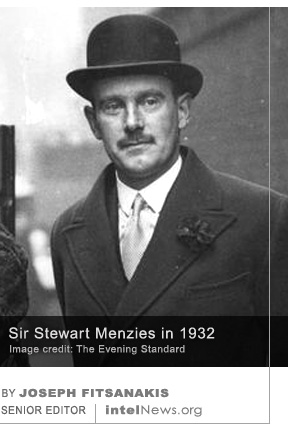
Sir Stewart MenziesSuccessive directors of the Secret Intelligence Service used a secret slush fund to finance spy operations without British government oversight after World War II, according to a top-secret document unearthed in London. The document was found in a collection belonging to the personal archive of the secretary of the British cabinet, which was released by the United Kingdom’s National Archives. It was discovered earlier this year by Dr Rory Cormac, Associate Professor of International Relations in the Faculty of Social Sciences of the University of Nottingham in England. It forms the basis of an episode of BBC Radio 4’s investigative history program, Document, which was aired last weekend. In the program, the BBC’s security correspondent Gordon Corera explains that the discovery of the secret slush fund reveals new information about the activities of the Secret Intelligence Service. It also raises questions about the underground activities of British spies in the Middle East following the British Empire’s postwar retreat.
Historically, the activities of the Secret Intelligence Service —known commonly as MI6— have been indirectly supervised by the British Parliament and its committees, which fund the agency through a secret vote. The use of the agency’s funds to carry out operations is also monitored by the Secretary of State for Foreign Affairs, the head of the Foreign and Commonwealth Office, who exercises political control over MI6. However, the document uncovered by Dr Cormac shows that, for many years, successive directors of the secretive spy agency financed operations using a sizeable personal fund, the existence of which was not disclosed to the government. The document describes a meeting held in 1952 between Sir Stewart Menzies, who was then the outgoing director of MI, and the permanent secretaries —essentially the top-ranking civil servants— to the Foreign Office and the Treasury. The meeting was held to prepare the ground for Sir Stewart’s retirement and to facilitate the smooth handover of power to his successor, Major-General Sir John Sinclair, who became director of MI6 in 1953. Read more of this post

Political tension grows in Zimbabwe as army chief threatens coup

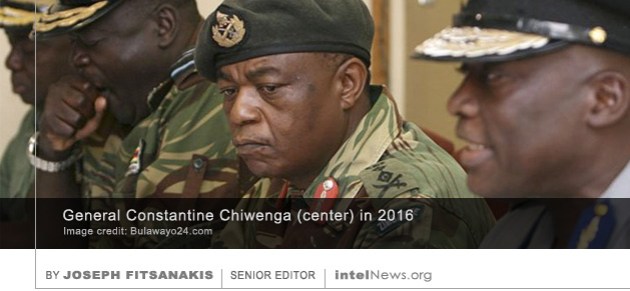
General Constantine ChiwengaPolitical affairs in Zimbabwe took an unprecedented turn on Monday, as the chief of the armed forces warned the country’s President, Robert Mugabe, that the military would “not hesitate to step in” to stop infighting within the ruling party. General Constantino Chiwenga, Commander of the Zimbabwe Defence Forces, took the extremely rare step of summoning reporters for a press conference at the military’s headquarters in Harare on Monday. A direct intervention of this kind is unprecedented in the politics of Zimbabwe, a country that is tightly ruled by its authoritarian President, Robert Mugabe. Mugabe is also President and First Secretary of the Zimbabwe African National Union – Patriotic Front (ZANU-PF), the party that has dominated Zimbabwean politics since it assumed power in 1980.

General Chiwenga reportedly spoke in the presence of nearly 100 senior military officers, who were seated in the conference room and appeared to support his intervention. The press conference was called less than a week after President Mugabe fired his second-in-command in ZANU-PF, Vice President Emmerson Mnangagwa. The 75-year-old longtime confidante of Mugabe was dismissed from his post after speaking out against Mugabe and his wife, Grace, 52. It is thought that Mugabe, the world’s oldest president at 93, is preparing to appoint his wife in his place, something that has angered some in his party, including Mnangagwa. Addressing Mugabe directly, Mnangagwa said that ZANU-PF is “not personal property for you and your wife to do as you please”. He was removed soon afterwards, on November 6, and is currently believed to have fled in exile in China, but has vowed to return to Zimbabwe.

Political observers in southern Africa warned that Mnangagwa’s firing was a risky move for Mugabe. The 75-year-old former ZANU-PF guerrilla previously served as Zimbabwe’s Minister for Security and Defence, and has powerful connections in the country’s armed forces. General Chiwenga’s intervention on Monday appeared aimed at sending a message to Mnangagwa that the troops will not accept his dismissal. The general warned that “the current purging” within ZANU-PF was “clearly targeting members of the party with a liberation background” —referring to the so-called Bush War between the leftist ZANU-PF and the Rhodesian military in the 1970s. The purge, said Chiwenga, “must stop forthwith”, because “when it comes to matters of protecting our revolution, the military will not hesitate to step in”. The general went further, commenting on Zimbabwe’s political instability and economic woes: “There is distress, trepidation and despondence within the nation”, he said, which is caused by “squabbling” within the ruling party. Because of that, “there has been no meaningful development in the country for the past five years”, resulting in “cash shortages and rising commodity prices”, added the general.

The next party congress of ZANU-PF is scheduled for December in Harare. Until last week, it was expected that Grace Mugabe would be appointed vice president at that time, replacing Mnangagwa. But with General Chiwenga’s unprecedented intervention on Monday, it remains to be seen whether President Mugabe’s strategy will unfold as planned.

Author: Joseph Fitsanakis | Date: 14 November 2017 | Permalink

Analysis: Dozens of royals arrested in weekend raids throughout Saudi Arabia

King Salman with Crown Prince MohammedDozens of Saudi senior figures, some of them among the world’s wealthiest people, have been fired or arrested, as the king and his son appeared to be removing their last remaining critics from the ranks of the security services. The unprecedented arrests took place without warning less than two hours after state-run media announced the creation of a new “supreme committee to combat corruption”. A royal decree issued on the same day named the head of the committee as Crown Prince Mohammed bin Salman, the king’s 32-year-old son, who is first in line to the throne.
By Saturday night, nearly 50 senior officials, including at least 11 princes, had reportedly been fired or arrested. The substantial list features four current and at least 20 former ministers, most of them members of the Saudi royal family. Reports from Riyadh said that among those arrested were Saleh Abdullah Kamel, chairman of the General Council for Islamic Banks, Arab media baron Waleed bin Ibrahim al-Ibrahim, and Prince Alwaleed bin Talal, a senior member of the Saudi royal family and one of the world’s wealthiest people. Prince Alwaleed is a major investor in technology companies such as Twitter and Apple, and is seen as a high-profile social reformer in the kingdom.

More importantly, Saturday saw the firing of Prince Mutaib bin Abdullah from the post of Minister of the Saudi Arabian National Guard Forces. He was replaced by Prince Khalid bin Ayyaf al-Muqrin, who until last week served as one of Prince Mutaib’s subordinates. The royal palace offered no precise explanation for the removal of Prince Mutaib and the three other government ministers. A statement released to the media said that the new effort against corruption was prompted by “the propensity of some people for abuse, putting their personal interest above public interest, and stealing public funds”. But there was no direct mention of Prince Mutaib in the statement, and no charges of corruption against him were made public. It is possible that the prince’s firing may not be directly related to the anticorruption drive.

However, few Saudi observers will believe that a genuine anticorruption crusade was behind last weekend’s arrests of senior officials. In a country were nepotism and corruption are not simply endemic, but serve as the driving engine of the economy, virtually nobody believes that the system can be reformed from within. Moreover, it cannot possibly be reformed by the royal family, which is the most prolific source of corruption in the oil-rich kingdom. So what exactly is going on?

Read more of this post

Analysis: Despite tragic deaths, New York attack reveals a weakened ISIS

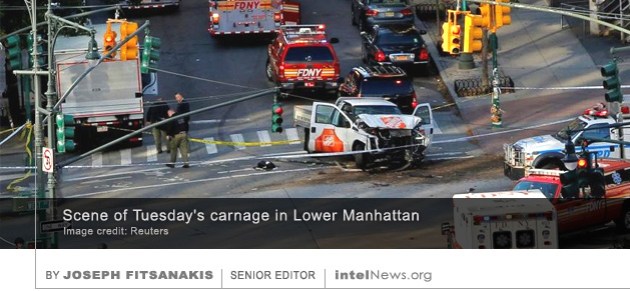
Lower Manhattan attackNews reports hastened to describe Tuesday’s atrocity in Lower Manhattan as “the worst terror attack in New York since September 11, 2001”. The comparison may be numerically accurate. Moreover, the deaths caused by the attack are nothing short of tragic. But if the Islamic State’s deadliest response to its retreat in the Middle East is a clumsy truck driver armed with a pellet gun, then Americans have little to fear from the terrorist group.

For months now, Western counter-terrorism experts have been bracing for a change of tactics by the Sunni group, which in 2014 controlled territory in Iraq and Syria equal to the size of England. The prevailing theory in security circles is that, as the Islamic State is forced to retreat in the Middle East, it will unleash waves of sleeper cells against Western targets abroad. This concern is logical, given the militant group’s obsession with its public image. At every turn since its dramatic rise in 2013, the Islamic State has consciously tried to project an appearance of strength that is far greater than its actual capabilities. In its public statements, the group has consistently extolled its ability to strike at distant targets regardless of its territorial strength in the Middle East. This applies especially to attacks by the Islamic State in Europe, which have tended to come in response to intense media speculation that the group’s territorial hold may be weakening.

One presumes that a terrorist attack in New York, a symbolic site in the ‘war on terrorism’, would aim to do just that: namely project an image of continuing strength and convince global audiences that the group remains potent. Yet, despite the tragic loss of eight lives, Tuesday’s attack in Manhattan did nothing of the sort.

To begin with, an attack on cyclists with a rented utility vehicle is hardly ground-breaking at this point. In the past 18 months, we have seen similar types of attacks in London (on two separate occasions), in Barcelona’s Las Ramblas mall, in downtown Berlin, and in Nice, where a 19-ton cargo truck was used to kill 86 people. Terrorist groups are by nature conservative in their operations, preferring to use low-tech, time-tested methods to dispense violence, rather than risk failure by breaking new ground. But at a time like this, when the very existence of the Islamic State hangs in the balance, one would think that the group would consciously try to intimidate its opponents by showing off some kind of revolutionary new weapon. That did not happen on Tuesday.
Additionally, the perpetrator of the attack, Uzbek immigrant Sayfullo Saipov, is hardly an inspiring figure for Islamic State supporters. After running over a group of unsuspecting cyclists, the 29-year-old Florida resident clumsily smashed his rented truck head-on into a vehicle that was far larger and heavier than his own, thus completely destroying his vehicle’s engine and effectively disabling his only weapon. He then jumped out of the truck, apparently wielding a pellet gun and a paintball gun. Mobile phone footage captured from a nearby building shows Saipov walking in a disoriented manner through Manhattan traffic before being shot by police officers. If —as it seems— the Islamic State was behind that attack, it would mean that modern history’s most formidable terrorist group failed to get a pistol in a country where firearms are in some cases easier to secure than nasal decongestant.

Choice of weapon aside, one does not need to be a counter-terrorism expert to conclude that Saipov lacked basic operational and planning skills. His attack behavior shows that he had failed to carry out even rudimentary prior reconnaissance of the area where he launched his attack. He even appears to have failed to read Tuesday’s New York Post. Had he done so, he would have known that the heavily attended annual Village Halloween Parade was scheduled to take place on the very same street, just two hours after he launched his deranged attack.
Once again, the question is: if the Islamic State does not utilize its deadliest and most capable operatives now, when its very existence in its Middle Eastern stronghold is being directly challenged, then when will it do so? By all accounts, the militant group’s leaders are well-read on recent history. They are therefore fully aware that, in the post-9/11 age, clumsy, low-tech, limited terrorist strikes by lone-wolf operatives lack the capacity to intimidate civilian populations, especially in New York.

Western counter-terrorism agencies and citizens alike should remain vigilant; but early evidence shows that the Islamic State is simply too weak to launch sophisticated, large-scale strikes against Western targets abroad. As I have argued before, the threat level would change if the militant group acquires chemical weapons or other tools of mass terrorism. For now, however, it is safe to state that the Islamic State’s capabilities do not pose anything close to an existential threat to the West.

► About the author: Dr. Joseph Fitsanakis is Associate Professor in the Intelligence and National Security Studies program at Coastal Carolina University. Before joining Coastal, Dr. Fitsanakis built the Security and Intelligence Studies program at King University, where he also directed the King Institute for Security and Intelligence Studies. He is also deputy director of the European Intelligence Academy and senior editor at intelNews.org.

Officials puzzled by attacks that killed 16 in relatively stable Mozambique

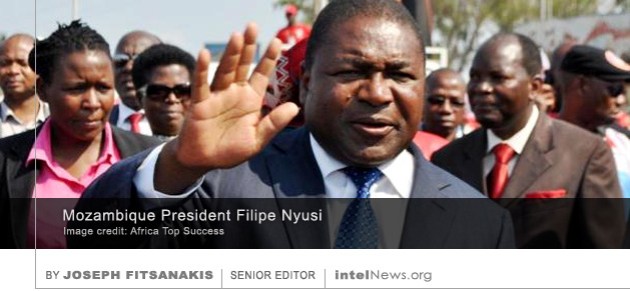
Filipe NyusiIn a surprise move, the president of Mozambique has fired the head of the military and the director of the country’s intelligence service, two weeks after attacks by an unidentified group left 16 people dead in a northern town. The attacks occurred on October 5 and 6 in Mocimboa da Praia, a small town of about 30,000 people located along Mozambique’s extreme northern coastline. The town lies only a few miles south of Mozambique’s border with Tanzania and within sight of several offshore gas fields in the Indian Ocean. According to local reports, several dozen assailants targeted police stations in Mocimboa da Praia with firearms and explosives, killing two police officers. An estimated 14 assailants also died in the coordinated attacks, while at least 12 more were wounded. Police forces were able to reclaim control of the town only after the eventual arrival of reinforcements from the tourist resort of Pemba, located 350 miles to the south of Mocimboa da Praia.

Two weeks after the attacks, however, the ideological backgrounds and motives of the assailants remain unclear. Mozambique has seen armed attacks by guerrillas before, but these are usually attributed to Renamo, a rightwing paramilitary group that was financially supported by Rhodesia and apartheid-era South Africa during the Cold War. The group is still in existence, but has mostly transformed itself into a political party. Its military wing declared a unilateral ceasefire in December of last year, which has been broadly observed. Importantly, the government did not attribute the Mocimboa da Praia attacks to Renamo. But if Renamo was not behind the attacks, then who was it? Local reports have mentioned a so-called “radical Islamist sect”; but Mozambique is a predominantly Christian country and does not have a history of Islamic radicalism. Nor is there known activity in Mozambique of African Islamist groups like Boko Haram or Al-Shabaab, which are strong in western and eastern Africa respectively.

In the days following the attacks in Mocimboa da Praia, police detained 52 people, including Muslim religious leaders, and confiscated half a dozen firearms, as well as hundreds of rounds of ammunition. But by the middle of last week, police officials began to dismiss earlier claims that the attackers were linked to an organized terrorist group. Some southeastern Africa watchers have suggested that the assailants were members of Swalissuna, a locally based militant opposition group that rejects the authority of the central government in capital Maputo, located in Mozambique’s south. The group is virtually unknown and is believed to have been founded in 2011 or 2012. It has no religious affiliation and its members are motivated by domestic grievances related to economic restructuring, corruption and political reform.

On Tuesday, Mozambique President Filipe Nyusi announced the surprise replacement of the country’s two most powerful security officials. Lagos Lidimo, director general of the State Information and Security Service (SISE), which reports directly to the President, was dismissed overnight and replaced by Julio Jane, who until Monday was the commander of the Mozambican National Police. Also replaced was Graça Chongo, head of the country’s armed forces. His replacement has not yet been named.

Author: Joseph Fitsanakis | Date: 26 October 2017 | Permalink

Analysis: West should prepare for chemical attacks by the Islamic State

Biochemical terrorismA German newspaper reported last week that at least one European intelligence agency has already warned that the Islamic State is exploring the use of chemicals for attacks in Europe. Such an eventuality would be a radical departure from prior attacks by the Islamic State in the West. In the past, the militant group has shown a strong preference for low-tech means of dispensing violence, such as firearms, vehicles and knives. But it has utilized chemical substances in Iraq and Syria, and its technical experts have amassed significant knowledge about weaponized chemicals.

Last week, several European and American counter-terrorism experts participated in a bioterrorism preparedness exercise in Berlin. Codenamed WUNDERBAUM, the exercise was one of several anti-terrorism drills that have taken place in the German capital this year alone. But last week’s drill was the first with an exclusive focus on preparing for a bioterrorist attack. German authorities insisted that the drill was not sparked by concrete intelligence of a pending biological or chemical attack. But the Berlin-based national newspaper Die Welt claimed on Friday that it had information about at least one such warning by a European intelligence agency. The paper did not name the agency, but said that “a foreign intelligence agency” had warned European security authorities of a possible terrorist attack by the Islamic State using chemical weapons. According to Die Welt, the warning was “explicit” and cautioned that the Sunni militant group may be preparing to use improvised bombs utilizing chemicals, including toxic gasses. The warning was communicated to European intelligence agencies, including Germany’s said Die Welt.

How likely is such a scenario? Terrorist groups tend to be conservative in their use of lethal technologies. They typically opt for time-tested methods using explosives or firearms, because these have a higher of success in comparison to more sophisticated, hi-tech weapons. The latter are also more expensive to build and require scientific and technical capabilities that are not typically available to terrorist organizations. Militants are usually strapped for cash, and are not science-savvy, so exceptions to this general trend are rare. But the Islamic State is different. Read more of this post

Security and mass murder after 9/11: Lessons from Las Vegas

Las Vegas shootingThere’s a reason why America has not experienced another 9/11, and it’s not because militants are not trying. Through a series of sweeping reforms prompted by the tragic events of that day, United States intelligence and security agencies have become extremely efficient at preventing large-scale terrorist and criminal violence. Using increasingly sophisticated methods of intelligence collection, analysis and even prediction, counter-terrorism and security experts have neutralized countless attempts to replicate —or even surpass— the horror of 9/11.

But aspiring terrorists and mass murderers are learning fast. Despite their relatively young age, many are now disciplined enough to resist the temptations of the networked culture that surrounds them, and abstain from social media. They isolate themselves physically and emotionally from family and friends, creating a virtual wall that prevents even those close to them from noticing unusual signs of behavior. They effectively replicate the isolation of Ted Kaczynski, the infamous Unabomber, but without the hermit beard and the log cabin in the backwoods of Montana. Most important of all, they work alone, which makes it immensely difficult to sense their murderous intentions. Counter-terrorism and security experts are trained to detect possible attacks by penetrating the communications between members of a conspiracy. When the operative is a lone wolf, and does not communicate his or her plans, the points of possible penetration diminish, as does the possibility of detection.

The case of Stephen Paddock, the 64-year-old retired accountant who perpetrated the Las Vegas shooting earlier this month, is indicative of the above trends. So secretive and emotionally isolated was he, that there exists no discernible evidence of his motive for killing 58 and injuring 546 people at an outdoor concert on the Las Vegas Strip. Moreover, Paddock had access to an expensive, sophisticated and extremely lethal arsenal. As is common with post-9/11 mass murderers, he avoided resorting to using bomb material, because he knew that these types of purchases are being carefully monitored by authorities after the 1995 Oklahoma City bombing. Read more of this post