Indonesia to investigate North Korean restaurant reportedly used as spy base
February 21, 2017 1 Comment
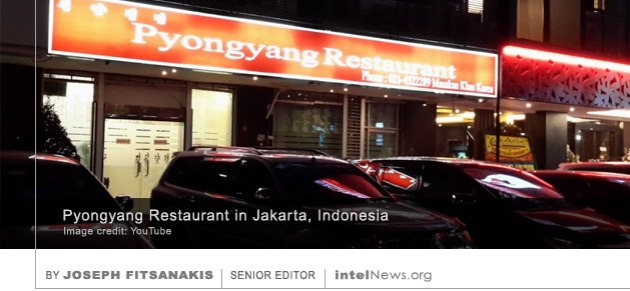 Indonesian authorities said on Sunday that they will investigate a North Korean restaurant in the country, after a Singaporean news agency claimed it was being used as a center for espionage. The announcement comes amidst heightened tensions between North Korean and its neighbors, following the murder last week in Malaysia of Kim Jong-nam, half-brother of North Korea’s Supreme Leader Kim Jong-il. Kim, the grandson of North Korea’s founder Kim Il-Sung, died after two women approached him at the Kuala Lumpur International Airport and splashed his face with liquid poison. Sources in South Korea and the United States have pointed at Pyongyang as the culprit of the assassination.
On Friday of last week, the Singapore-based news agency Asia One published a lengthy report into alleged North Korean espionage operations in Southeast Asia. The report claimed that North Korean intelligence agencies have operated extensive networks of operatives in Indonesia, Malaysia and Singapore, and that these networks have operated unimpeded for over two decades. The news agency cited an unnamed “intelligence source” as saying that the spy networks are operated by North Korea’s Reconnaissance General Bureau (RGB). The RGB is in charge of special activities abroad, which include covert operations and intelligence collection involving espionage. It operates under the Ministry of State Security and answers directly to North Korea’s supreme leader.
According to Asia One, the RGB maintains some of its largest spy networks abroad in Indonesia, Singapore and Malaysia, where Kim Jong-nam met a gruesome death last week. RGB personnel operating in these countries are North Korean citizens who are employed in the construction sector, as well as the tourism industry. Some operate North Korean restaurants, which are popular tourist attractions across Southeast Asia. The unnamed intelligence source told Asia One that North Korean restaurants serve “as a main front to conduct intelligence gathering and surveillance [against] Japanese and South Korean politicians, diplomats, top corporate figures and businessmen”. The RGB’s network in Indonesia is based in textile factories located in several Indonesian cities, said Asia One. There is also “an apartment located above a North Korean restaurant in [the Indonesian capital] Jakarta that is part of the RGB Indonesia office”, according to the report.
Following the news agency’s allegations, Argo Yuwono, senior commander for the Indonesian National Police, said that an investigation would take place into Asia One’s allegations. He said that his detectives would coordinate their activities with the Indonesian Foreign Ministry before moving ahead with the probe.
► Author: Joseph Fitsanakis | Date: 21 February 2017 | Permalink
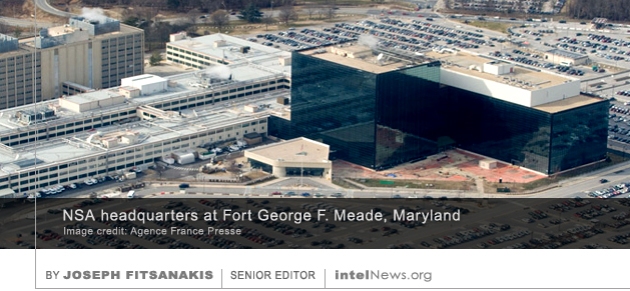 Classified information stolen by a United States federal contractor, who was charged with espionage last month, includes the true identities of American intelligence officers posted in undercover assignments abroad, according to court documents. In August of this year, Harold Thomas Martin III, was arrested by the Federal Bureau of Investigation on charges of stealing government property and illegally removing classified material. Martin, 51, served as a US Navy officer for over a decade, where he acquired a top secret clearance and specialized in cyber security. At the time of his arrest earlier this year, he was working for Booz Allen Hamilton, one of the largest federal contractors in the US. Some media
 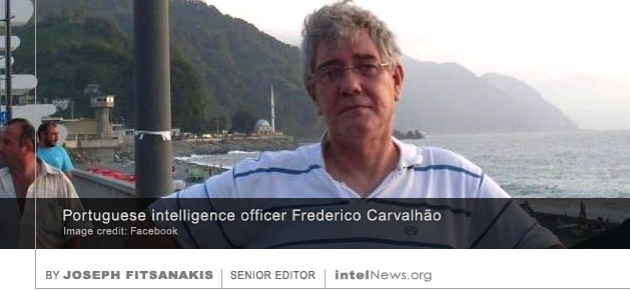 A Portuguese intelligence officer arrested a week ago in Rome, allegedly while passing classified documents to his Russian handler, may have accomplices with access to North Atlantic Treaty Organization (NATO) secrets. IntelNews
 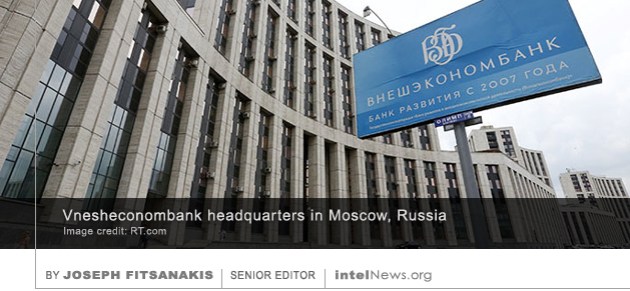 A Russian intelligence officer, who posed as a banker in the United States, has been handed a prison sentence by a court in New York. Evgeny Buryakov, 41, posed as an employee of the New York branch of Vnesheconombank, a Russian state-owned bank headquartered in Moscow. However, in January 2015, the Federal Bureau of Investigation
 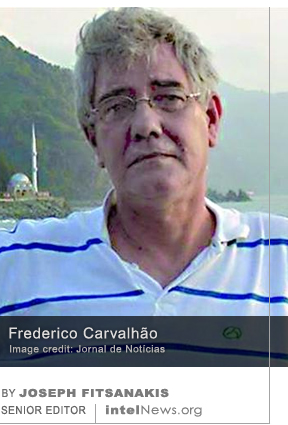 Two intelligence officers, one Russian and one Portuguese, have been arrested by Italian authorities on charges of espionage. The arrests took place in Rome on Monday by Italian police, who were reportedly accompanied by Portuguese counterintelligence officers. It is suggested in Portuguese media that the two men were arrested in the act of exchanging classified documents and money. The Portuguese intelligence officer has been identified in
 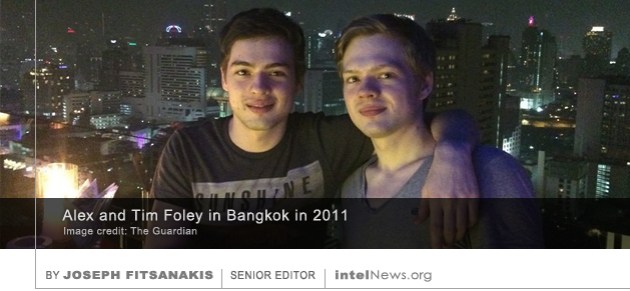 The two sons of a Russian couple, who were among 10 deep-cover spies arrested in the United States, have given an interview about their experience for the first time. Tim and Alex Foley (now Vavilov) are the sons of Donald Heathfield and Tracey Foley, a married couple arrested in 2010 under Operation GHOST STORIES, a counterintelligence program run by the US Federal Bureau of Investigation. Following their arrest, their sons, who had grown up thinking their parents were Canadian, were told that they were in fact Russian citizens and that their real names were Andrei Bezrukov and Elena Vavilova. Their English-sounding names and Canadian passports had been
 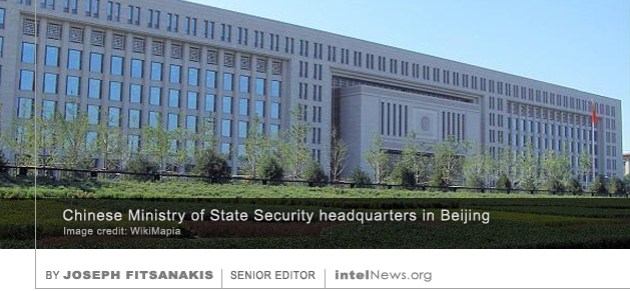 The White House has warned the Chinese government to stop deploying on American soil intelligence operatives masquerading as tourists, business executives or other false covers. Nowadays the standard practice for intelligence personnel deployed abroad is to be posted as diplomatic staff in a foreign embassy or consulate. But there are some intelligence officers who do not follow that practice. These are known as non-official-cover operatives, or NOCs in American intelligence parlance. NOCs are typically high-level principal agents or officers of an intelligence agency, who operate without official connection to the diplomatic authorities of the country that is employing them. They typically pose as business executives, students, academics, journalists, or non-profit agency workers. Unlike official-cover officers, who are protected by diplomatic immunity, NOCs have no such protection. If
 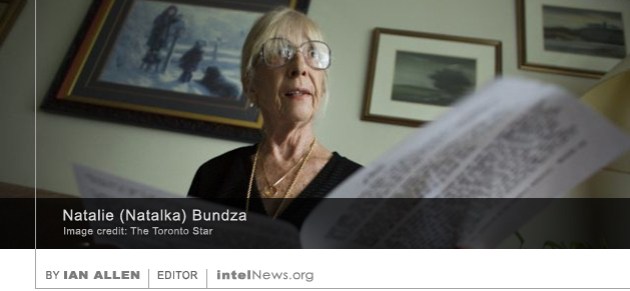 A set of declassified intelligence documents from the 1950s and 1960s offer a glimpse into the secret war fought in Canada between American and Soviet spy agencies at the height of the Cold War. The documents were authored by the United States Central Intelligence Agency and declassified following a Freedom of Information Act request filed on behalf of the Canadian newspaper The Toronto Star.
  A congratulatory letter sent by a senior Nazi official to







 intelNews.org
Yuri Drozdov, handler of Soviet undercover spies during Cold War, dies at 91
June 26, 2017 by Joseph Fitsanakis Leave a comment
His knowledge of East German intelligence affairs prompted his involvement in the famous 1962 spy-swap between the United States and the Soviet Union. The Soviets surrendered the American pilot Francis Gary Powers, who had been captured in May 1960, when the U-2 spy plane he was piloting was shot down over Soviet airspace. In return, they received Rudolf Abel (real name Vilyam Fisher) a Soviet undercover spy who was captured in New York in 1957, posing as an American citizen. From 1964 until 1968, Drozdov was stationed in Beijing, China, where he served as the KGB rezident, effectively the agency’s chief of station. He returned to Moscow and in 1975 was posted under diplomatic cover in the United States, where he commanded the KGB’s station in New York until 1979.
Upon his return to the USSR, Drozdov was promoted to chief of the KGB’s Directorate S, which handled the agency’s worldwide network of so-called illegals —intelligence officers serving abroad without official cover or formal connection to the Soviet Union. Shortly after his return to Moscow, Drozdov also headed Operation STORM-333, a daring attack on the presidential palace in Afghanistan, during which Soviet special forces killed Afghan President Hafizullah Amin and essentially fired the opening shots of the decade-long Soviet-Afghan war. The experience prompted Drozdov to recommend to his superiors the establishment of a new KGB special-forces unit. It was created in 1981 under the name Vympel (Pennant) and headed by Drozdov himself. He commanded several Vympel missions in and out of the USSR before resigning from the KGB in 1991.
Little is known about the specifics of Drozdov’s death. It is believed that he died on June 21, surrounded by his family. The Russian Foreign Intelligence Service (SVR), a successor agency of the KGB, issued a brief statement commemorating Drozdov’s service. It was followed by a statement issued by the office of the Russian President Vladimir Putin, which praised Drozdov as “a legendary spy, outstanding professional […], incredible person and true patriot”.
► Author: Joseph Fitsanakis | Date: 26 June 2017 | Permalink
Filed under Expert news and commentary on intelligence, espionage, spies and spying Tagged with Cold War, history, KGB, News, non-official-cover, obituaries, STORM-333, USSR, Vympel, Yuri Drozdov