North Korean radio station known for sending coded messages to spies goes silent
January 15, 2024 2 Comments
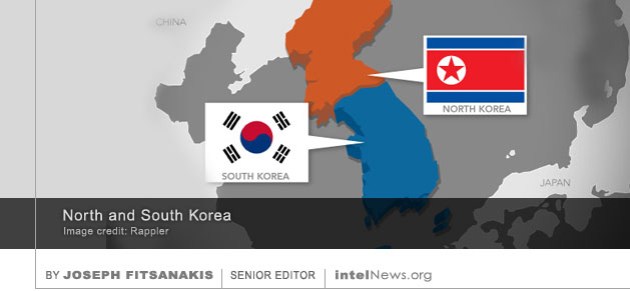 NORTH KOREA APPEARS TO have suspended a long-standing radio station, known for broadcasting content targeted at South Koreans, which also aired encrypted messages intended for North Korean spies abroad. Radio Pyongyang was founded by Korean communist forces in the 1940s. In 1950 it formed part of the North Korean state’s official media propaganda arm.
Throughout the Cold War, Radio Pyongyang aired hundreds of hours of news and cultural content every week. The broadcasts were in various languages and were exclusively aimed at international listeners. However, most of the station’s output was targeted at South Koreans. In 2002, the station was renamed Voice of Korea. Around that time, possibly owing to a temporary rapprochement between North and South Korea, the station curtailed much of its political programming. However, broadcasts featuring political content were resumed in 2016, as relations between the two warring sides began to deteriorate once again.
For much of its existence, the Voice of Korea has also been known to operate as a so-called numbers station. The term denotes shortwave radio stations, usually sponsored by a government entity, that regularly air broadcasts consisting of formatted number sequences. These sequences are widely believed to be encrypted communications addressed to intelligence officers operating abroad. They contain operational instructions and other directives that are typically undecipherable without the use of an encryption protocol. These stations also broadcast certain types of music, which function as codewords and are believed to signal specific directives to spies.
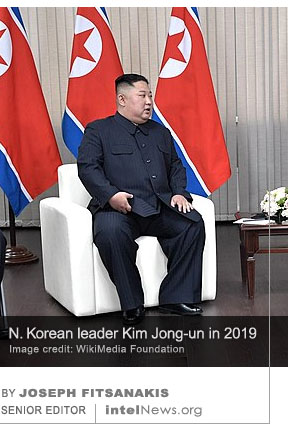
But the Voice of Korea unexpectedly fell silent last week. Its website, which features content in several languages, also appears to have been taken down. The sudden changes occurred days after North Korea’s Supreme Leader, Kim Jong-un, delivered a key address during the year-end plenum of the ruling Workers’ Party of Korea (WPK) in Pyongyang, on December 31. In his speech, which became public on January 6, the North Korean leader declared that the reunification of Korea under communist principles —a longstanding goal of the WPK—had been rendered “impossible” due to widening differences in approach between the two Koreas.
The North Korean strongman also called for “a fundamental change” in the WPK’s policy on inter-Korean affairs. Finally, he discussed a series of steps for the “reorganization of entities” that govern North Korea’s relations with South Korea. Several North Korean government websites focusing on the reunification of Korea, including the Voice of Korea website, have since been taken down. North Korea observers suggest that the daily radio broadcasts of the Voice of Korea appear to be part of the reorganization declared by Kim Jong-UN on December 31.
► Author: Joseph Fitsanakis | Date: 15 January 2024 | Permalink
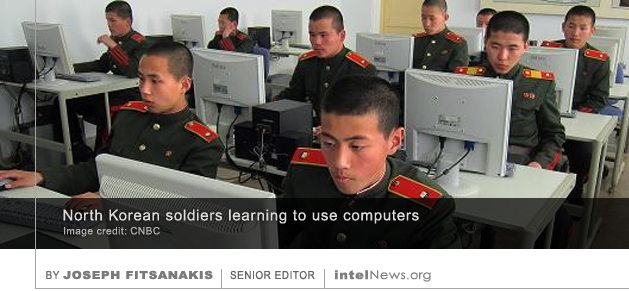 A NOTORIOUS NORTH KOREAN hacker group is believed to be behind a “sophisticated” effort to elicit the views of international experts on issues that are of concern to Pyongyang, according to an investigation by Reuters. The news agency
  SOUTH KOREAN AUTHORITIES HAVE busted an alleed spy ring run by a North Korean handler, who remains at large. Two men have been arrested so far in connection with the ring. One of them, identified only as “Lee”, is
  AN AMERICAN COMPUTER PROGRAMMER has been jailed for 63 months for providing “highly technical information” to North Korea, which related to cryptocurrency systems, according to United States officials. The programmer, Virgil Griffith, 39, also known as “Romanpoet”, became widely known in the early 2000s, when he began describing himself as a “disruptive technologist”. He later consulted with the Federal Bureau of Investigation and other law enforcement agencies in the area of the dark web and cryptocurrencies.
 THE NORTH KOREAN MISSILE program has developed rapidly in the past year, partly due to an influx of stolen cryptocurrency, which has now become “an important revenue source” for Pyongyang, according to a United Nations report. The confidential report was produced for the United Nations’ Security Council, by a committee tasked with monitoring the impact of the supranational body’s sanctions on the North Korean economy.
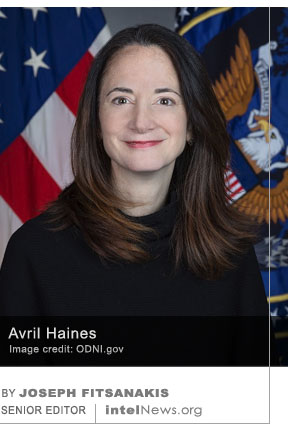 THE INTELLIGENCE CHIEFS OF the United States, Japan and South Korea are to meet behind closed doors this week. The meeting will take place nearly two years after a major diplomatic spat between Japan and South Korea threatened to significantly harm intelligence cooperation between them. In November of 2019, the South Korean government threatened to terminate the General Security of Military Information Agreement (GSOMIA). The agreement was initiated in 2016 under American tutelage, with the aim of facilitating the sharing of intelligence between South Korea and Japan about North Korea’s missile and nuclear programs.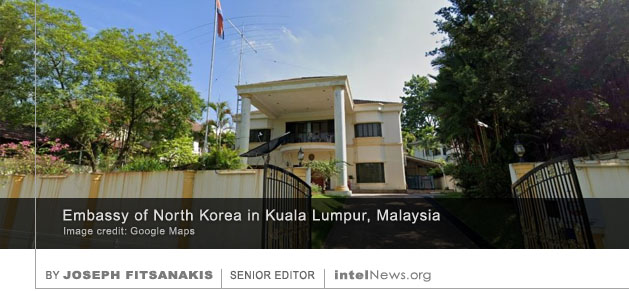
 A NORTH KOREAN ACTING ambassador, who is believed to be the son of one of the most senior officials of the ruling Workers’ Party of Korea (WPK), reportedly defected with his family to South Korea, according to sources. Two South Korean news outlets, the Yonhap News Agency and the Maeil Business Newspaper, reported the alleged defection on Monday. They both cited sources in the South Korean government.
 THE HALF-NEPHEW OF North Korean leader Kim Jong-un, who disappeared in 2017 and has not been seen since, is in the custody of the United States Central Intelligence Agency (CIA), according to a new report. The missing man’s name is Kim Han-sol. He is the son of the late Kim Jong-nam (pictured), the eldest son of Kim Jong-il and grandson of Kim Il-Sung, who founded the Democratic People’s Republic of Korea in 1948. A critic of North Korea’s rulers, Kim lived in self-exile in the Chinese territory of Macau, and split his time between China, Singapore and Malaysia.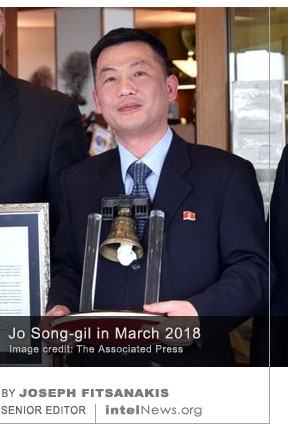
 Computer hackers working for North Korea launched cyberattacks against carefully selected officials of national delegations belonging to the United Nations Security Council, according to a soon-to-be released report. The report is expected to be submitted early next month to the UN Security Council Sanctions Committee on North Korea.
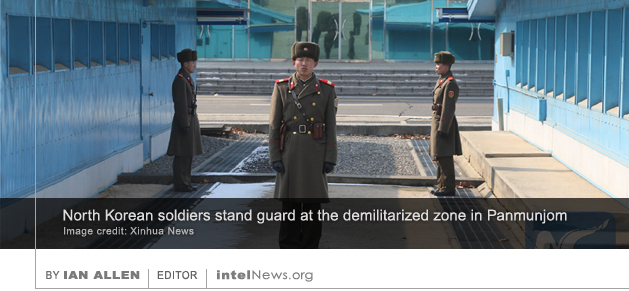 Officials in South Korea and China have cast doubt on rumors circulating in recent days that North Korean Supreme Leader Kim Jong-un may be dead or close to dying. The rumors about Kim’s demise began to circulate on April 15, when the North Korean leader failed to participate at an official ceremony held to mark the birthday of his grandfather. Known as the Day of the Sun —a public holiday in North Korea— the annual event commemorates the birth of the country’s founder, Kim il-Sung.
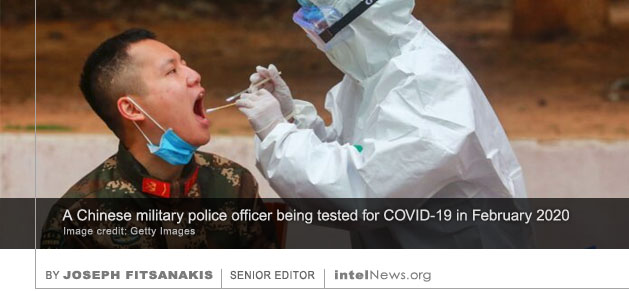 Military forces around the world are scrambling to contain the impact of COVID-19 on military readiness, as the virus continues to infect troops and commanders at an alarming rate. On Tuesday, the Polish government
 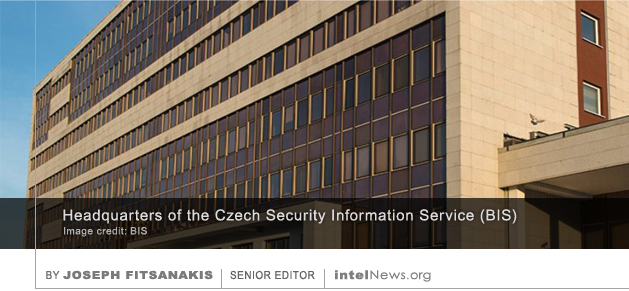 The Czech intelligence services foiled a secret plan by North Korea to smuggle weapons parts and surveillance drones, leading to the expulsion of a North Korean diplomat from the country, according to a report. The report,






 intelNews.org
South Korea’s top HUMINT agency probes potentially catastrophic data breach
July 29, 2024 by intelNews 1 Comment
Formed under American tutelage in 1946, KDIC is today considered South Korea’s most secretive intelligence agency. It operates under the Defense Intelligence Agency (DIA), which makes it part of the Ministry of National Defense’s chain of command. Unlike DIA’s civilian counterpart, the National Intelligence Service, KDIC rarely surfaces in unclassified news reporting, and it almost never issues press releases. Its operations primarily involve HUMINT activities, thus making it South Korea’s most active HUMINT-focused agency.
Predictably, KDIC’s primary intelligence target is North Korea. The agency gathers much of its intelligence on the North through an extensive network of undercover officers operating with diplomatic credentials. KDIC also handles non-official cover (NOC) operatives, who are located mostly in Asia. There have been periodic claims in the unclassified literature that some KDIC NOCs have operated inside North Korea at times –though such claims remain speculative.
On Saturday, the Seoul-headquartered Yonhap News Agency alleged that classified information relating to KDIC had been “leaked”. According to Yonhap, the leak included personally identifiable information about KDIC official and non-official cover personnel stationed abroad. The report claimed that the leak was discovered by South Korean authorities a month ago, and that the discovery had resulted in the recall of several KDIC undercover operatives serving overseas “due to concerns over their identities being exposed”.
The Yonhap report claimed that, according to an ongoing probe, the leak may have originated from a personal laptop computer belonging to a civilian KDIC employee. The employee has since claimed that the laptop had been hacked, but some investigators believe the suspect may have “intentionally left the laptop vulnerable to hacking by North Koreans”.
According to an official statement released on Sunday by the Ministry of National Defense, the case is “currently under investigation by military authorities”.
► Author: Joseph Fitsanakis | Date: 29 July 2024 | Permalink
Filed under Expert news and commentary on intelligence, espionage, spies and spying Tagged with Defense Intelligence Agency (South Korea), HUMINT, KDIC (South Korea), Korea Defense Intelligence Command, News, non-official-cover, North Korea, official cover, South Korea