French senior civil servant arrested on suspicion of spying for North Korea
November 27, 2018 1 Comment
 A senior civil servant in the upper house of the French parliament has been arrested on suspicion of spying for North Korea, according to prosecutors. The news of the suspected spy’s arrest was first reported on Monday by Quotidien, a daily politics and culture show on the Monaco-based television channel TMC. The show cited “a judicial source in Paris” and said that France’s domestic security and counterintelligence agency, the General Directorate for Internal Security (DGSI), was in charge of the espionage case.
The senior administrator has been identified as Benoit Quennedey, a civil servant who liaises between the French Senate and the Department of Architecture and Heritage, which operates under France’s Ministry of Culture. Quennedey was reportedly detained on Sunday morning and his office in the French Senate was raided by DGSI officers on the same day. Quotidien said that he was arrested on suspicion of “collecting and delivering to a foreign power information likely to subvert core national interests”. The report did not provide specific information about the type of information that Quennedey is believed to have passed to North Korea. It did state, however, that a counterintelligence investigation into his activities began in March of this year.
Quennedey is believed to be the president of the Franco-Korean Friendship Association, the French branch of a Spanish-based organization that lobbies in favor of international support for North Korea. Korea Friendship Association branches exist in over 30 countries and are believed to be officially sanctioned by Pyongyang. They operate as something akin to the pre-World War II Comintern (Communist International), a Moscow-sanctioned international pressure group that advocated in favor of Soviet-style communism around the world. French media reported on Monday that Quennedey traveled extensively to the Korean Peninsula in the past decade and has written a French-language book on North Korea. News reports said that the French President Emmanuel Macron had been made aware of Quennedey’s arrest. The senior civil servant faces up to 30 years in prison if found guilty of espionage.
► Author: Joseph Fitsanakis | Date: 27 November 2018 | Permalink
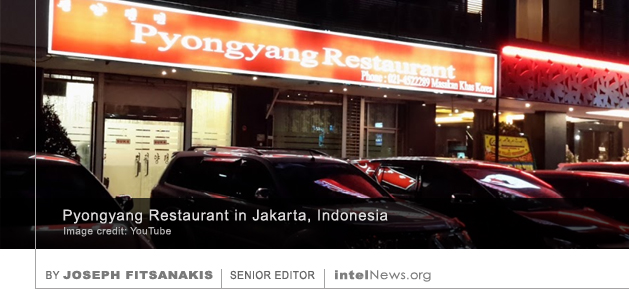 A group of 12 female North Korean restaurant workers and their male manager claim that their widely advertised defections in 2016 were fake, and that they were in fact abducted by South Korea’s spy services. The North Korean government maintains a chain of North Korea-themed restaurants throughout Asia, which operate as popular tourist attractions across Southeast Asia. The state-owned restaurants help provide the cash-strapped regime in Pyongyang with desperately needed foreign funds. The North Korean staff —almost all of them female— who work at these restaurants are carefully vetted and chosen to represent the reclusive regime abroad. Some observers
 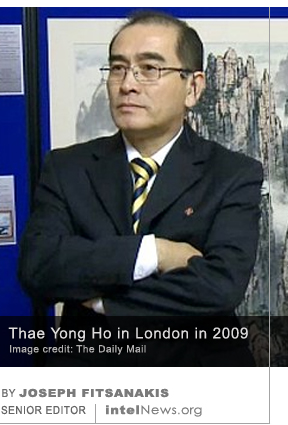 North Korea offered to stop selling missile technology to Iran and other enemies of Israel in exchange for $1 billion in cash from the Jewish state, according to former senior North Korean diplomat who has now defected. The account of the offer can be read in Password from the Third Floor, a book published earlier this year by Thae Yong Ho. Thae, a member of a prominent North Korean family, defected with his wife and children in 2016, while he was serving as a senior member of the diplomatic staff of the North Korean embassy in London.
 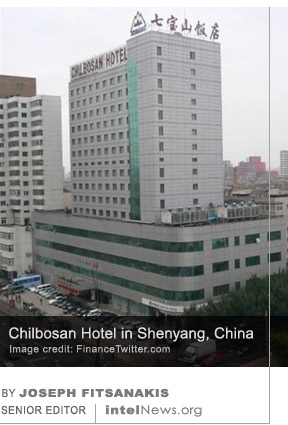 One of North Korea’s most senior intelligence officials, who played a major role in building Pyongyang’s nuclear weapons program, has disappeared and is believed to have defected to France or Britain, according to sources. South Korean media identified the missing official as “Mr. Kang”, and said he is a colonel in North Korea’s State Security Department (SSD), also known as Ministry of State Security. Mr. Kang, who is in his mid-50s, enjoyed a life of privilege in North Korea, because he is related to Kang Pan-sok (1892-1932), a leading North Korean communist activist and mother to the country’s late founder, Kim Il-sung.
 The Central Intelligence Agency has reportedly established back channels for negotiation between the United States and North Korea, which the Department of State is now using to communicate with Pyongyang. Rex Tillerson, who was summarily fired as US Secretary of State by President Donald Trump last week, was famously in favor of diplomatic negotiations between the US and North Korea. The White House had resisted and even publicly criticized Tillerson’s views. Ironically, Tillerson was fired just as his pro-diplomacy views on North Korea are being adopted by the White House.
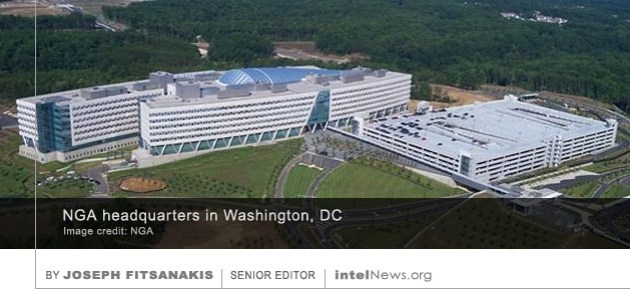 The National Geospatial-Intelligence Agency (NGA), one of America’s most secretive spy organizations, will work with a number of human-rights groups to monitor human rights in North Korea, according to a senior NGA official. Formed in 1996 as the National Imagery and Mapping Agency, the NGA operates under the supervision of the US Department of Defense. It is tasked with supporting US national security by collecting, analyzing and distributing geospatial intelligence. It also performs a combat-support mission for the Pentagon. The agency collects most of its data from satellites, surveillance aircraft and unmanned surveillance drones. Headquartered in a vast 2.3 million square foot building in Washington, the NGA is known for its secretive nature and rarely makes headlines.
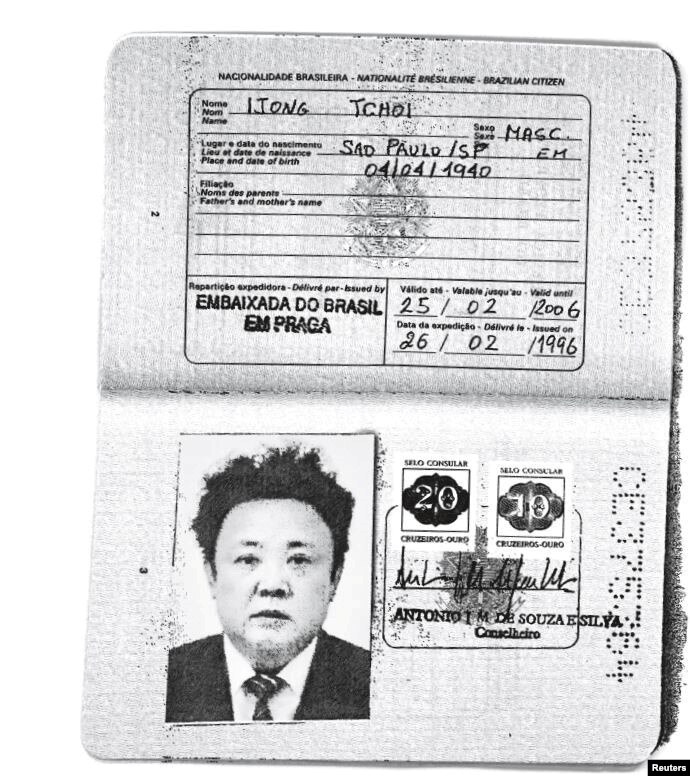
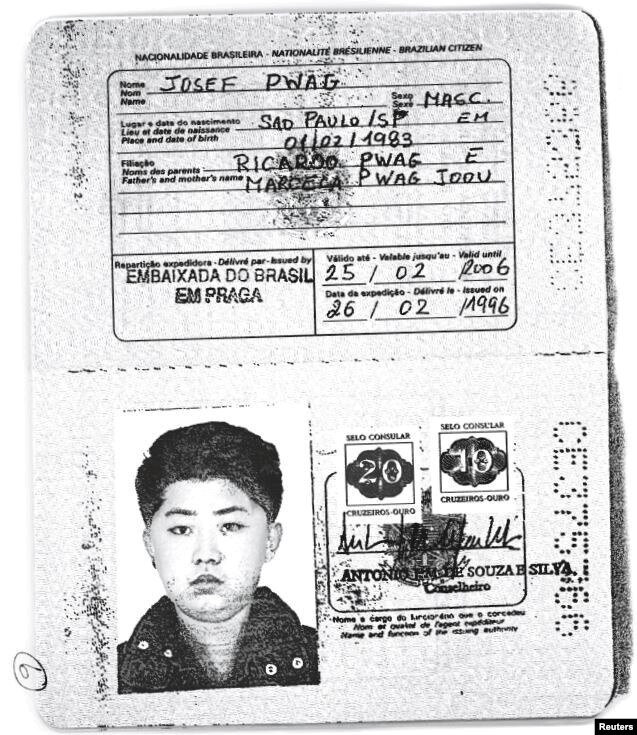
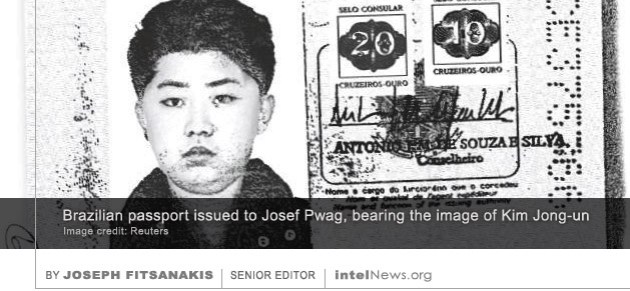 The late Supreme Leader of North Korea, Kim Jong-il, and his son and current Supreme Leader Kim Jong-un, used forged Brazilian passports to secure visas for overseas trips and to travel abroad undetected, according to reports. The Reuters news agency
 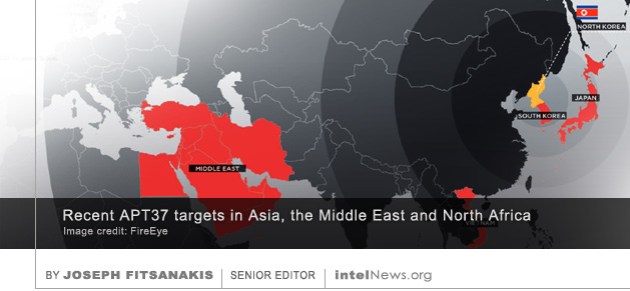 A little-known North Korean cyber espionage group has widened its scope and increased its sophistication in the past year, and now threatens targets worldwide, according to a new report by a leading cyber security firm. Since 2010, most cyber-attacks by North Korean hackers have been attributed to a group dubbed “Lazarus” by cyber security specialists. The Lazarus Group is thought to have perpetrated the infamous Sony Pictures attacks in 2014, and the worldwide wave or ransomware attacks dubbed WannaCry by experts in 2017. It is widely believed that the Lazarus Group operates on behalf of the government of North Korea. Most of its operations constitute destructive attacks —mostly cyber sabotage— and financial criminal activity.
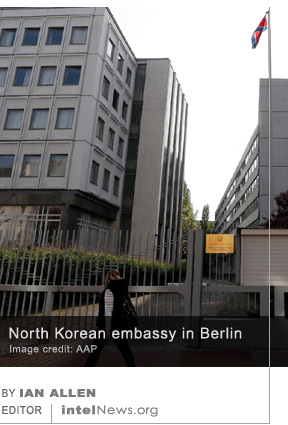 North Korea used its embassy in Berlin to acquire technologies that were almost certainly used to advance its missile and nuclear weapons programs, according to the head of Germany’s counterintelligence agency. For many decades, Pyongyang has used a sophisticated international system of procurement to acquire technologies and material for its conventional and nuclear weapons programs. These secret methods have enabled the country to evade sanctions placed on it by the international community, which wants to foil North Korea’s nuclear aspirations.
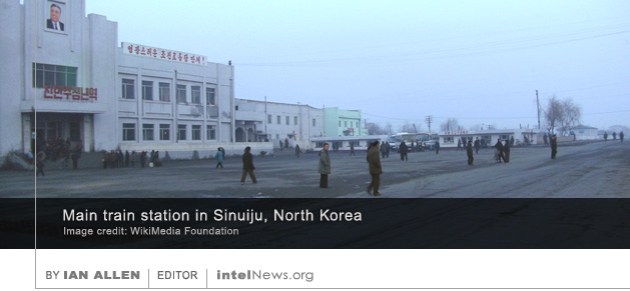 A North Korean nuclear scientist who defected to China but was involuntarily sent back to North Korea in November reportedly killed himself in his North Korean cell hours before he was due to be interrogated. Information about the scientist’s alleged suicide was issued on Thursday by Radio Free Asia (RFA), a multilingual news service based in Washington, DC, which is funded by the United States government. The service said its reporters spoke to an anonymous source in North Hamgyong province, North Korea’s northernmost region that borders China. The source identified the late scientist as Hyun Cheol Huh, but cautioned that this may not be his real name, because the North Korean security services are known to “use […] fake names when referring to important persons” in their custody.
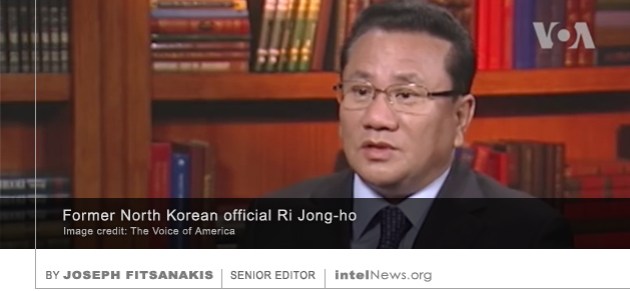 North Korean Supreme Leader Kim Jong-un has consolidated his position by killing hundreds of domestic critics in recent years, but he lacks confidence and will not go to war against outside powers, according to a senior North Korean defector. Ri Jong-ho was a senior official in North Korea under its previous leader, the late Kim Jong-il. He rose through the ranks of the Workers’ Party of Korea and was directly mentored by Kim, who personally appointed him to a post in Bureau 39. The powerful body is in charge of securing much-needed foreign currency for Pyongyang —often through illegal activities— and partly funds the personal accounts of the ruling Kim dynasty.
 The seizure earlier this year of a North Korean ship secretly carrying thousands of weapons for use by the Egyptian military has revealed the scale of one of Pyongyang’s most profitable money-making ventures: global arms sales. Experts say that the North Korean state continues to supply thousands of tons of Cold-War-era conventional weapons to countries such as Eritrea, Cuba, Burma and Iran, as well as to some American allies, including as Egypt. There is also evidence that at least two non-state militant organizations, including the Lebanon-based group Hezbollah, are among Pyongyang’s customers. The latter take advantage of North Korea’s vast arsenal of weapons produced in the 1960s and 1970s, which are being sold on the international arms market at very low prices.
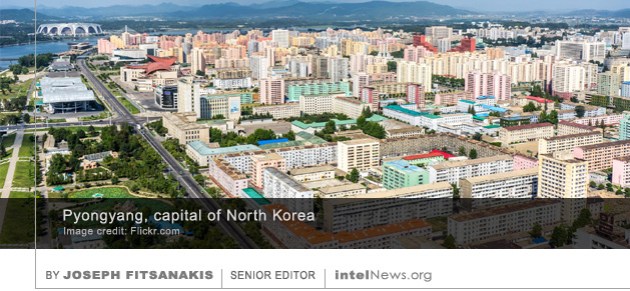 Australia rejected a secret request by the United States Central Intelligence Agency to open an embassy in North Korea, which the Americans hoped to use as a base from where to collect intelligence on the communist state.
 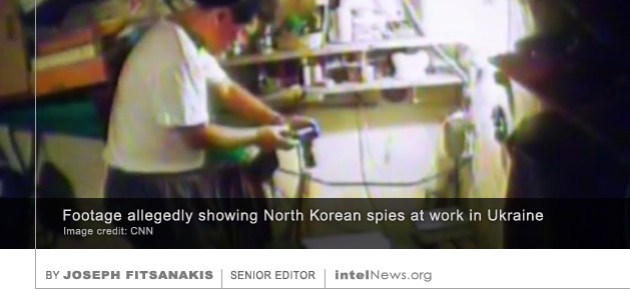 Ukrainian authorities have released rare surveillance footage filmed during a sting operation that ended with the capture of three North Korean spies. The North Koreans, two of whom are now serving prison sentences in Ukraine, had traveled there in 2011 believing they would be given missile technology secrets. Last July, North Korea surprised missile technology experts by successfully testing two intercontinental ballistic missiles (ICBMs). Government-controlled media in Pyongyang claimed that North Korean ICBMs were capable of reaching the United States’ mainland.






 intelNews.org
Head of CIA’s Korean mission center to resign, say sources
November 28, 2018 by Joseph Fitsanakis Leave a comment
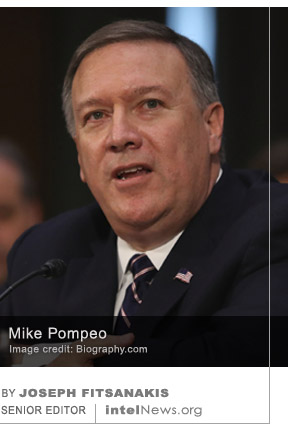
Following his return to the US from Seoul, Kim reportedly retired, but returned last year to head the CIA’s new Korea Mission Center (KMC). The purpose of the specialized unit is to analyze Pyongyang’s ballistic missile and nuclear weapons programs, which the administration of US President Donald Trump considers as matters of priority for the White House. It was as head of the KMC that Kim reportedly met Mike Pompeo once he became Director of the CIA in January 2017. The two men worked closely together and it is believed that Kim’s role was instrumental in organizing the negotiations between Washington and Pyongyang that led to last summer’s historic high-level meeting between President Trump and Supreme Leader Kim Jong-un. According to American and South Korean media, Kim accompanied the then-CIA director on his secret trip to North Korea. He also accompanied Pompeo on his trips to North Korea once the Kansas Republican became Secretary of State.
The Yonhap News Agency said on Tuesday that Kim initially intended to leave his CIA post in the summer, but was persuaded by Secretary Pompeo to continue. However, he has now tendered his resignation, which will take effect on December 20. Citing “multiple sources”, including “a senior official at South Korea’s National Intelligence Service”, the Seoul-based news agency said that Kim plans to take up an academic post at Stanford University, adding that he intends to continue serving as an adviser to the secretary of state. Prior media reports have stated that “Kim is widely viewed as a hawk on North Korea”, so there are suspicions that his departure from the CIA stems from his disagreement with the policy of negotiation signaled by President Trump. However, the CIA has not commented on the Yonhap report. The South Korean agency said that the CIA is already reviewing candidates to succeed Kim.
► Author: Joseph Fitsanakis | Date: 28 November 2018 | Permalink
Filed under Expert news and commentary on intelligence, espionage, spies and spying Tagged with CIA, CIA Korea Mission Center, News, Newstex, North Korea, North Korean nuclear program, resignations, United States